Greetings friends and family. This post is out of sequence simply because I did not have enough time to catch up on our adventure in Cuenca before we head out to our next Ecuadorian destination. I have so much more to tell you about Cuenca but it will have to wait until we return from Hacienda Zuleta.
Hacienda Zuleta is a farm / Condor retreat near Otavalo. Tod hired a driver to pick us up at 9:00 this morning for the 2 – 3 hour trip to the Condor retreat. This trip is an early birthday present for me as I wanted to have a picnic lunch with the Lamas and Condors in this legendary setting. Our friend Bonnie told us about how wonderful this place is so we looked it up on-line and found a small window of time where we had no other “outings” planned and booked the trip.
(Don’t worry, we are not missing the Packer game – Tod is taping it so we will watch it in place of Monday night football. Please don’t text or email either of us about the game highlights or score.)
Off to finish getting ready as our driver will be here within the hour. What an awesome birthday this will be! (How do you think Tod will ever top this birthday gift? He has a year to plan:)
Until our next post, be well and remember, life is too short to drink bad coffee!
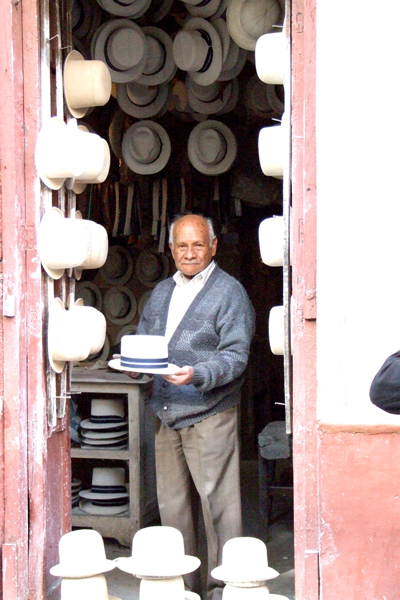
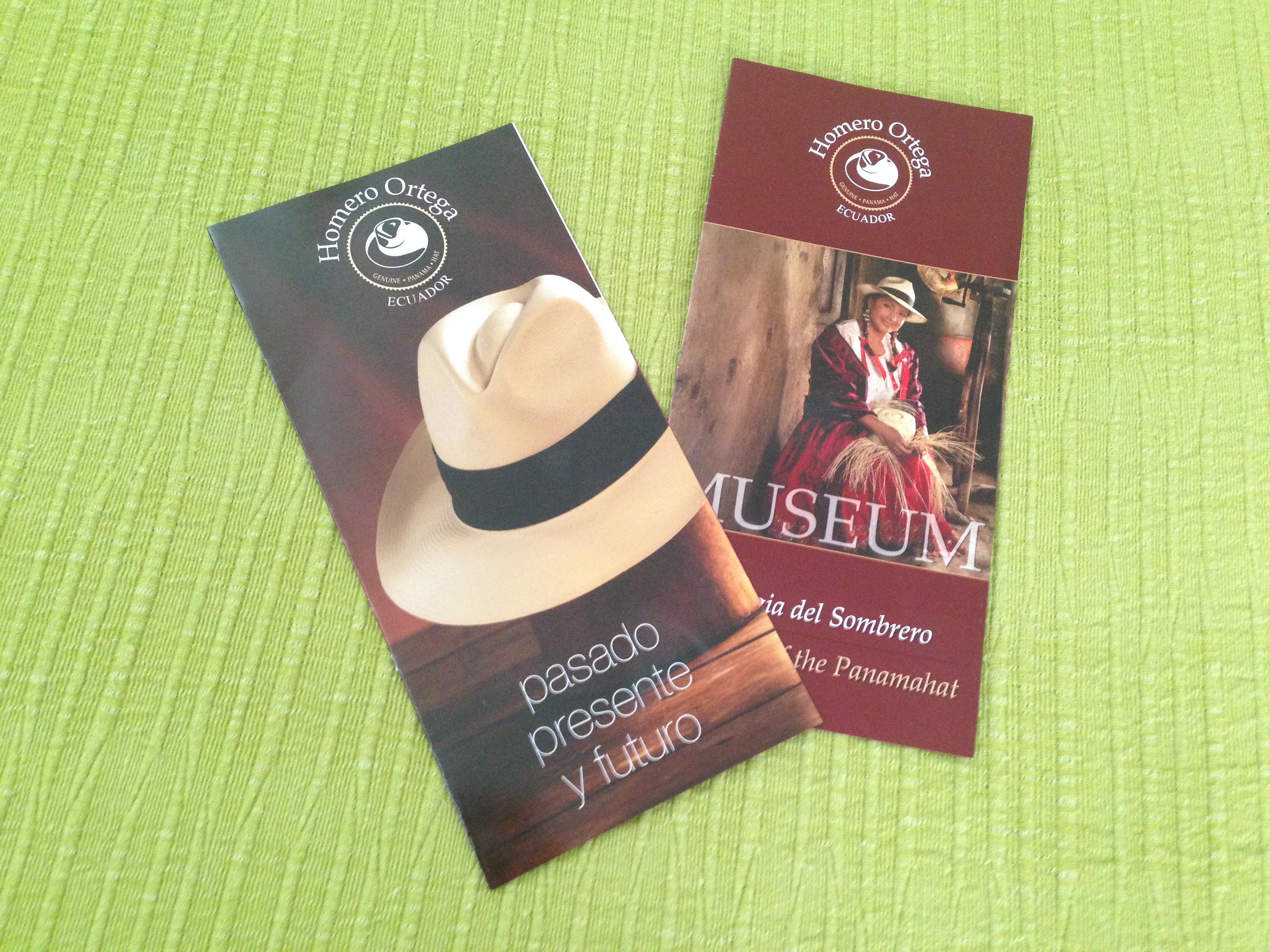
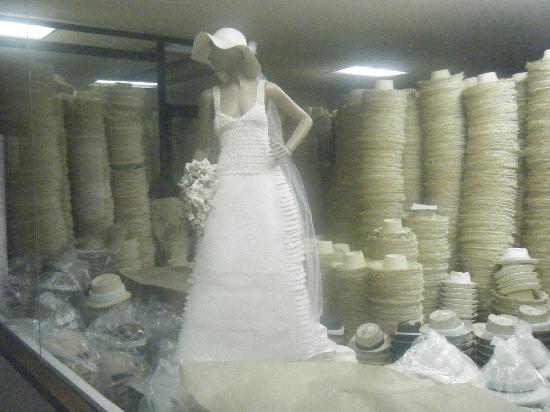
Tod wanted to visit Cuenca because of the historic architecture and I wanted to see the Panama Hat Factory. Ecuador’s most famous export is called a “Panama” hat. Exporting of the Panama hat began as early as the 1800’s. In the 1800’s Panama was part of what is now Colombia. Ecuador had very little traffic, tourist or otherwise, Panama on the other hand was a very busy corner of South America. Ecuador’s strong, lightweight straw hats were in demand so the exporting to Panama began. When asked where they got their hats people would reply “Panama” however would neglect to mention, “Oh, yes, it was made in Ecuador”. The hats were soon known as the “Panama” hat and now, a few centuries later, are still called Panama hats. And although we toured 2 factories and peeked our noses into the shop of Alberto Pollo – Casa del Sombrero – whose family has been in the hat business since 1900, we took no photos. The few photos we have are from the internet or of our packaged purchases. Touring the factories and trying on the sombreros was a highlight of this trip and I still cannot believe neither of us thought of taking pictures.
Alberto Pulla – Casa del Sombrero – Hat House.Panama Hat Purchases!Factory and Museum Brochures.Panama Wedding Hat.
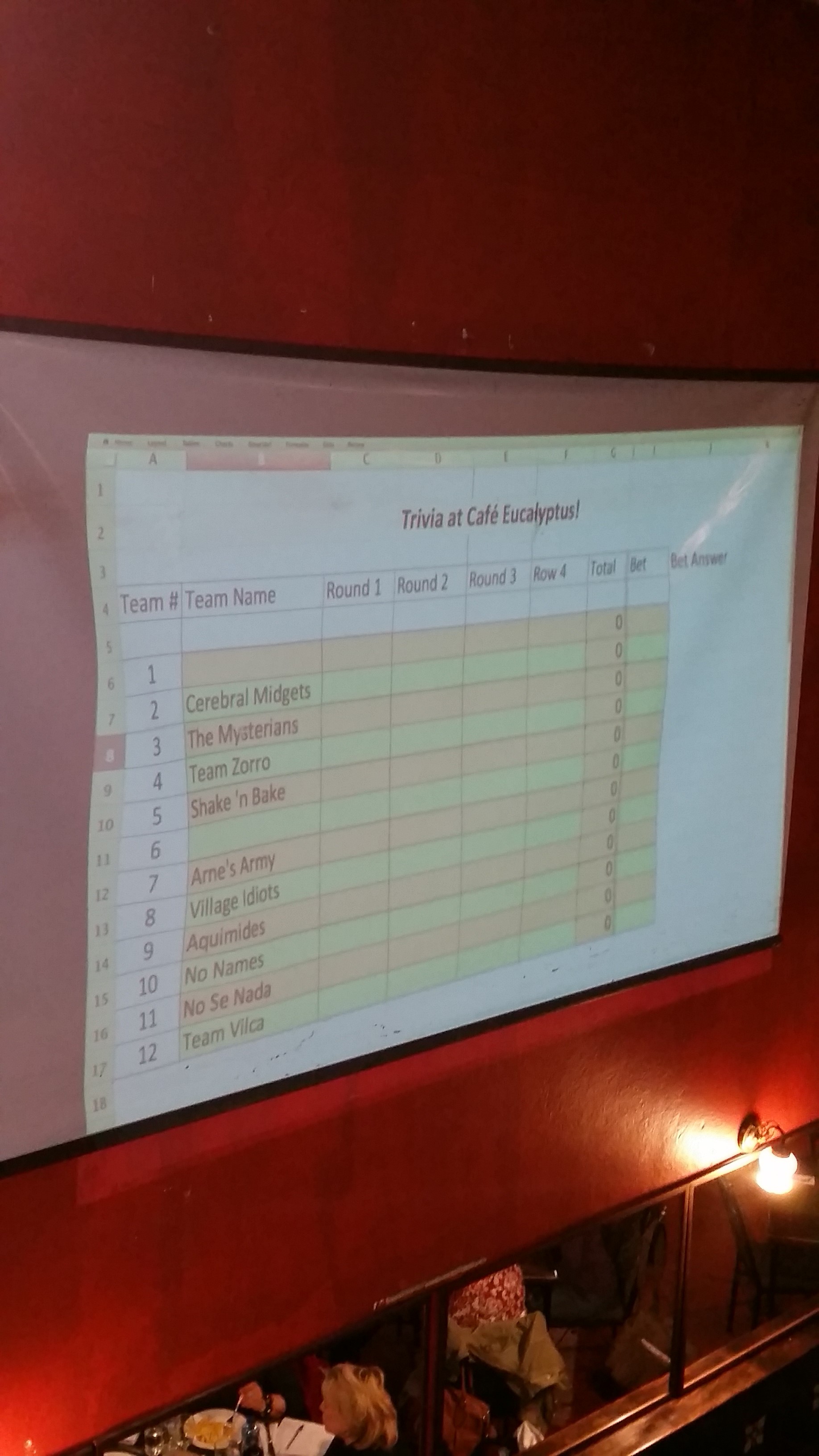
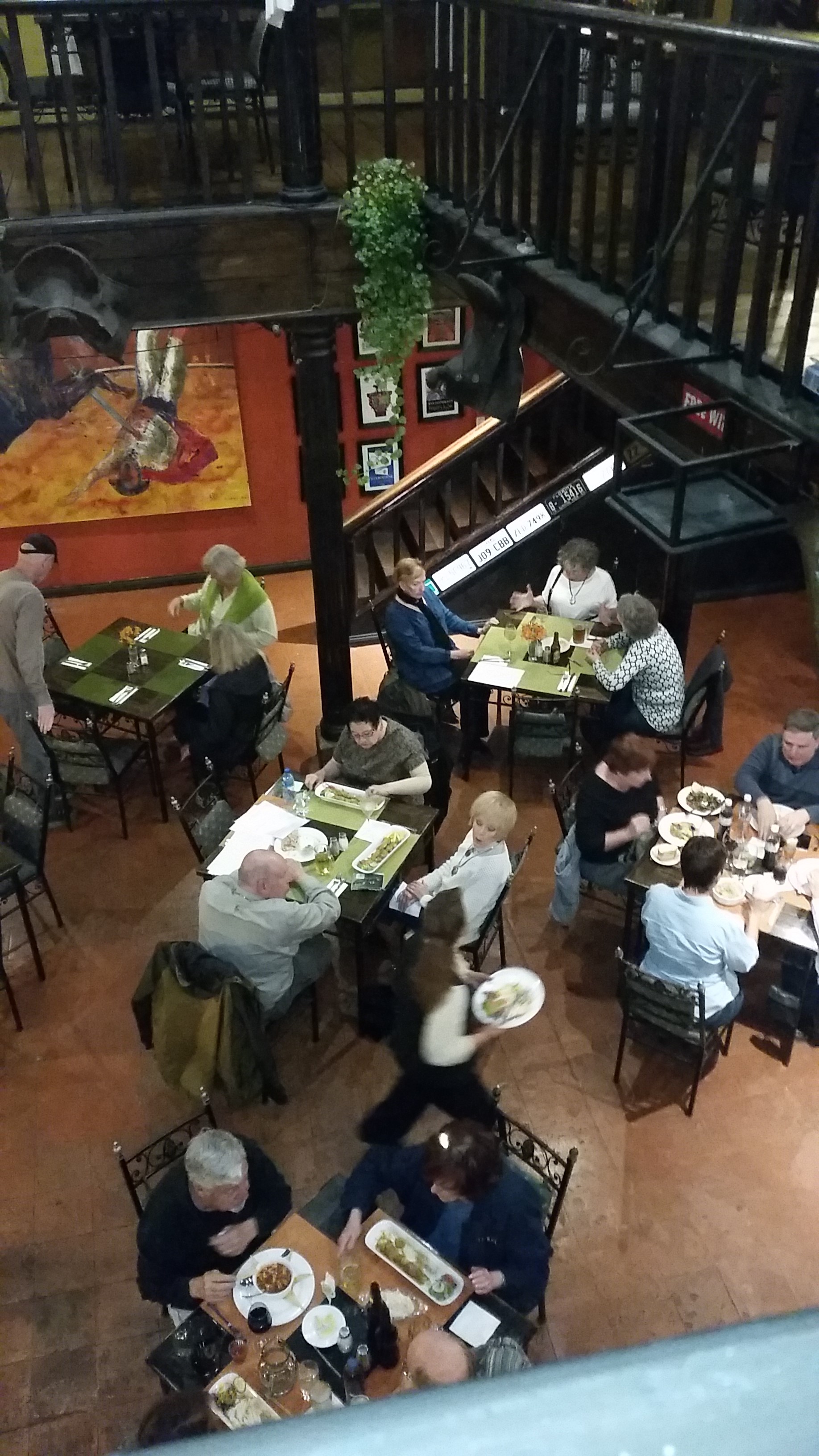
Along with the hotels, architecture and beautiful cathedrals, Cuenca is also known for its tourist attraction / night activities. Cuenca seems to have a strong population of expats and there are gathering areas such as specific coffee shops and restaurants which cater to the English speakers. We found Café Eucalyptus which is owned by an expat originally from the US. We really went there because they advertised several vegetarian options. Little did we know we had walked into Gringo trivia night at Café Eucalyptus. We were whisked to an upstairs table as the downstairs was reserved for the trivia teams. What a hoot we stumbled across! The tables filled up one by one with mostly retired expats, everyone seemed to know each other. Apparently Café Eucalyptus hosts trivia one night a week, salsa dance lessons one night, live music on the weekends and so on. Just a place for dinner and socializing in English. The website promises that on cooler nights they offer a blazing fireplace, plenty of sofa space and free marshmallows. What a concept! Real log fireplaces upstairs and down with free marshmallows.
Trivia Score Board! Returning Teams.Trivia Teams.Downstairs at the Eucalyptus. Not a Trivia Night.
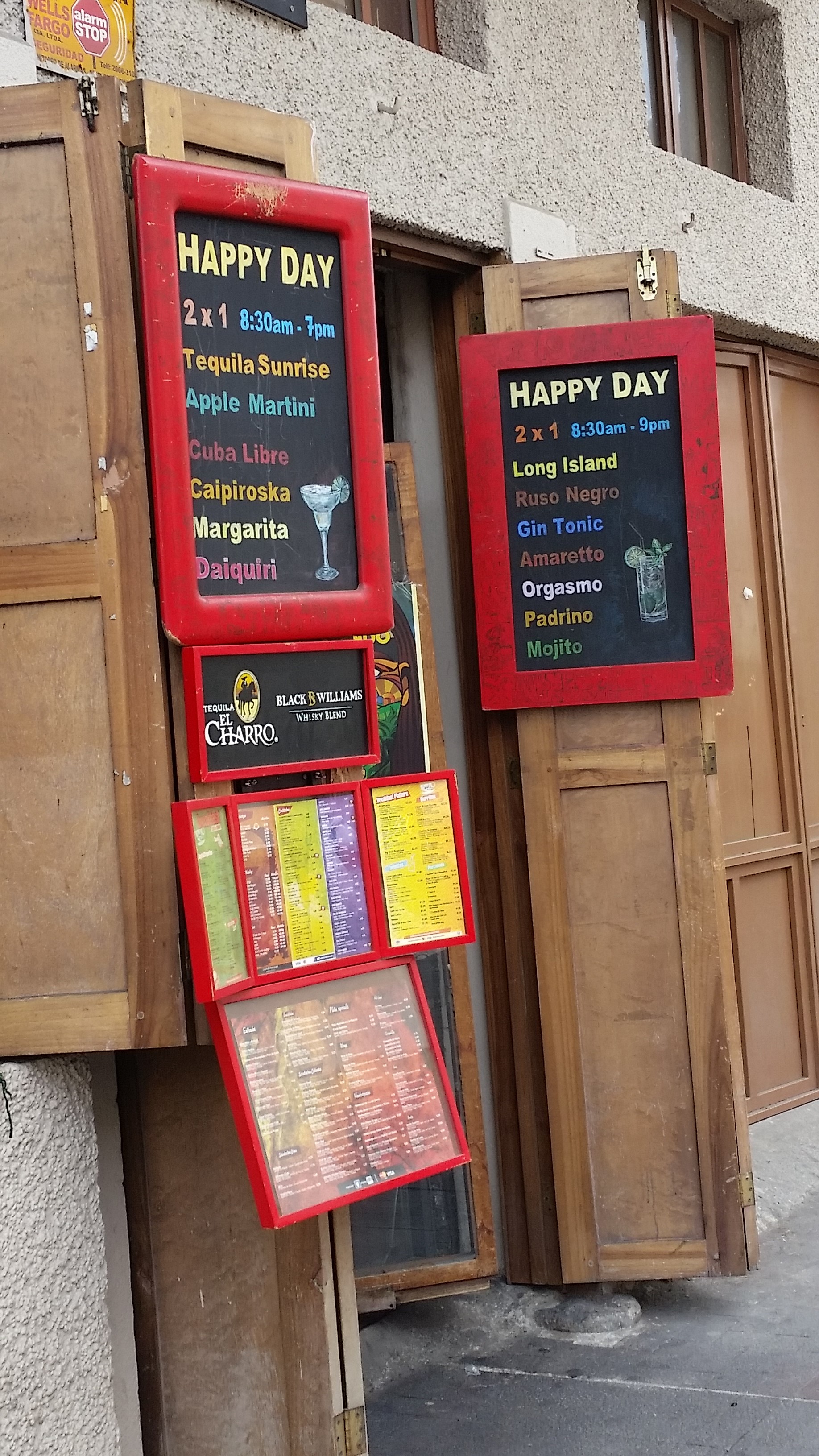
It did not surprise me at one point to see several Gringos standing around this place that advertised “Happy Day” not “Happy Hour” and they specialize in subs and shots.
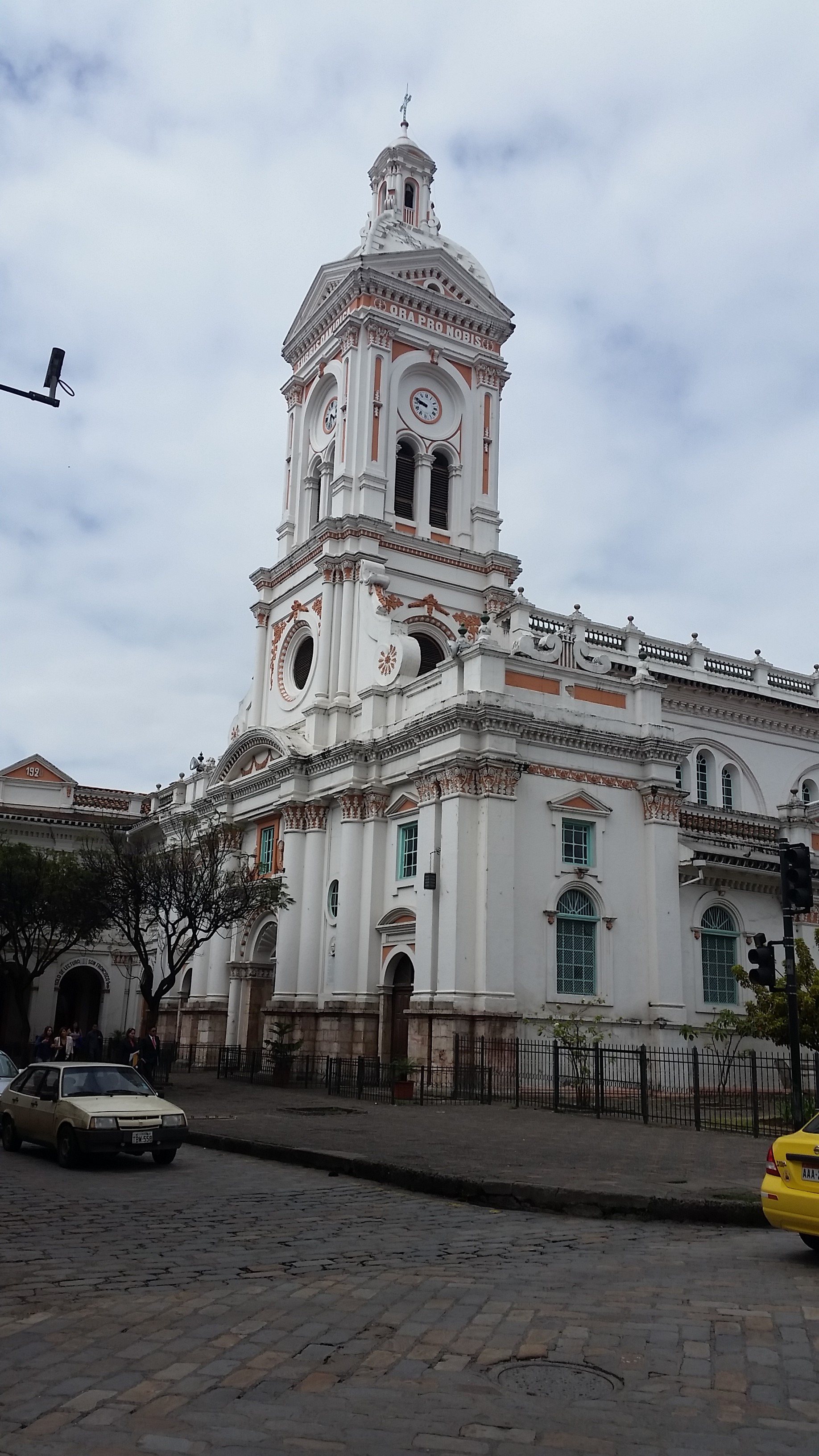
Cuenca is known for its historical buildings and stunning architecture. Nothing portrays this more than the 52 cathedrals of Cuenca. (One for every Sunday of the year.) The cathedrals are everywhere you look in the historic section of Cuenca, you cannot walk a block without having a church or church steeple in view. I wish we would have had the time to tour each one but we did tour as many as we could. Most of the churches have 3 services a day with an open door policy.
Two Churches.Twin Tower White Church.Single Tower.
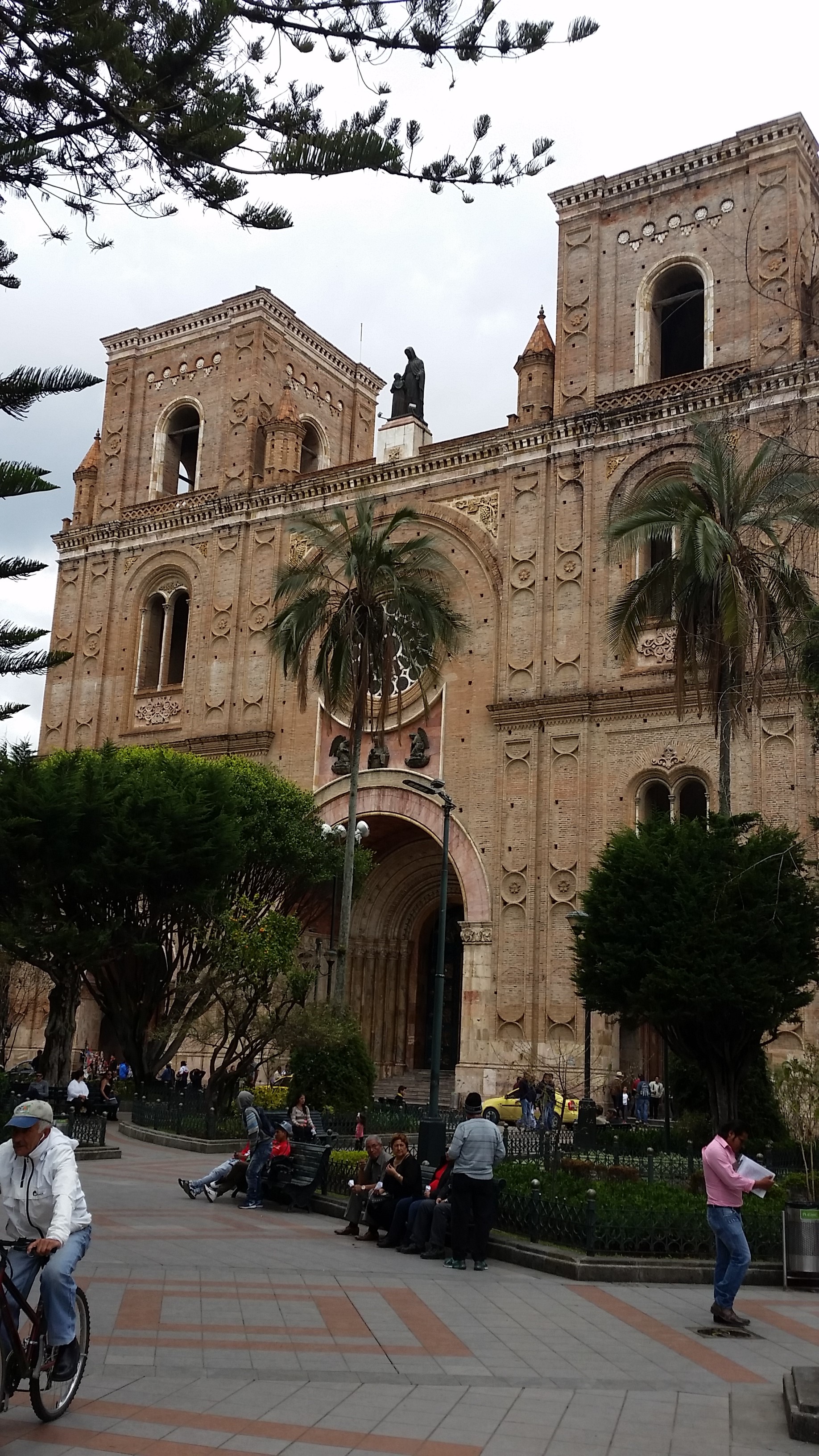
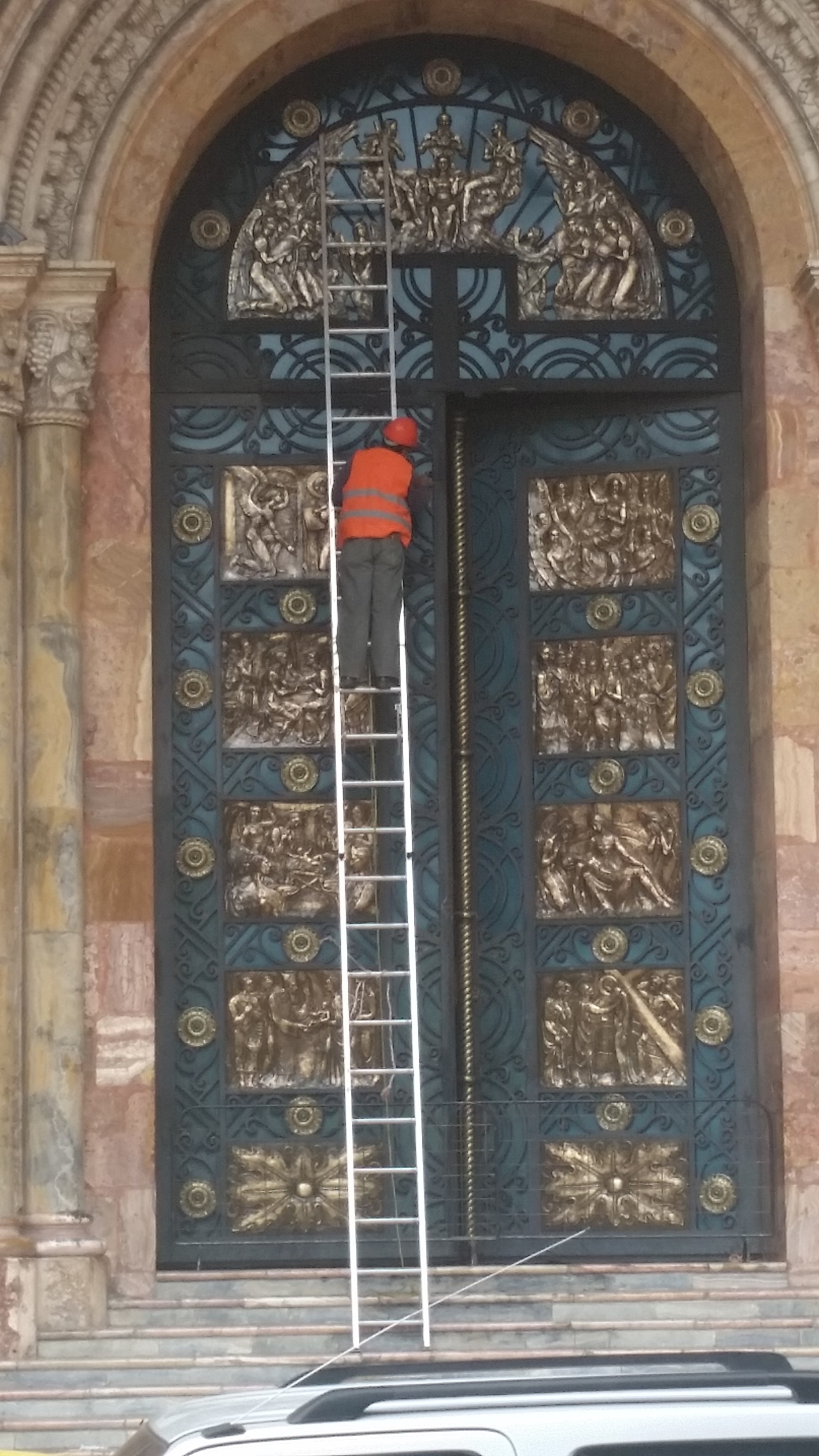
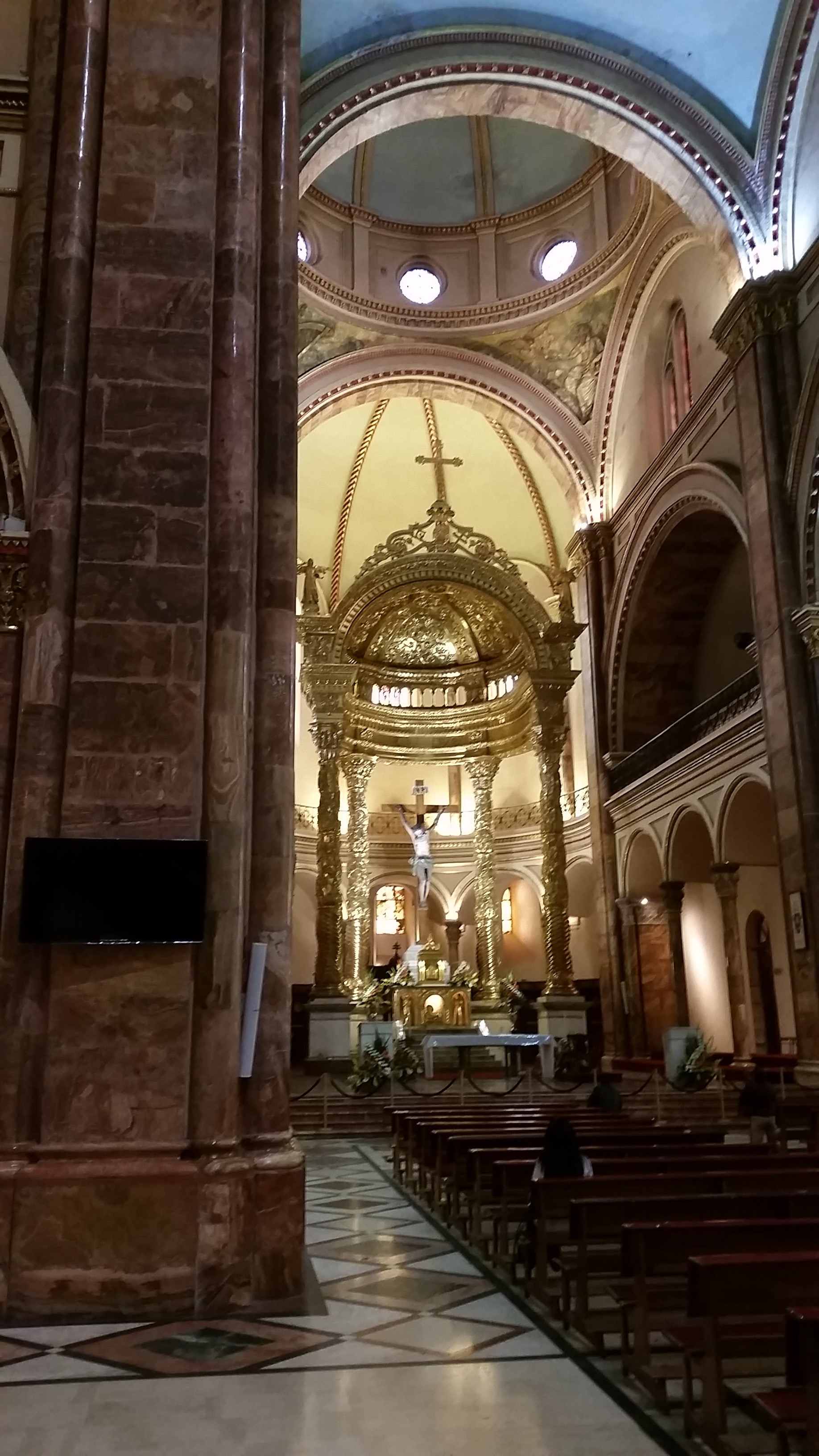
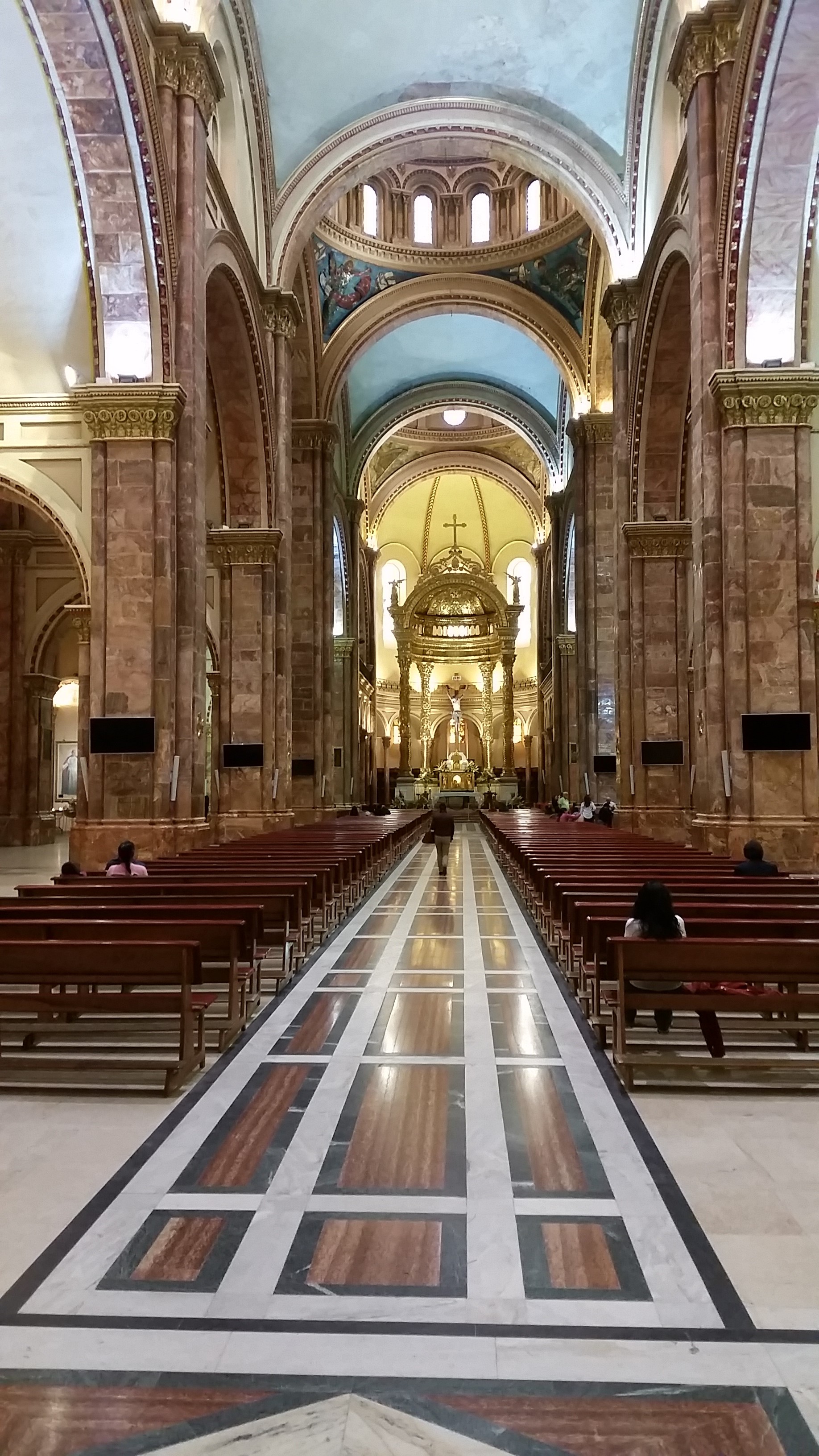
In the town’s main square there are two cathedrals, the “old” church which began construction in 1557 (the year Cuenca was founded) is no longer used for services and the “new” cathedral which began construction in 1885, services are still held in the new cathedral each day. The towers of the old cathedral were used by the Ecuadoran expedition team that was measuring the arcs/radius of the earth in 1736. These early measurements of the Earth’s curvature on the Equator enabled the first accurate determination of the size of the Earth.
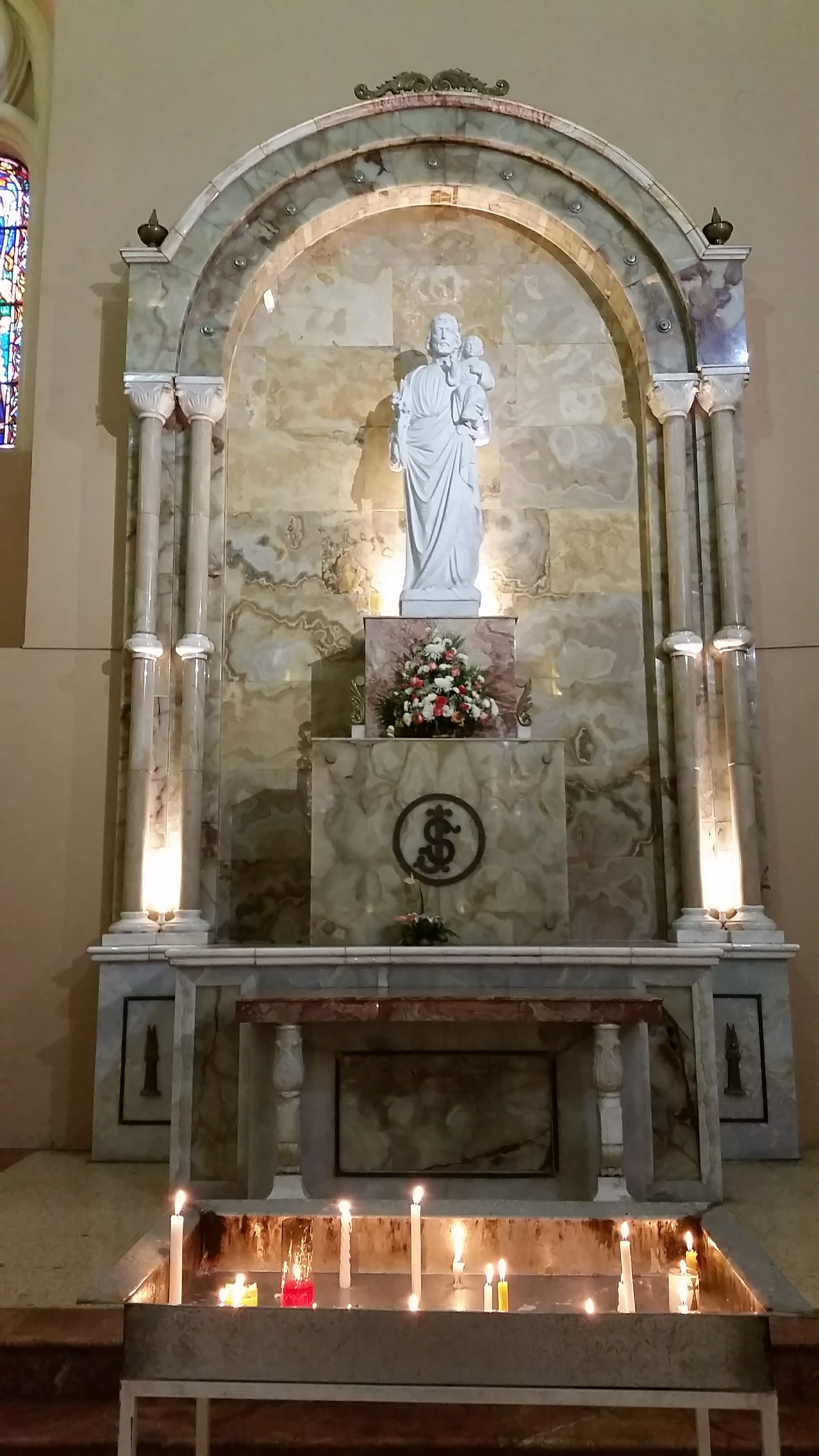
New Church Town Center.Door Repair at the New Church.Gold Alter.Beautiful.The Beauty Throughout.
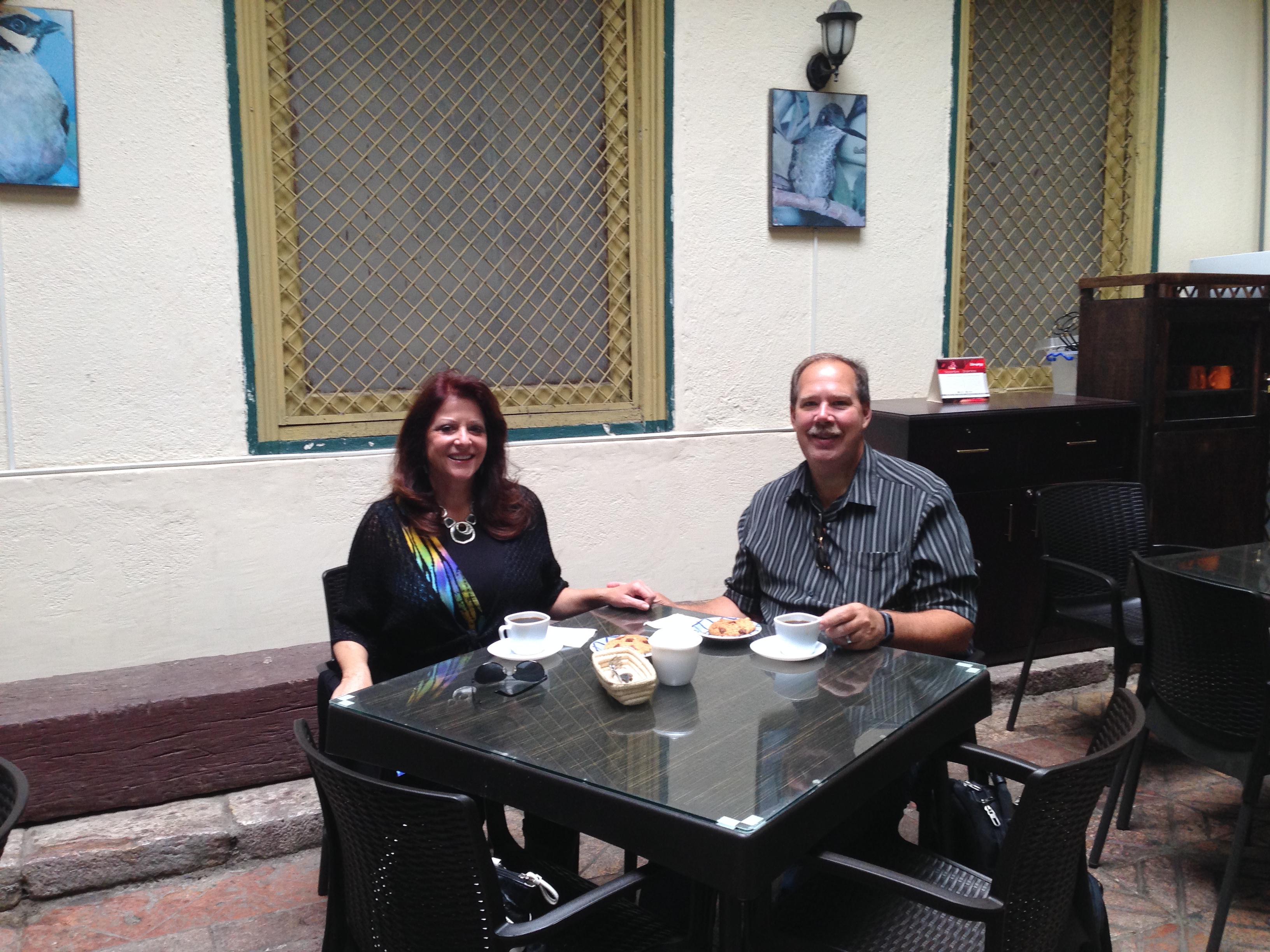
During our touring of the city cathedrals we discovered several coffee shops. The first one we entered smelled heavenly on the outside. The hostess was grinding beans so we had to go inside. We ordered coffee and Tod tasted his and immediately added sugar. (Something he never does.) I tasted mine and made an executive decision. “This coffee is terribly weak and not very fresh, lets go.” Tod looked at me like I was crazy so I reminded him, “Darling, life is too short to drink bad coffee!”
About 3 doors down we found a coffee shop where they made each cup fresh and asked if we wanted it strong! We loved it and it became our favorite coffee shop in Cuenca.
Favorite Coffee Shop in Cuenca.Life is Too Short to Drink Bad Coffee!
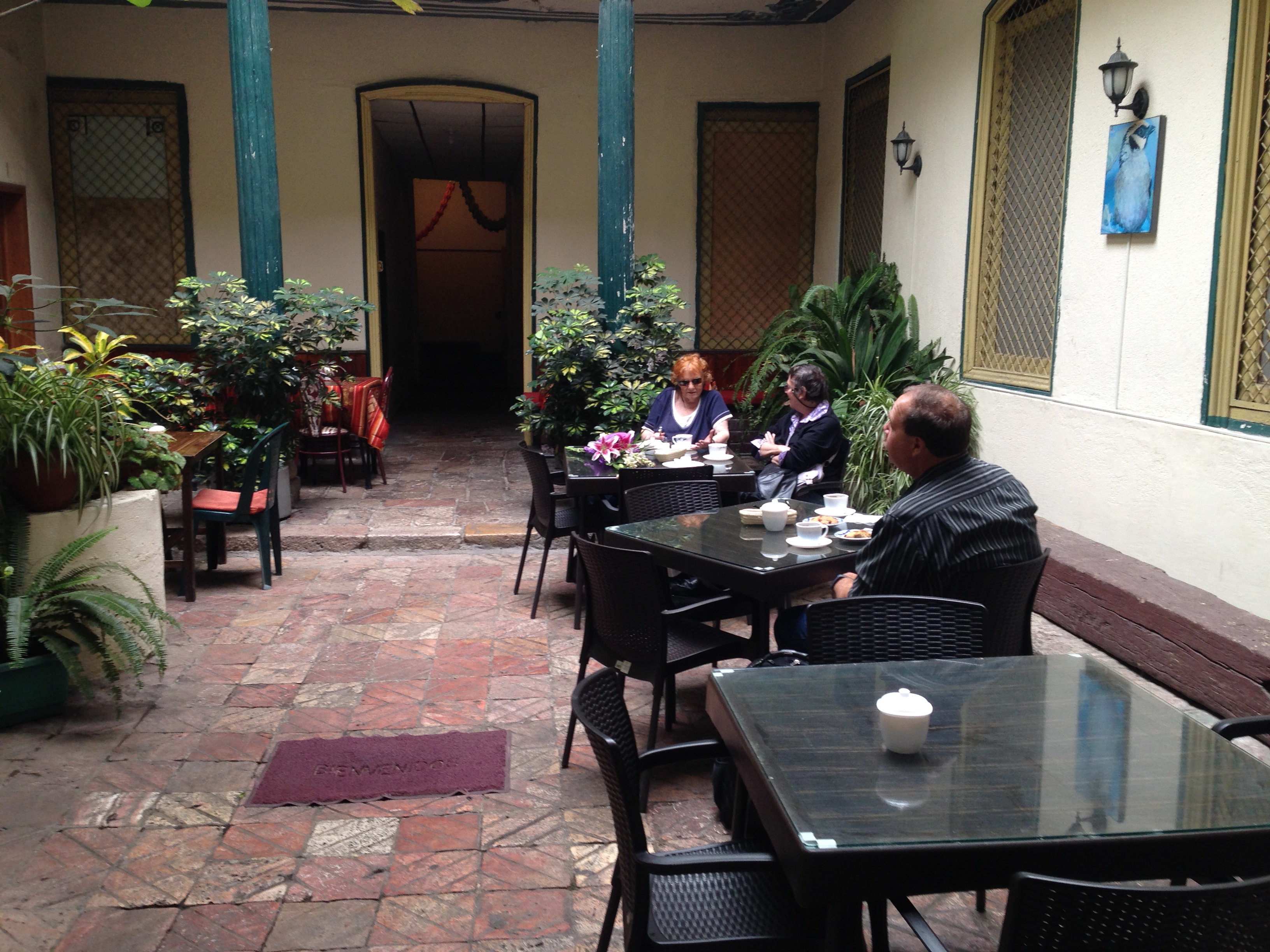
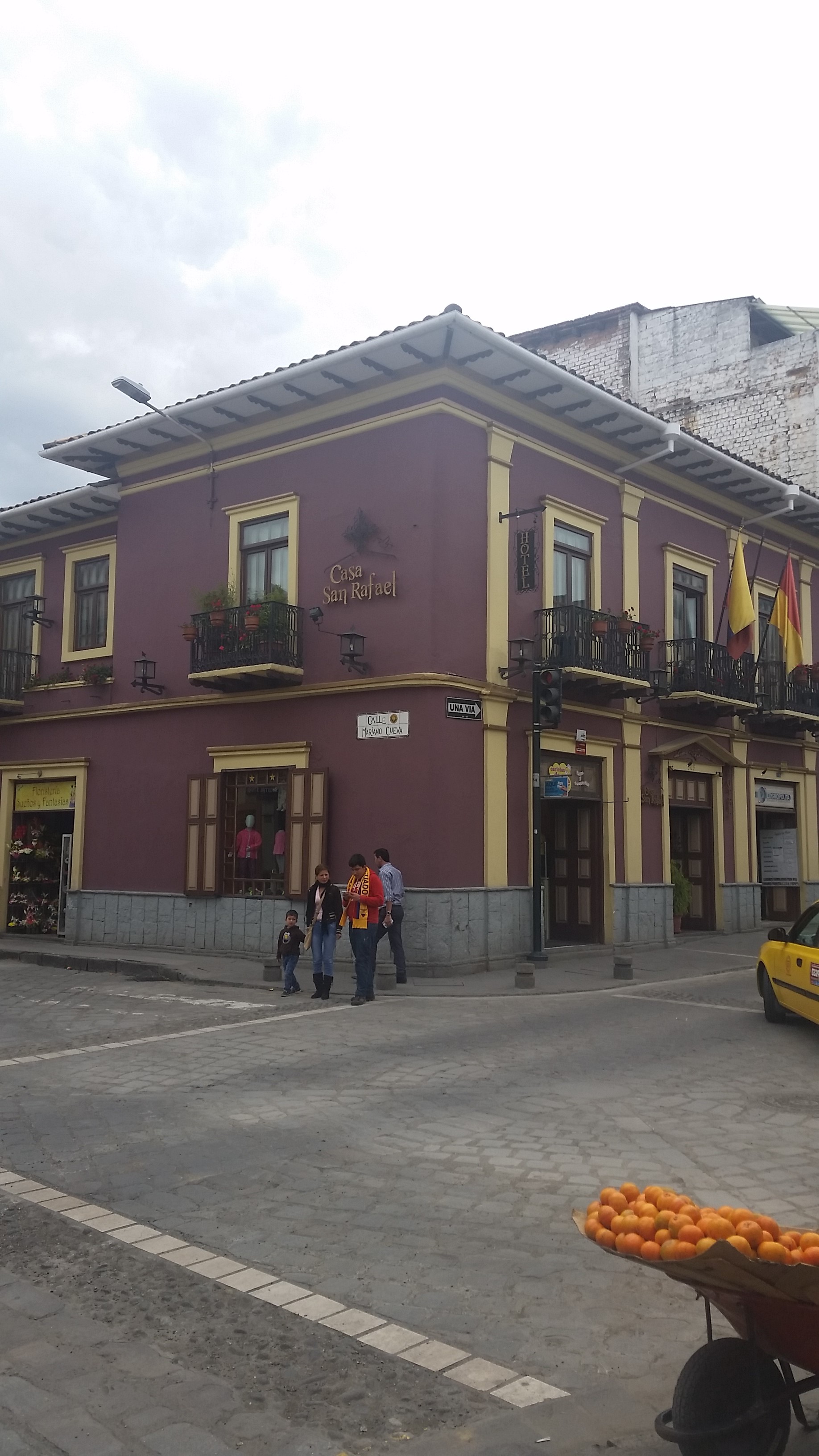
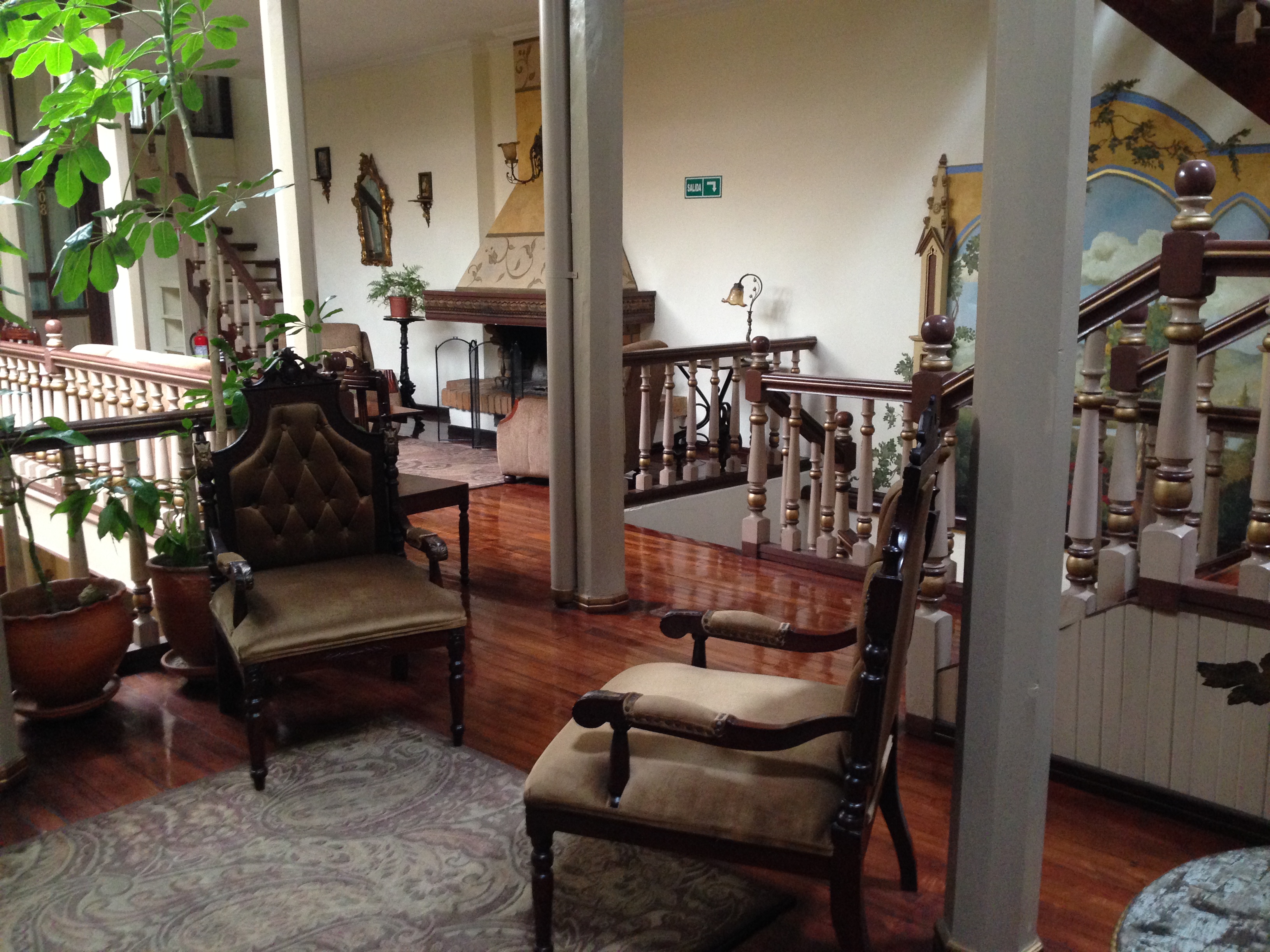
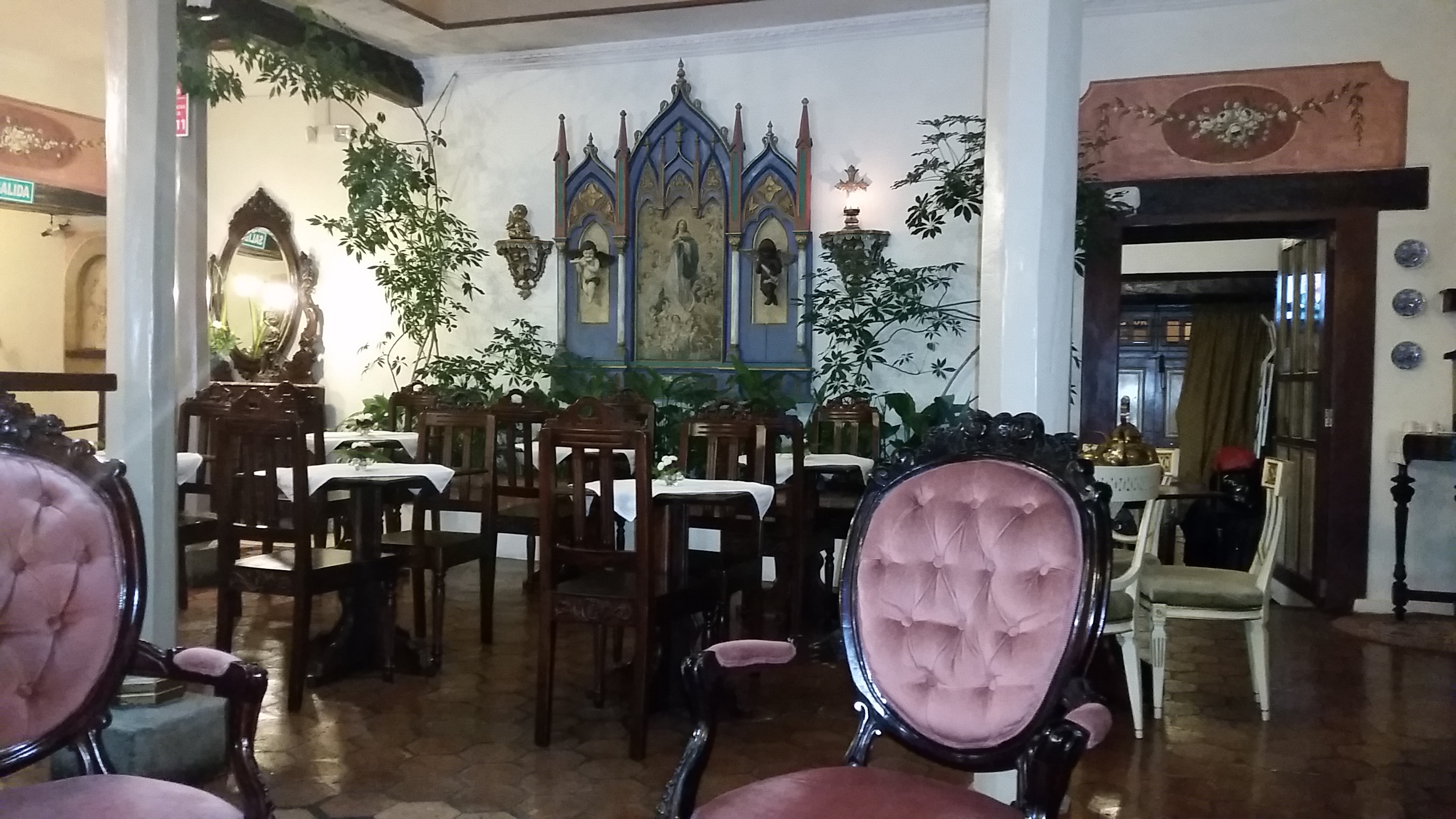
Our travels to Cuenca involved a 40 minute taxi ride to the Quito airport, a long wait at the airport and a 35 minute flight to Cuenca. The Cuenca airport is small, (3 gates) but very nice and extremely efficient. Our hotel, Casa San Rafael, had an absolutely charming colonial style ambiance. The hotel has 13 rooms, each with a private bath, this is something you have to remember to ask when booking a hotel as not all do. The hotel was once a private home and the hotel was the main living quarters (or the place where the important people lived as our hotel receptionist stated). The servant’s quarters was sectioned off, sold and now is a different business. I am not sure how old the building is, but, the hotel other than required additions such as the front desk, remains as it was in the original house.
Hotel Casa San Rafael.Upstairs Lobby Area.Hotel Breakfast Nook. Adorable Setting.
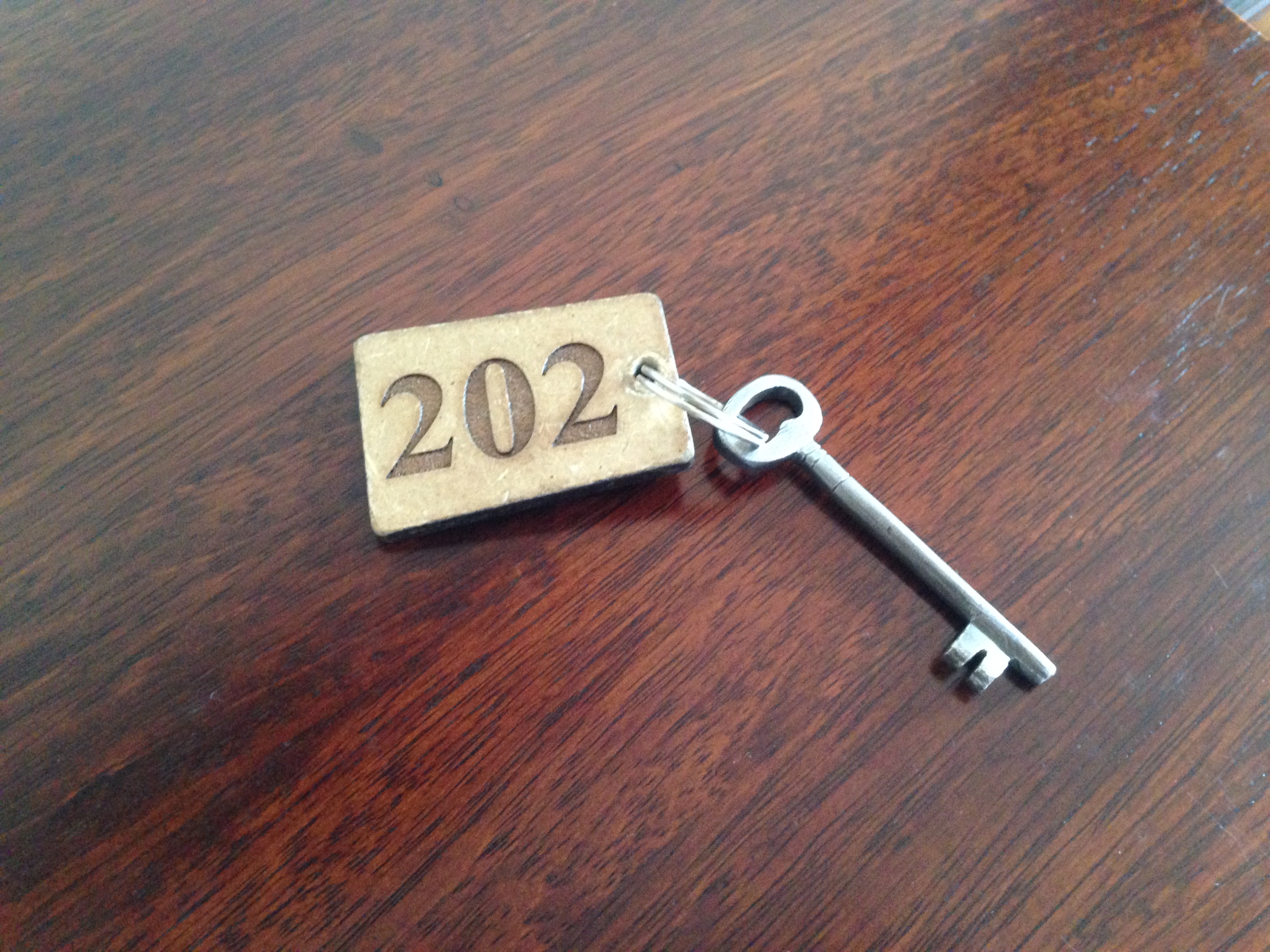
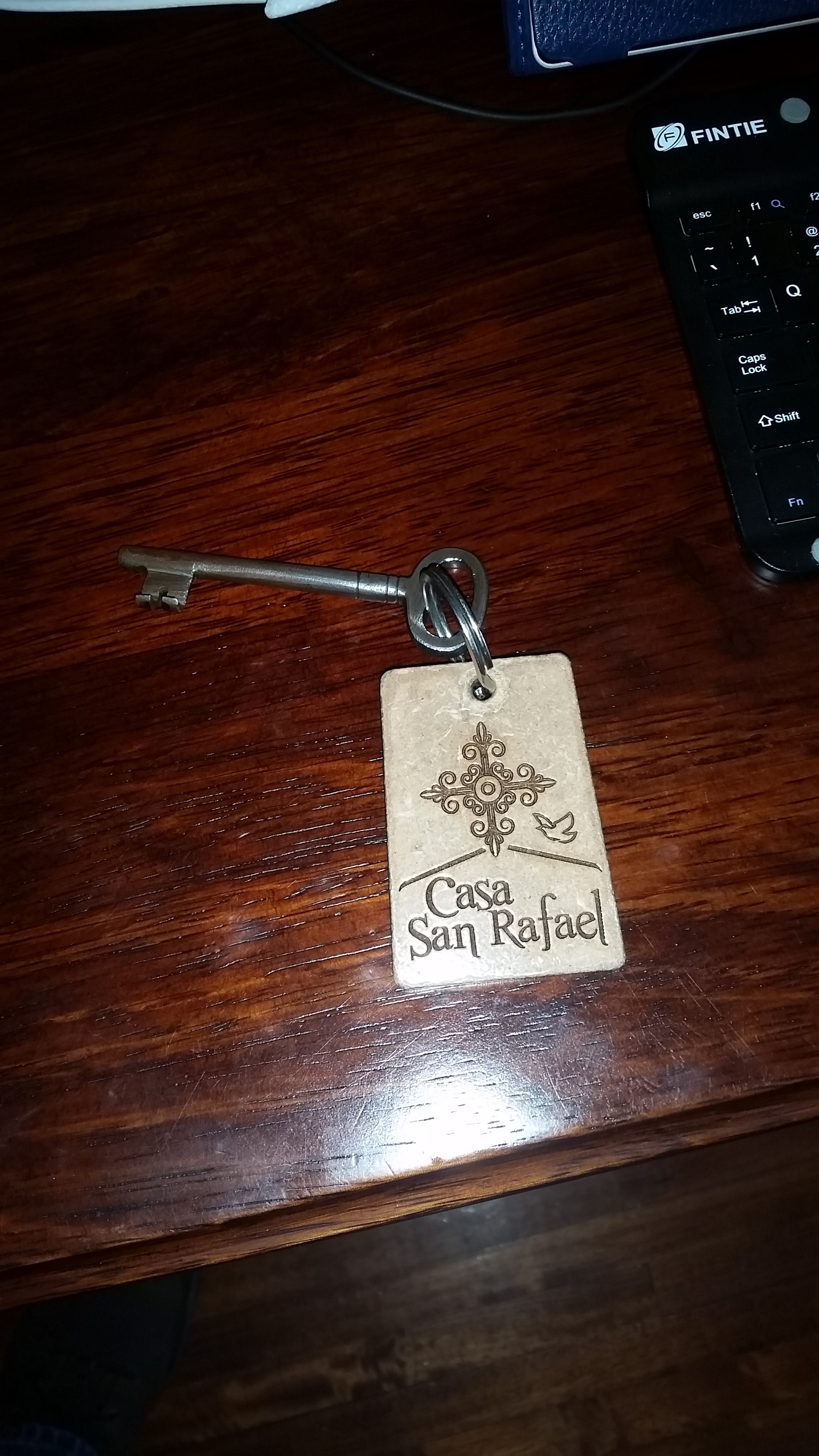
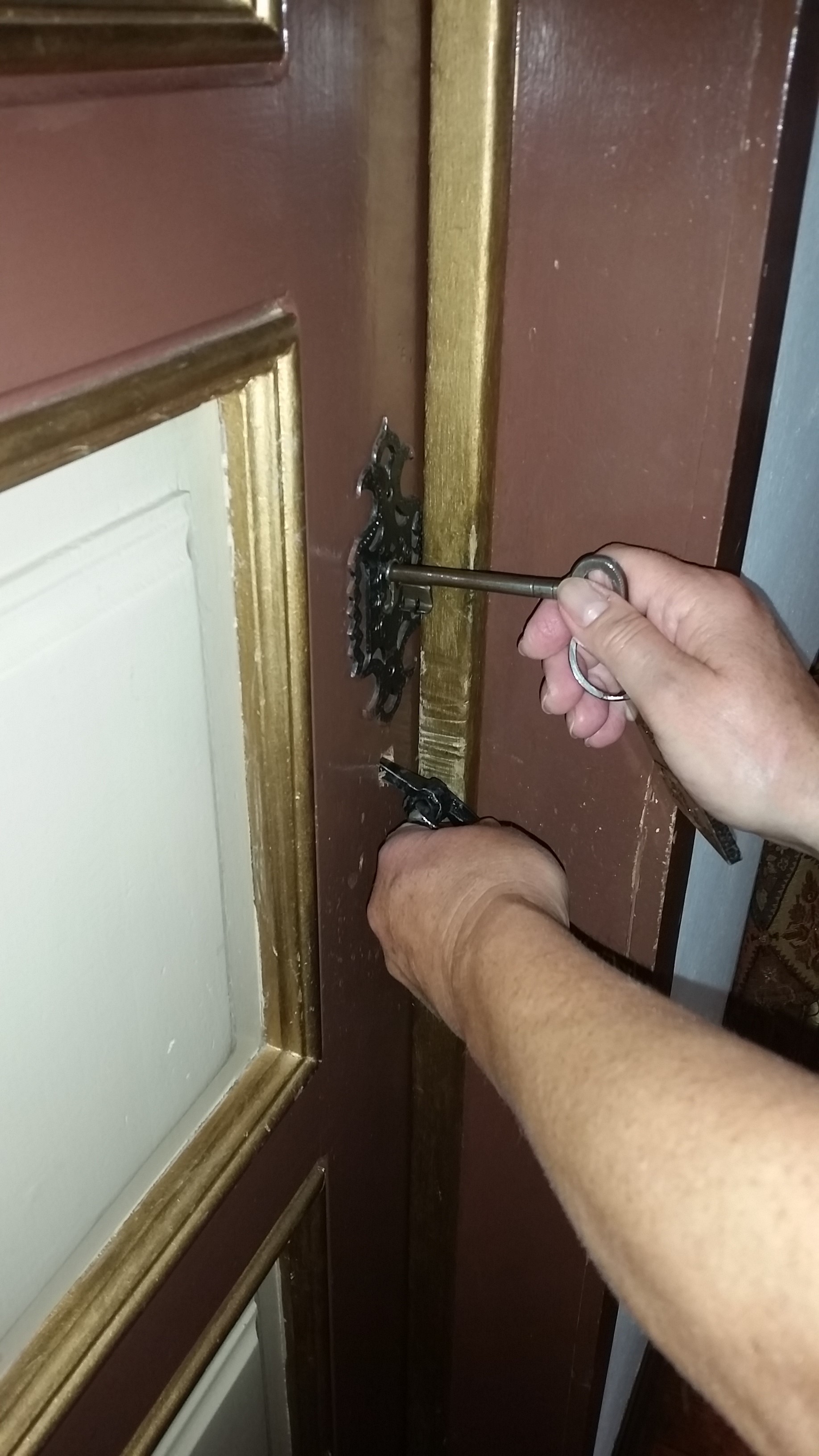
I love the way Ecuadorian hotels include the name of the hotel and the room number on your keys. I guess security is different in Ecuador. We would have liked to pocket the key for a souvenir just because it is so rare to see a skeleton key actually in use.
Guess What our Room Number Was?Room Number on One Side, Hotel Name on the Other.Skeleton Key – Not as Easy as it Looks.
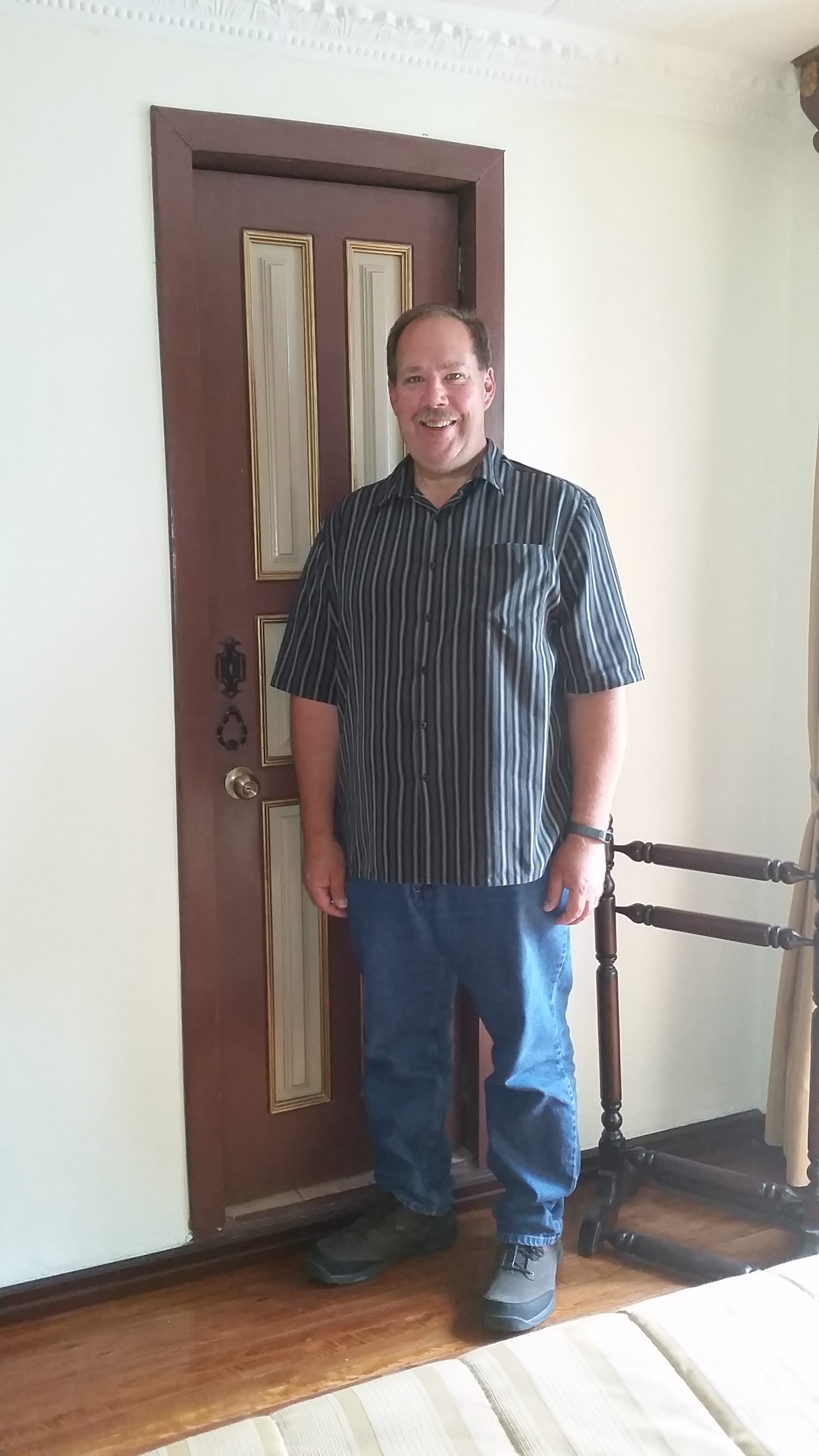
I am sure the bathrooms were added on, maybe they were closets in the original home. I tried to show the perspective of the narrow door but it was hard to capture in a photo. The inside was nice but small, anyone over 5’4” would need to put their legs inside the shower stall to be seated.
Tiny Little Doorway.It’s Smaller Than it Looks.
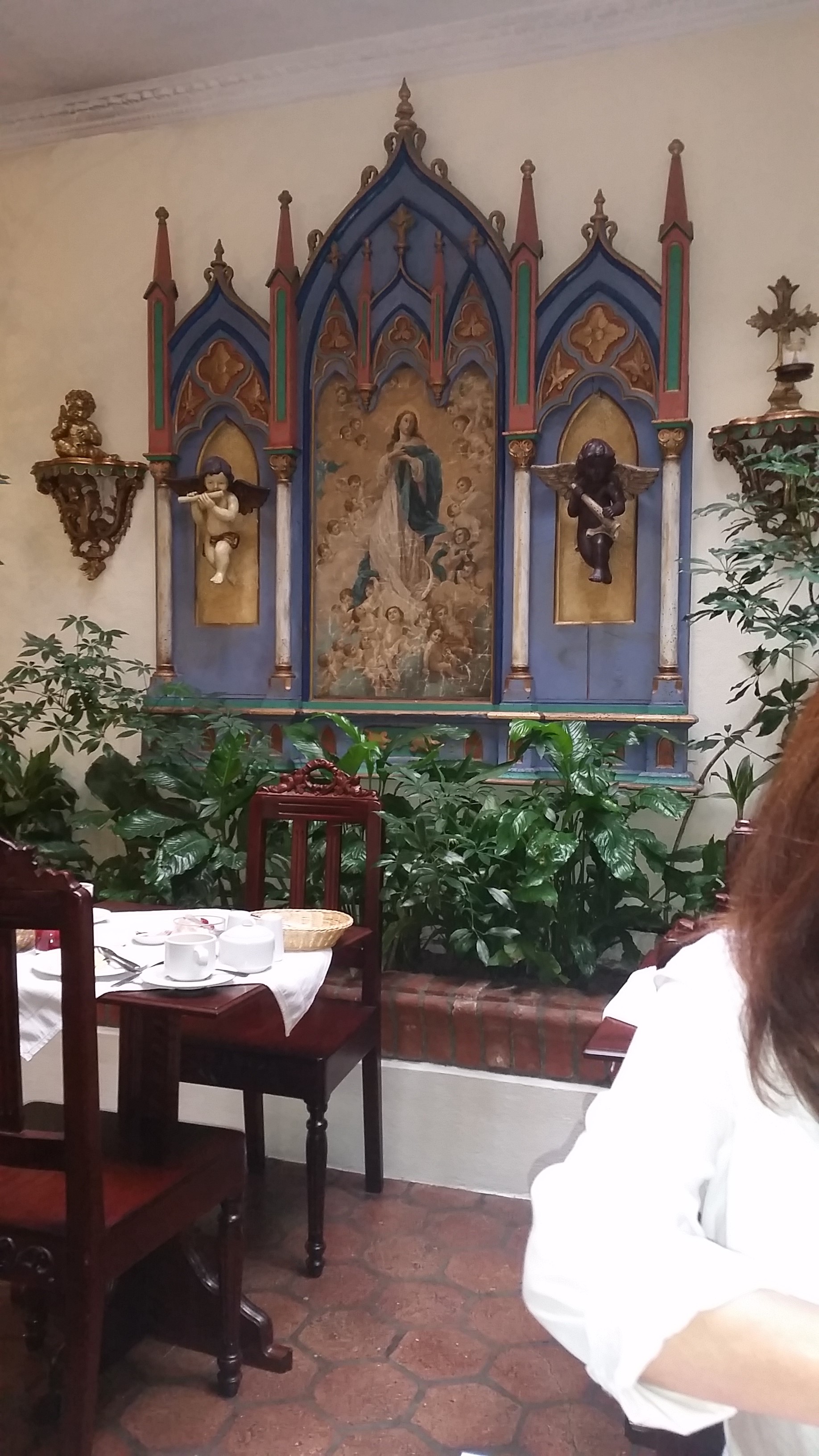
The little breakfast nook area was so cute. Every time we walked into the hotel Tod would say, “Shelly would just love this place.”
Breakfast China.All Part of the Charm.
At this point we are looking forward to exploring this city!
Today we spent doing laundry and repacking our bags. Tomorrow morning we fly to Cuenca. Cuenca is the capital of the Azuay Province. It is located in the highlands of south central Ecuador at about 2,500 meters (8202 feet) above sea level, with an urban population of approximately 400,000. The city center is listed as a UNESCO World Heritage Trust site due to its many historical buildings. We are scheduled to stay for 3 nights.
For our “down day” we only hiked 5 miles. We decided to skip the bus and walk to the Lizarran, my favorite Ecuadorian Spanish Tapas Restaurant. We have put on a few miles so far this trip. Tod has been keeping track of the steps and converting to miles to let me know how we are doing. All of our trekking is together so our miles are the same distance other than the day I was completely down with altitude sickness. So far we have a total of 60 walking miles (all uphill it seems) for an average of 5.5 miles a day! Not too bad considering one day was travel to get to Ecuador and one day I was in bed most of the day.
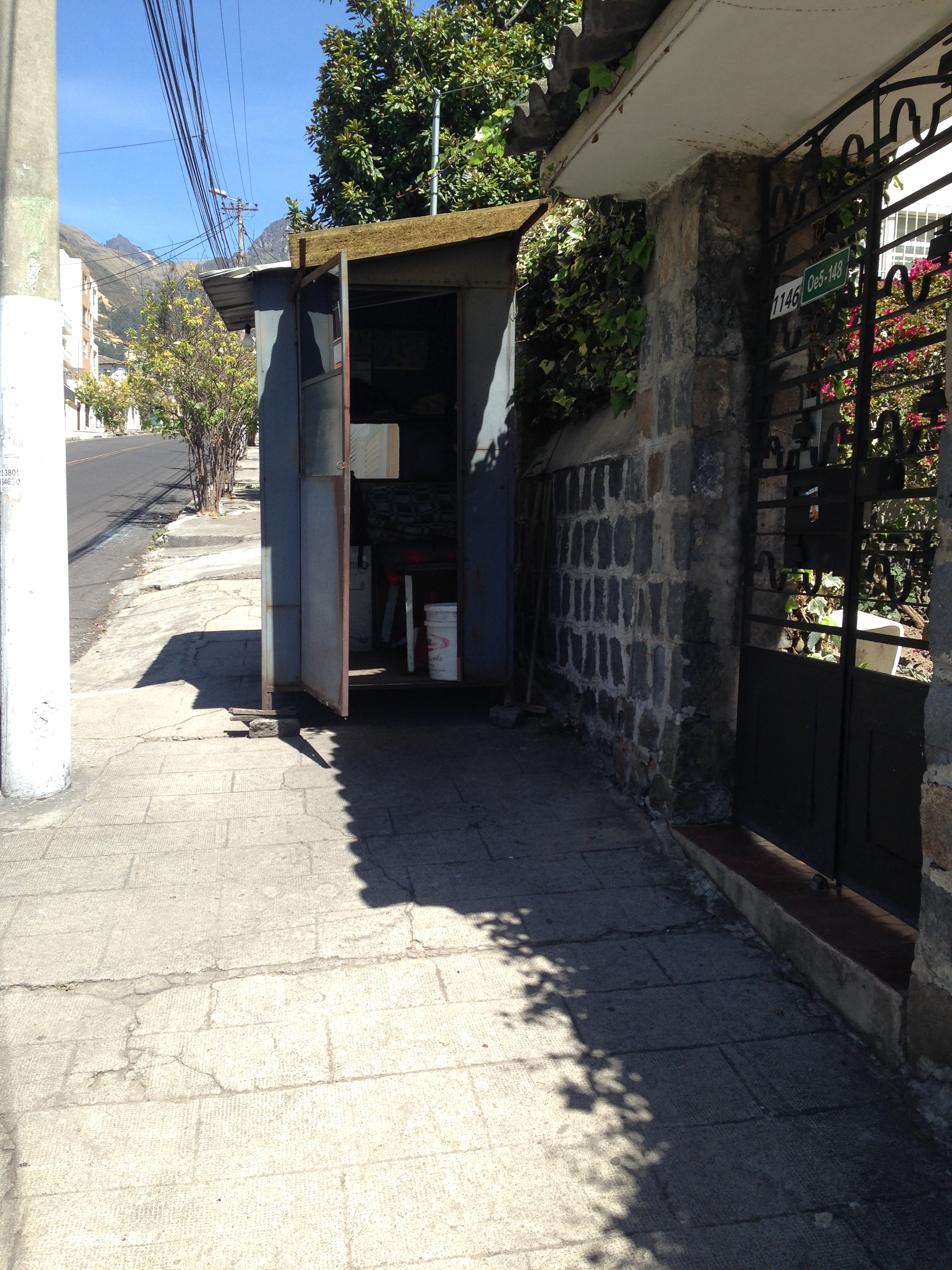
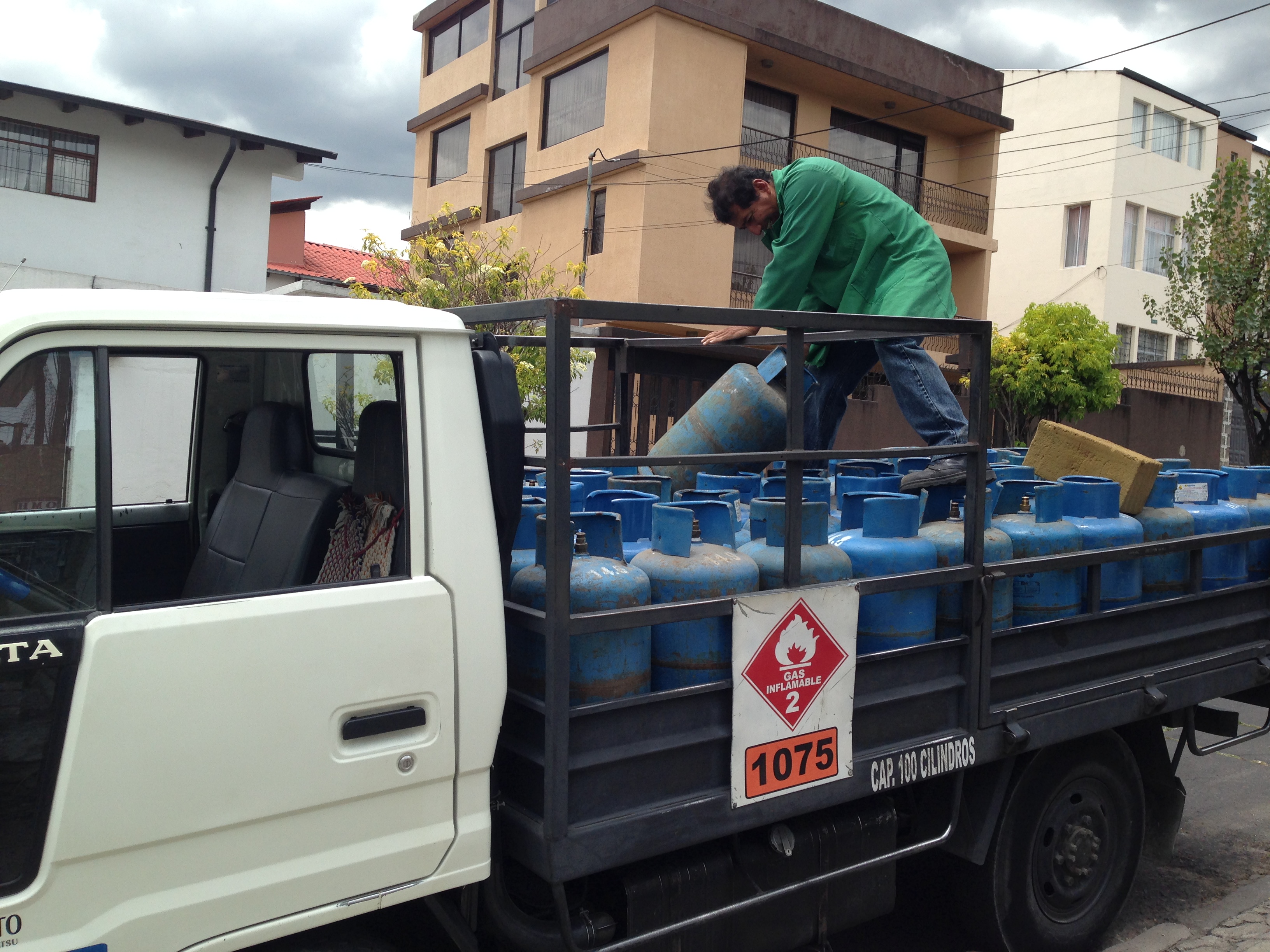
In Ecuador most homes have gas hot water and a gas stove. (I love our little gas stove, it reminds me of camping, you even have to light the burners each time you use it). The Gas man drives around usually in the morning and honks the horn. Then circles the block so if you want or need gas you go outside and open your gate and then he stops. We asked Sandra “What if you are not home or you just miss him?” She misunderstood me and said “Oh I have extra tanks I don’t run out”. We finally made ourselves clear that we were not asking about her specifically but just in general what if people work during the day. She said that you just arrange with the security guard and he will take care of it for you. We met the guard the first night here, he came up to the car and got Sandra’s keys and unlocked the gate so we could just drive in. Of course Tod and I had to get out anyway because the space is so small inside the parking area but it was sort of sweet and made us feel safe knowing he was there guarding our house. The photos below are of the outside of our flat, the security guard shack (they are all over the residential areas), and the gas man.
The Gate/Entrance.The Guard Shack – He is Inside.The Gasman Getting us a New Tank.Notice the Foam Pad on His Shoulder and the Wood Block by the Tire?
While the Gasman was connecting our new tank, a broom man walked by. I am not sure if he was walking the neighborhood selling brooms or bringing them to one of the mini markets to sell but whatever the case it was an unusual sight.
Otavalo is just an awesome little town surrounded by indigenous villages that we grew to love in the short time we were there. The small town atmosphere combined with the native culture that many of the inhabitants still embrace is captivating and left us charmed and fascinated with Otavalo. I strongly recommend this trip to anyone visiting Ecuador. It will be well worth the effort and travels.
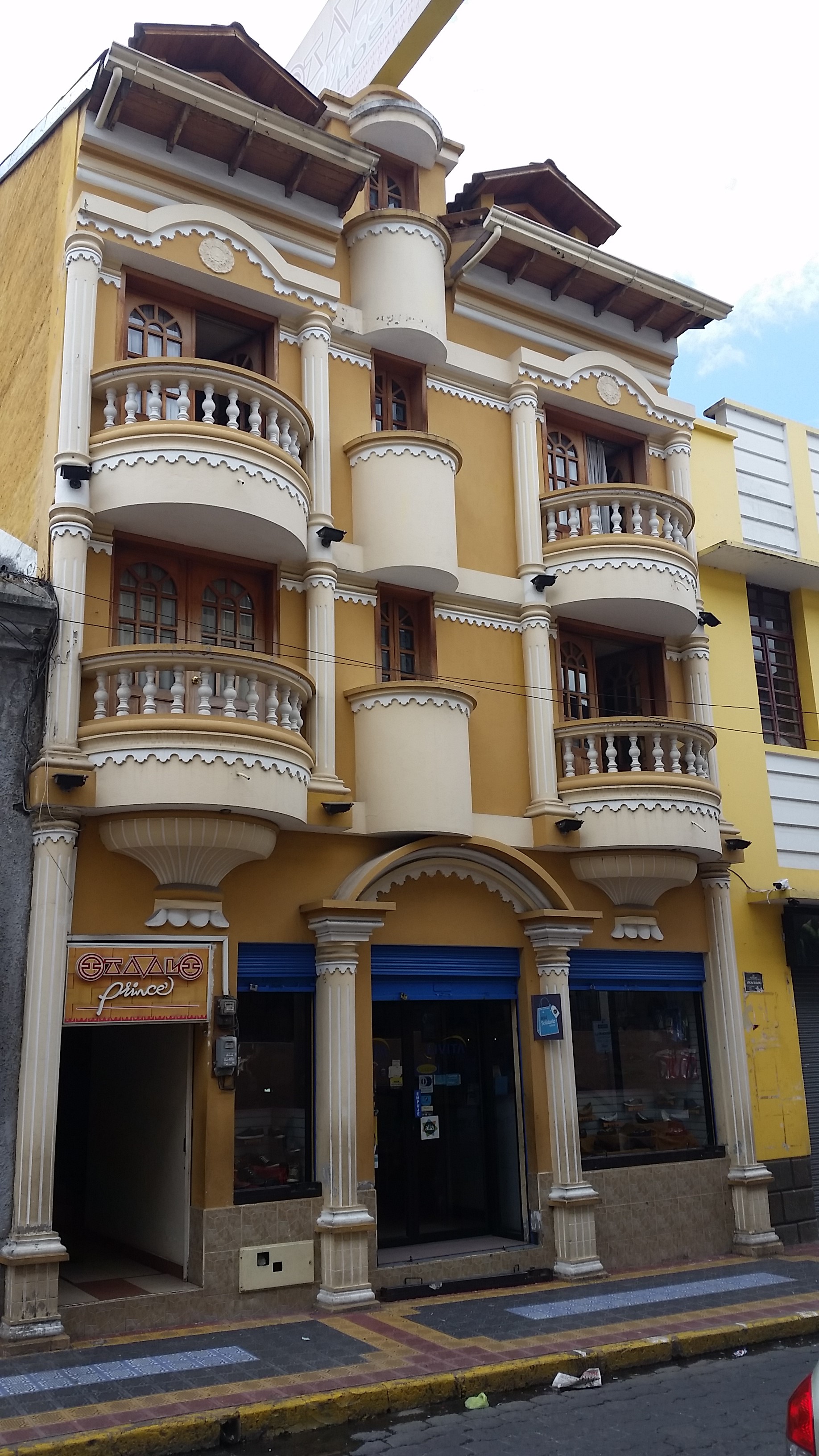
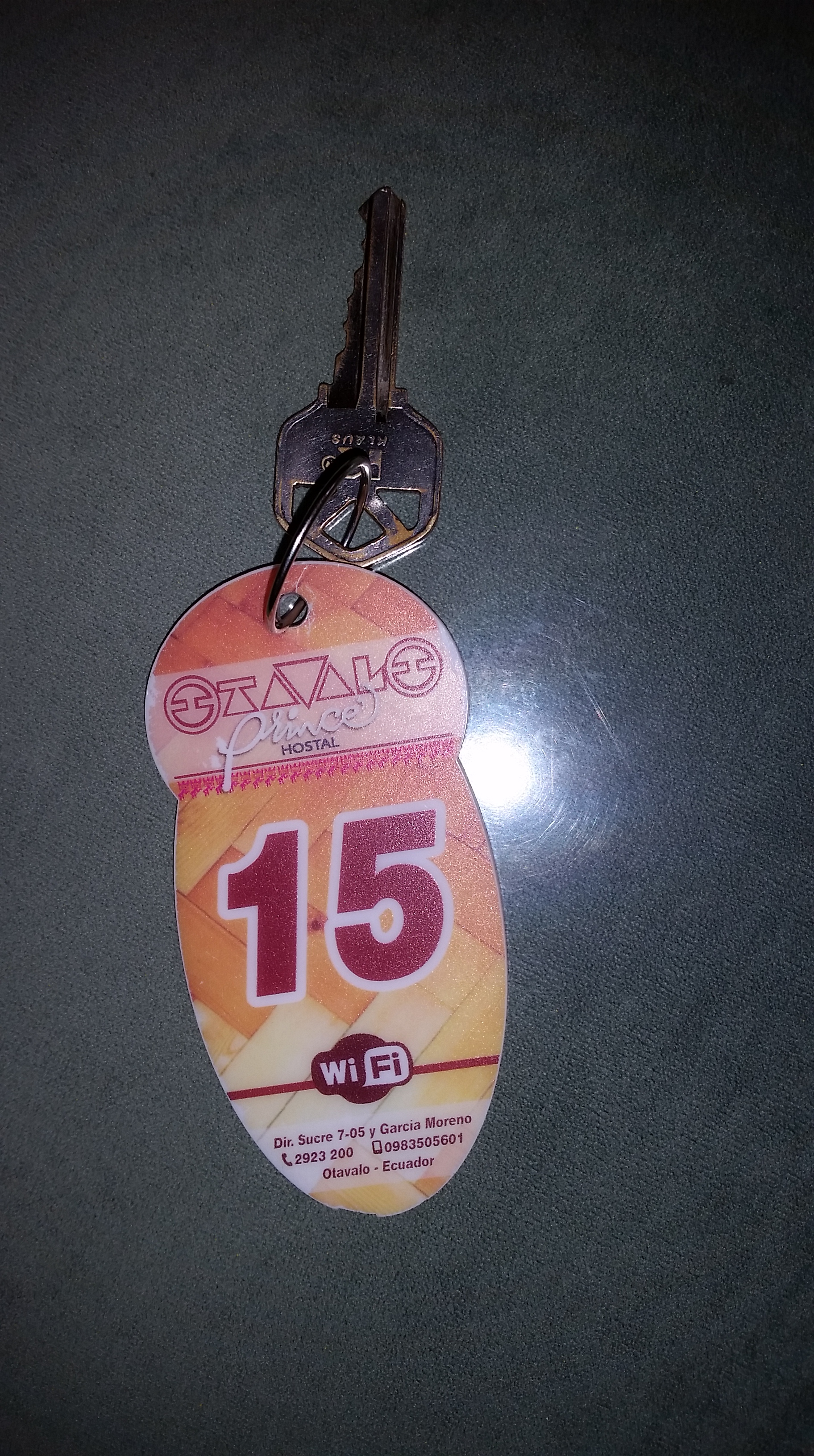
Hostal Otavalo Prince was a quaint little hotel in the middle of town. If you need someplace quiet this may not be for you however, the streets do quiet down around 10:00 PM each night. It is extremely inexpensive ($35 a night which includes breakfast – a 10% charge will be added if you pay by credit card). Like everyplace else we stayed there is no heat and no air conditioning. If it is too cool during the day open the window and the sun and warm air will warm the room / house. If it is too warm at night, open the window and let the cool fresh air in.
Outside View of Hostal Otavalo Prince.When is the Last Time You Used a Key Like This? Check out the security, room number printed on the key-ring.Looking out the Window. Interesting street lights.
Travel back to Quito was uneventful. We found the bus station in Otavalo and rode the 1 hour and 45 minutes back to Quito – from the bus station took a taxi home.
Likely no more posts until next weekend so until then take care!
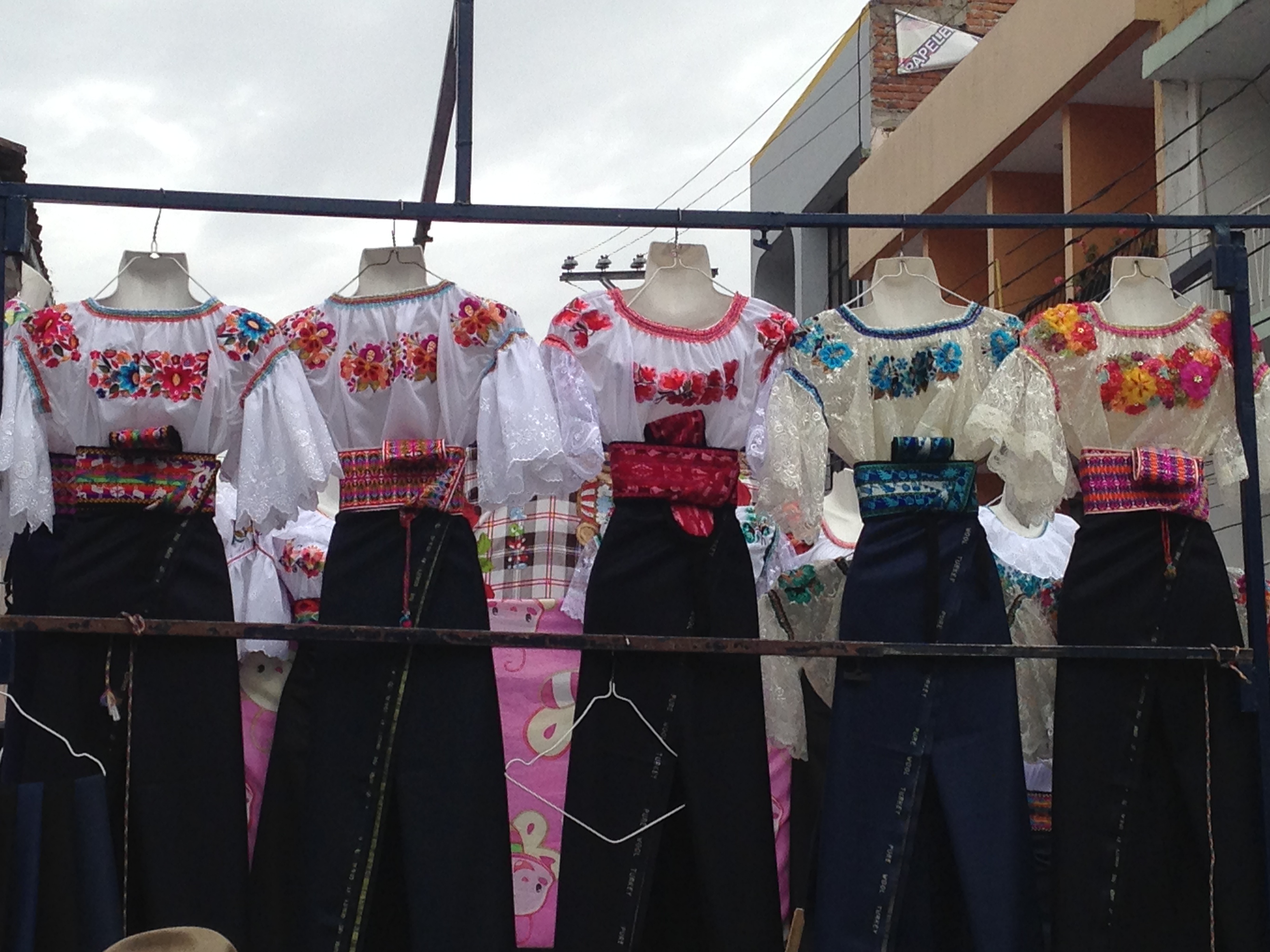
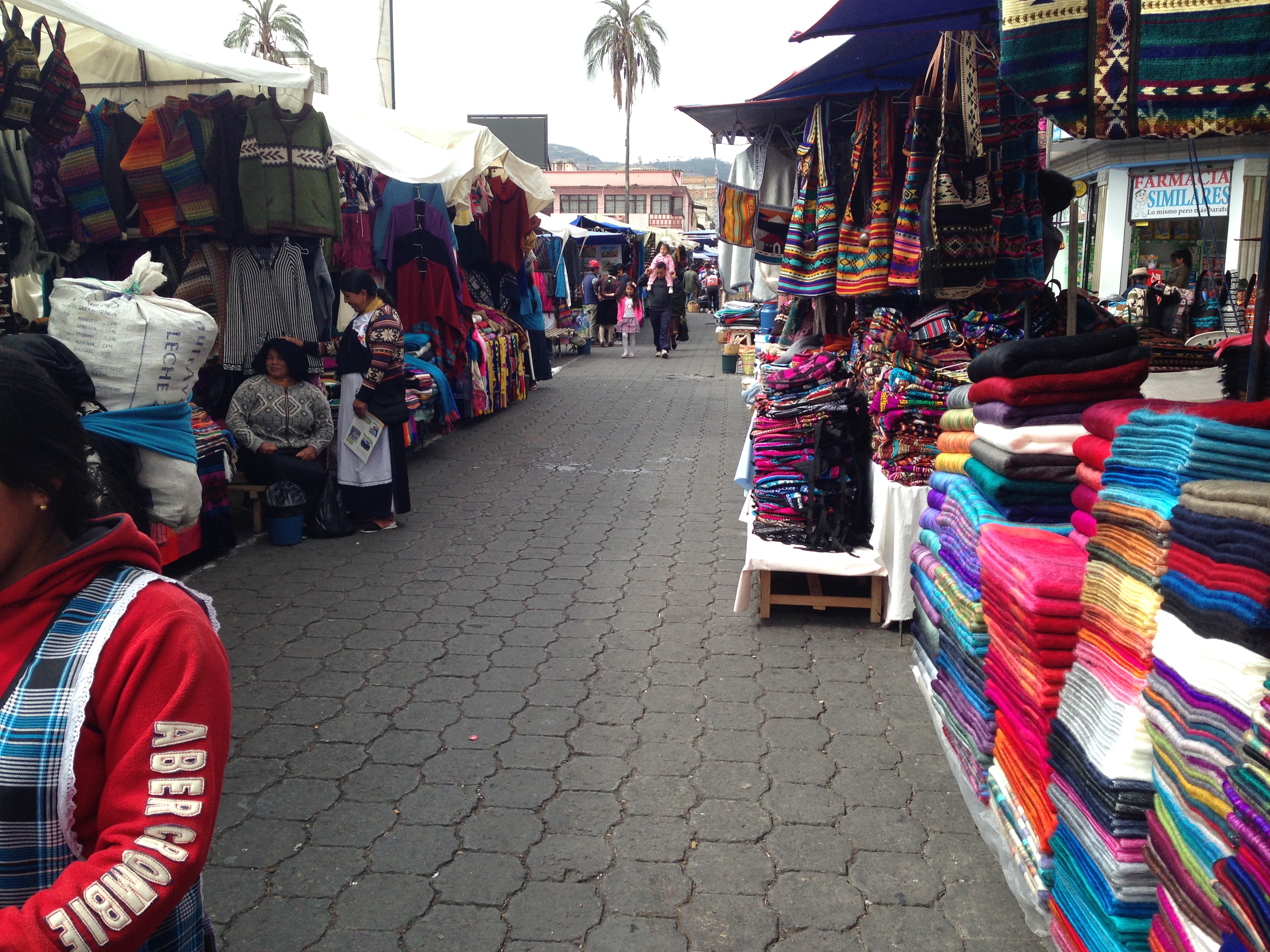
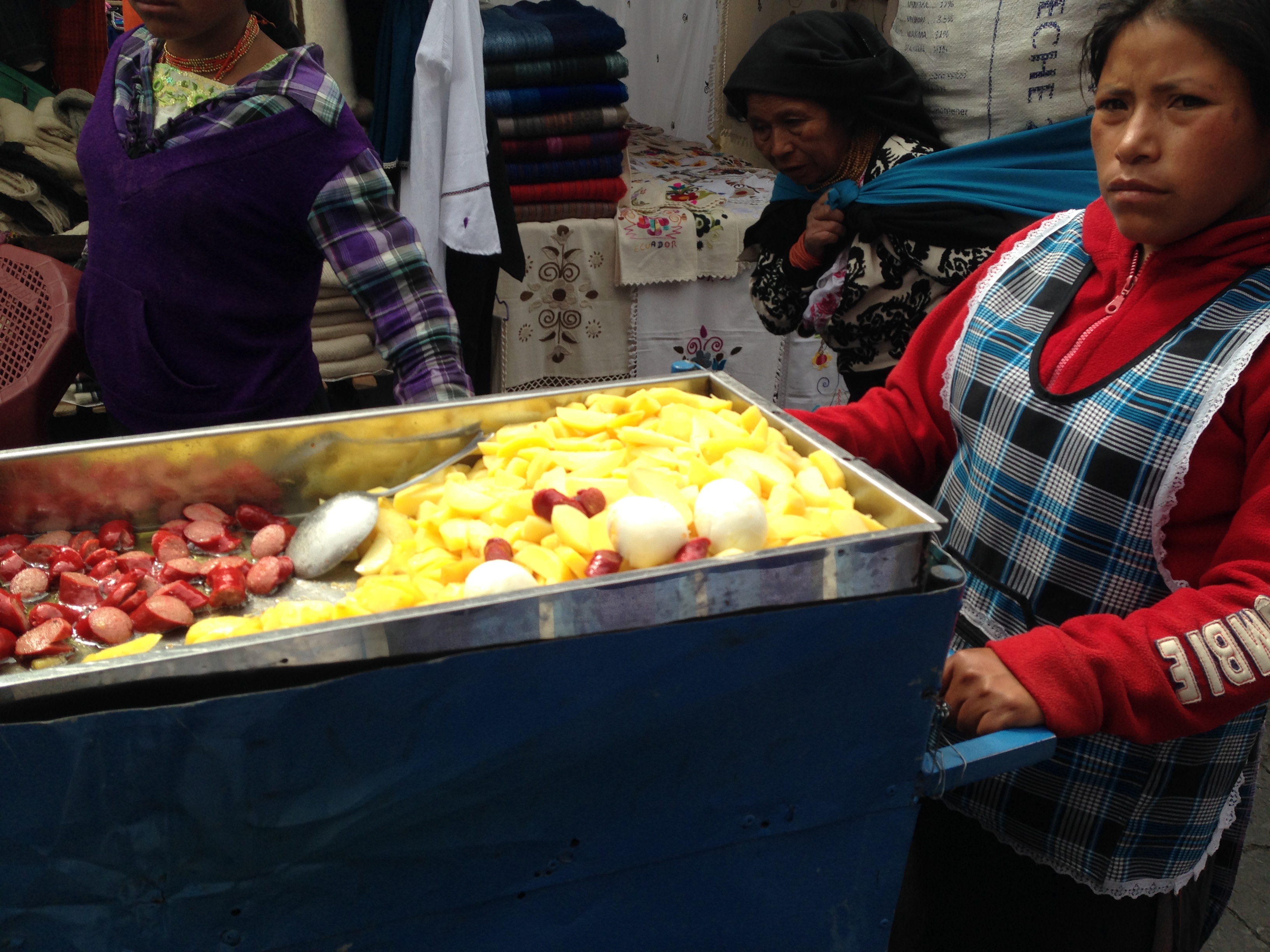
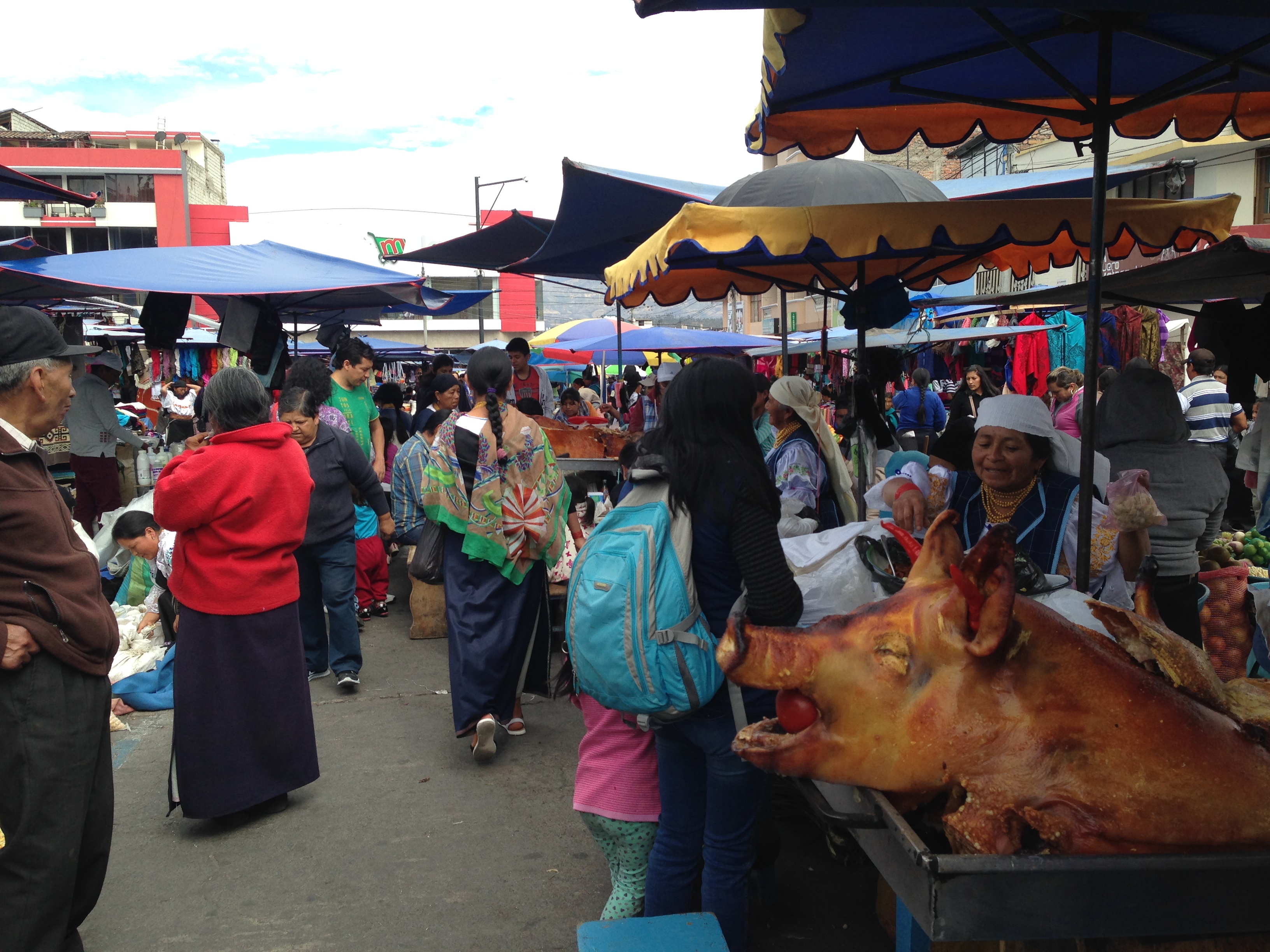
The Otavalo Market is open seven days a week with many local vendors participating, however, Saturday is the main market of the week, and is huge covering so many streets we could not even see everything in one Saturday. The hand made goods are simply amazing and most are of extreme quality. I am not sure why more Ecuadorian products are not sold in other parts of the world. Locals specialize in the production of hand-woven woolen goods, wooden handicrafts, paintings and many hand-made products. Anyone that has visited Otavalo will agree that this market is a must-see destination when in Ecuador. Where Quito seems to be more of a Spanish culture with a hint of Indian, picturesque Otavalo is more of an Indian culture with a hint of Spanish.
Grains and Spices.Local Dress.Market Day.Tod Searching for the Perfect Gift.Wheeling a Hot Coal Cart Through the Crowd.
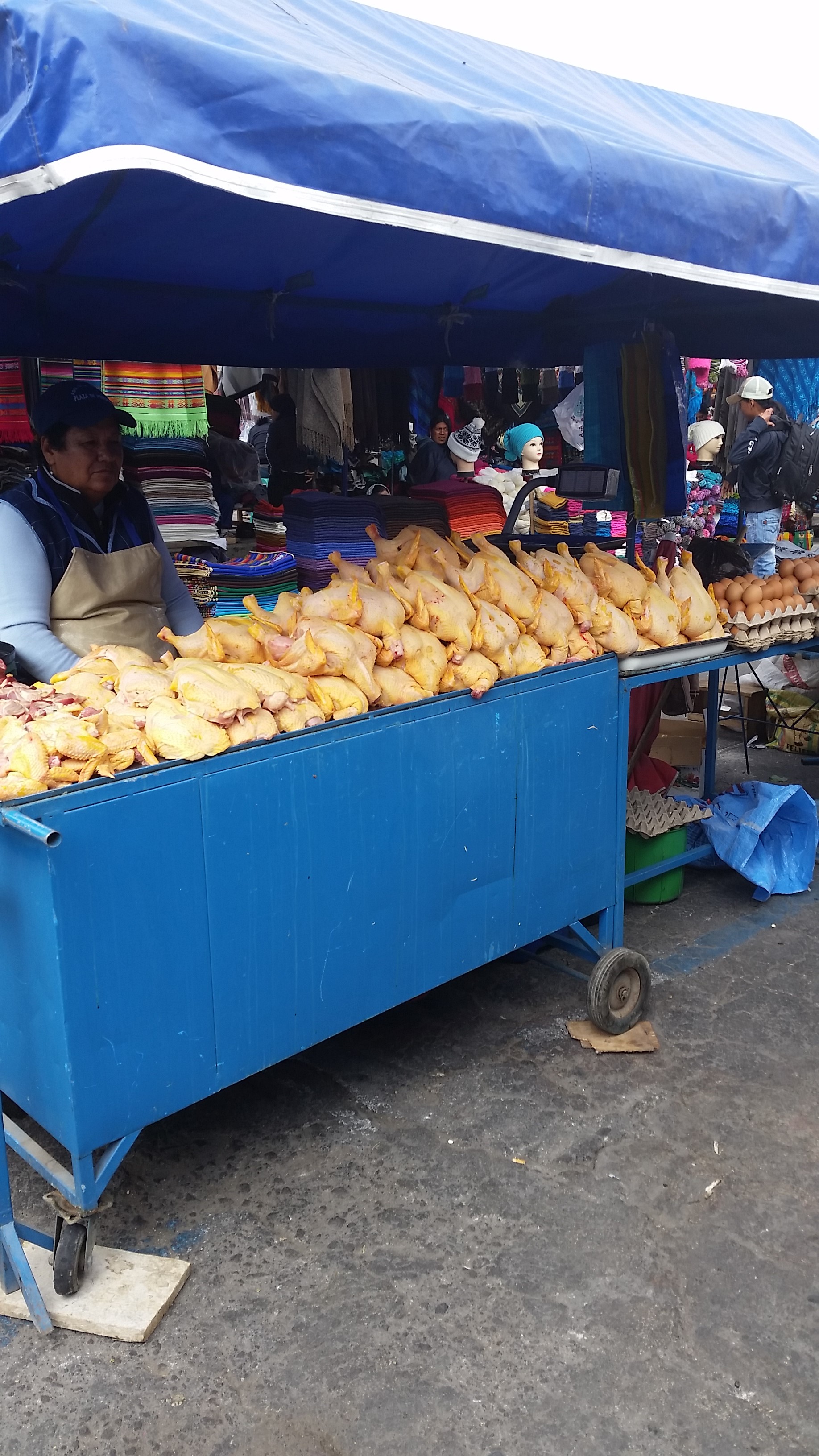
The hog tables are interesting – a full cooked pig is the center of the table and people just sit at the table, order lunch and are served a plate right there. God forgive me but the sight of it just about gaged me although I am not sure which is more disgusting to me the row of raw chickens or the stuffed pig.
Dinner at the Market.Lunch Anyone?These Chickens Sit Out All Day.
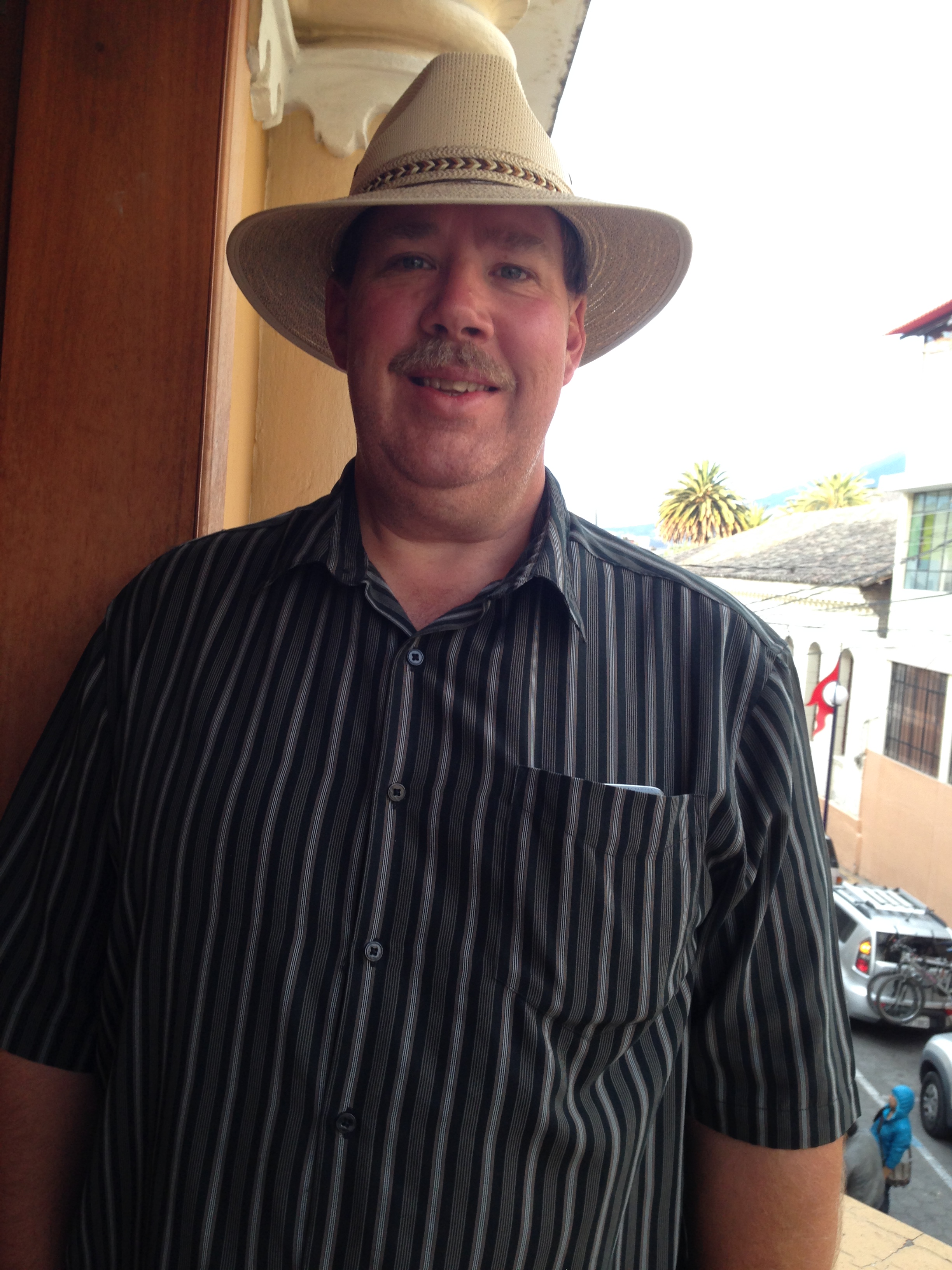
We found some amazing items to purchase from Maluantho’s hand crafted silver collection to Diego Buitrón’s original paintings. Tod even found a woven hat and I scored with an absolutely beautiful cloak. When visiting this market, make sure to have cash and in smaller bills – most vendors cannot accept credit nor can they make change for larger bills. You can haggle prices which we did with everything, but be gentle, as sales from this one day a week is how many of these locals survive.
Tod Found the Perfect Hat at the Market.
Enough of the market for one day and on to touring the crater-lake.
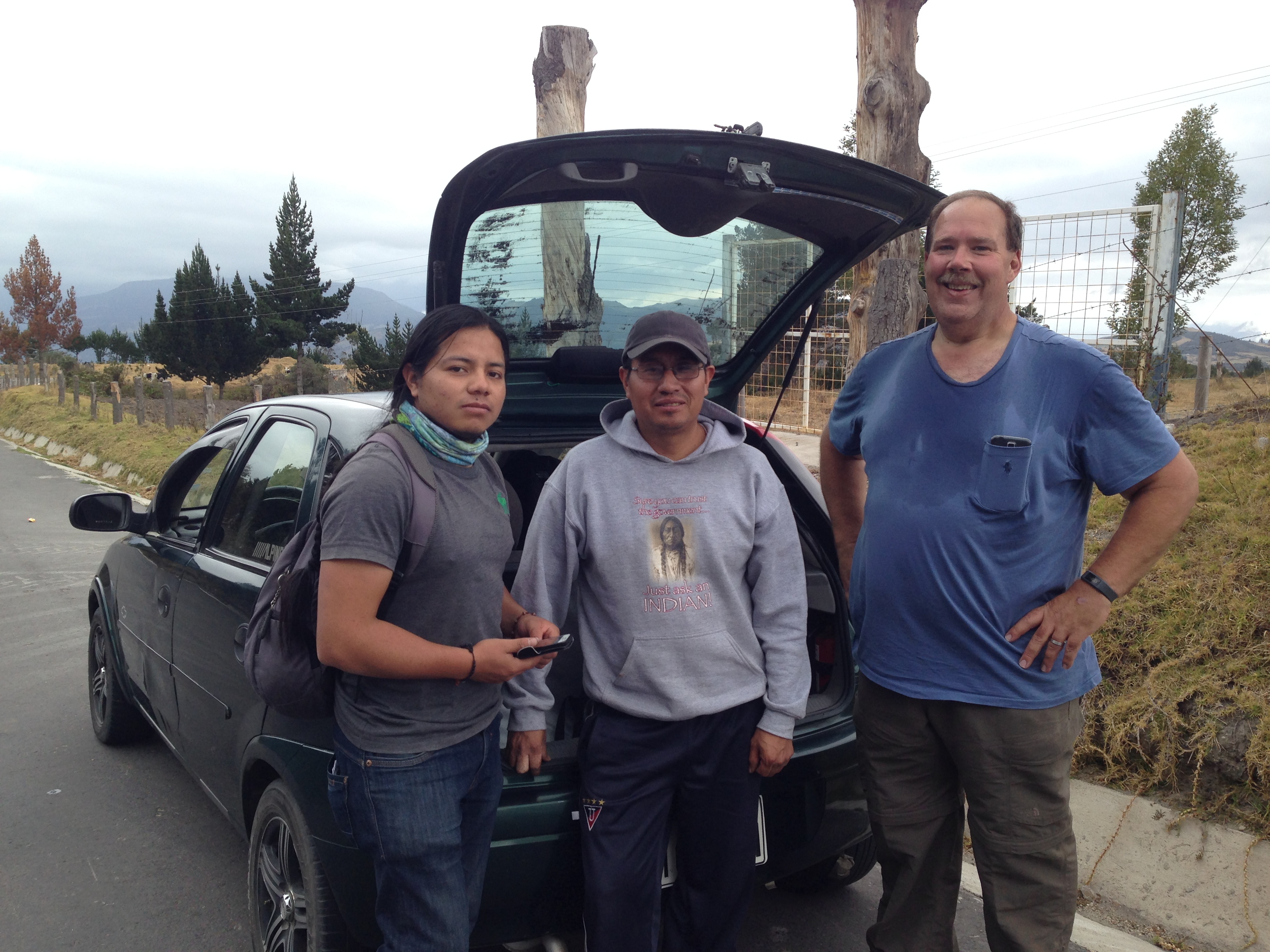
Our tour guide was Diego and our driver was Edwin both were super nice and very knowledgeable about the history of Cuicocha and the indigenous plant and wild life of the area. Diego spoke his native language Otavaleño, Spanish and English. Edwin spoke Otavaleño and Spanish.
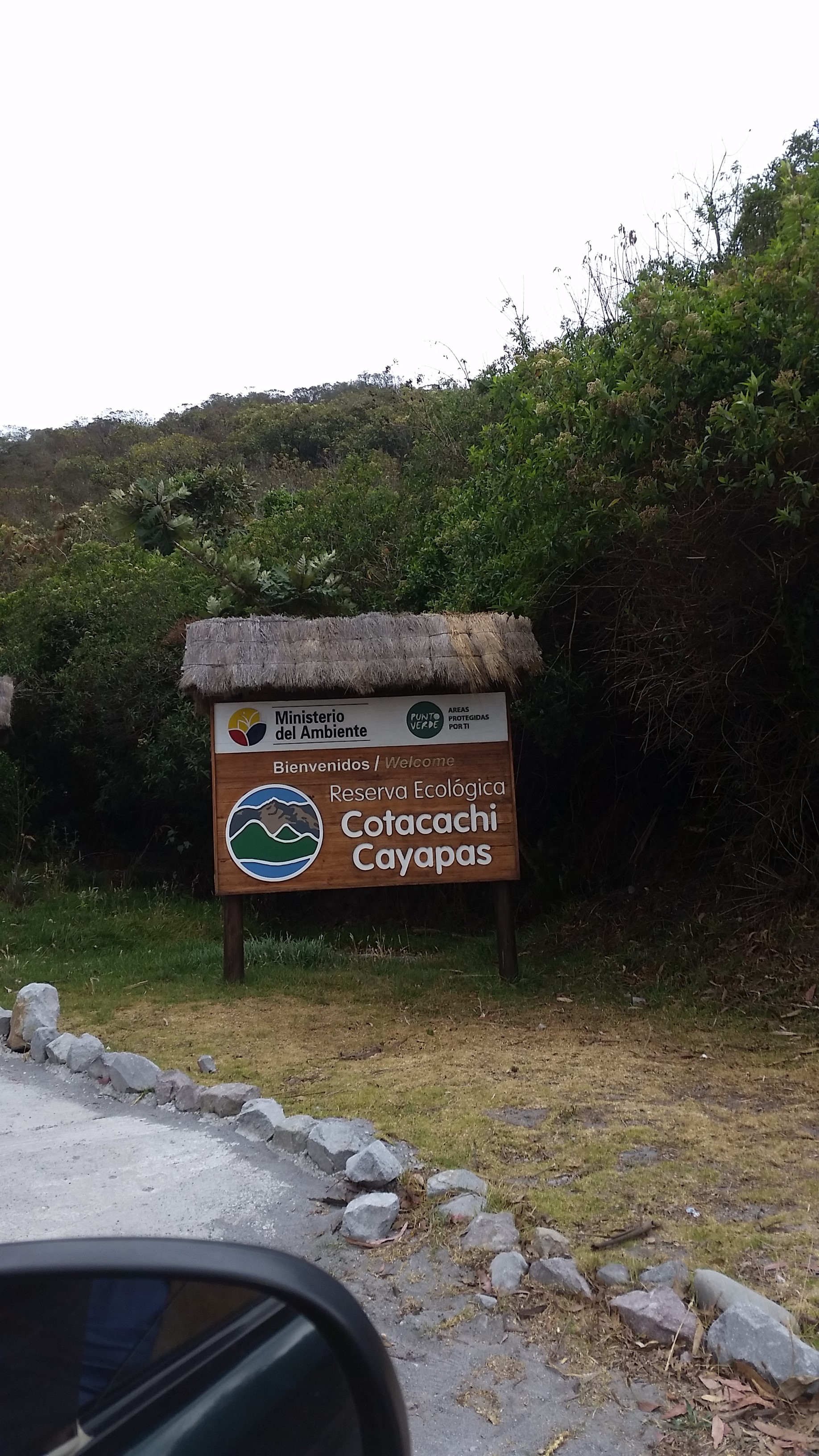
Park Entrance.
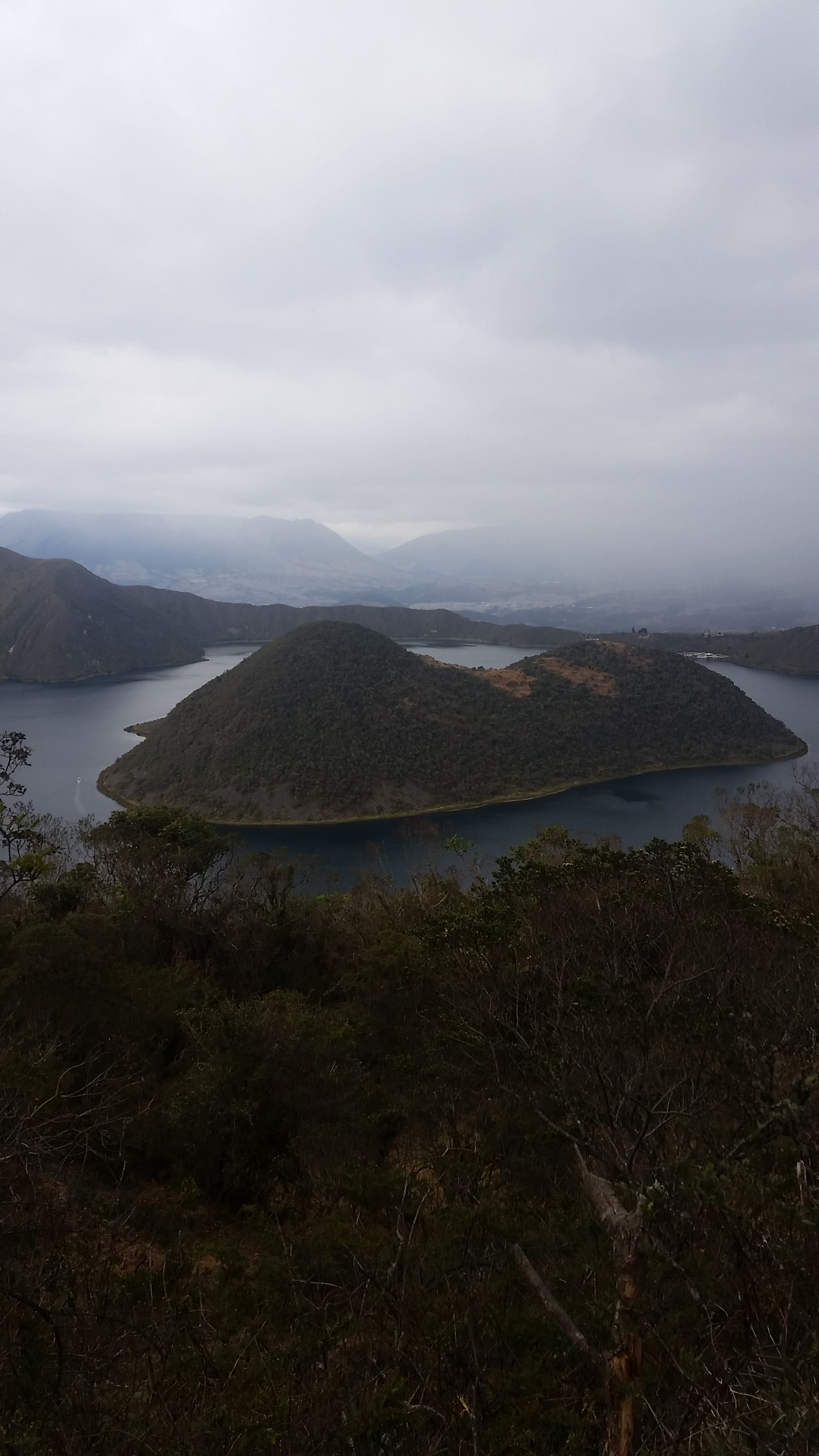
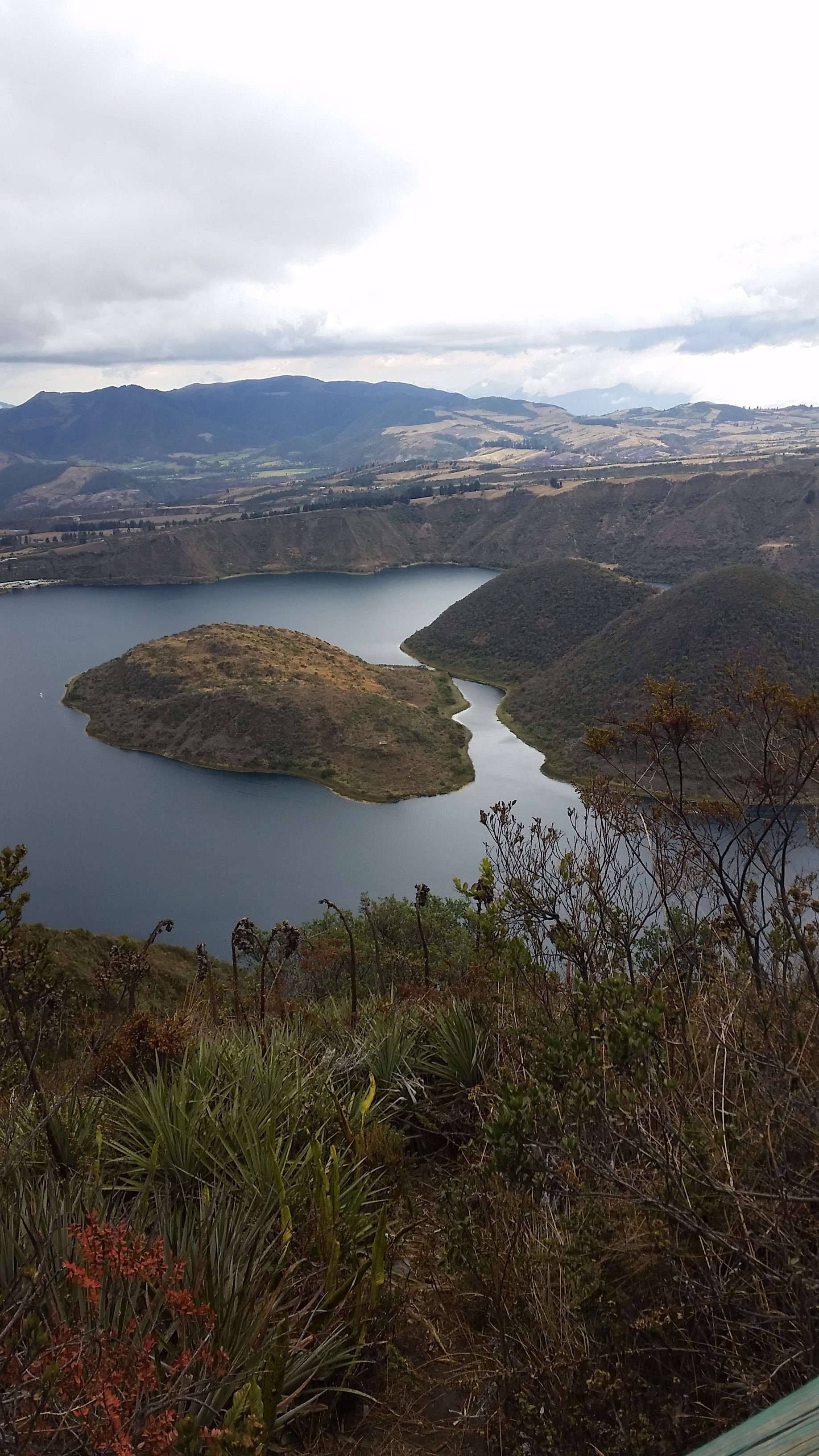
As I had stated earlier, Cuicocha was once a volcano that imploded, after which the crater flooded which resulted in the Cuicocha Lake. Eruptive activity at Cuicocha began an estimated 4500 years ago and continued until about 1300 years ago. Cuicocha Lake is over 600 feet deep and very clean and clear. The name Cuicocha translates to Kichwa: Kuykucha, “Lake of Guinea Pigs” or Kuychikucha, “Rainbow Lake”. I like to think of it as “Rainbow Lake” even though guinea pigs are a primary staple and considered an excellent source of protein by the Otavaleño people, I cannot come to terms with people eating guinea pigs.
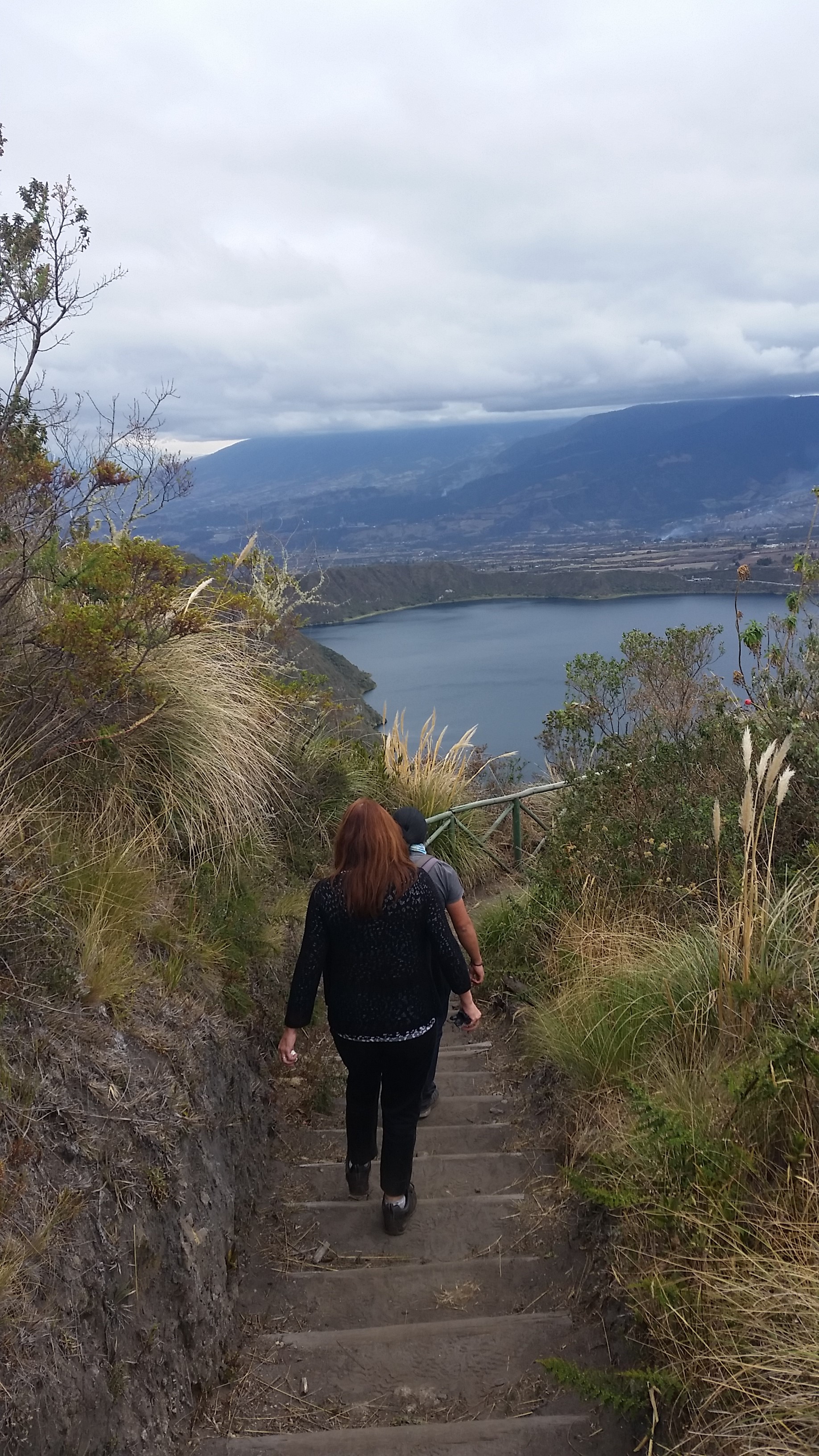
As you can see from the photos the lake is a beautiful blue and most days you can see bubbles coming up in-between the formed islands proving that there is some sort of volcanic activity still going on in Cuicocha.
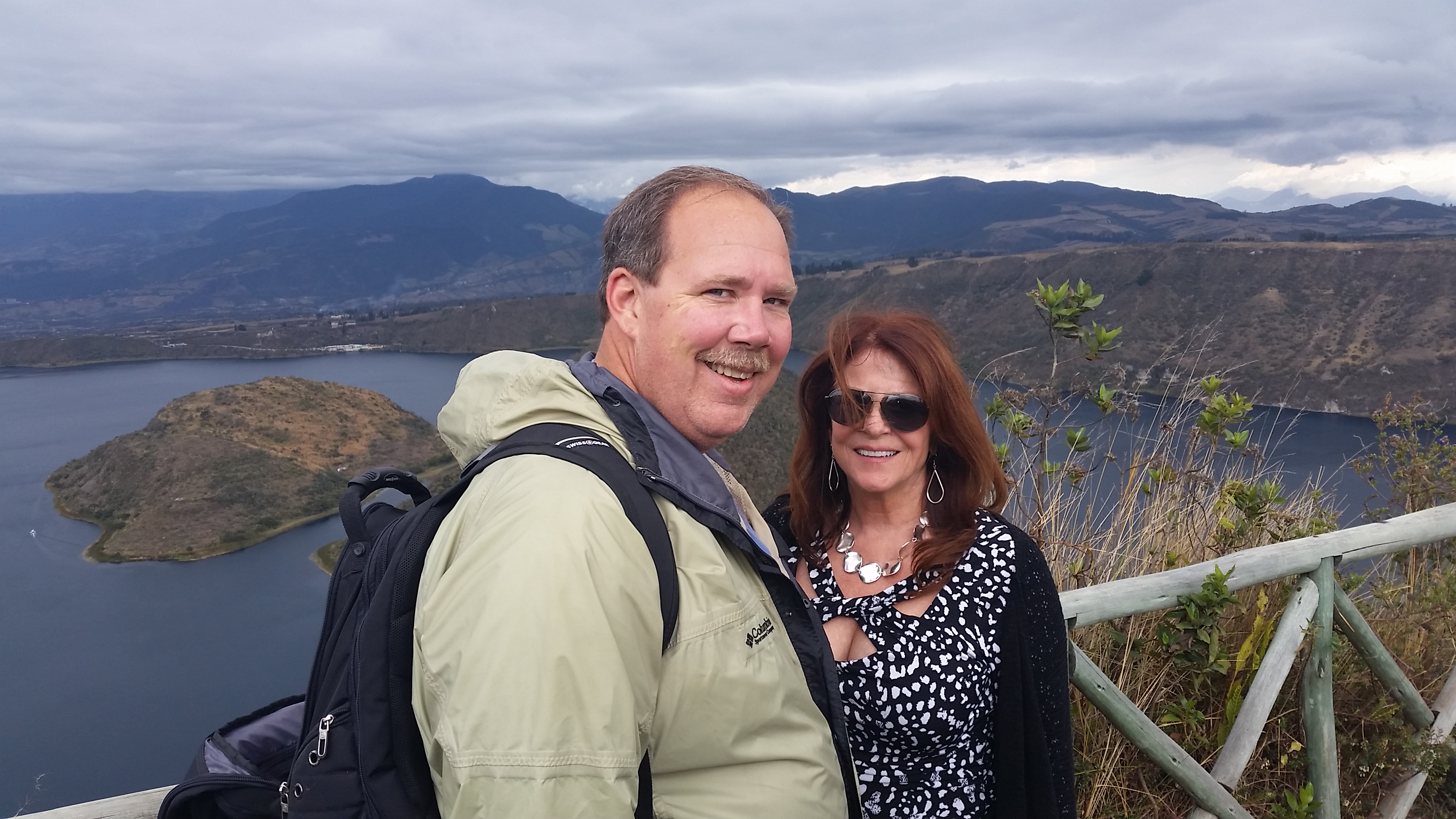
More Beautiful than Photos Can Capture.Majestic View.
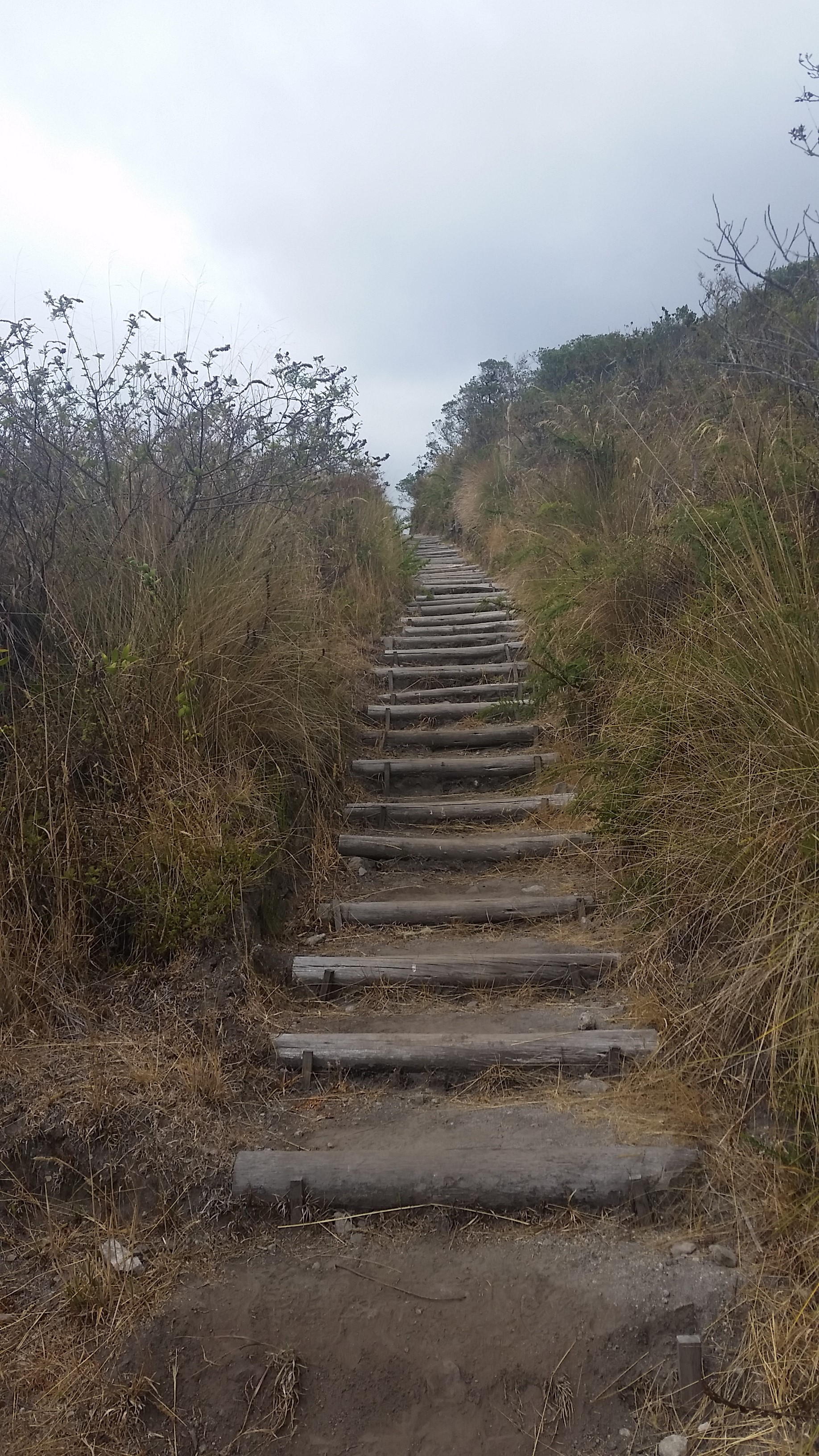
The trek around was up and down with a few level spots I think put there just to keep you from giving up. It seemed mostly uphill but I am sure that was partially due to being back up in elevation.
Not Too Far into the Hike.What Goes Up.Must Come Down. Then Back Up. Then Back Down.
The elevation (11,500 feet) combined with the constant up and down made the hike difficult but quite honestly we both felt it was well worth it and if given an opportunity would do it again. Thanks to Diego and Edwin for making this possible.
Little did we know how this travel day would unfold but we were braced for an adventure. The trip to Otavalo is about 55 – 60 miles and takes and estimated 1 hour 50 minutes. Otavalo is a city with a population of about 90,000 including the surrounding smaller native villages. The primary reason for this excursion is to attend the Saturday Market where the indigenous Otavaleños sell their weaving such as handmade blankets, tablecloths, tagua nut jewelry, hand crafted silver jewelry, musical instruments, dream catchers, leather goods, fake shrunken heads, indigenous costumes, hand-painted platters and trays, purses, clothing, spices, raw foods and spools of wool. This market site boasts to be the oldest continuous operating market in the world dating as far back as 2000 years BC. I don’t know if that is fact or fictional boasting, but, it sounded intriguing.
The Journey Begins!
To travel to Otavalo we had to get to the northern most bus terminal in Quito where we would catch the northbound bus to Carcelen and at the end of that route get on a bus to Otavalo. (Easy right?) We were doing great and feeling quite pleased with ourselves right up until we got off the bus in Carcelen. We went in the exit and never did find our bus or a ticket window or a police officer to ask, but some guy approached us, likely helping his friend to fill his van, and directed us out of the station to a van already filled with people. They somehow made room for us and off we were in a van filled with people that unknown to us were headed for some village 20 miles north of Otavalo. The driver did not even speak Spanish much less English, he was native Indian and spoke the Quichuan language. Luckily the other guy in the front seat did speak Spanish so Tod could communicate enough to let them know we needed to get out in Otavalo (I am not sure but I think that somehow Tod has a GPS built into his head). It really wasn’t a bad trip and we made it in record time (1 hour 15 minutes) likely because we skipped all the bus stops along the way. The shuttle van dropped us off on the highway at the edge of Otavalo and gave us directions to the town square – we thought about just getting a taxi and giving him the hotel name and address but what fun would that have been? We navigated to within 3 blocks of our hotel before I found 2 police officers and asked for directions. Not bad for 2 gringos in a city where Quichuan is the first language for all, Spanish or French a second language for many and for a limited few, English, is a third language.
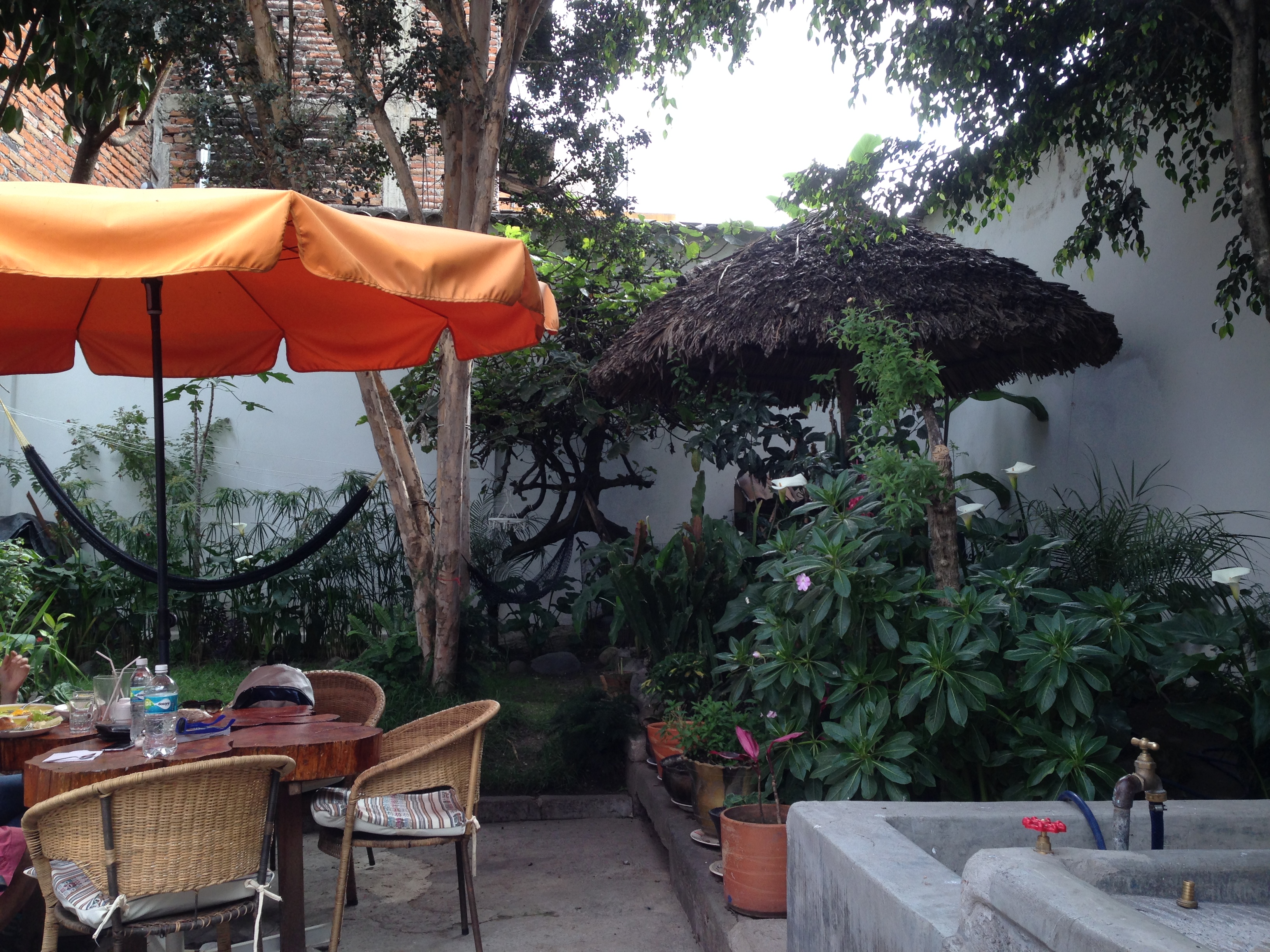
After we checked into our hotel (Hostal Otavalo Prince) and regrouped a little we headed out on foot to see what there was to see and to find Ecomontes Tours. We learned of this company by means of a brochure in our hotel room and found they had hiking tours of Cuicocha Lake. Cuicocha was once a volcano that imploded, after which the crater flooded. Anyway the touring company was on the same street as the hotel so should have been easy to spot (logical right?) but there are street vendors everywhere and the businesses, if labeled, are not always labeled in spots that you can see. We eventually did find it after walking right past it the first time. It had a huge sign that said “TOURS” on the side of the building, nothing in the front and no way to identify it unless approaching from the east. We were too late in the day to hike around Cuicocha crater-lake so we booked it for Saturday and extended our stay in Otavalo. After securing our tour, we found a quaint little restaurant that had a cool outside dining and garden area. In the garden were two hammocks, I guess if you eat too much you could go lay in the hammocks and rest for a while. The single staff person (cook, hostess, waitress, table busser) spoke Quichuan and Spanish but no English, however, several of the diners were speaking English, other than ourselves, it was the most English language we had heard in over a week.
Love this Outdoor Garden Dining. Notice the hammocks in the background?
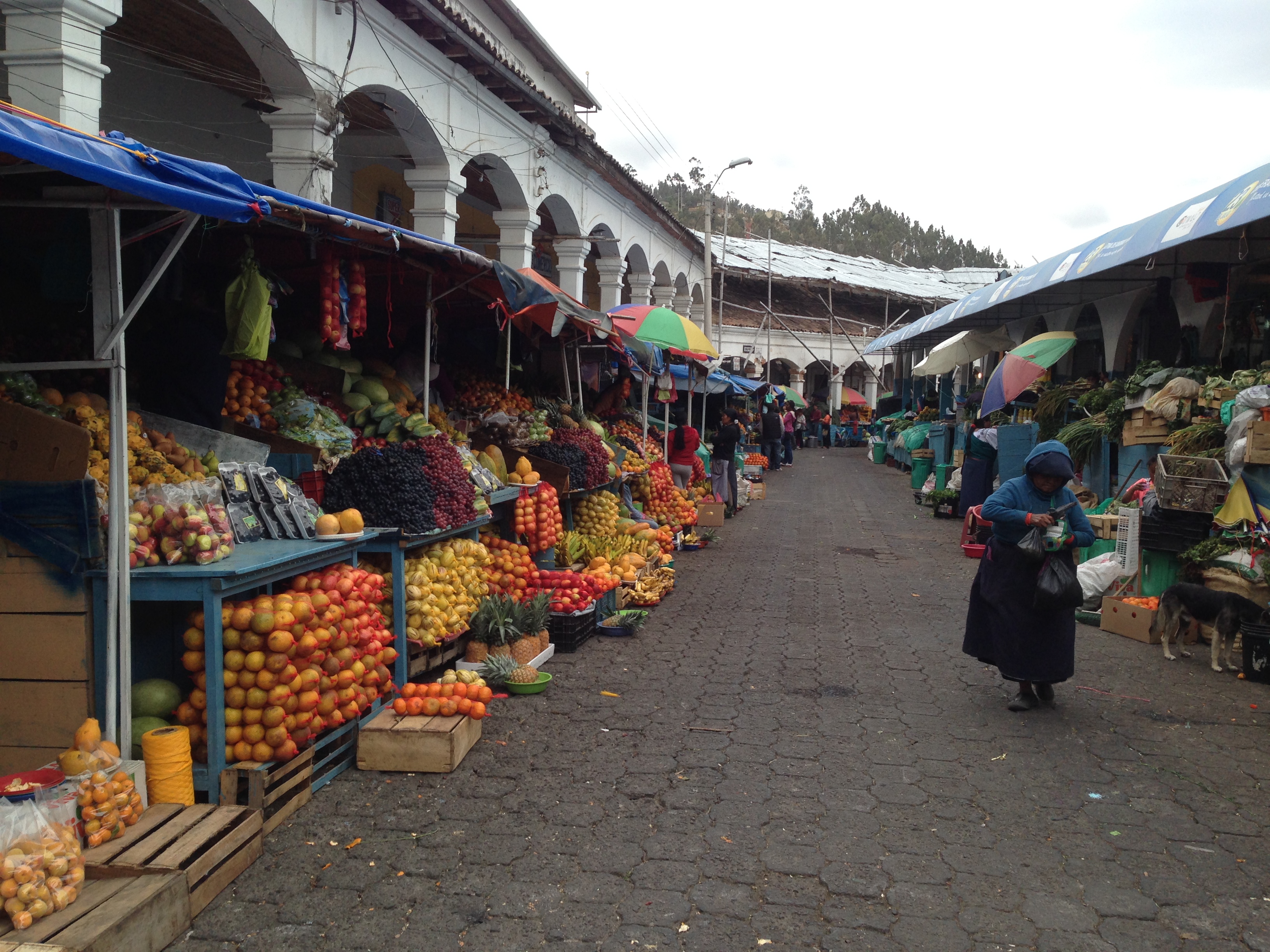
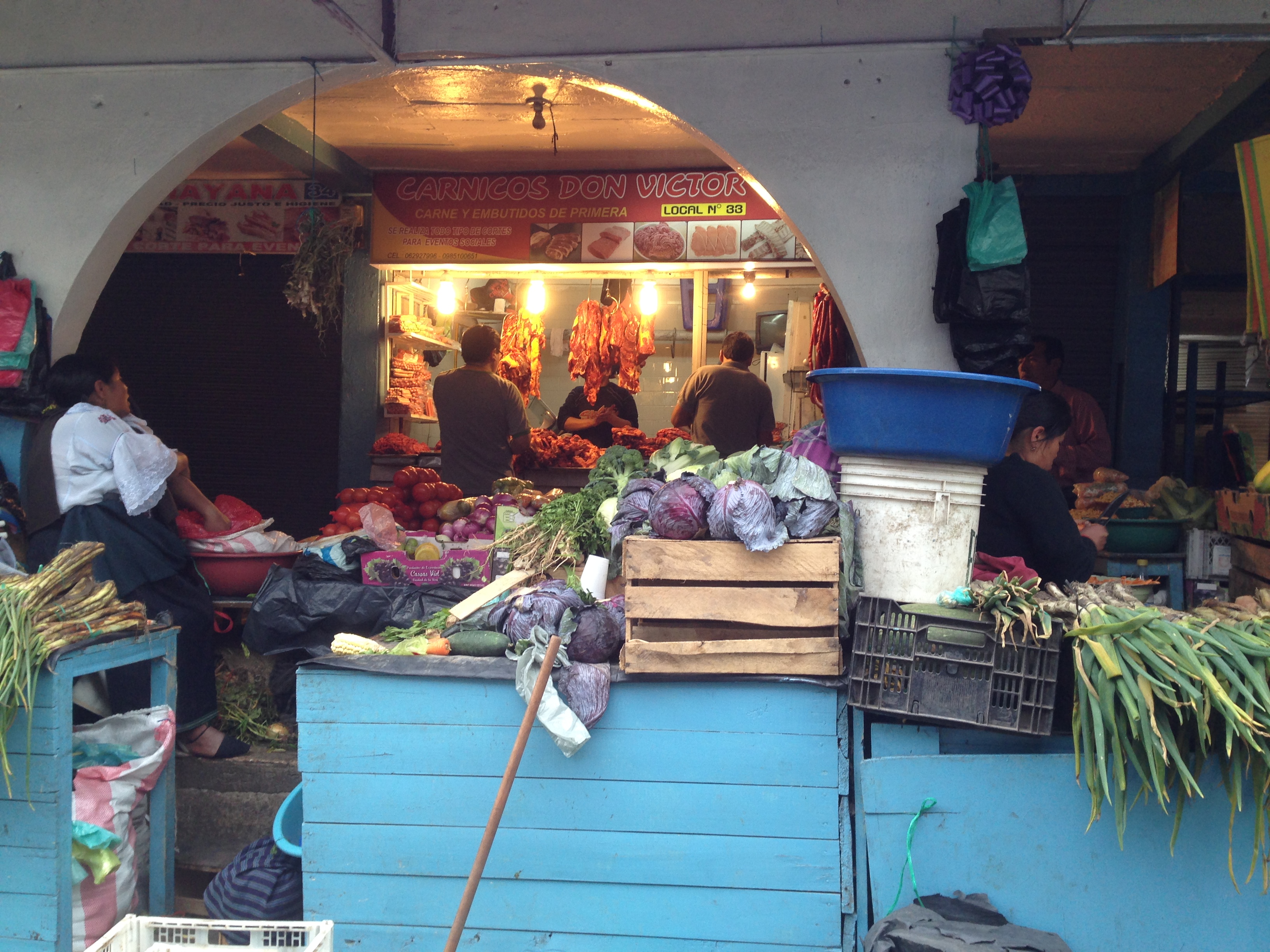
We walked around Otavalo and found an open market that was huge. Part of it was outdoors (see photos below) and some of it was indoors, but all of it was open. Fruit, vegetables, meat, fish and herbs, it appears the craft markets are in the town square. The meat section made me almost sick! There were whole pigs, tables of whole skinned chickens, other tables with what must have been cuts of beef and tables of whole fish (now when I say whole on the pigs and fish I mean with the heads on! Yuck!).
Otavalo Market – Love all the Fresh Local Produce!Not too crazy about the Meat section.
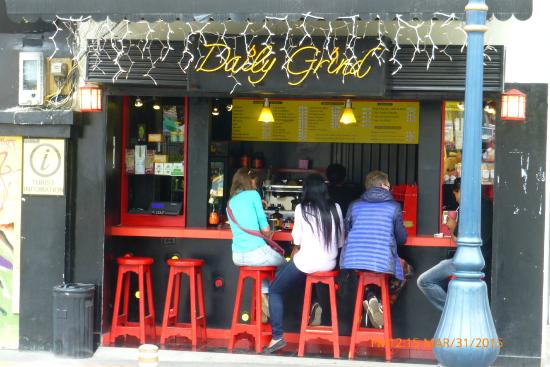
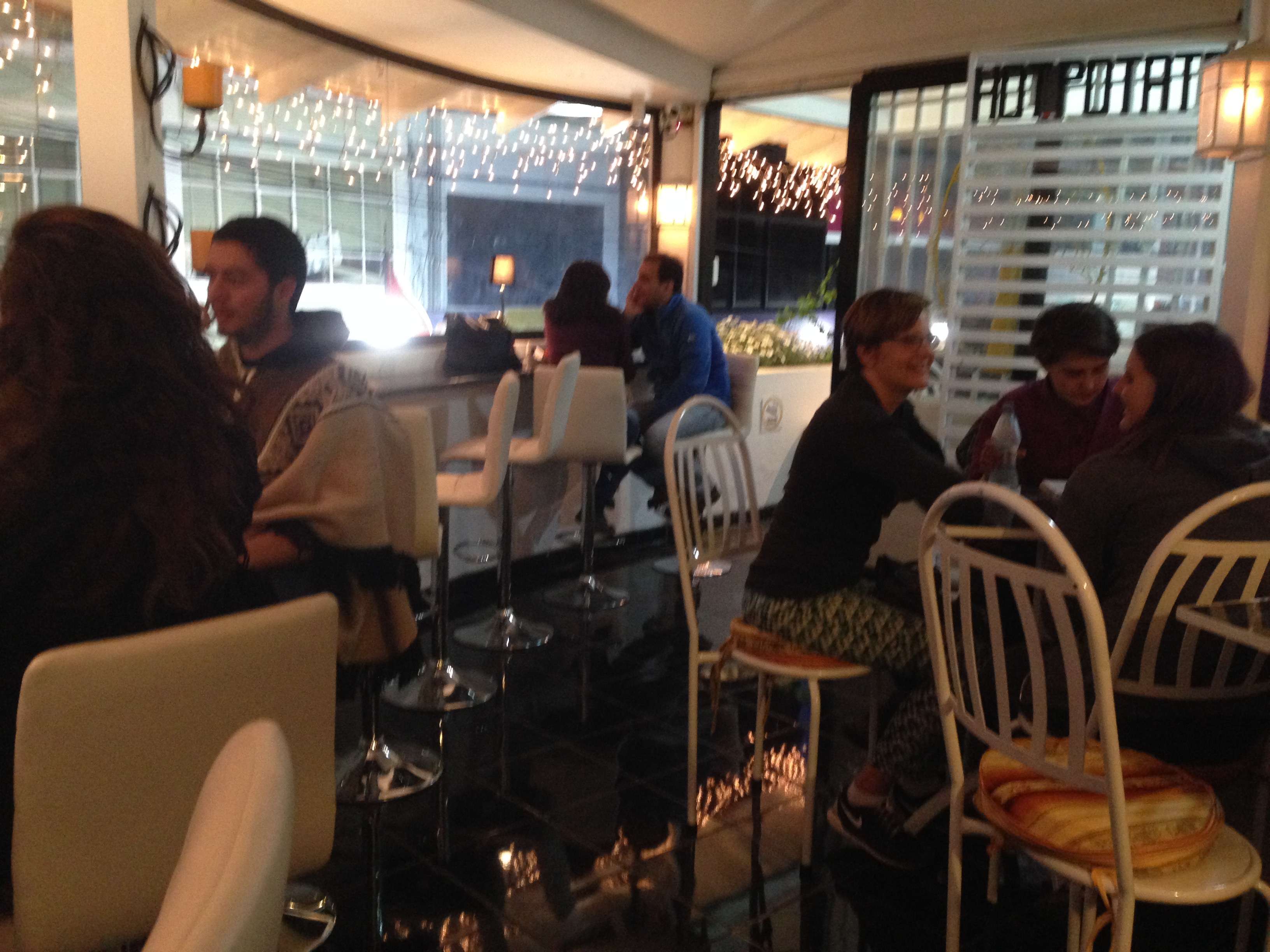
We had enough walking and headed to a coffee shop that we had spotted earlier that day (The Daily Grind). The “Hot Potato” was just upstairs and a young man, who we were soon to find out was named Jorge, directed us upstairs to the Hot Potato which had just opened. In the Hot Potato you could get coffee, a few different drinks, wine, beer (one brand but a light and a dark), and soup of the day. This place was great, we met Bonnie an expat from New York. Bonnie has been in Ecuador for 16 years and appears to be the financial backer. She lives between New York and Ecuador, she owns a house in one of the surrounding communities and works with the local government to build schools. It was interesting to learn that she gets most of the funding to build these schools by working with two local artists (one painter and one silver smith). Bonnie purchases their art, transports and sells it in New York, then uses the profits to build schools. She has really embraced the Ecuadorian culture in this community which is primarily the Indigenous Otavaleño Indian.
The Daily Grind.The Hot Potato – The Door to the Rear Leads to a Small Outside Smoking Section Bonnie Put in for European Visitors.Looking Down from Hot Potato on a “non-market” Day.View of the Square from the Hot Potato on a “non-market” Day.
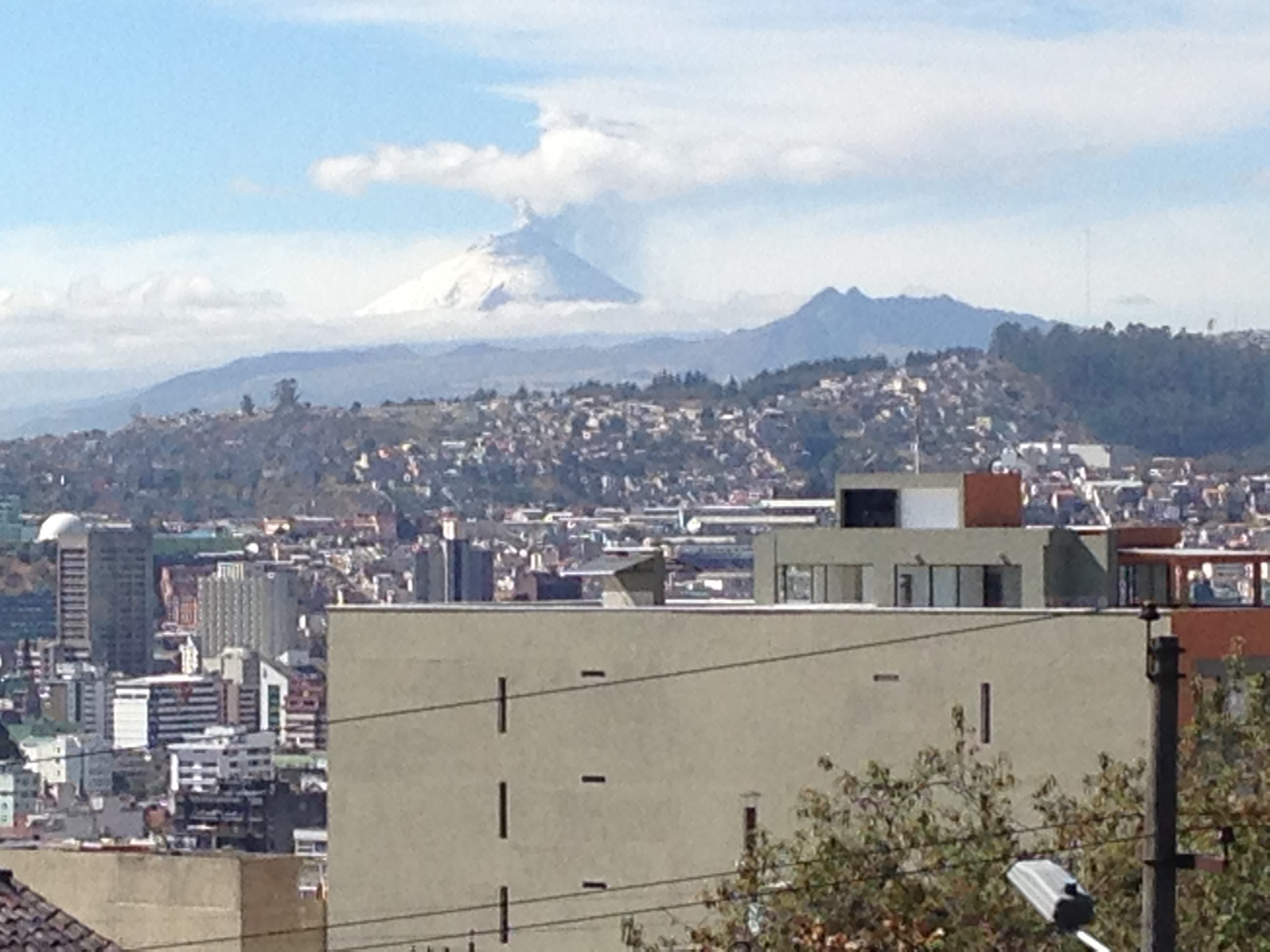
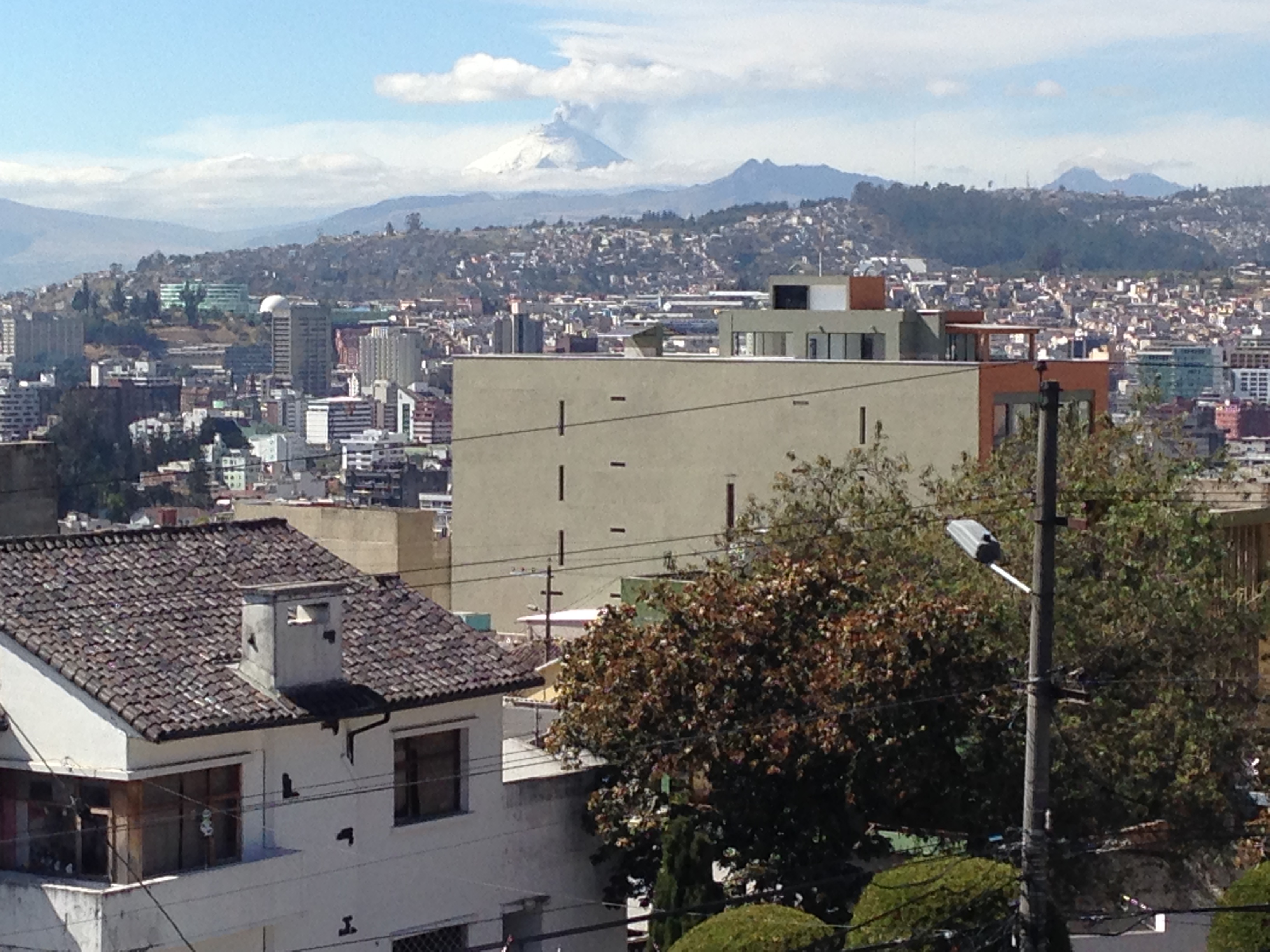
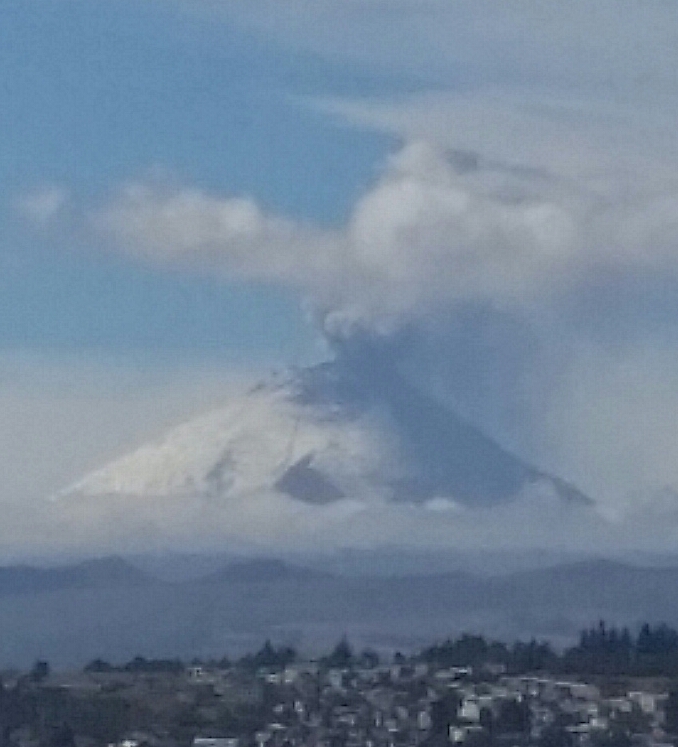
This morning we had an unexpected surprise when Sandra knocked on our door and asked if we wanted to go see Cotopaxi. Obviously we said yes and went with her to the rooftop balcony of our flat. Cotopaxi can be seen in the morning when it is clear and this morning it was perfect conditions. This volcano is one of South America’s most famous volcanoes and one of its most active ones. It is 5911 m (19,393 feet) high, with a current status labeled as erupting. As you can see from the photos Cotopaxi is smoking steadily. Quito is at a high enough elevation that if Cotopaxi does erupt in full force we will not have to evacuate however there are several small villages she is concerned for so although it was a rare novelty for us to see, we pray for the safety of the nearby villages.
Cotopaxi Volcano, Ecuador.Cotopaxi from the Rooftop.Tod Cropped a Version so you could have a Closeup.
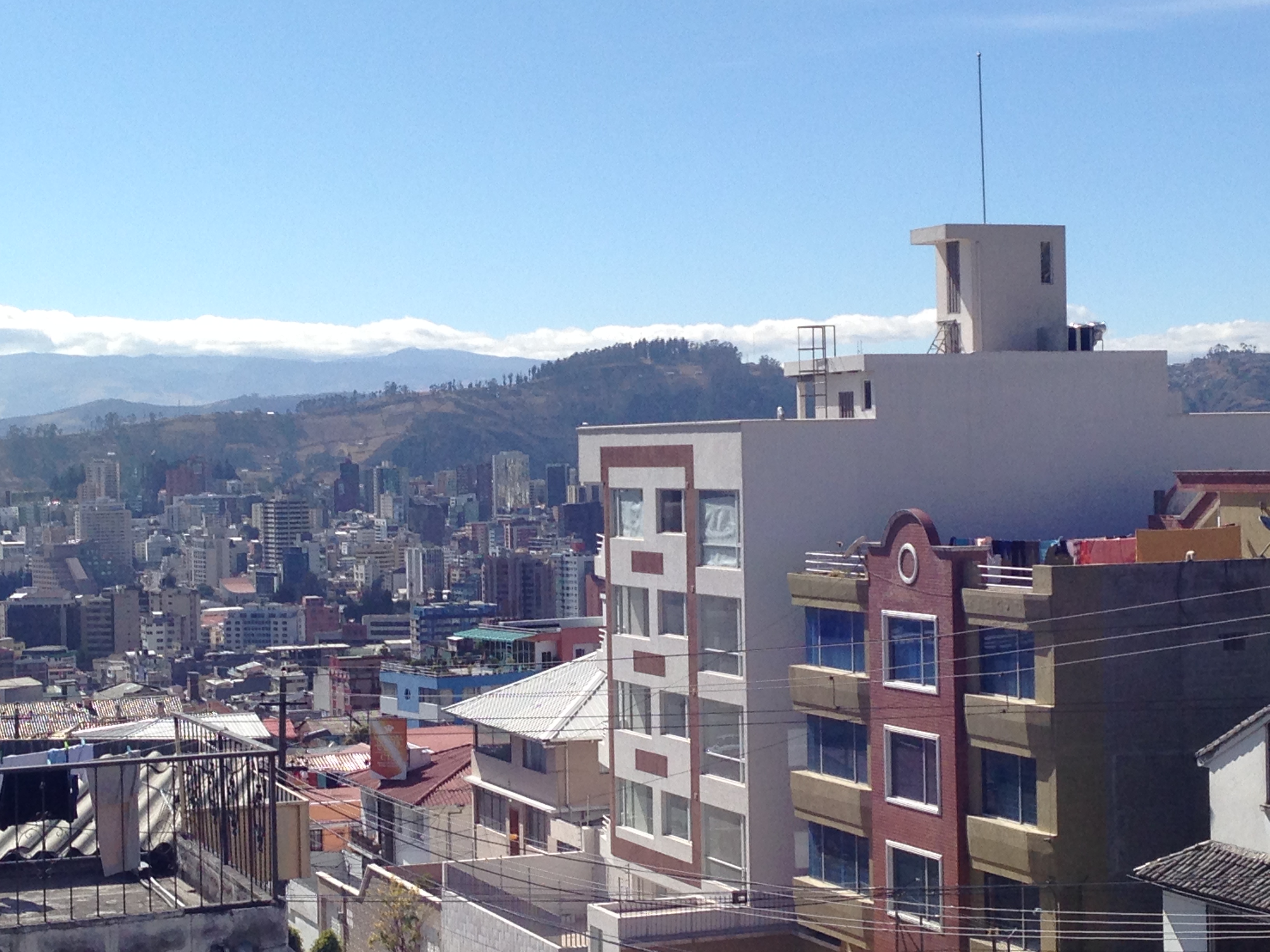
While we had this viewpoint from the rooftop we took a few photos of Quito to share with you.
Rooftop View of Quito. See the Church in the Background.Rooftop View of Quito.See the Virgin of Quito Statue in the Background?
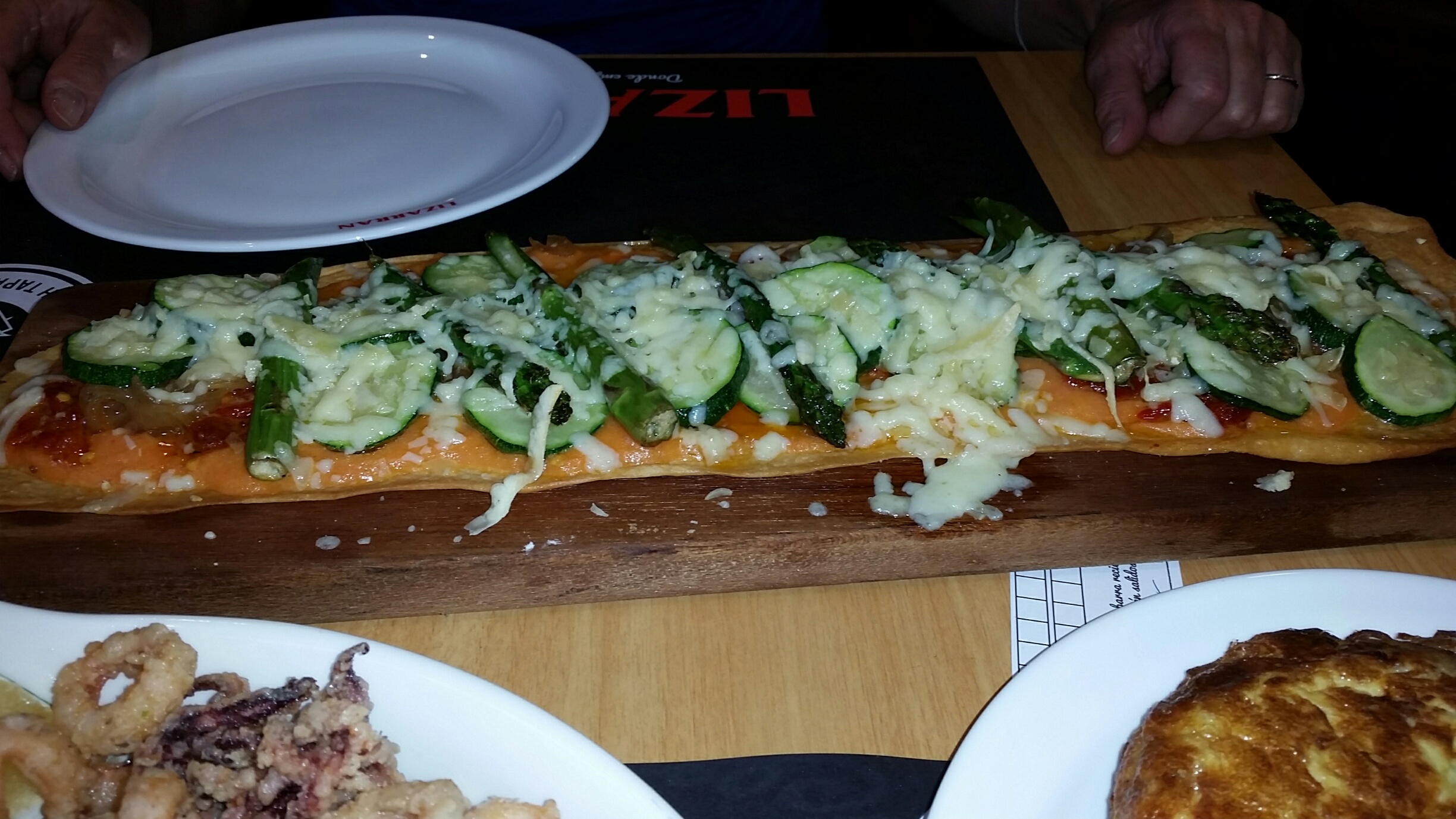
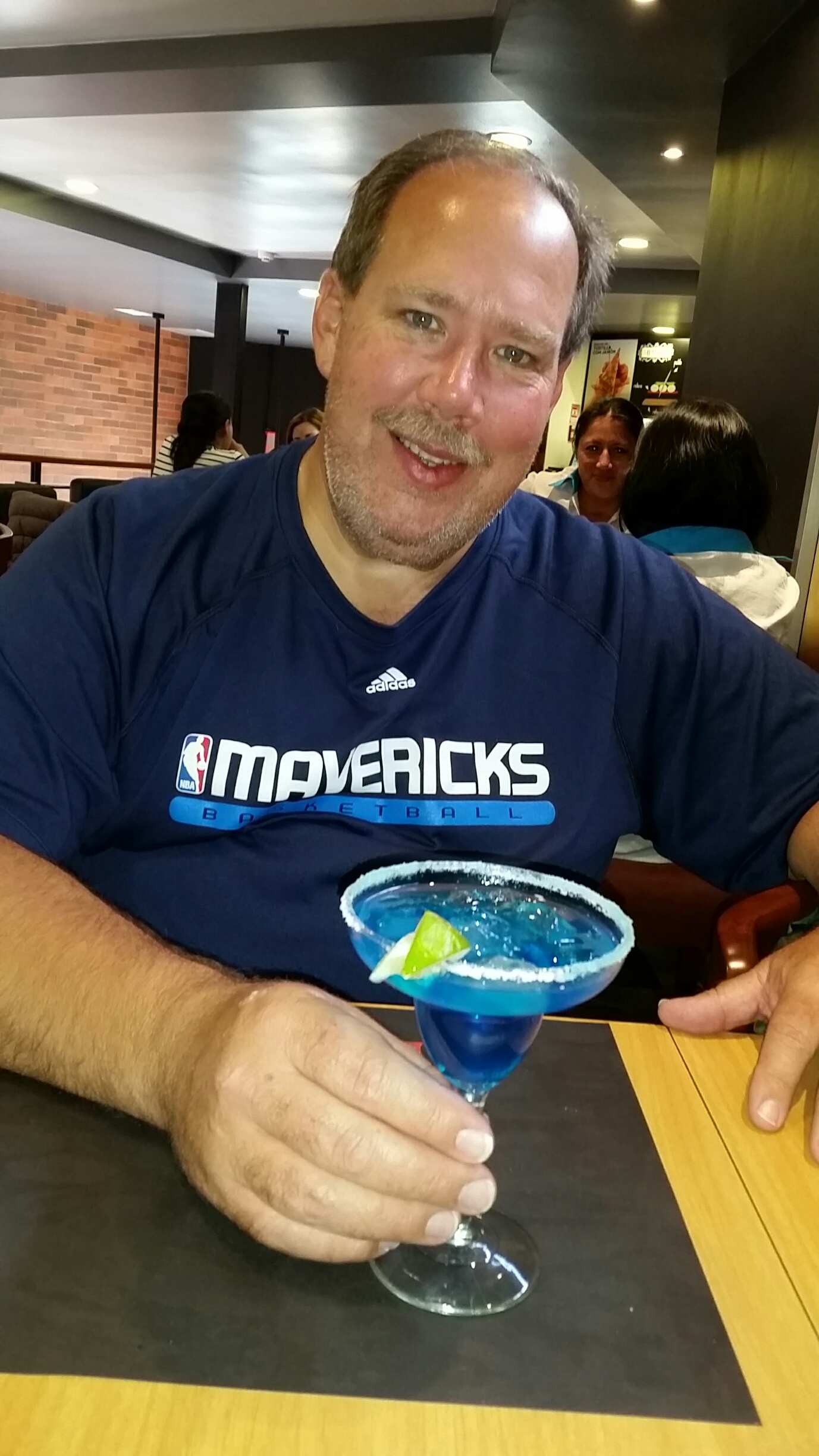
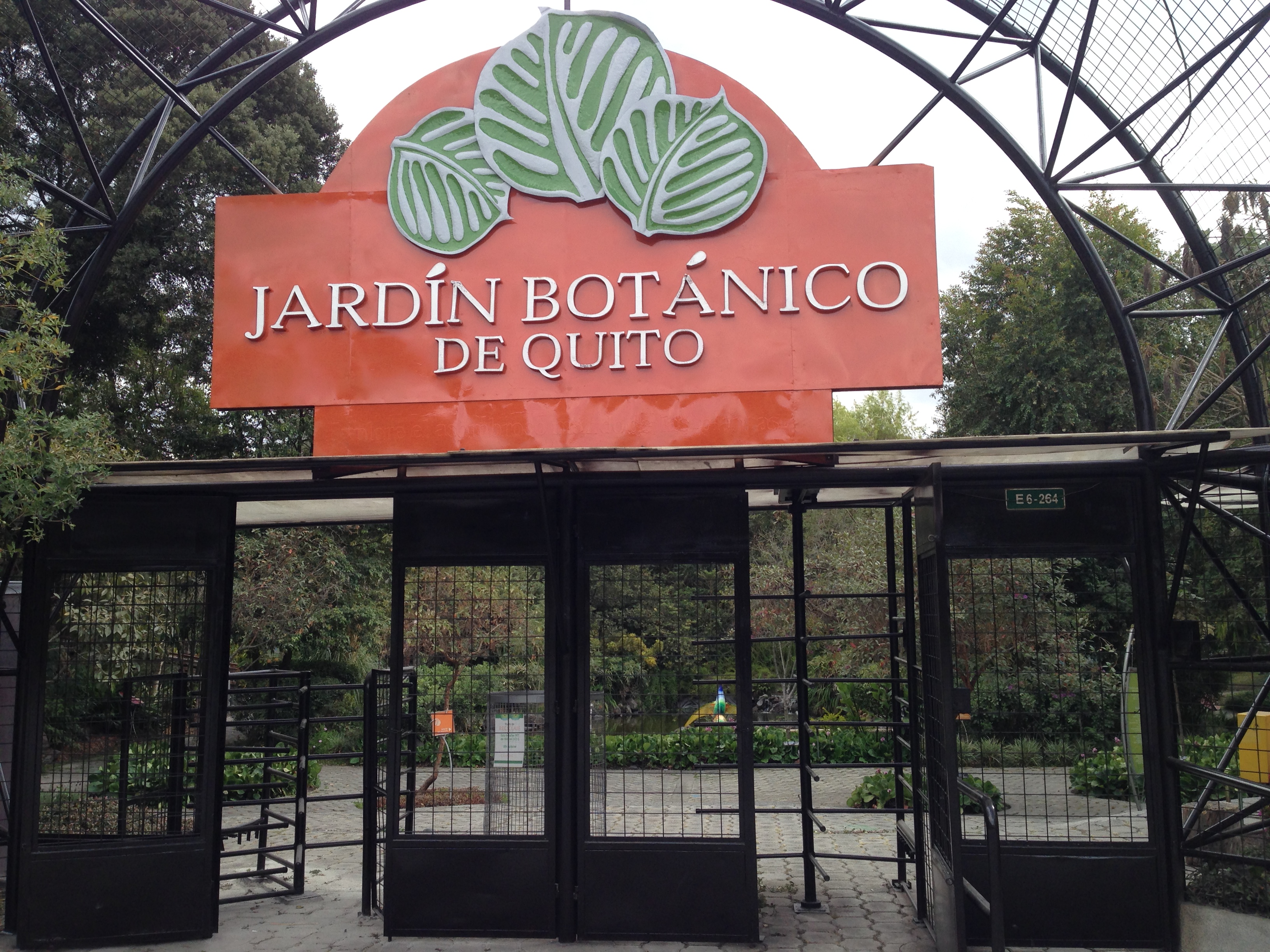
After the excitement of seeing our first erupting volcano we took the Trolley downtown for lunch and the Jardin Botànico de Quito (Botanical Garden of Quito) in Carolina Park. We found an awesome restaurant across the street from the park. It was by far the best dining experience we have had in Quito thus far. I already put in my request that this restaurant, Lizarran – Spanish Tapas Restaurant, is the one I want to go to for our last night / dinner in Quito. Tod ordered a Margarita and had the most beautiful blue drink I have ever seen. I had no idea they made blue Margaritas and neither did he!
I am not sure what it was called but it translated to a Vegetarian Flat-bread. Tod had Calamari and some type of Potato Bake.The Blue Margarita. (Matches his Mavericks Shirt!)
On the way to the Garden, we stopped to take pictures of the plane that was gutted out, painted and now is used for a slide. This section of the park was closed off but we could still get a photo to send Keith.
Actual Plane Gutted and Painted.
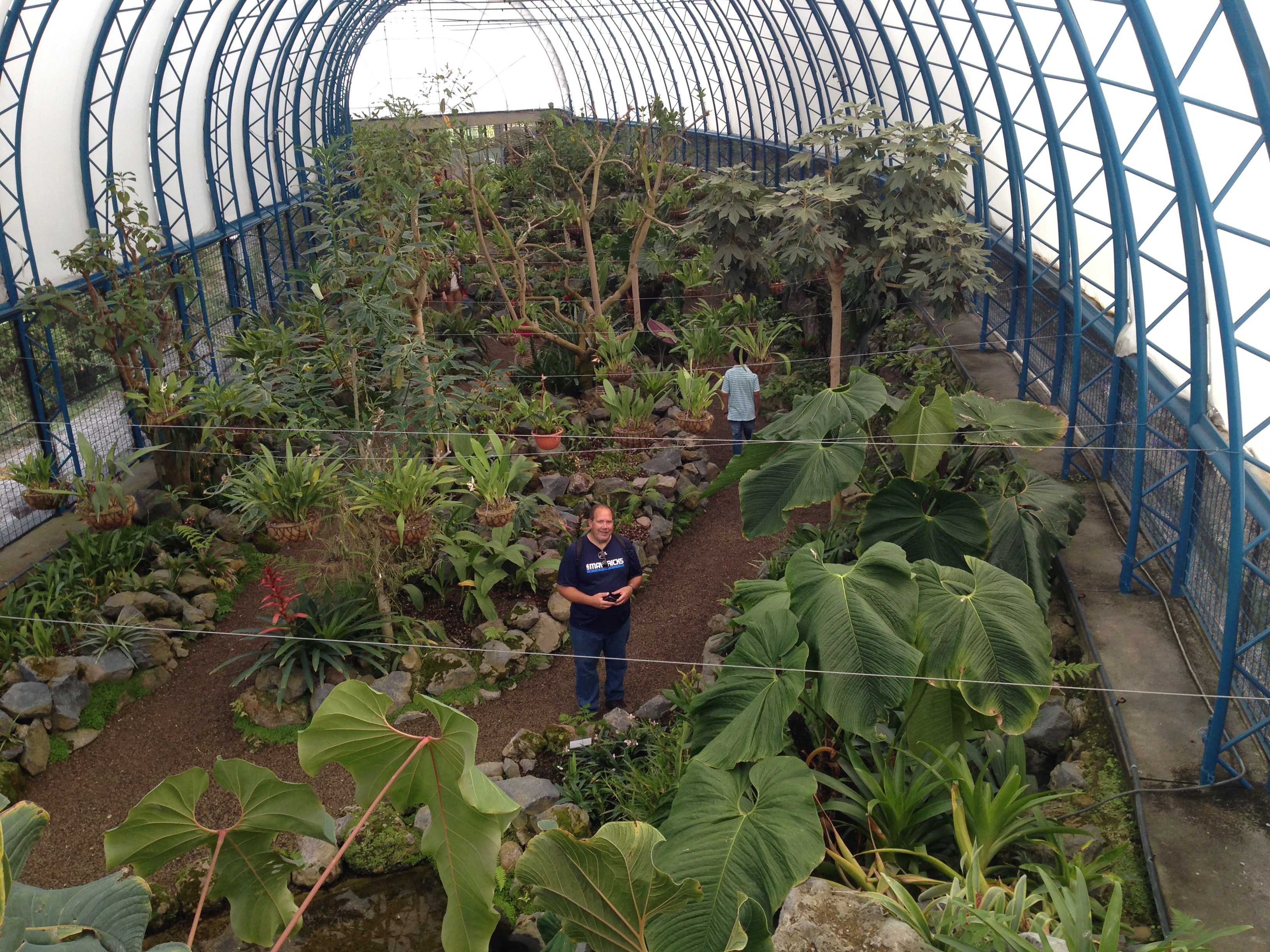
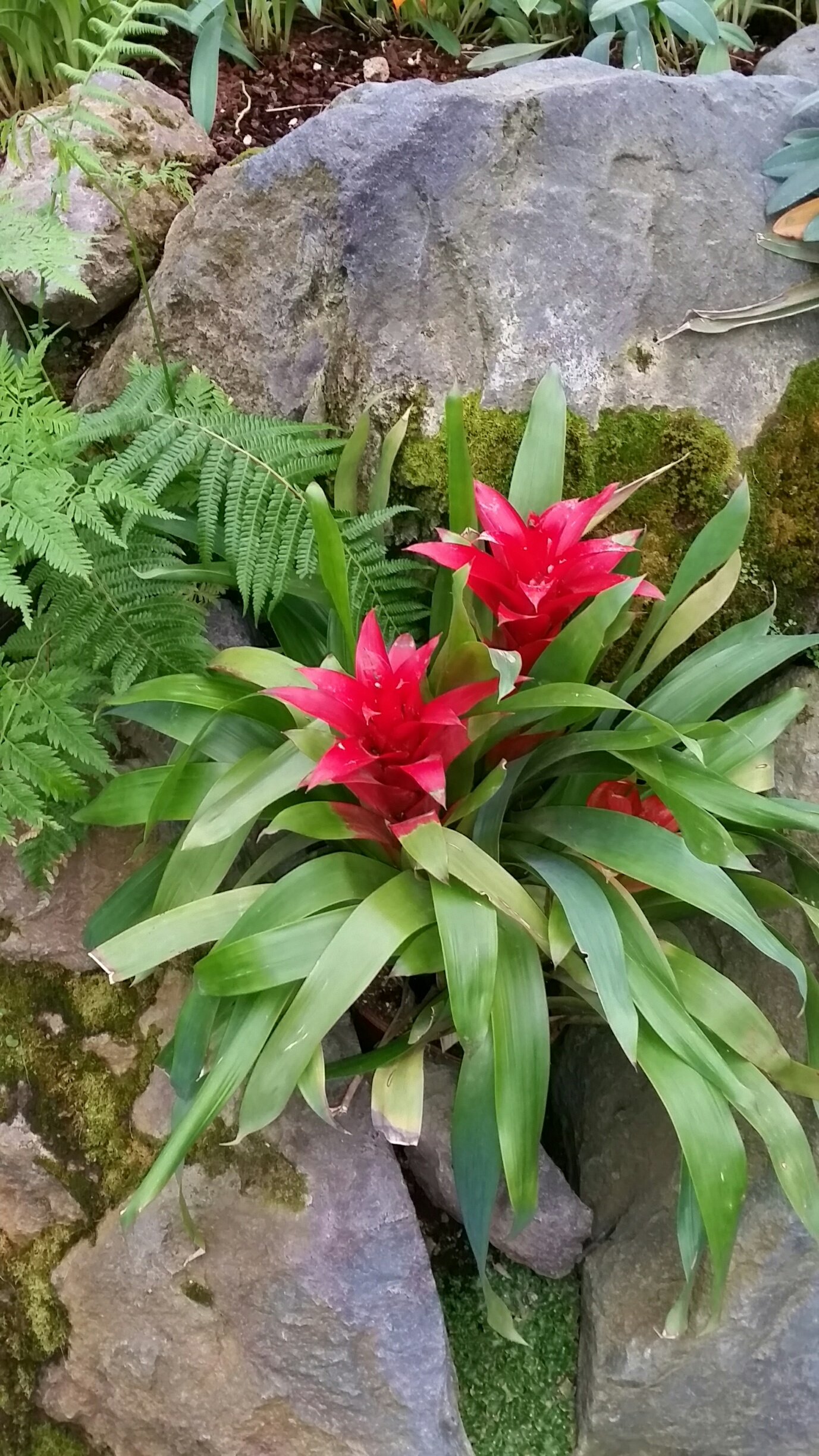
Walking into the Botanical Garden was a bizarre transition from a crazy busy downtown city to a tranquil, peaceful and quite park. There were many different species of plants and trees from the rainforest to the dessert. It was definitely worth the time and money ($3.00 Each) to see the garden.
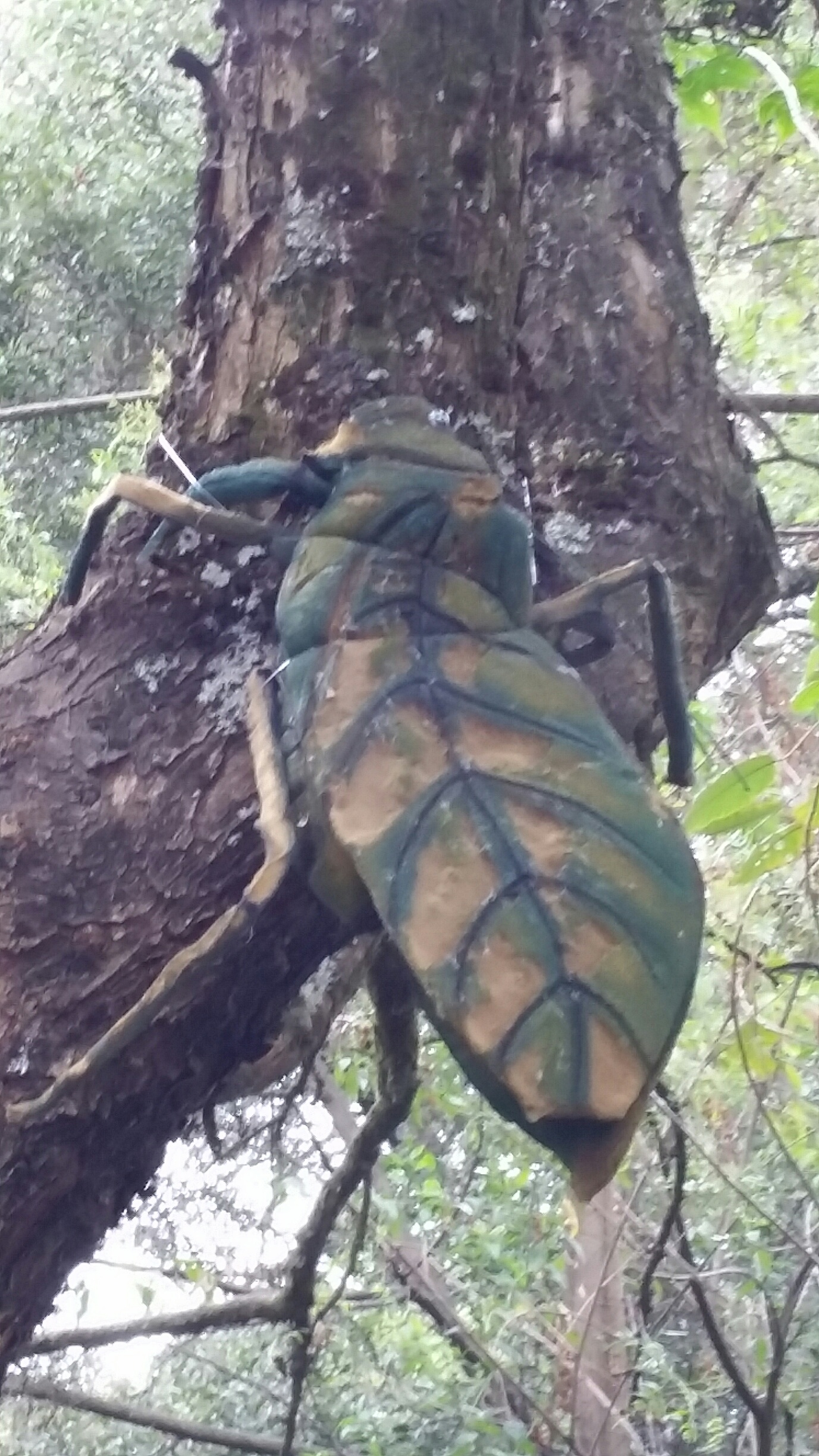
Welcome to Jardin Botànico de Quito!Koi Pond to Greet You at the Entrance.Tod in the Greenhouse Tropical Garden.Beautiful!Different Insects Depicted Throughout the Gardens.
Tomorrow we are taking a bus to Otavalo and will be spending the night. Likely the next post will not be until Sunday. Until then – wishing you all the best! T n M
Going to Middle Earth was amazing and the trip there and back an adventure. We took the blue line, which was a first for us. The blue line is independently operated and runs differently than the trolleys and the yellow line. For starters you do not buy a .25 cent ticket prior to getting on, which was strange and also there is a worker other than the driver that I will call a porter for lack of a better term. The porter collects the money from you when you get off inside the Quito city limits (.25 cents) or walks through the bus and collects (.40 cents) from each passenger when the bus passes the city limits. The porter is busy the entire trip, collecting money, making change and announcing (yelling) the next bus stop destination or “parada de autobus”. In the afternoon it is so busy I do not know how he keeps track of who he has collected from and who still owes. It seems like an organized mess to me.
Getting on and off is a challenge, not only because the first step is so high, but also the driver does not always come to a full stop or wait for everyone to get on or off before closing the doors. If only younger men are at the upcoming stop, the driver merely does a rolling stop and the men getting on have to run jump on and off a slow moving bus, it’s crazy. Consideration is given for women, children and old people, once we learned the rules we realized it is best for Tod to get on and off first because the driver will wait for me, however he has had the doors close on him. One really sweet thing (well at first I thought it was sweet) is that Men get up for pregnant women, moms with babies, the handicapped and old people. One gentleman got up and gave me his seat. The nerve! I almost slapped him in the face, I may never ride the blue line again!
Our final destination, The Equator, Mitad del Mundo, and is one of Ecuador’s must see attractions. It’s located approximately 26 km (16 m) north of the center of Quito and took about 30 minutes by bus.
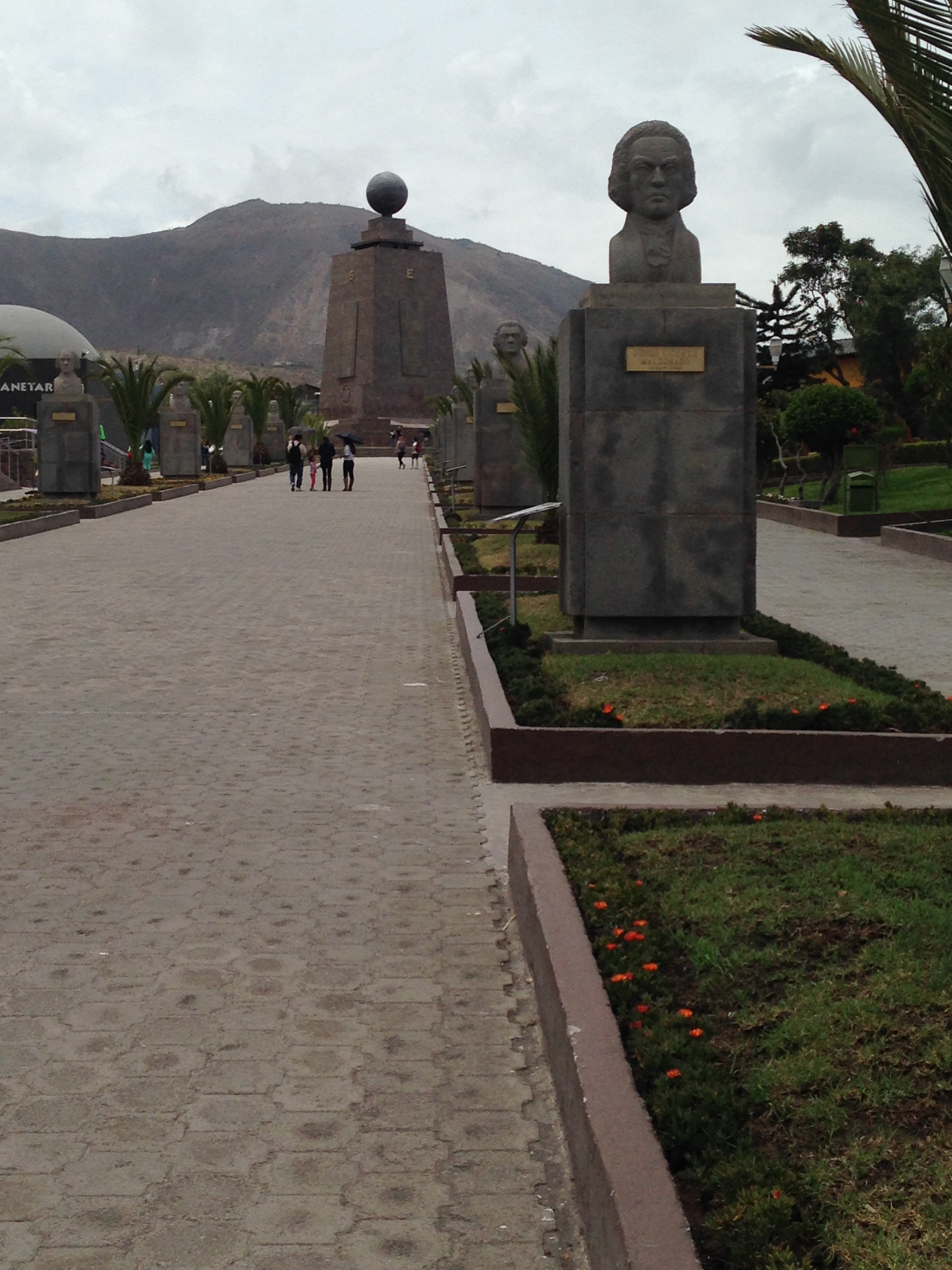
When you enter the grounds of Mitad del Mundo there is a path to the monument (shown below) that takes you to the center of the earth or latitude 0’0’0”. The path is adorned with artwork including busts of scientists and engineers involved in the identifying and measuring where the exact center exists.
Path to Middle Earth Monument – Museum.Me on one of the many benches lining the path.
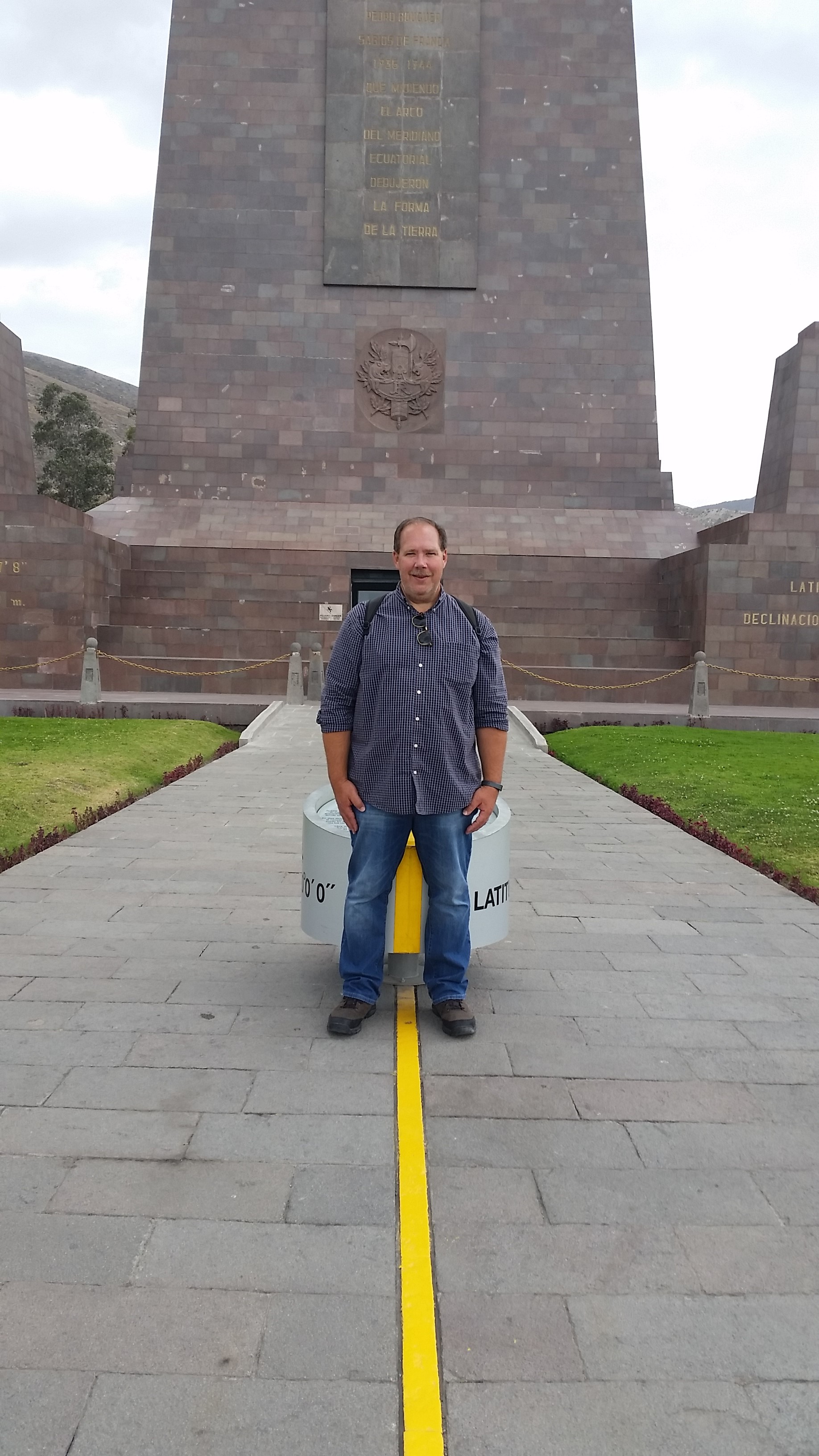
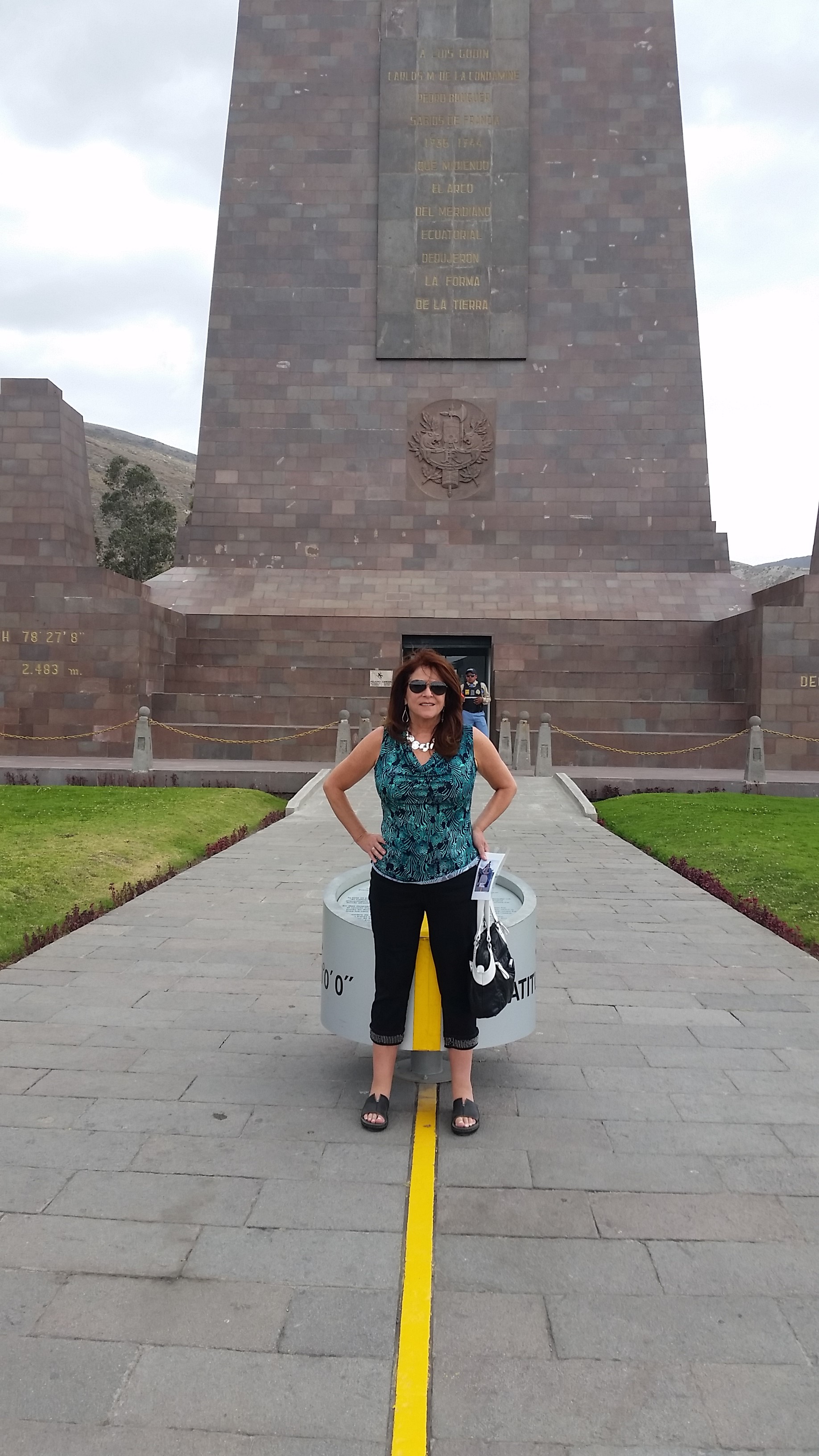
Approaching the monument you see a yellow line painted down the center of the east-facing entrance where you can stand to have your photo taken straddling the line, one foot on the northern and one foot on the southern hemisphere. The monument is about 100 feet high and the globe on the top is 4.5 meters (14.75’) and weighs 5 tons.
Tod Straddling Middle Earth.Michele Straddling Middle Earth.
Inside the monument is a 3 story museum that depicts the indigenous culture/people of Ecuador. There are also interactive experiment stations proving you are at the Equator.
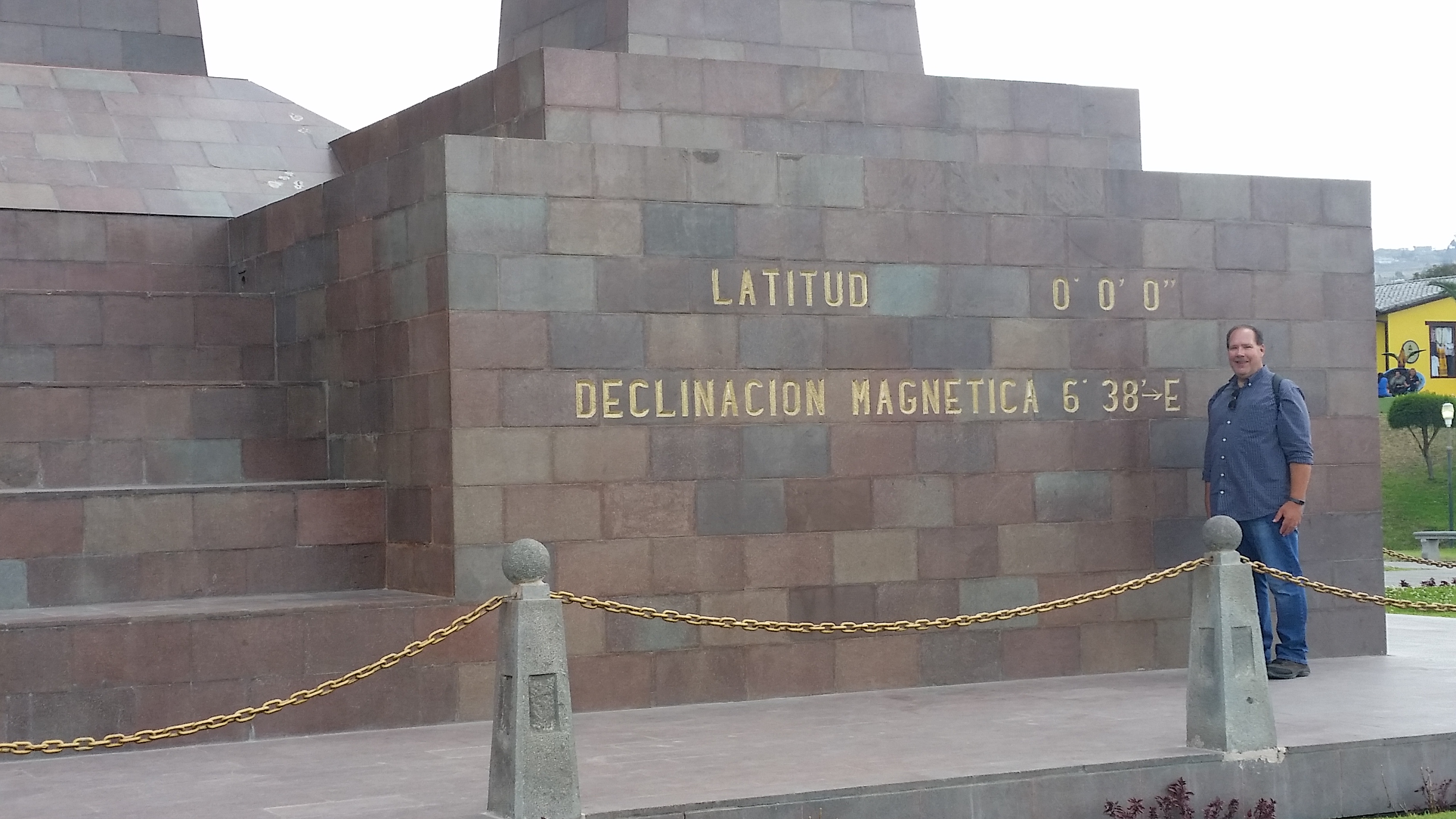
Tod at Latitude 0’0’0″
The Equator was originally mapped and discovered by a French expedition team in 1736 although in recent times with the GPS the exact location is in question. Were the early geographers really 231 – 250 meters (700 – 820 feet) off the mark? This “new” location is advertised to be the “real” Equator and has several “scientific experiments” again proving that now you are at the “real” Equator. We need to go back with a tour guide and investigate this for ourselves, but for now, we were at Middle Earth!




















 5117 Melbourne St., Unit 4103