October 26 – Mitad del Mundo

Weeks ago we told you about our crazy bus trip to Middle Earth or Mitad del Mundo. We also mentioned that I really wanted to go back to the “new” location, advertised to be the “real” Equator.

Well today was the day and back we went. Our directions were to head past the entrance of Middle Earth and find the dirt road, it would take you right to it. And low and behold it did!
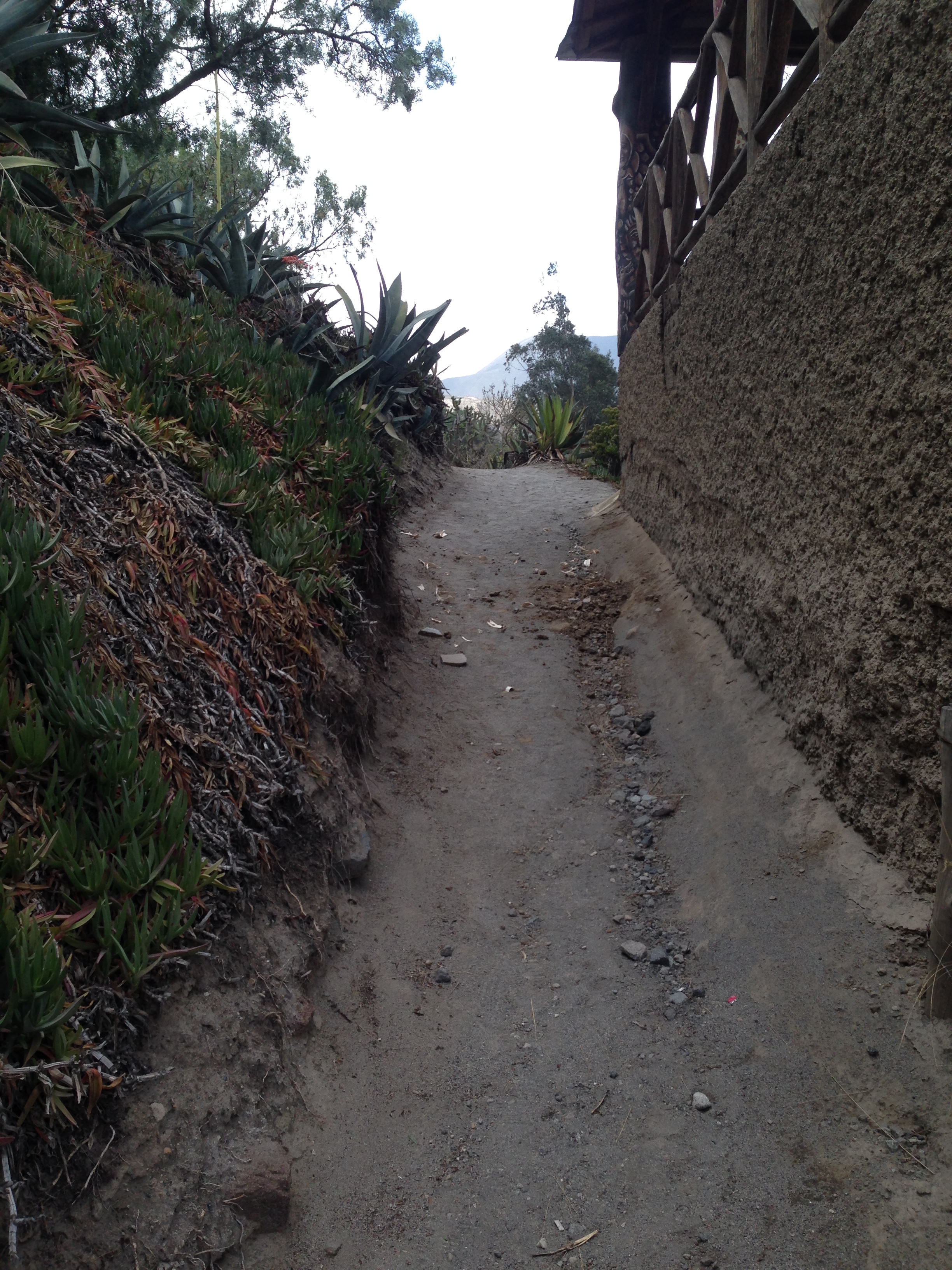
End of the Dirt Road.
But of Course.
But of Course.

Oh, my, gosh, this place was unbelievable! We had an English speaking guide so could understand everything and ask questions and the best part, we could understand the entire answer! Our guided tour included a discussion of the early inhabitants of Ecuador and some of their habits such as the burial process. The bodies were preserved and placed in a fetal position then buried with worldly possessions to take to the “after” life. If the king of the tribe died, his entire immediate family (wife, children) were knowingly and willingly drugged into a coma state then buried with the deceased king. They would eventually awaken but by then they had already been buried alive. (I am guessing no one wanted to marry a king.) So having no living heirs, a new king would be chosen.

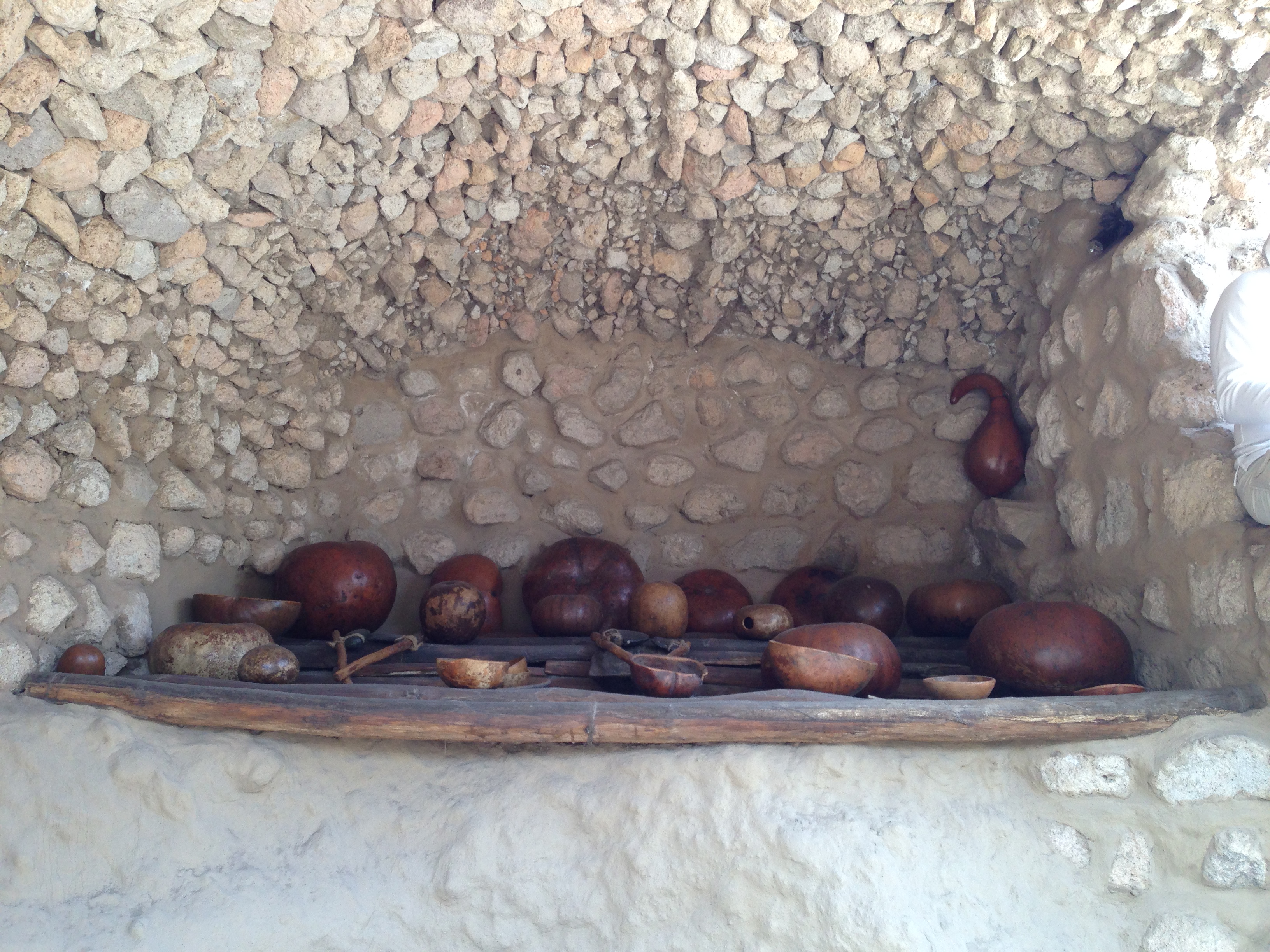
Tomb of the King.
Tomb of the King.
Gourds and Pots for the Afterlife.

Another interesting thing about early inhabitants is that they did partake in head shrinking. It is a 5 or 7 step process to shrink a head (I can’t remember, I was a little mortified during this part of the tour.) In some cases it was done to enemies and then warn or displayed as a trophy. In other cases it was in honor of deceased royalty or maybe a family member you wanted to honor. It is not really done anymore mostly because it is outlawed in Ecuador. In the 1930s, the Ecuadorian and Peruvian governments made it illegal to sell, own or trade shrunken heads. (Before that you could buy one for about $25.) In the 1940’s, the U.S. followed suit. The sale and purchase were outlawed but it is still taking place in the black market. It is believed that today 80% of shrunken heads on the market are fakes – monkey heads or made from leather. For a period of time the shrunken head trade was a huge business for Ecuador and Peru.
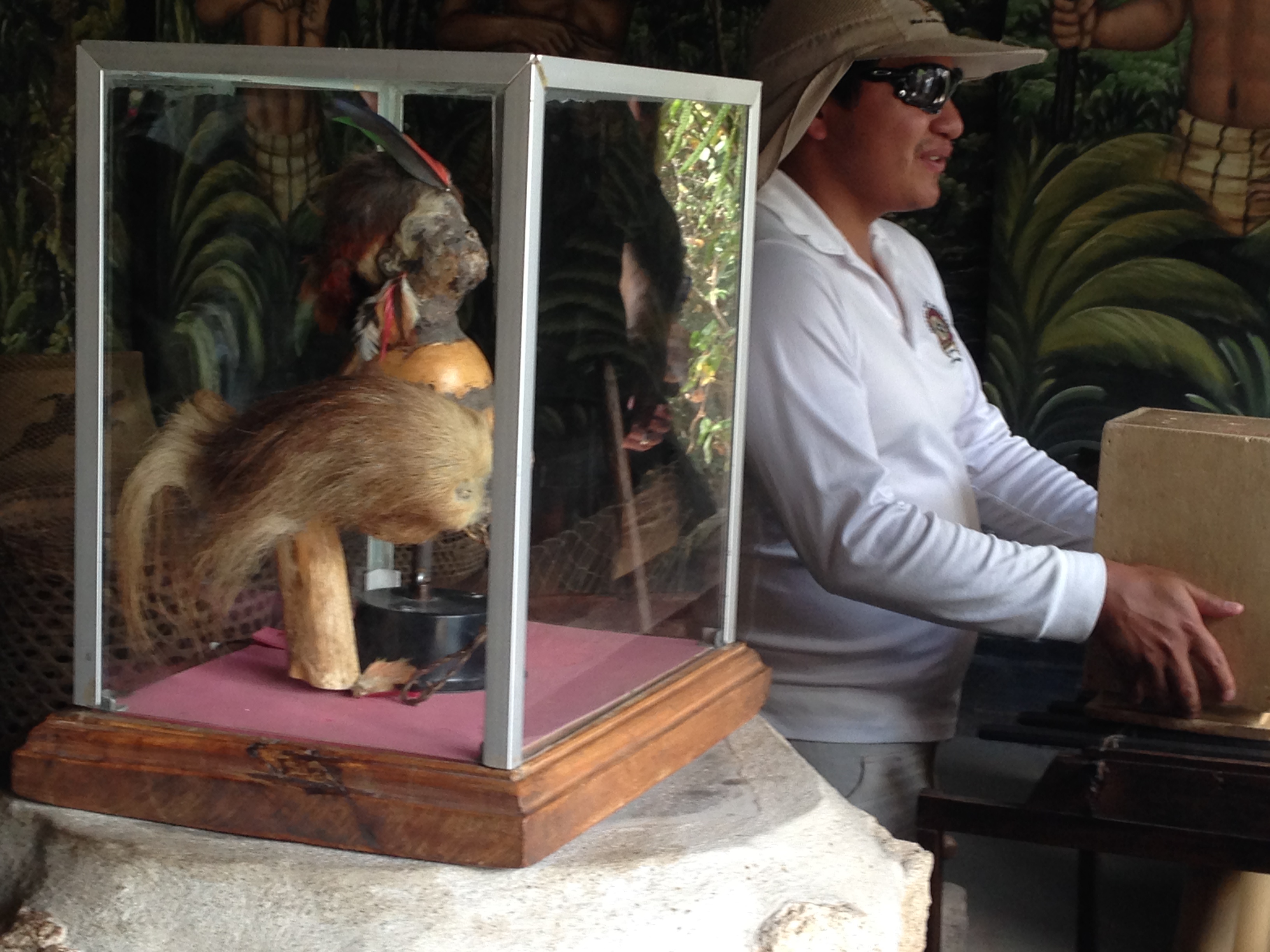
Shrunken Heads - What Else Would They Be?
Shrunken Heads – What Else Would They Be?

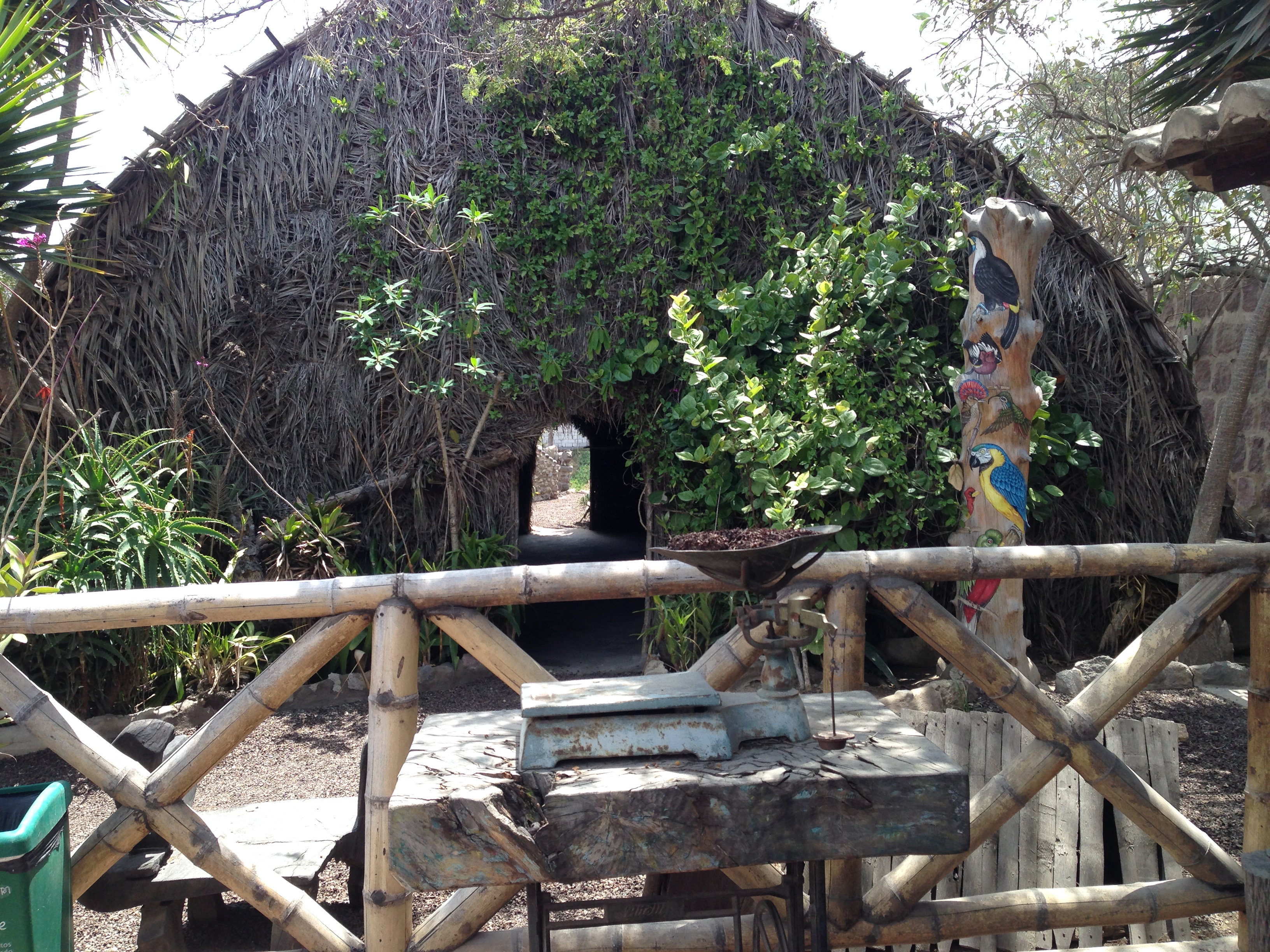
Overall it was very interesting to learn about different Indian tribes and see parts of how they lived and in some cases are still living.  The photo below is of a woman’s house (I cannot remember her name) that lived in this location almost on top of the equator until she died at age 114. It’s her actual house, but, I am sure they refurbished it for tourists. She made Chicha de jora which is basically a corn beer prepared by germinating maize, extracting the malt sugars, boiling the wort, and fermenting it in large vessels, traditionally huge earthenware vats, for several days. Her and her “herd” of Guinea Pigs lived in this house. (Did I mention that Ecuadorians usually keep their Guinea Pigs in the house?).  I guess easier to pluck out of the cage to prepare for dinner.
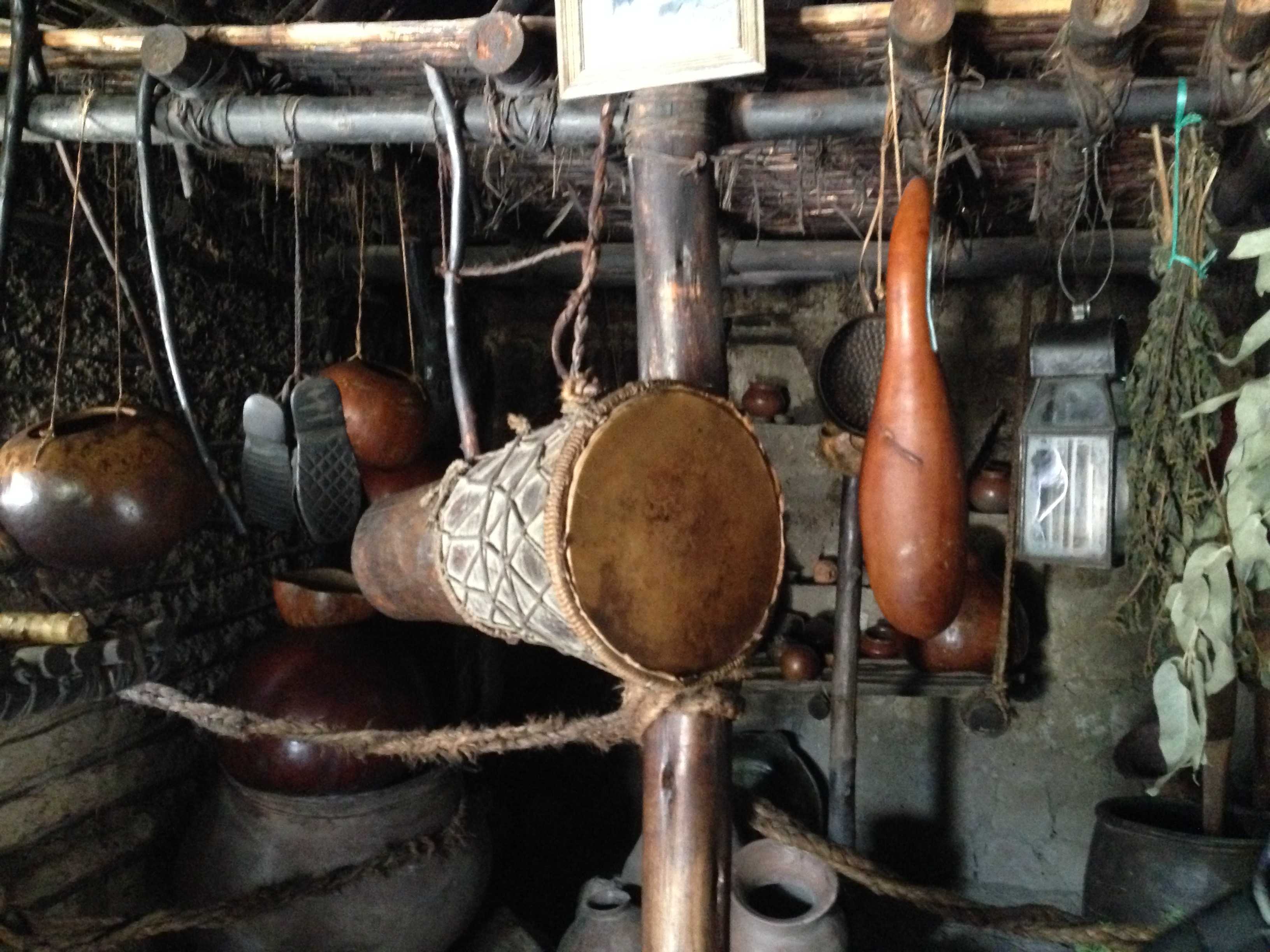
Woman's House.

Authentic Native Hut.

Finally we were at the exact location of the “real” Middle Earth. This part of the tour was why we were here and as promised, there were several “scientific experiments” that we could take part in. Had the GPS identified the real latitude 0’0’0”? We were about to find out!

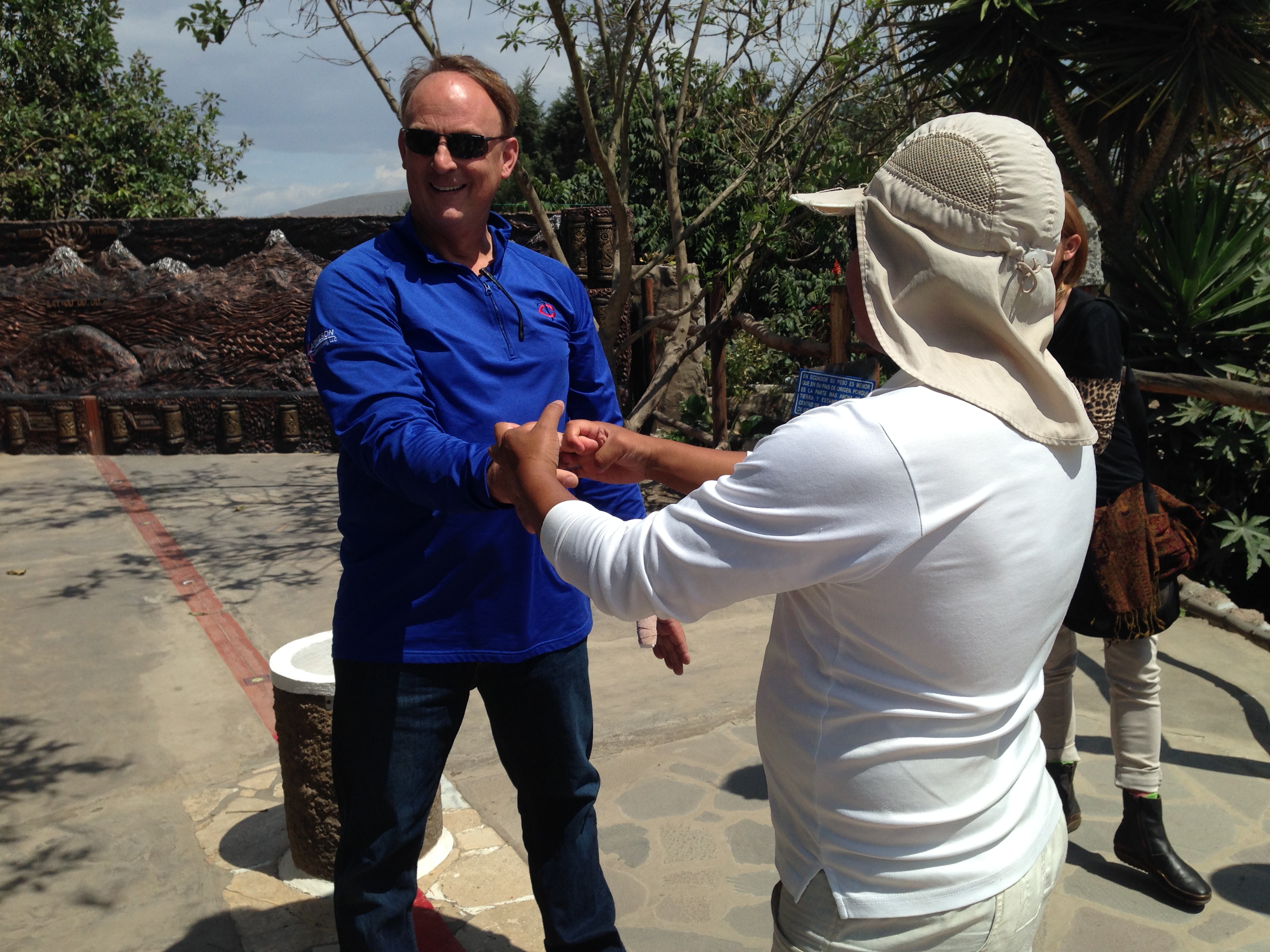
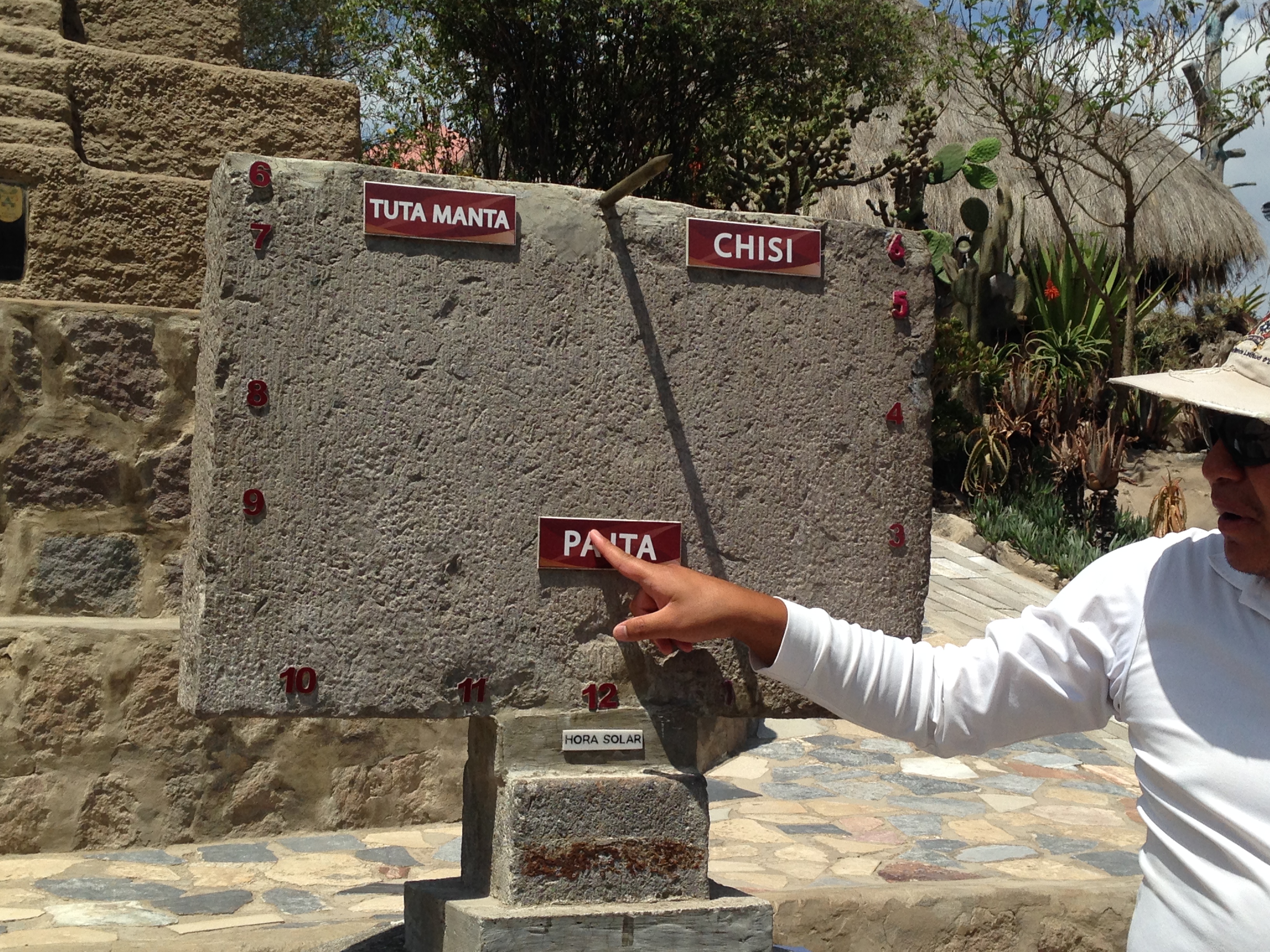
One of the experiments was a sink with water and leaves. When the plug is pulled at the center (Equator) line, the water flows straight down – no swirl. When moved 10 feet to the left the water/leaves swirled clockwise – when moved 10 feet to the right, the water/leaves swirled counter clockwise. Another experiment was balancing a raw egg on a nail head – easy at the equator. Other experiments included tests of strength 5 feet off the equator and then exactly on it. It seems that both forces are pulling you when you stand exactly on the equator and it is much more difficult to do simple strength tasks. I could easily pull Tod’s arms down with 2 fingers on the Equator and 5 feet off the Equator I could not do it with 2 hands much less 2 fingers. You have really got to go there and check it out for yourself – it reminds me of a vortex effect.
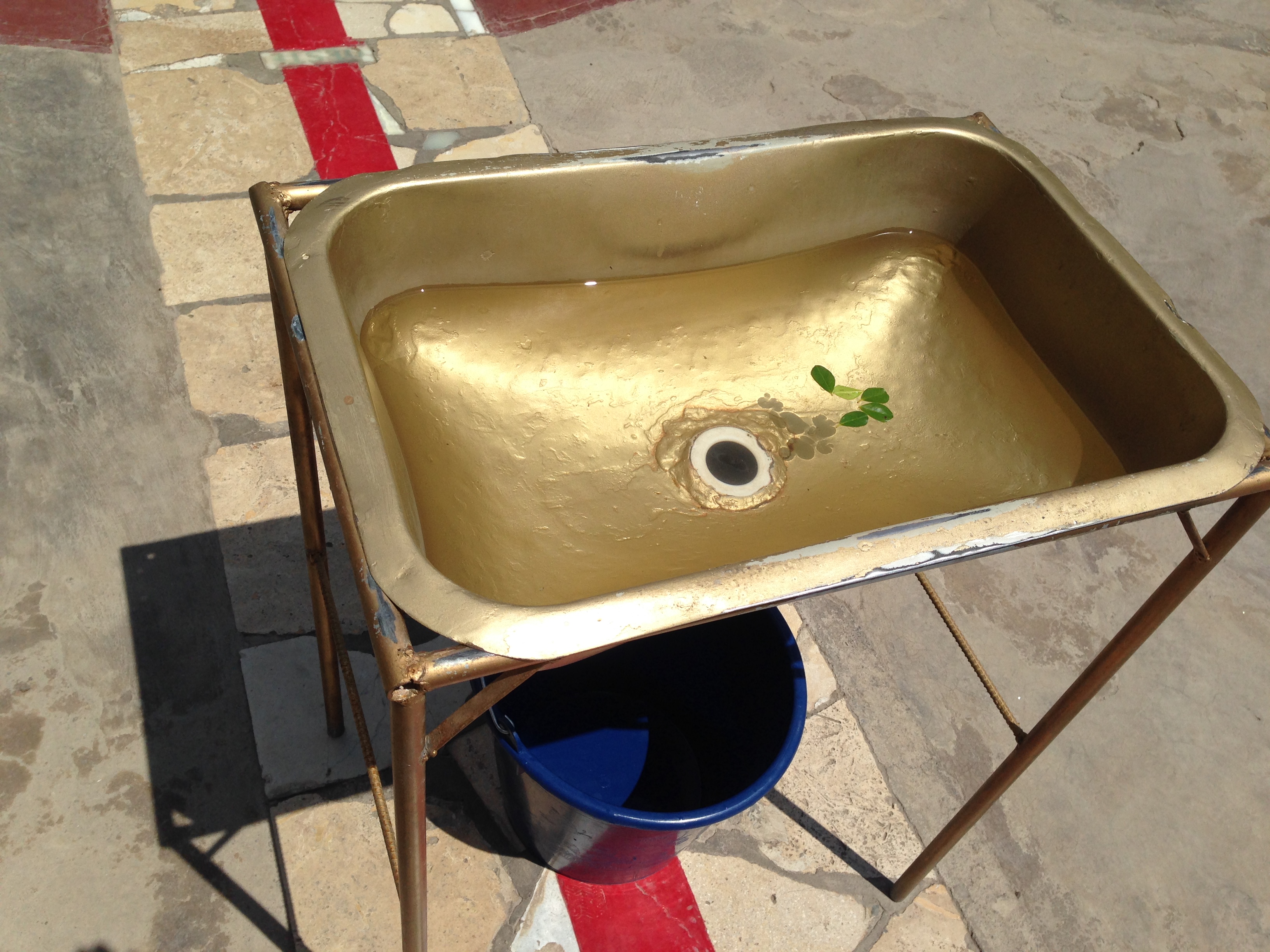
Swirl Test - Passed!
Swirl Test – Passed!
Sun Dial.
Sun Dial.
No Strength Zone.
No Strength Zone.
Balance an Egg? Easy at the Equator!

I am so glad we went back to find this place. I do believe this is the real Equator line in Ecuador and the early French expedition team were really 700 – 820 feet off the mark but again, considering the tools they had to work with I believe they did a remarkable job!

I cannot believe this trip is almost over. The time has gone by so fast and we were having so much fun. Ah well, until the next post, take care. T & M
October 25 – Gold and Goblins

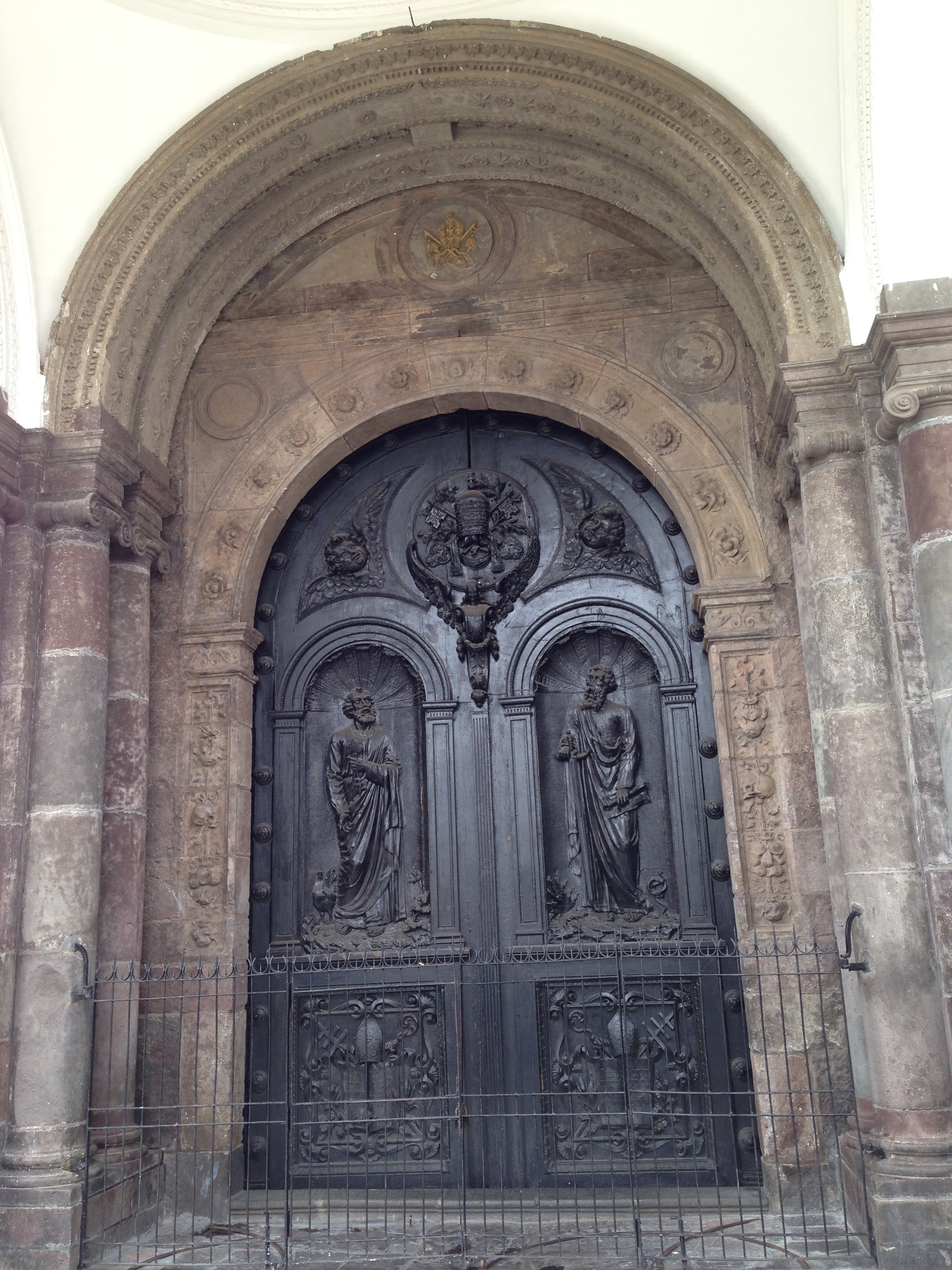
In one of my early posts I shared the story about the Sunday street market in Old Town and I told you about the cathedral, Iglesia de la Compańia de Jesus. This was the cathedral that took 160 years to build and was under construction from 1605 – 1765. It’s the one that looks like a golden palace or temple on the inside and we could not take pictures. We still could not take photos, however, we happened to get there at the beginning of a service, so were able to attend mass in this awesome and breathtaking cathedral! It was amazing, and even though the mass was in Spanish and we could only understand parts of it, it was still absolutely spectacular! What an unexpected treat. Different Cathedral below, but, I just love these doors.

Cathedral Doors.
Cathedral Doors.

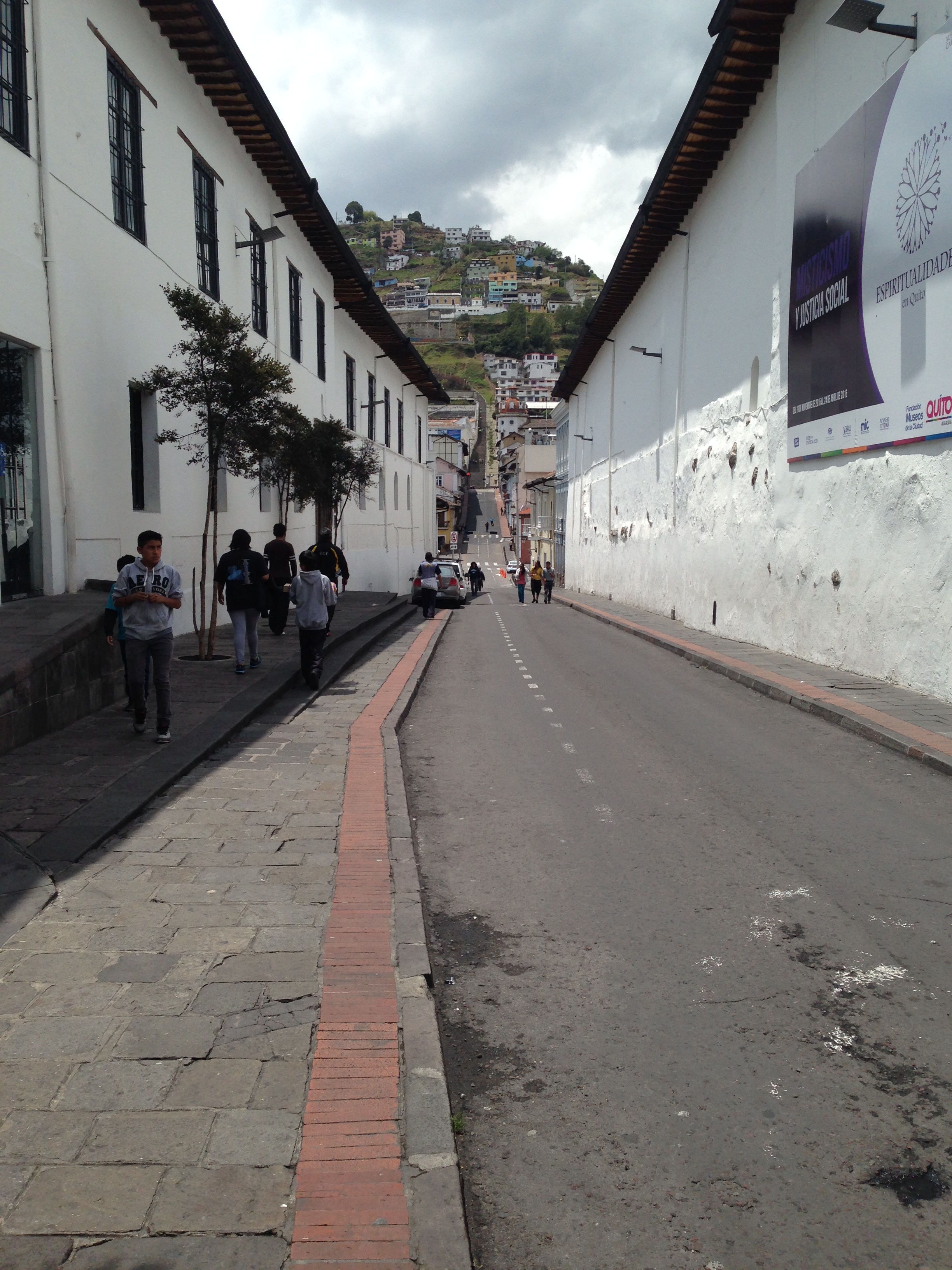
The streets of Old Town like most of the “Old Towns” in Ecuador are narrow and really not designed with cars in mind. This street is empty only because it is Sunday so the roads are closed to most traffic because of the market.

Carriage Size Streets.

There were street musicians, mimes, super heroes and of course all the normal vendors.

Super Heroes.
Super Heroes.
Street Band.
Street Band.

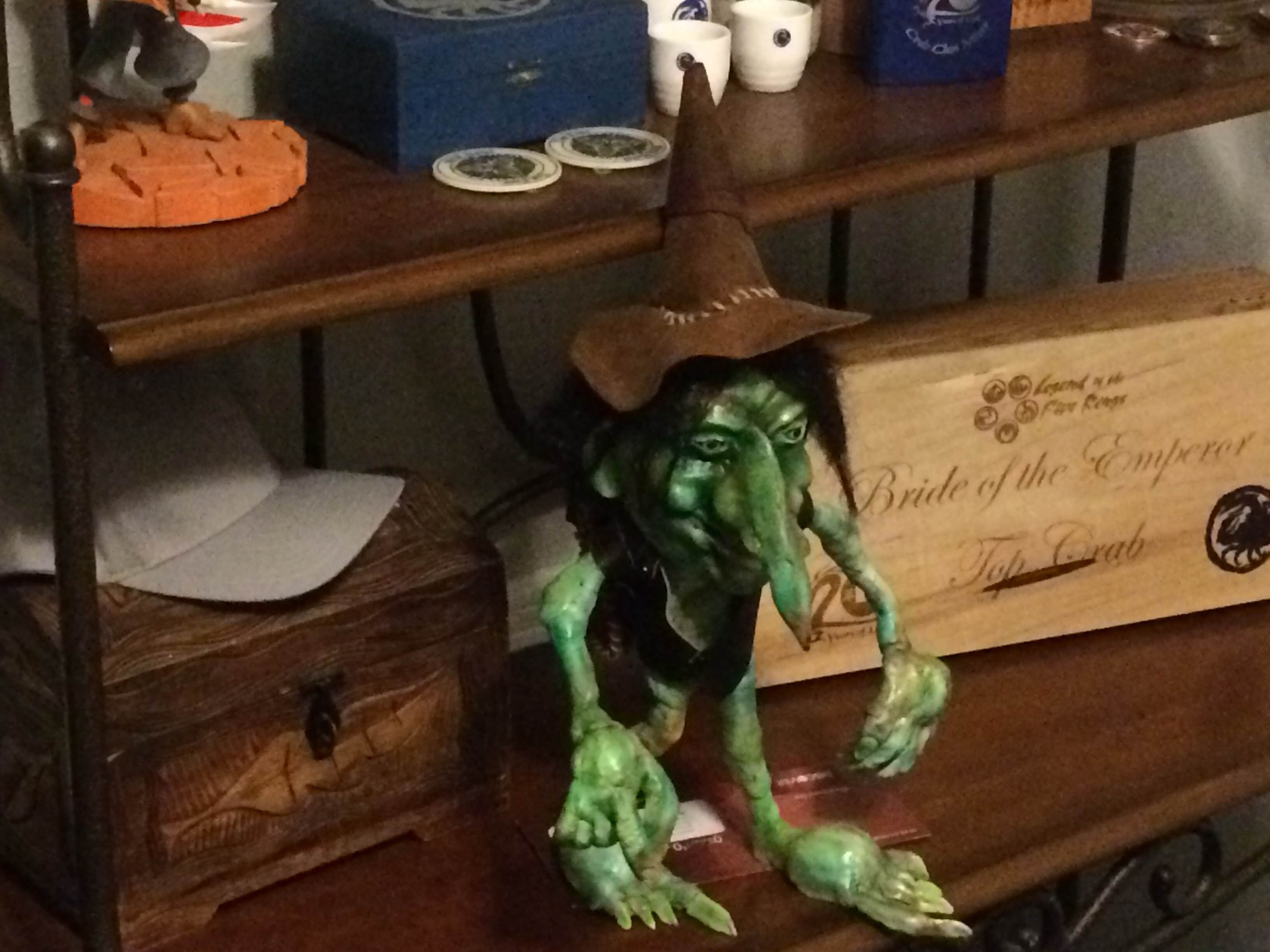
We were walking along looking for a comic book store we had seen the last time we were here and that is when we saw him. I think we both saw him at the same time. He was in the showcase window of a small little shop, and we said, “That’s it, that’s the one!” We had been searching all over for the perfect purchase and here he was, right in front of us! My first reaction was, “He’s perfect, but, how will we ever get him home without breaking him in a million pieces?” Tod, always the positive can-do attitude said simply, “Oh, I’ll get him home.” So it was settled, we went inside, I told the shopkeeper which of his creations we wanted and asked to have it padded for travel (I didn’t know how to ask for bubble wrap). Anyway after about 15 minutes of wrapping our Gremlin in old newspaper and rags we completed our purchase and were on our way. (We both hoped Jeremie would like it as much as we did because soon it would be his.) He is bigger than he looks in the photo.

Green Goblin.
Green Goblin.

October 26 is the trip to the proclaimed “real” middle earth!

October 24 – Lizards, Crabs and Moby-Dick

October 24th was a travel day, our taxi picked us up at 6:00 AM so we could get to the Ferry dock in time to catch the 7:00 AM Ferry to Baltra then the bus to the airport (which by the way was not open when we got there, well, it was open so we could get in and stand in line but the workers were not in place. You see many of them took the same Ferry ride over as we did.) But nothing really exciting to tell about traveling today so I will use this post to share a few more photos of Galápagos’ iguanas and crabs and tell you about a great book.

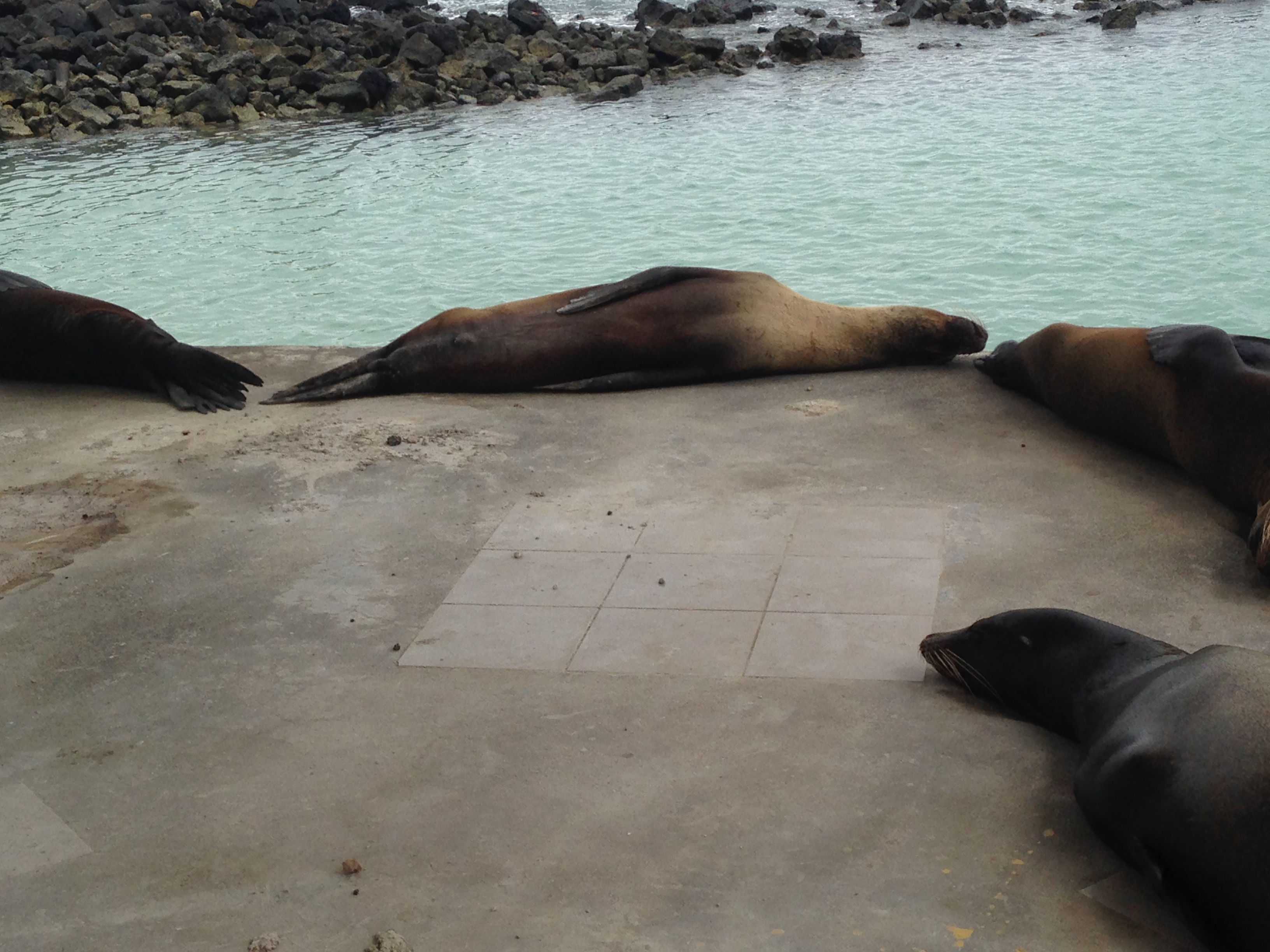
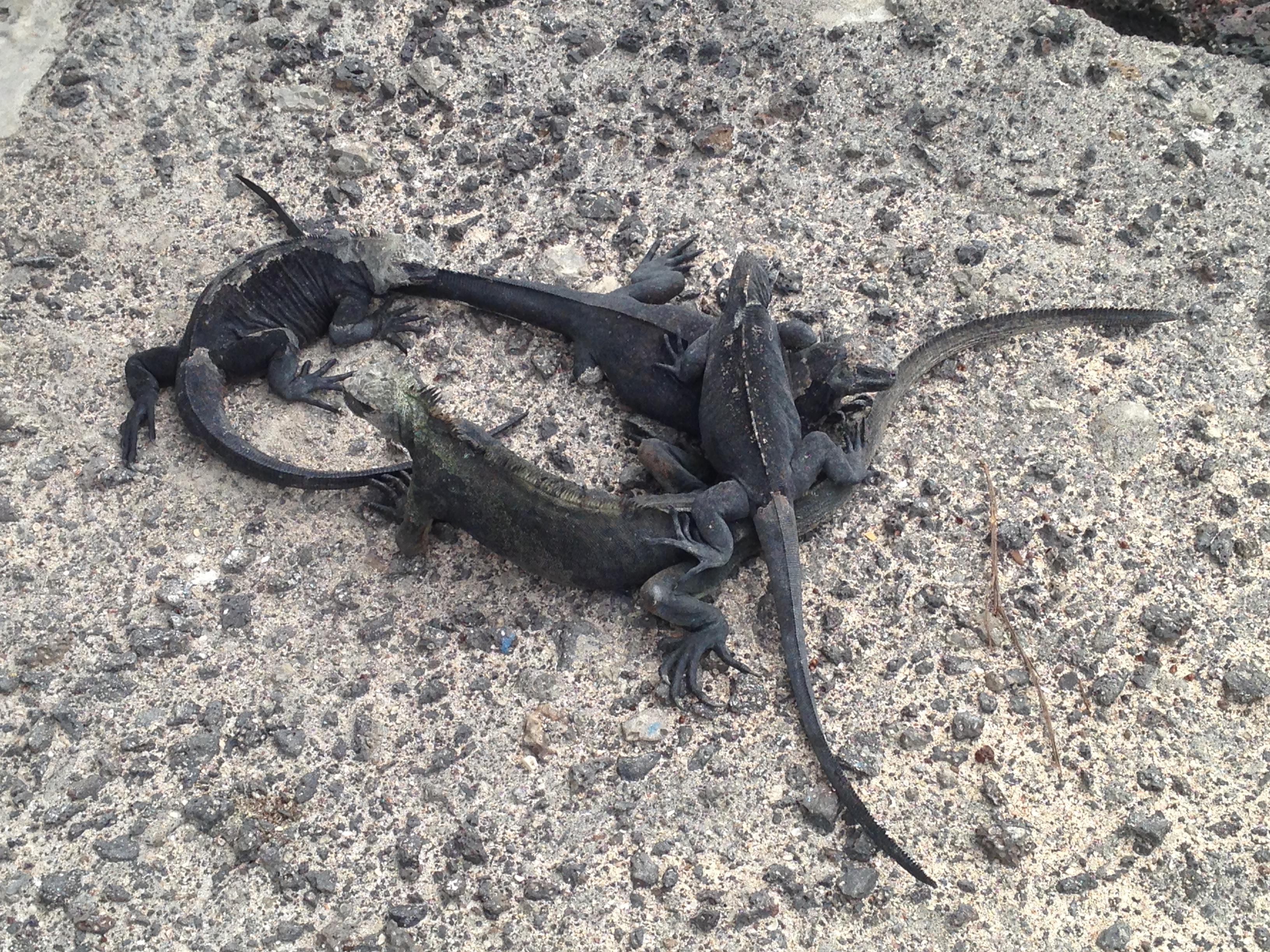
On the sea wall / pier next to Fisherman’s Wharf a group of sea lions seemed always to be lined up at the end of the pier making a semi-circle of sea lions. Not to be outdone, marine iguanas made their own “lizard” ring.

Ring of Lions.
Ring of Lions.
Lizard Ring.
Lizard Ring.

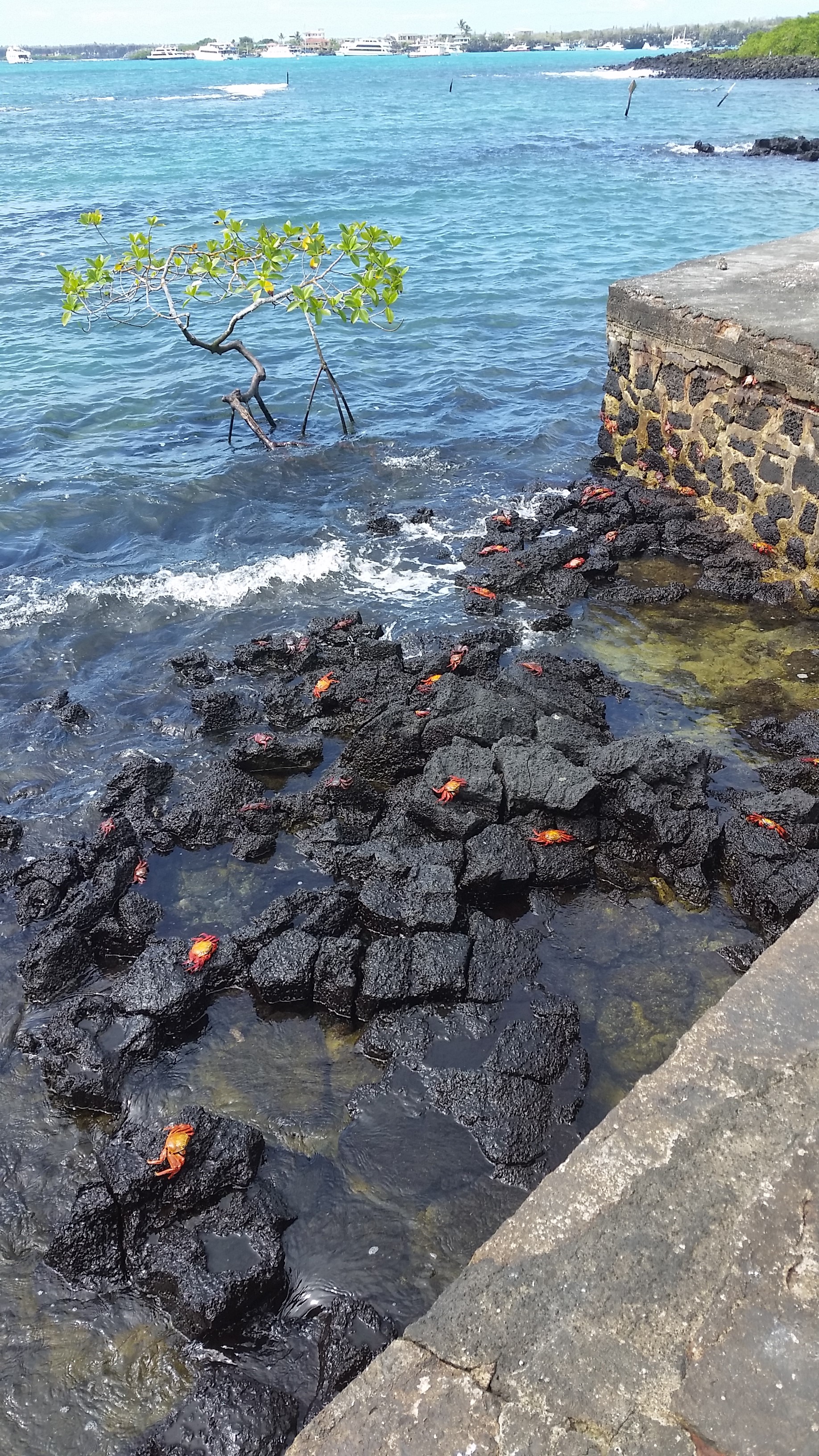
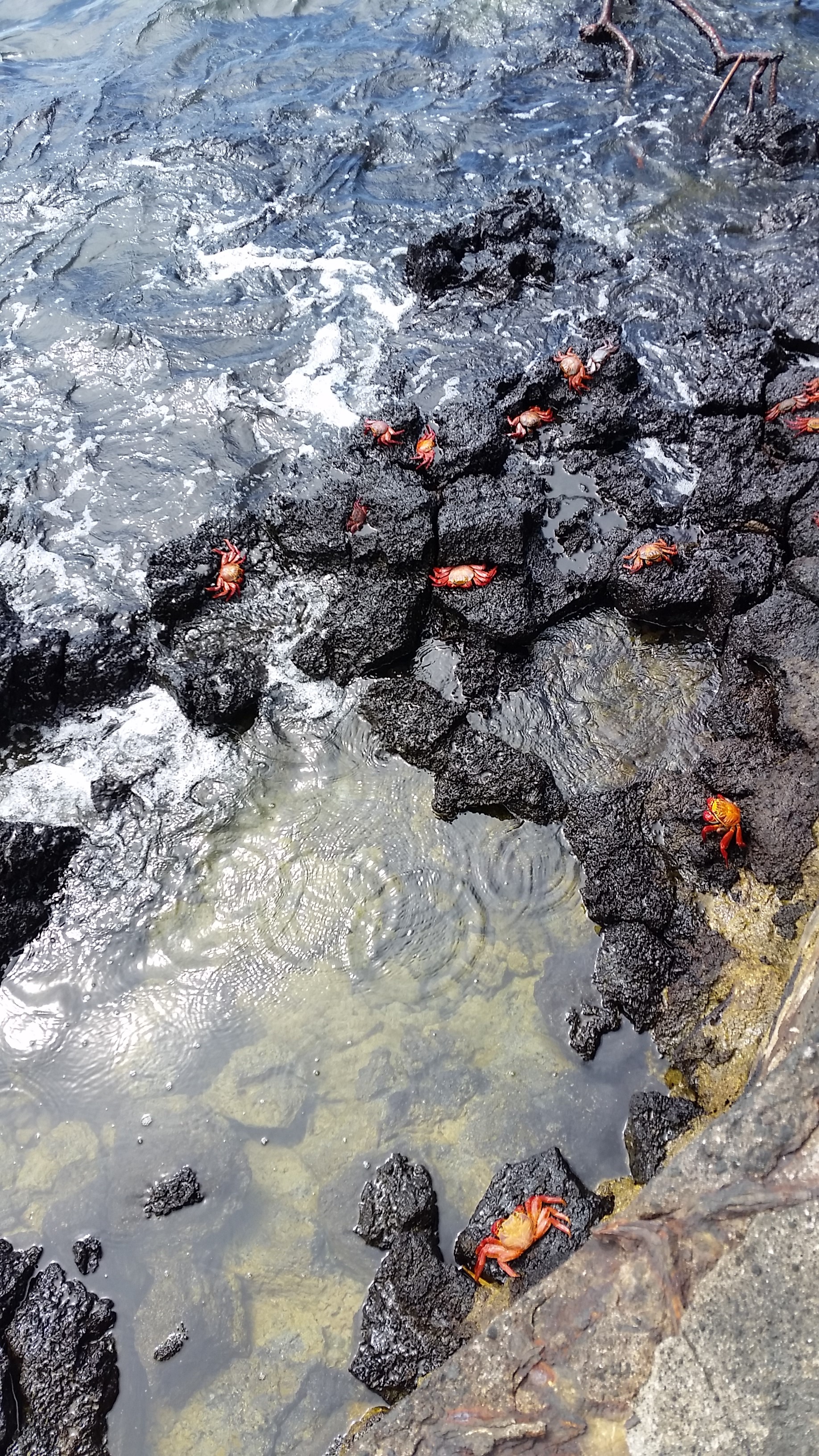
Everyplace along the sea wall or where there were any volcanic rock, there were hundreds of crabs either sunning themselves or trying to scurry away from some unknown threat or to a better sunning spot.

Looks Like a Crab Run!
Crabby Breakwater.
Crabby Breakwater.
Crabby Water.
Crabby Water.

There were so many great memories with this trip, but the Galápagos’ Islands was definitely a highlight which we hope to experience again someday!

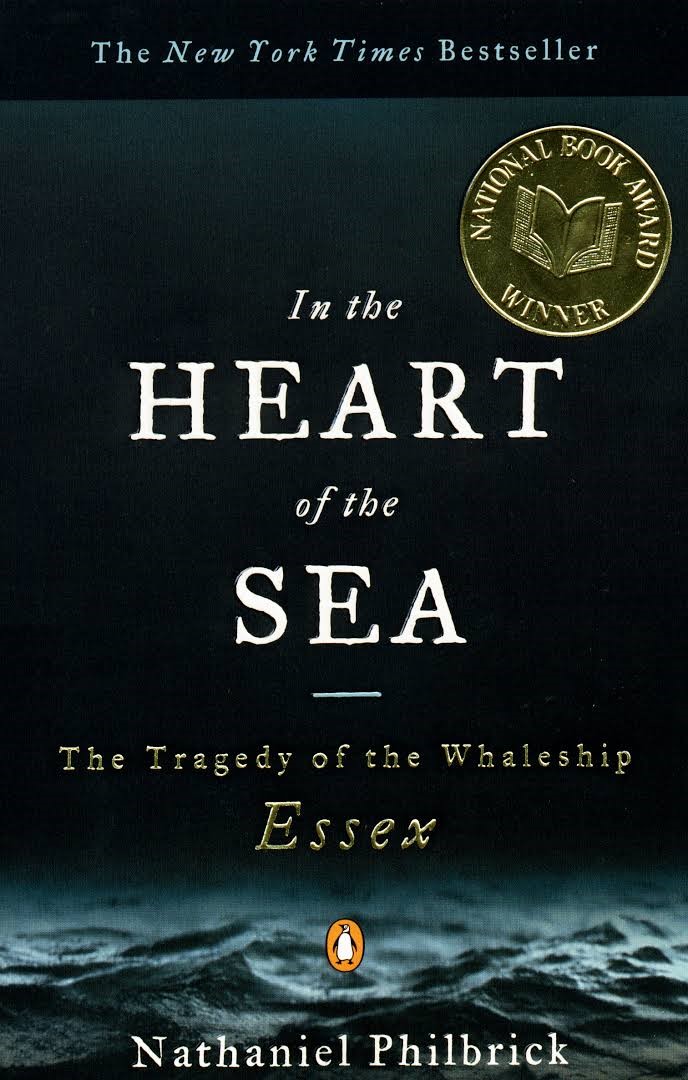
Great Read: With my Galápagos’ travels, I started and finished the book “In the Heart of the Sea” by Nathaniel Philbrick. The story is based on the tragic events of the Whale-ship Essex. (The Essex is the Whale-ship that was attacked or rammed by a whale and was the true life event that the fictional book “Moby-Dick” was written about – first published in October, 1851 by the name “The Whale”.)

This true life story really appalled me when I started reading it, primarily because of the cruel and inhuman method they had for killing whales, but, also because of how the young boys (14 – 15 -16 years old), and African Americans were abused and misused when the ship was out to sea. The more you get into the book, the better it gets. It really is very good, once you get past the butchering of the whales and abusive treatment of boys and black men.

But the really cool thing about this book is that I started it on one of our flights (likely to Cuenca) and by the time we were flying to the Galápagos’, I was reading about how the Essex stopped in Ecuador. The final mainland stop for the Essex was in Ecuador for stocking up on supplies and then off to the “uninhabited” Galápagos’ Islands to pick up Tortoises for additional food. The way the Tortoises were abused/starved to death was also sickening but really it is an interesting historical book about whaling and the beginning of the oil industry. I loved reading about historical events that started in the US and passed through Ecuador while we were visiting there.

Heart of the Sea - Great Read.
Heart of the Sea – Great Read.

At this point in time we were back in Quito, with plans to once again attend the Old Town street fair which is held every Sunday. Until next post, be well!

October 23 – Lobsters, Lions and Pelicans

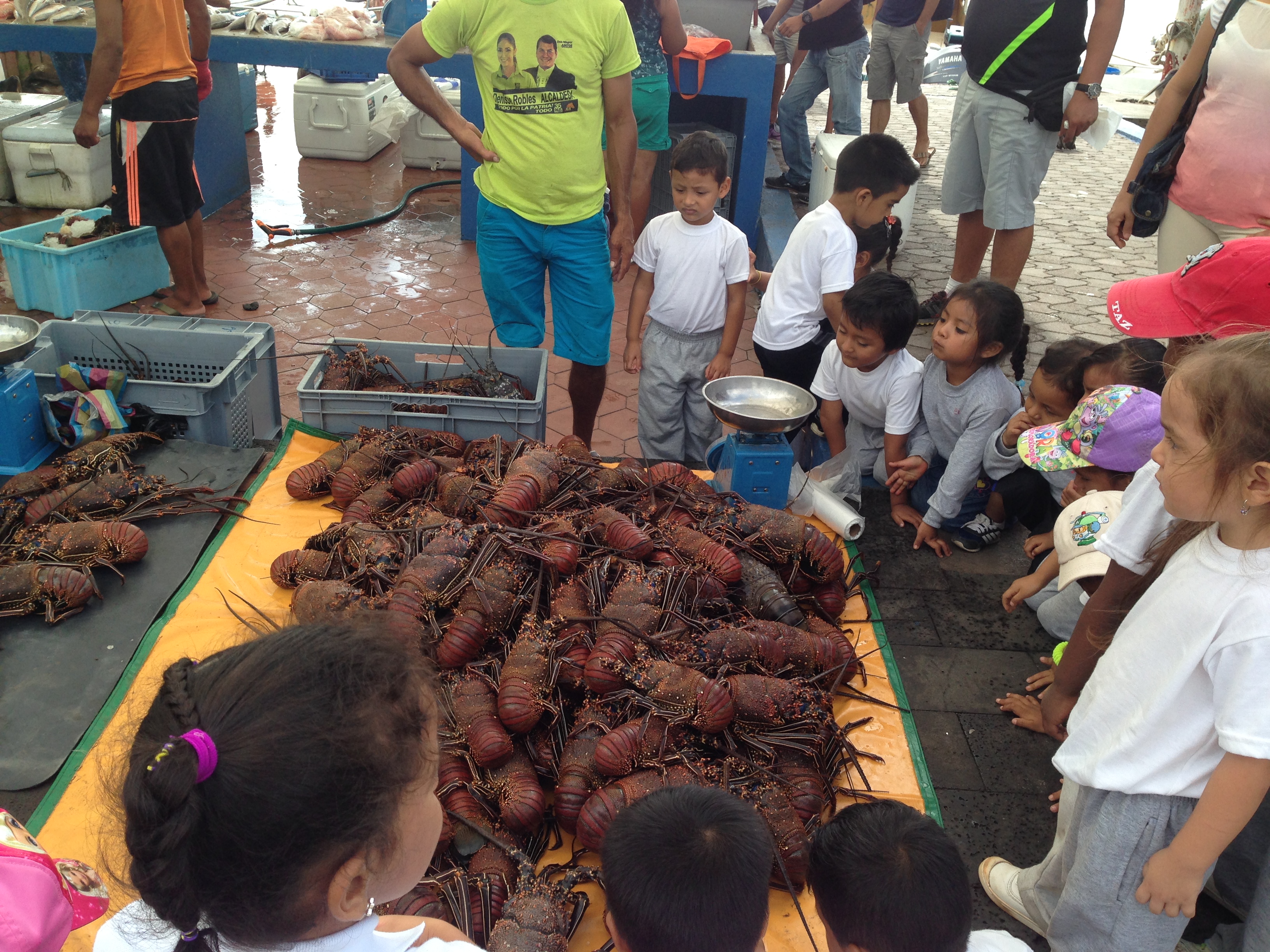
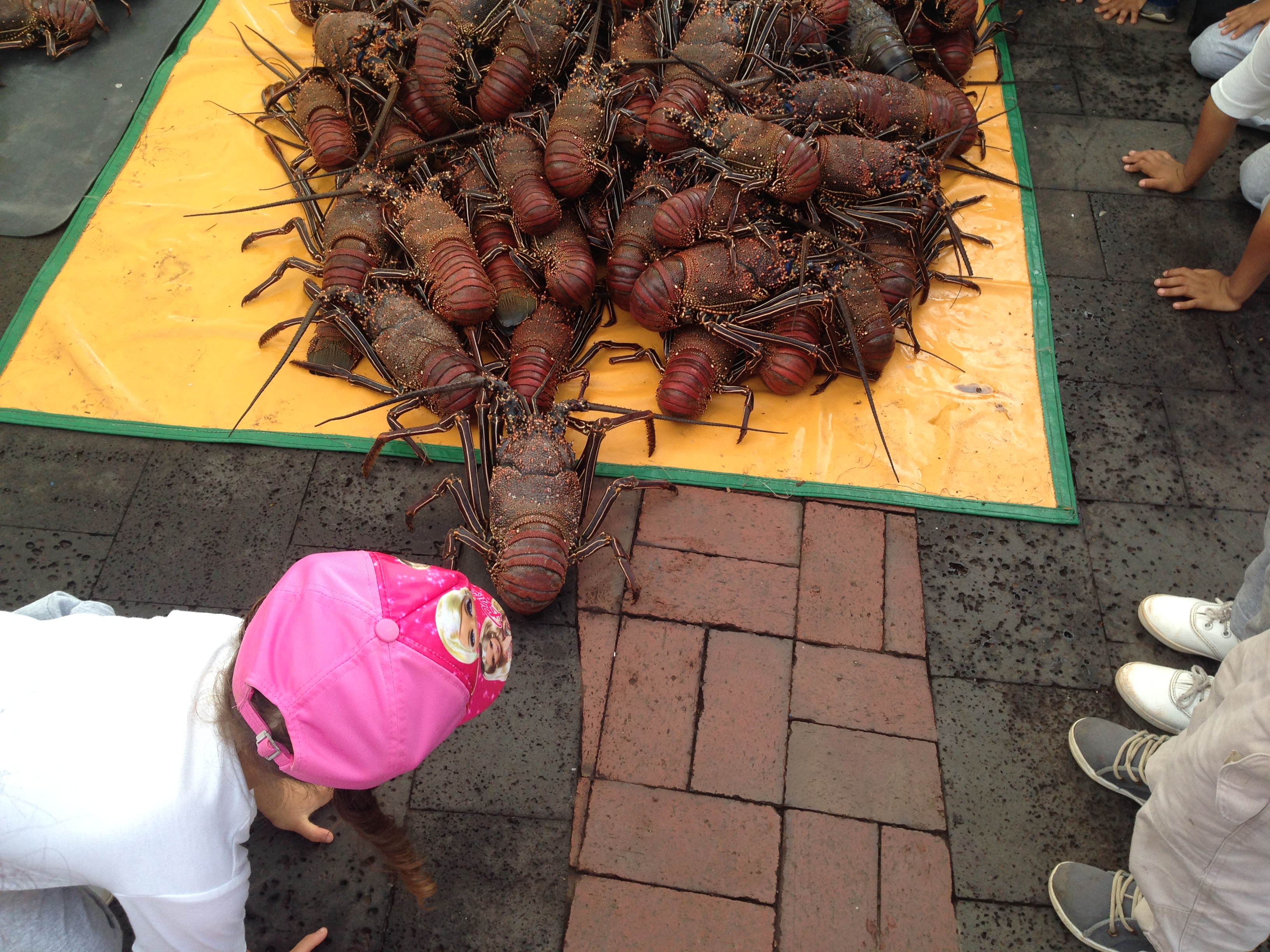
One of the coolest things about a seaside village (well besides the ocean and all the sailboats), is the sale of the “catch of the day” at Fisherman’s Wharf. There were several types of fish, crabs and of course, fresh lobster still crawling around. Mind you this was all disturbing to a vegetarian but it was an experience I would not have missed. This day was particularly fun because a group of pre-school children were there on a field trip. In the photos below the little girl was screaming and giggling as the lobster crawled toward her, and the little boy in the next shot was bravely bragging how he would beat up the lobster (well he didn’t really brag until the lobster was placed safely back on the stack!)

Day Care Field Trip to the Wharf.
She was Screaming and Giggling.
She Was Screaming and Giggling.
He Will Protect Everyone.

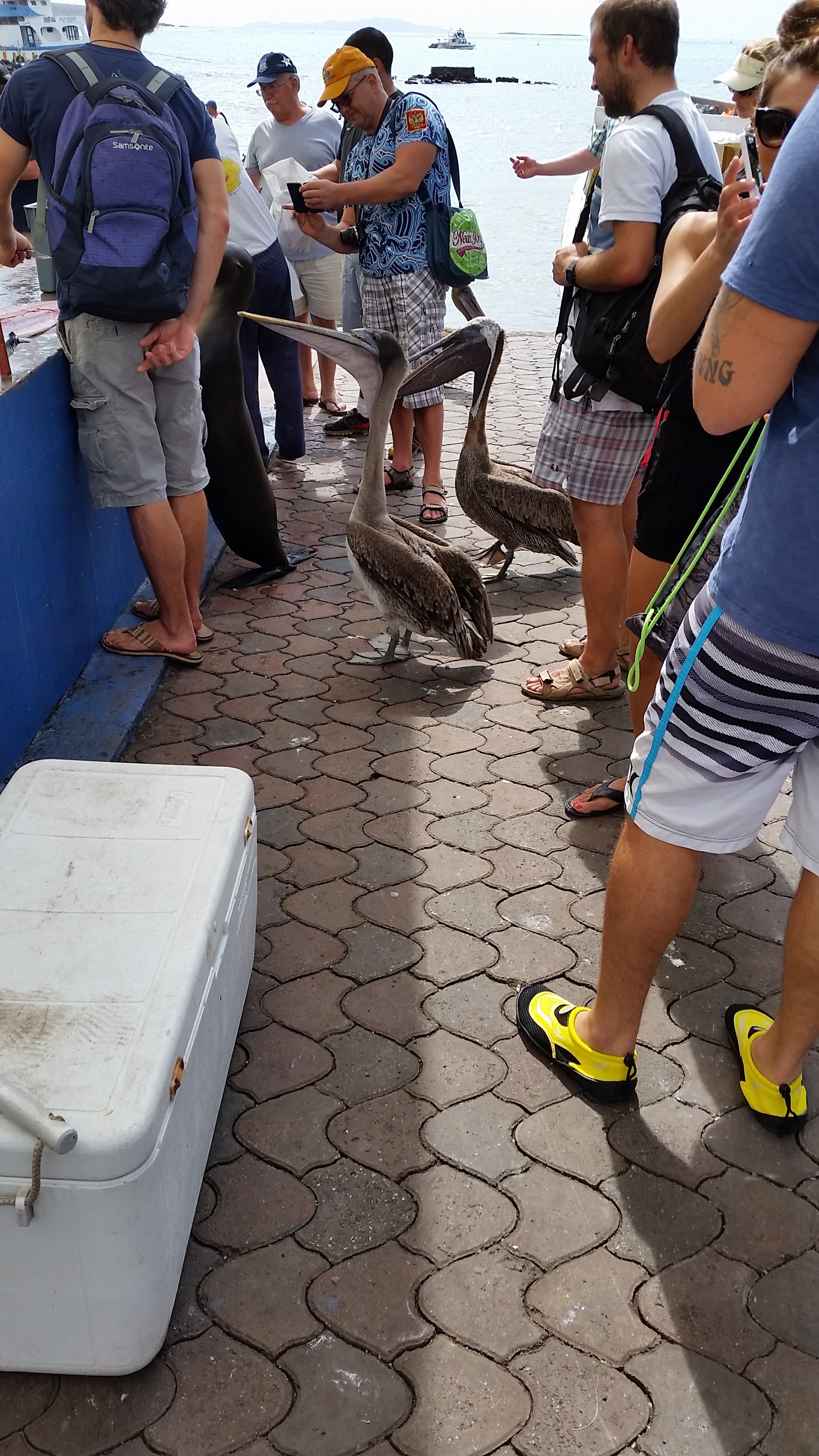
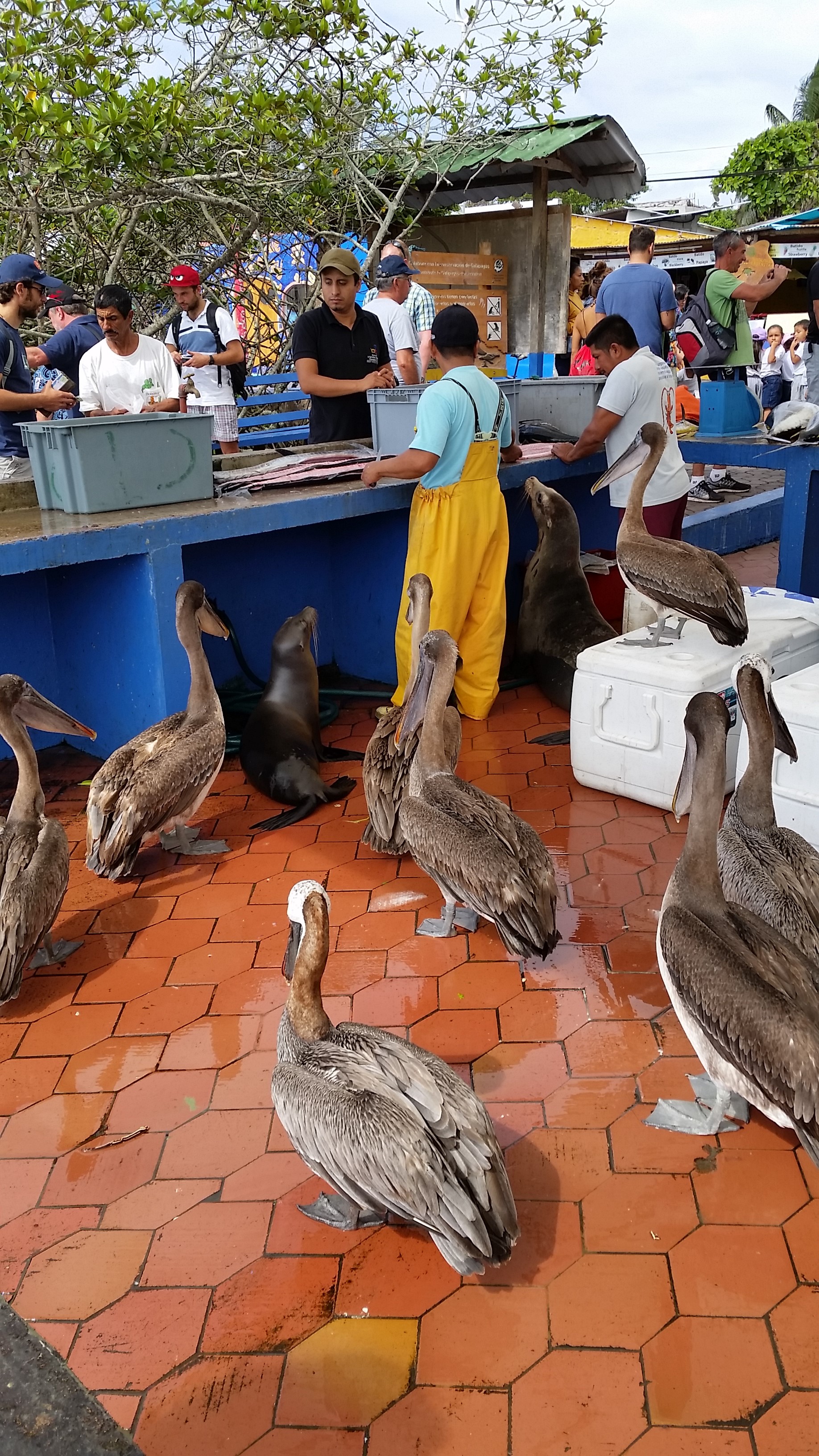
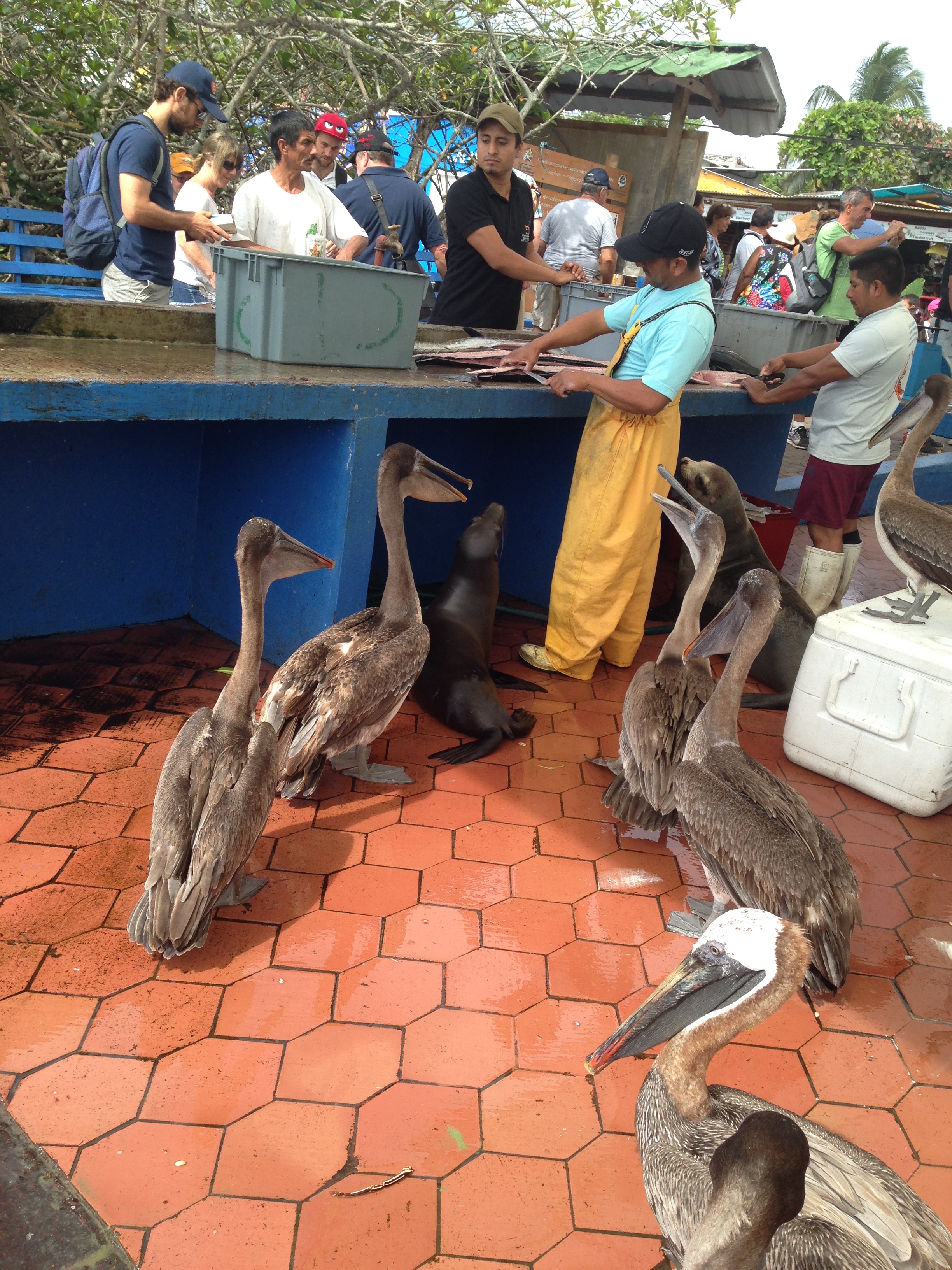
There were pelicans and sea lions begging for the scraps. Nothing hit the floor, talk about recycling at its finest. The sea lions would stand on their tail fins and “belly up” to the counter to get scraps. Some would stand next to the men cleaning fish and nudge them with their noses (just like a dog would do) to make sure they were considered first for the fish innards and skins. (Gross!)

Beggars Paradise.
Beggars Paradise.
Look Closely - Sea Lion Standing.
Look Closely – Sea Lion Standing.

These guys are on the inside with the cleaning crew. Nudging and Begging.

Beggars Heaven.
Beggars Heaven.
Pelicans are Complaining.

It was really fun to watch the sale of the catch of the day. Some of the people were locals getting dinner, others were local restaurant/hotel owners and many were just tourists like us, taking pictures that they hoped could capture and explain what they were seeing first hand.

The 24th is a travel day, but, I will use the post to share a few more Galápagos’ memories so until then, be well.

October 22 – Darwin and The Ocean

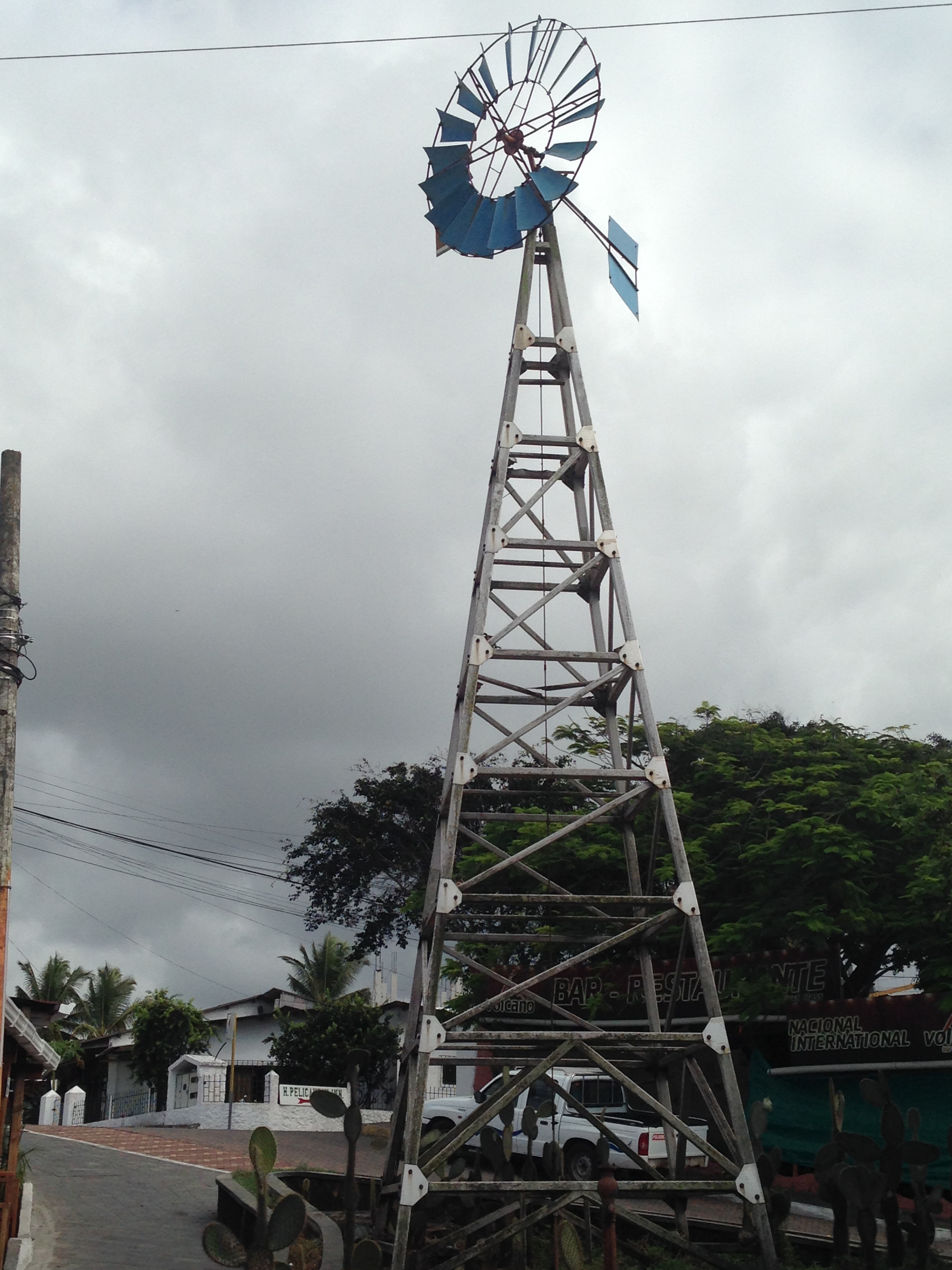
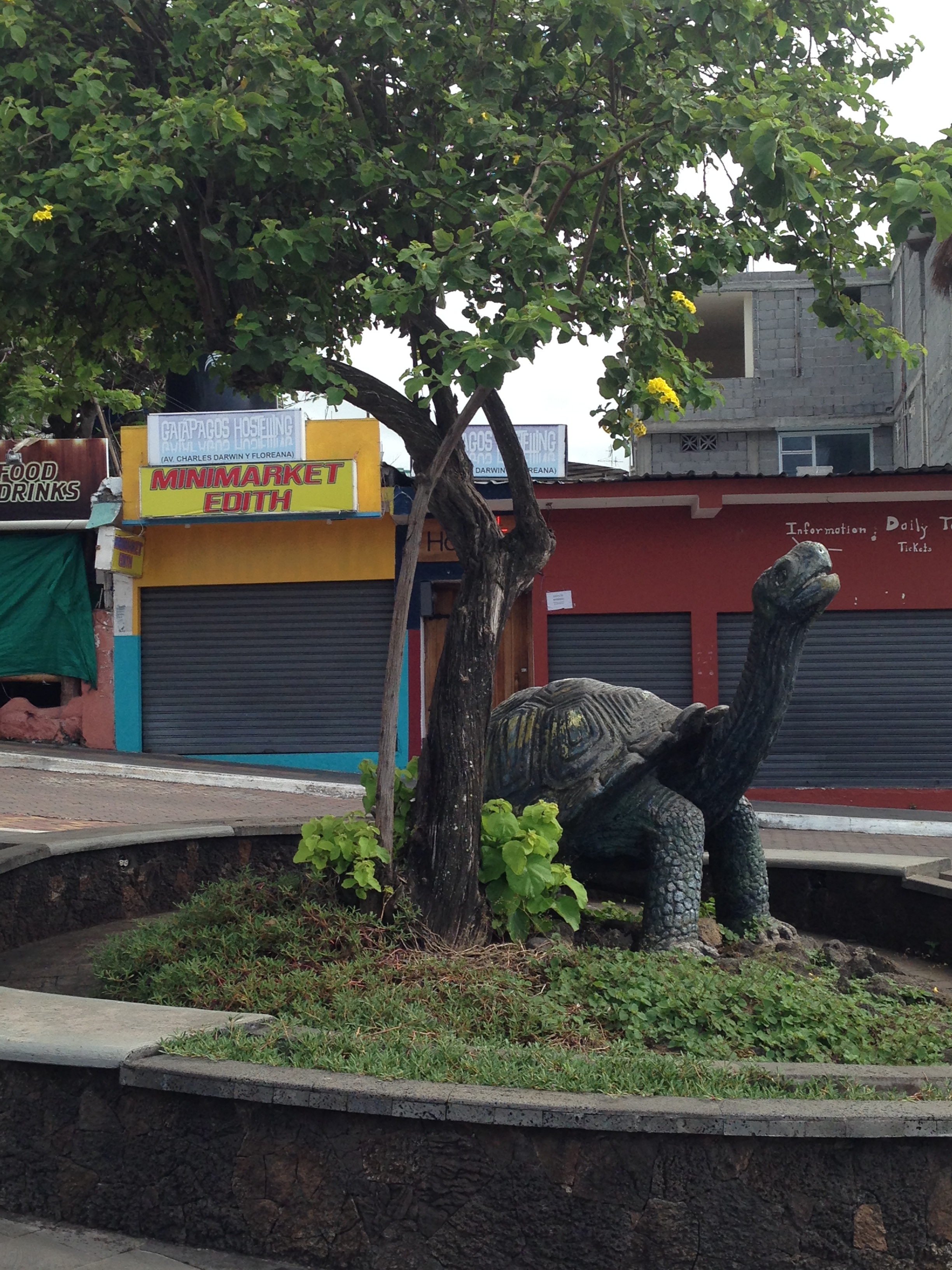
We headed to the Darwin Research Lab in the morning (This was going to be the highlight for me, it is the main thing I wanted to see in the Galápagos!) and on the way stopped to take a few photos of an actual working windmill that was sort of right in the middle of town and of the turtle statue guarding it. I don’t actually know what time it was but you can tell by the closed shop/garage doors that it was before 10:00. (Although, the fish market was open for business and the fishermen were busy cleaning and selling their catch.)

Working Windmill.
Working Windmill.
Guarding the Windmill.

As you get closer to the Darwin Lab there are many shops selling Darwin type merchandise, mostly the usual touristy type items such as t-shirts and coffee mugs.  It was a hike to get there and it was not advertised but the actual tourist buildings were closed for remolding – I was a little bummed about that but we still hiked all the trails and got to see the huge turtles and giant lizards.

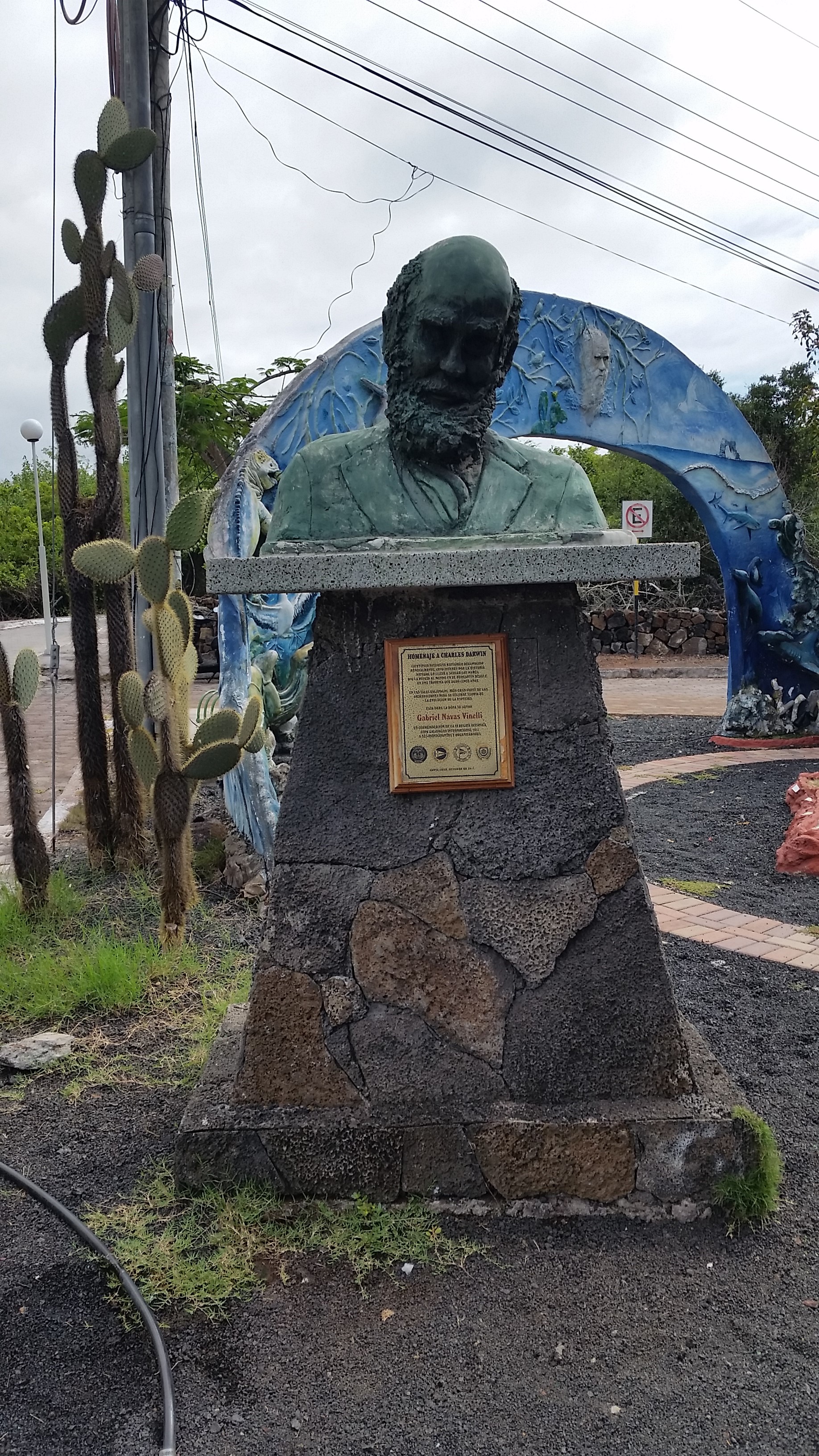
Darwin Bust at a Gift Shop.
Foundation Main Building.

Before leaving the airport visitors have to pay a $100 park fee and this gives you free access to all beaches and of course the Foundation for as long as you are on the islands.

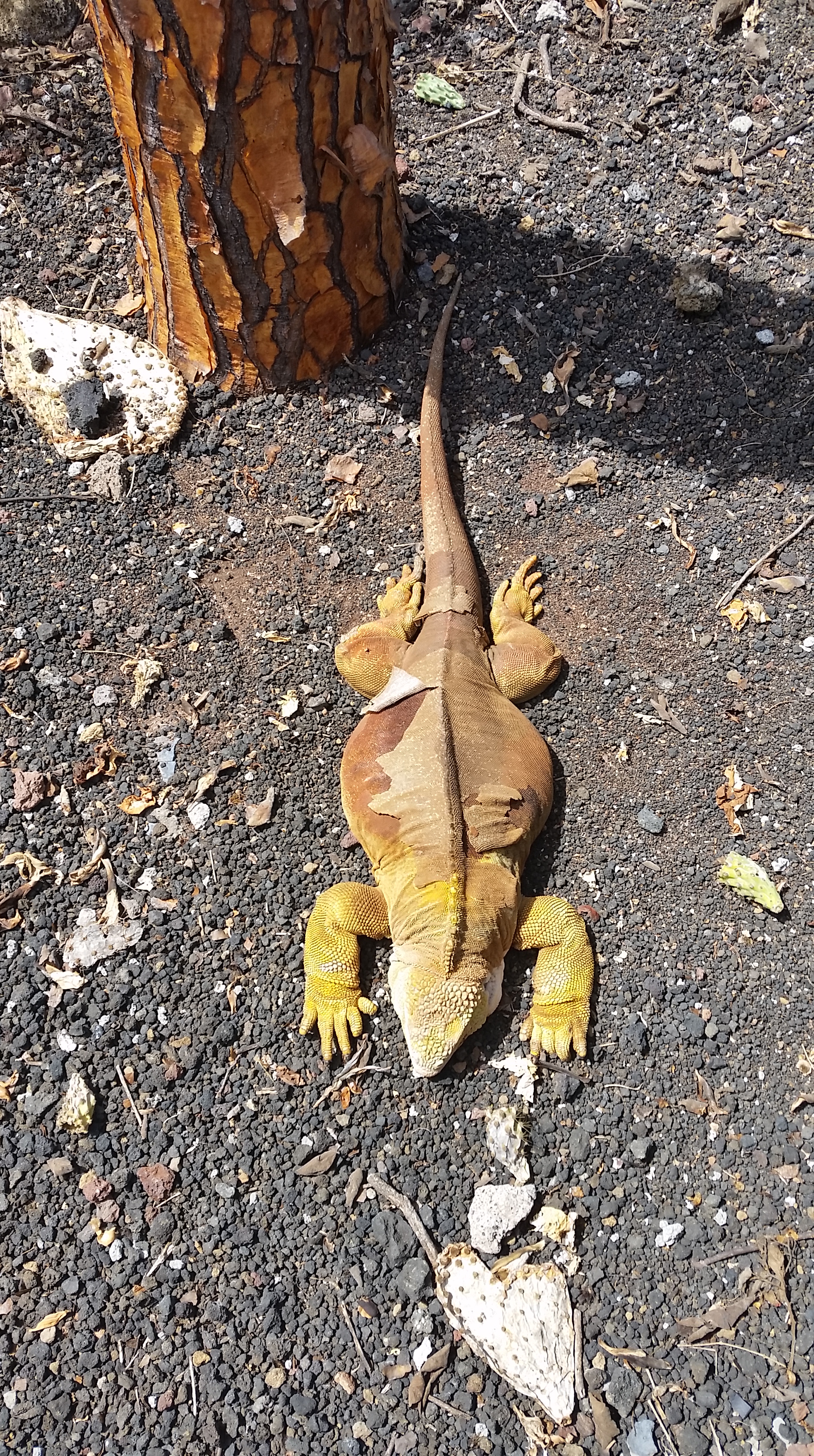
The turtles were huge and the giant lizard was 4-feet long.

Giant Turtles!
Giant Tortoises!
More Giant Tortoises.
This Guy is 4-feet Long.

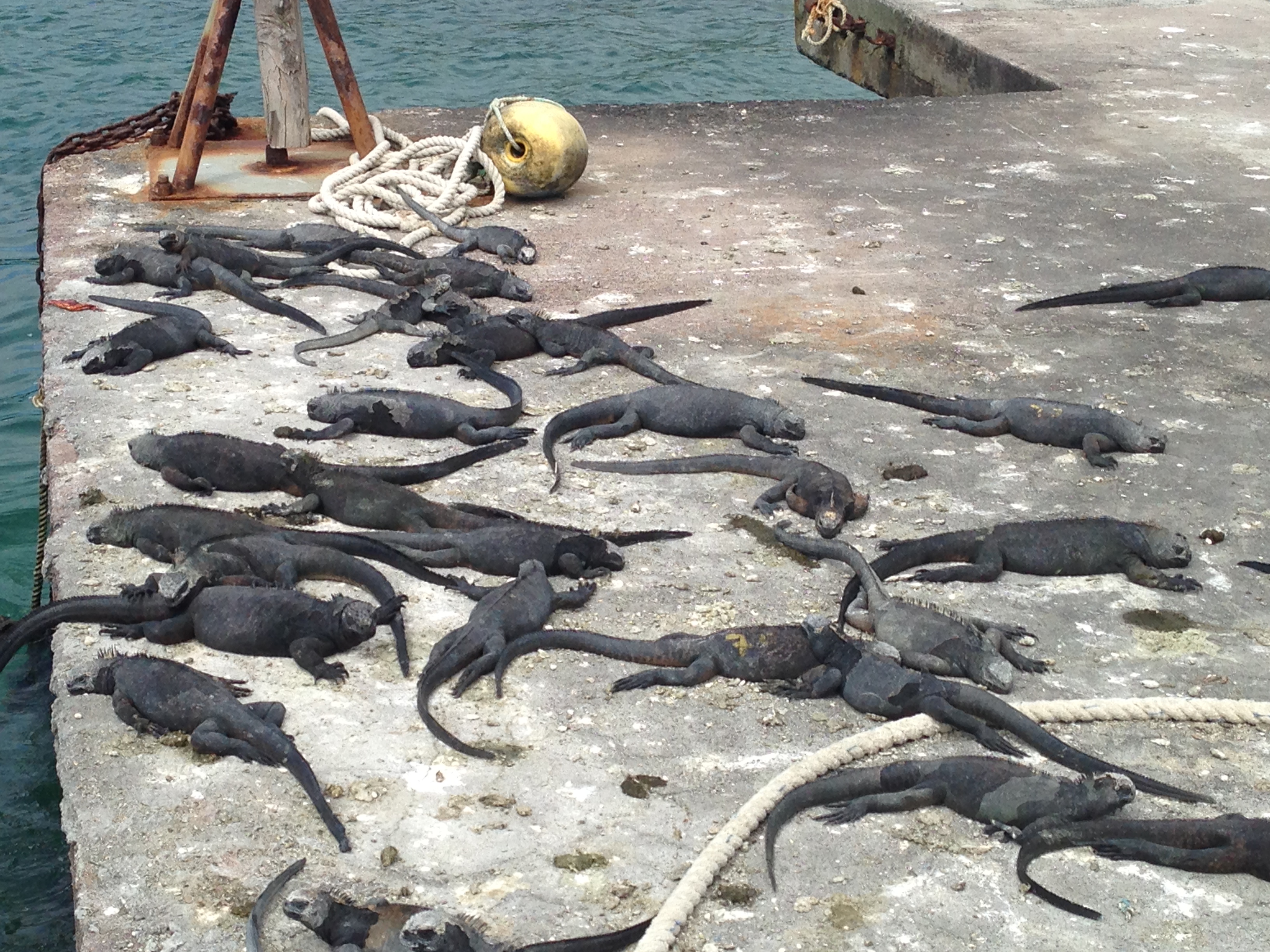
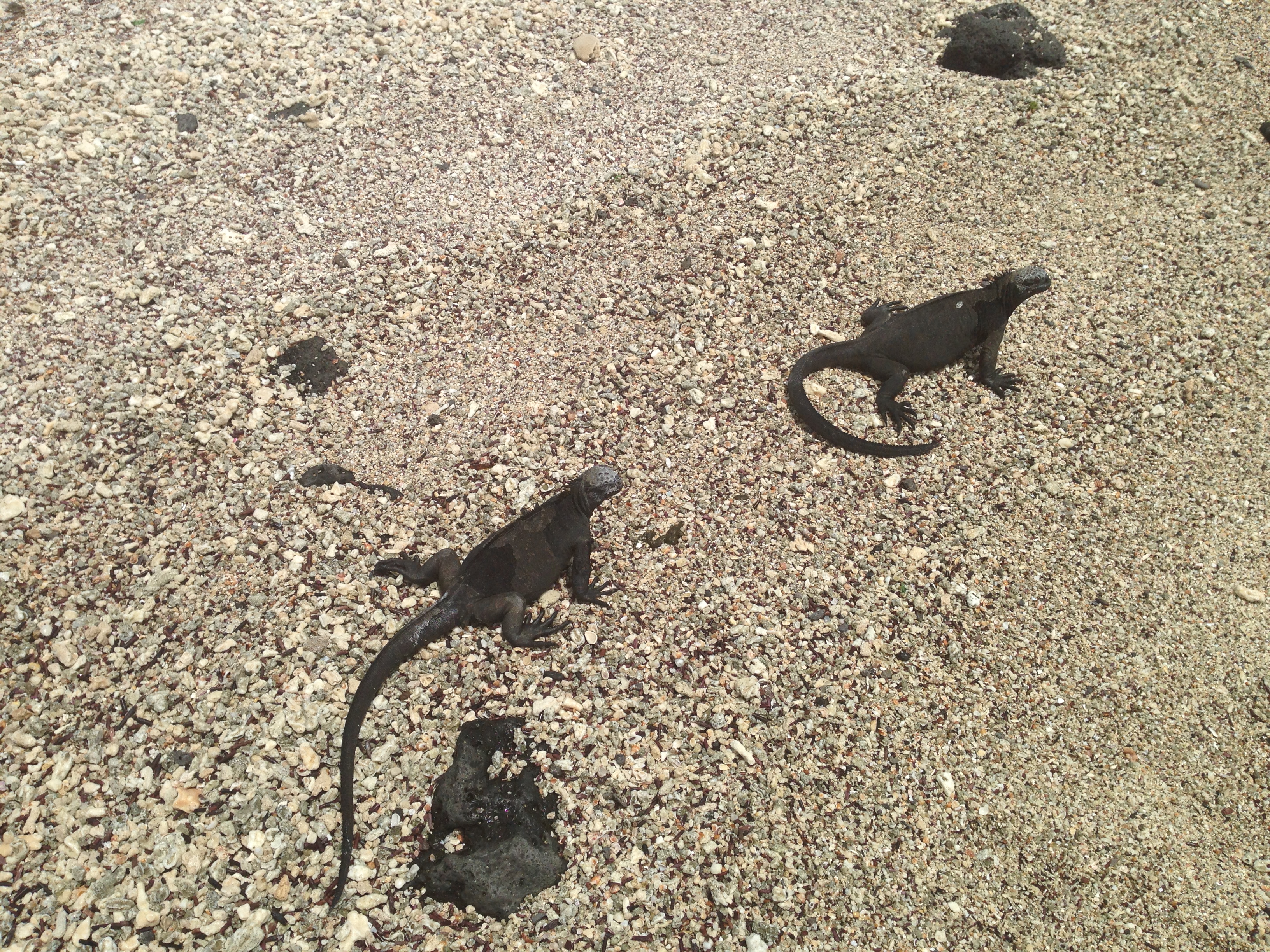
The trails were cool and a few of them lead out to the ocean where we had an excellent view of the harbor and watched several marine iguanas which are found only on the Galápagos Islands. I had to look it up later because I could not understand what the white tops on the lizard or iguana heads were all about, but marine iguanas often wear distinctive white “wigs” of salt expelled from glands near their noses. Tod has some video footage of the lizards swimming and if I get them cropped enough I will post some.

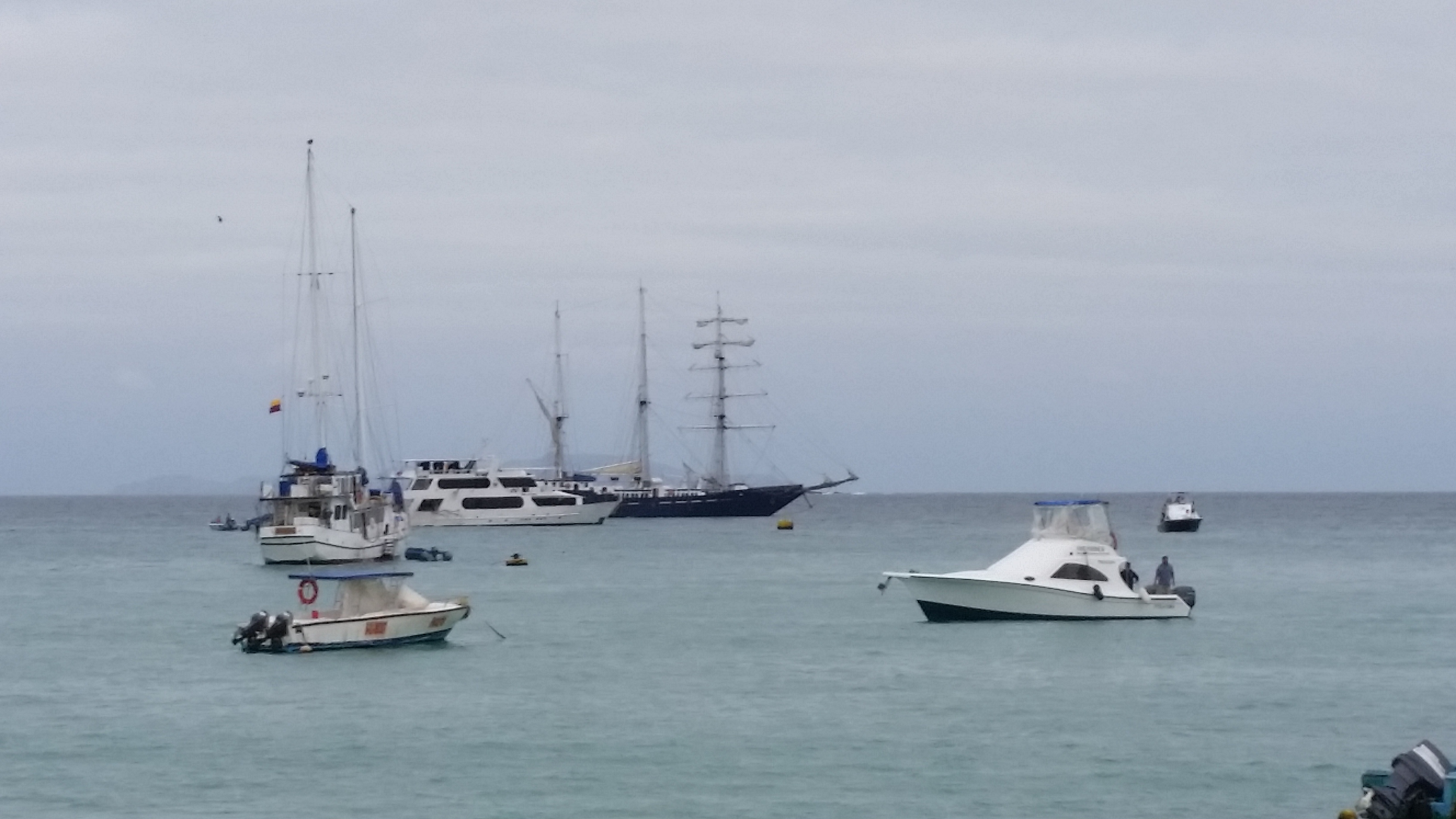
Sail Away.
Sail Away.
Lizard Pier.
Lizard Pier at the Entrance.

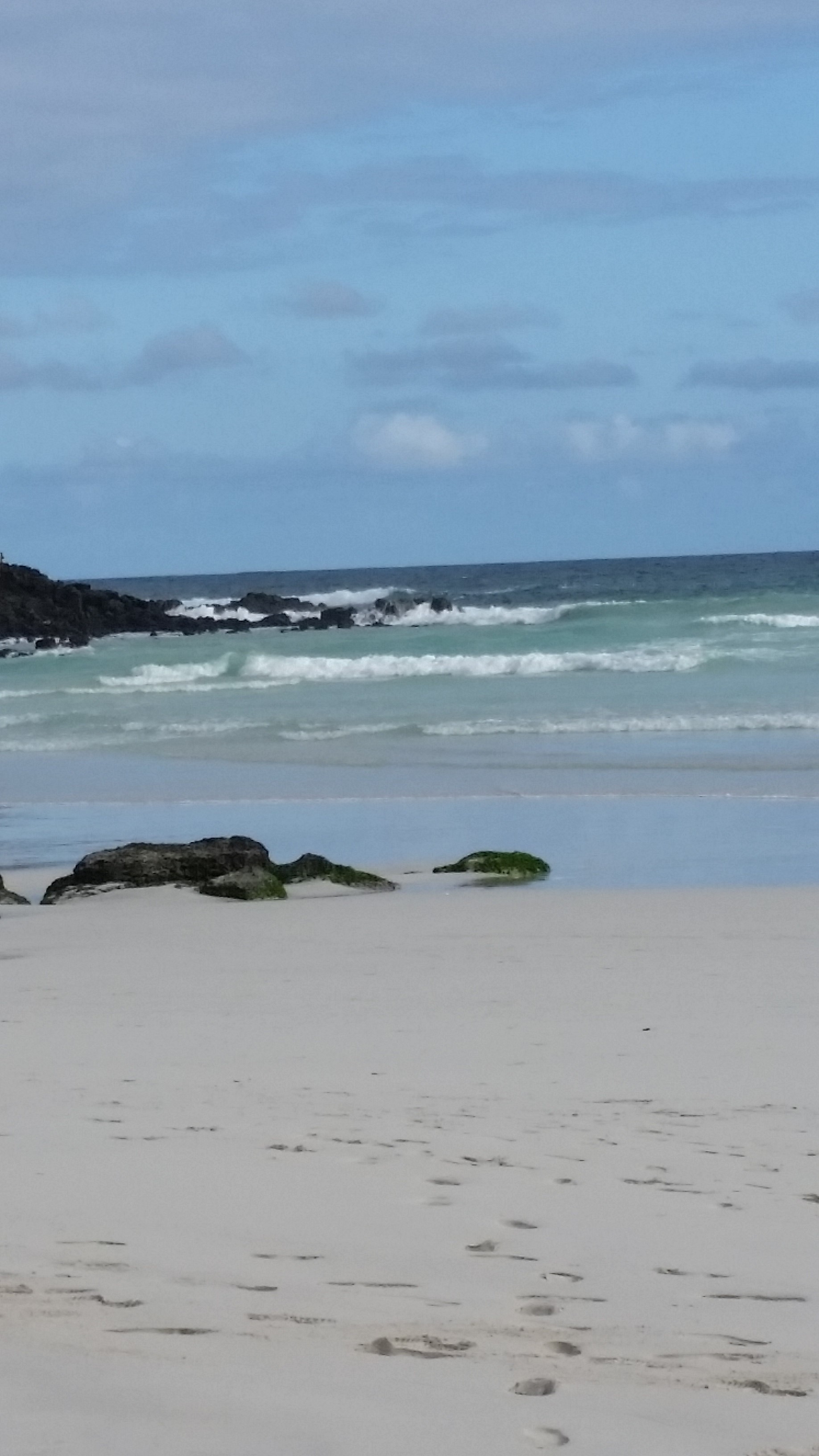
After hiking all over the Darwin trails we headed back to our hotel and then on to the Ocean. The road to the ocean really was uphill almost all the way. Once we got to the park entrance it was at least a 30 minute hike (uphill) to the beach. The beach was so beautiful / magnificent / wonderful – I cannot think of a word to describe how I felt to be back at an ocean beach. I forgot just how much I loved swimming in the ocean, jumping the waves and having the big rollers crash into you trying to push you back into shore and shortly after the undertow trying to pull you back out to sea. Tasting the salt on your lips and feeling the sand changing beneath your toes as the waves roll in and out. I love the ocean and really hope it is not as long until I can experience it again.

Path to the Beach.
Path to the Beach.
I LOVE the Beach!
I LOVE the Beach!

There were some very big waves when we were there but I only saw one surfer catch a wave. The rest of the surfers were just body surfing.

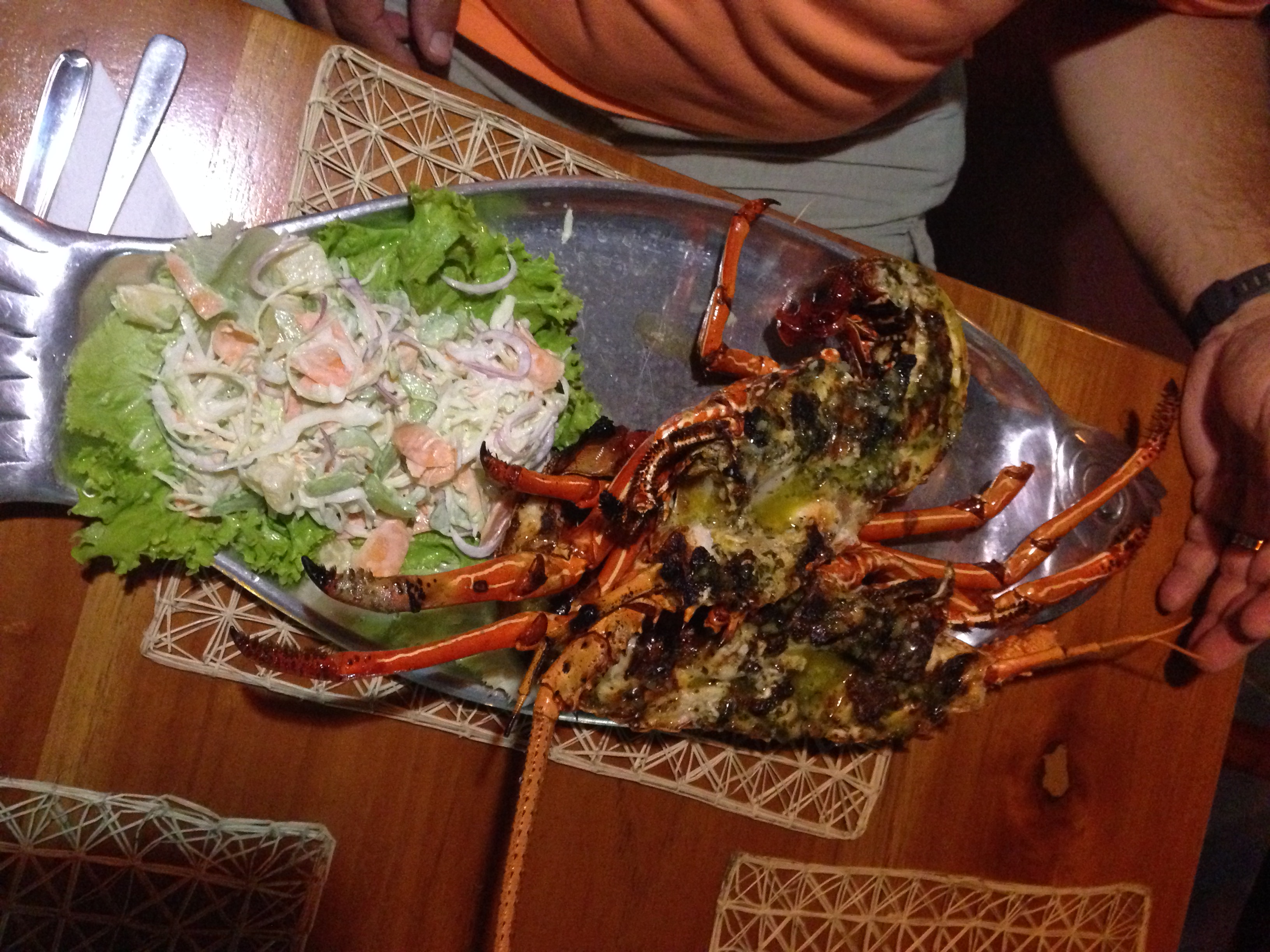
Must have been seeing the fishermen and spending time in the ocean but that night Tod needed a lobster dinner. Lobster dinners range from $18.00 – $28.00 but a steak costs $40.00 (My veggie dinner was $4.00).

This Lobster Was Huge!

At the end of the day Tod said, “How many miles do you think we walked?” I had no idea but my feet were a little tired. Turns out it was a 10 mile day and neither of us had even noticed how far we walked. There is so darn much oxygen at sea level compared to 9000 feet above sea level it felt like a cake walk!

It was a long, fun filled day in the Galápagos Islands and I have so much more to share with you about this trip! Until the next post, be well and God Bless!

October 21 – Santa Cruz, Galápagos Islands

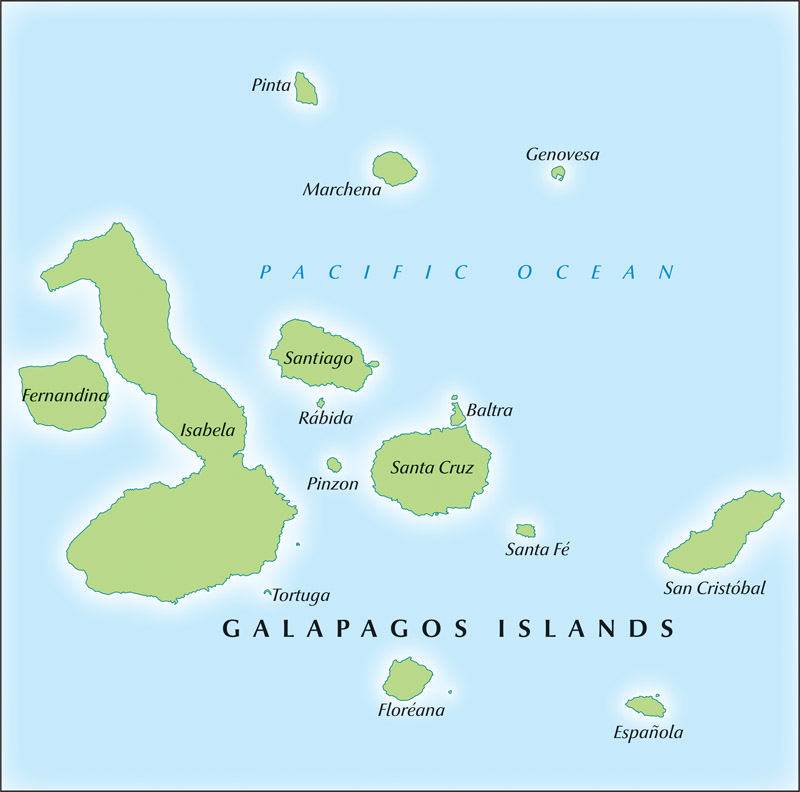
The Galápagos has four inhabited islands: Santa Cruz, San Cristóbal, Isabela, and Floréana. The other islands are not inhabited by humans, and do not permit any over-night stays. In fact, they are only accessible from 6 am to 6 pm. There are 2 airports, one on Baltra and the other on San Cristóbal.

Even from Ecuador, getting to the Galápagos Islands is an experience quite possibly not for the apprehensive traveler. From Quito we took the 45 minute cab ride to the airport then flew to Baltra, which other than the airport, is uninhabited. (Baltra was a US Army Air Force base during WWII and after the war the facilities were given to the Ecuadorian government.) Flying into Baltra was such a disappointment, it is a desert wasteland, and I mistakenly thought I was flying into this tropical paradise with giant tortoises and unique vegetation!

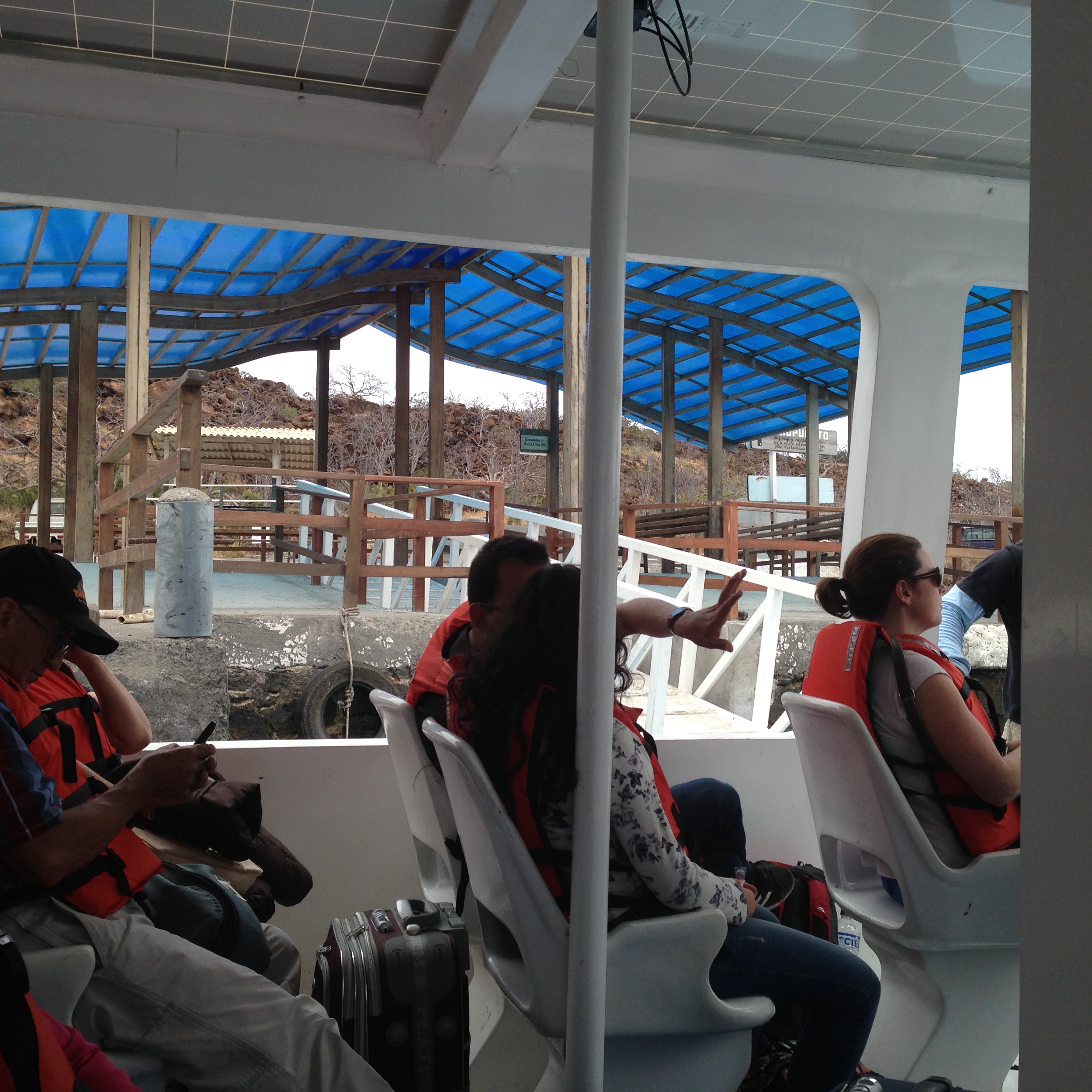
From the airport we took a bus (5-10 minutes) to the Ferry Docks and then a Ferry (10 minutes) to Santa Cruz.

Galapagos Islands Map
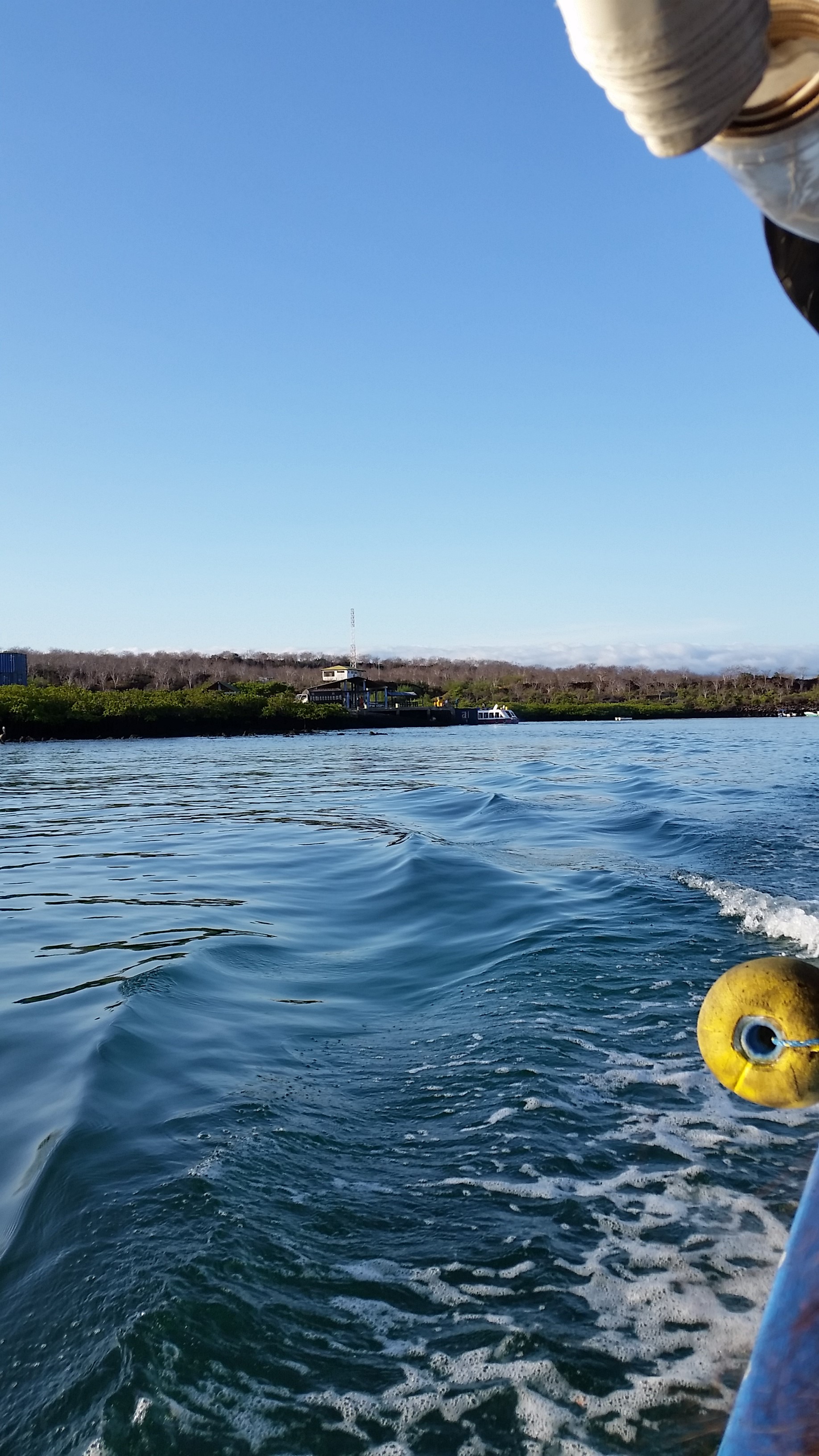
On The Ferry from Baltra.
Ferry View.
Ferry View.

From the docks at Santa Cruz we hired a taxi and took the 45 minute ride to our hotel. Santa Cruz was much more how I expected the Galápagos Islands to be. Lush, tropical, beautiful, mountains, ocean, everything I was expecting. Our hotel was small, quaint and off the main drag far enough so it was quiet but close enough to walk to everything.

Hotel Fiesta Welcomes Us.
Hotel Fiesta Honeymoon Welcome.
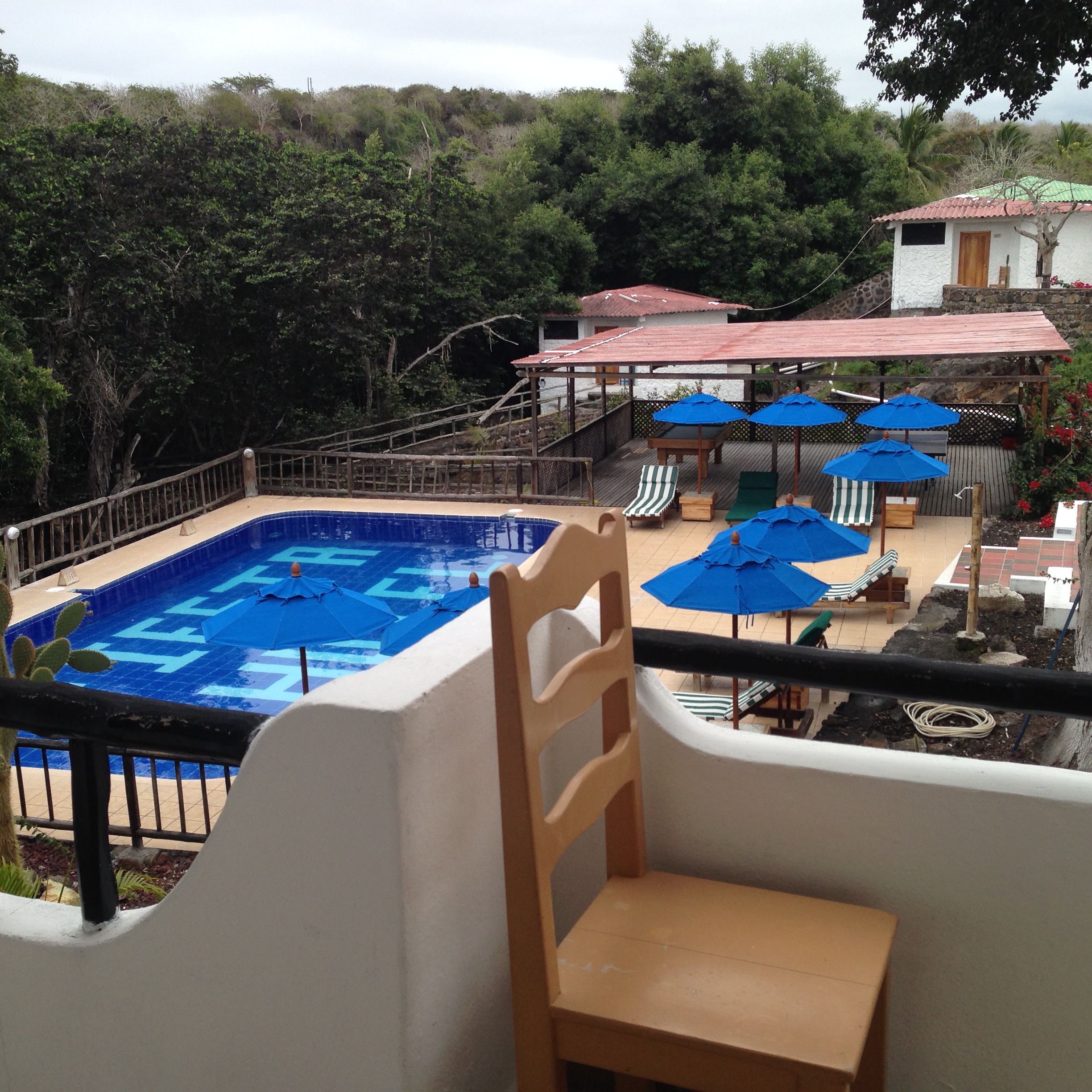
View of the Grounds.
Deck Grounds View.
Deck Grounds View.
Love the Pool.
Love the Pool Area. We Sat Here Every Night.

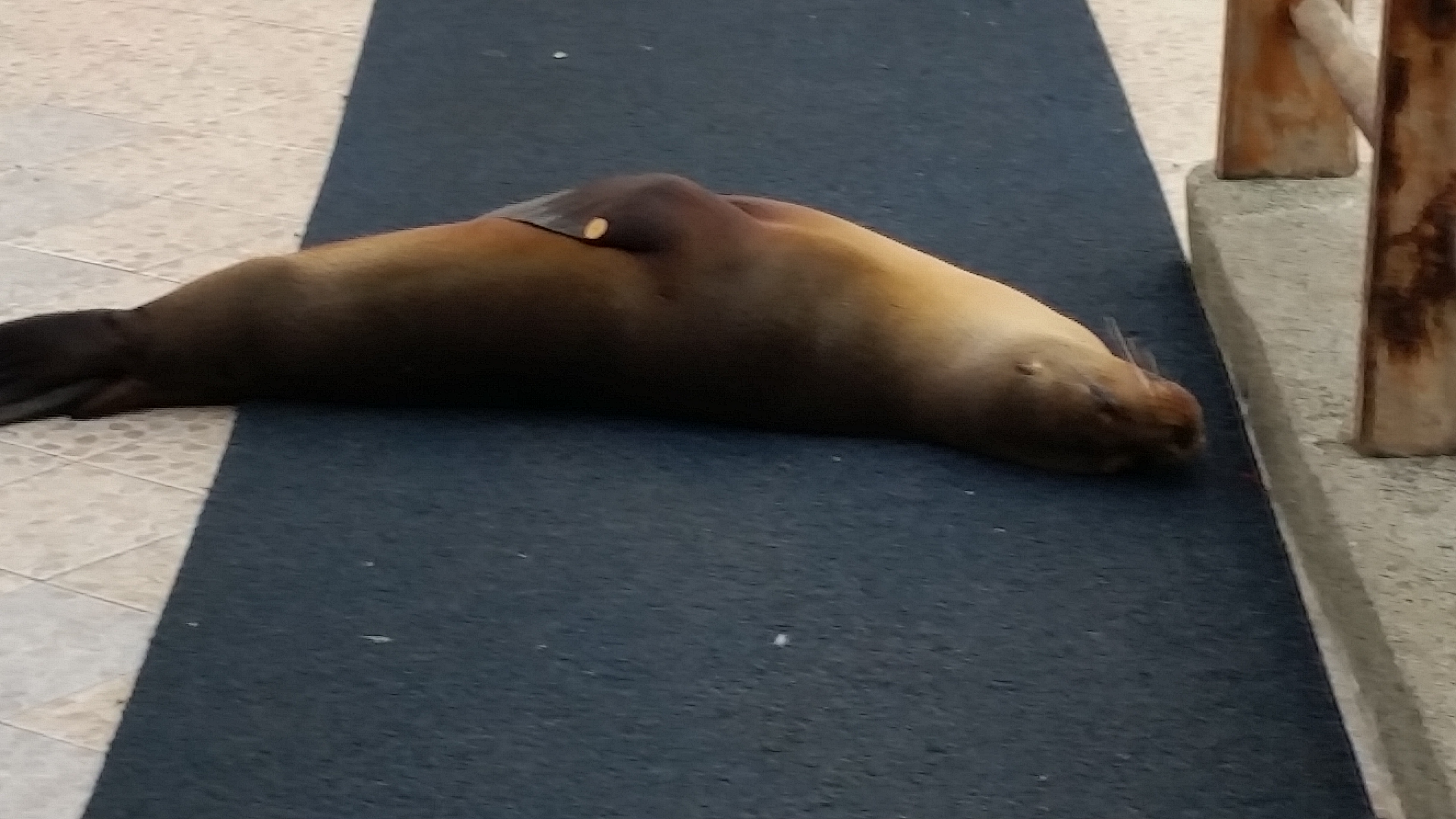
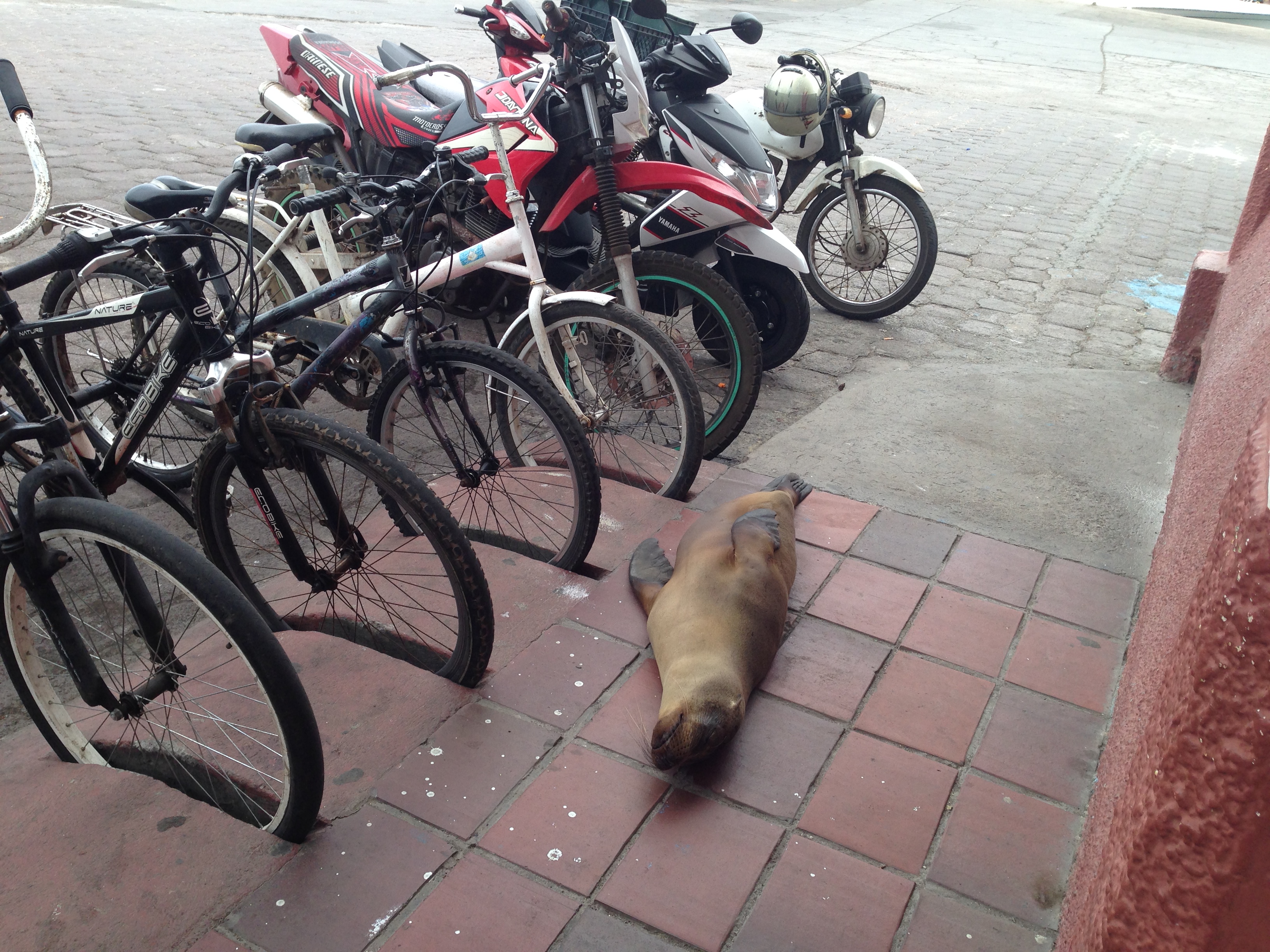
We did not waste much time at the hotel and we were off to explore the downtown. What we found was everything we had been hoping for. Small little shops and restaurants, friendly charming people, and the piers.  One pier seemed to be for tourist transport and the other more for fishing boats. We walked along both and that is when we came to realize that the benches on the fishing pier were more for Sea Lions than people (well at least the Sea Lions seemed to think so!) And the piers themselves were lounging places for the Sea Lions. It was crazy, it’s the first time in my life that I had to actually step over a Sea Lion. He/she was not about to move for me.

Just a Little Afternoon Siesta.
No Way Was the Sea Lion Moving for Tod.

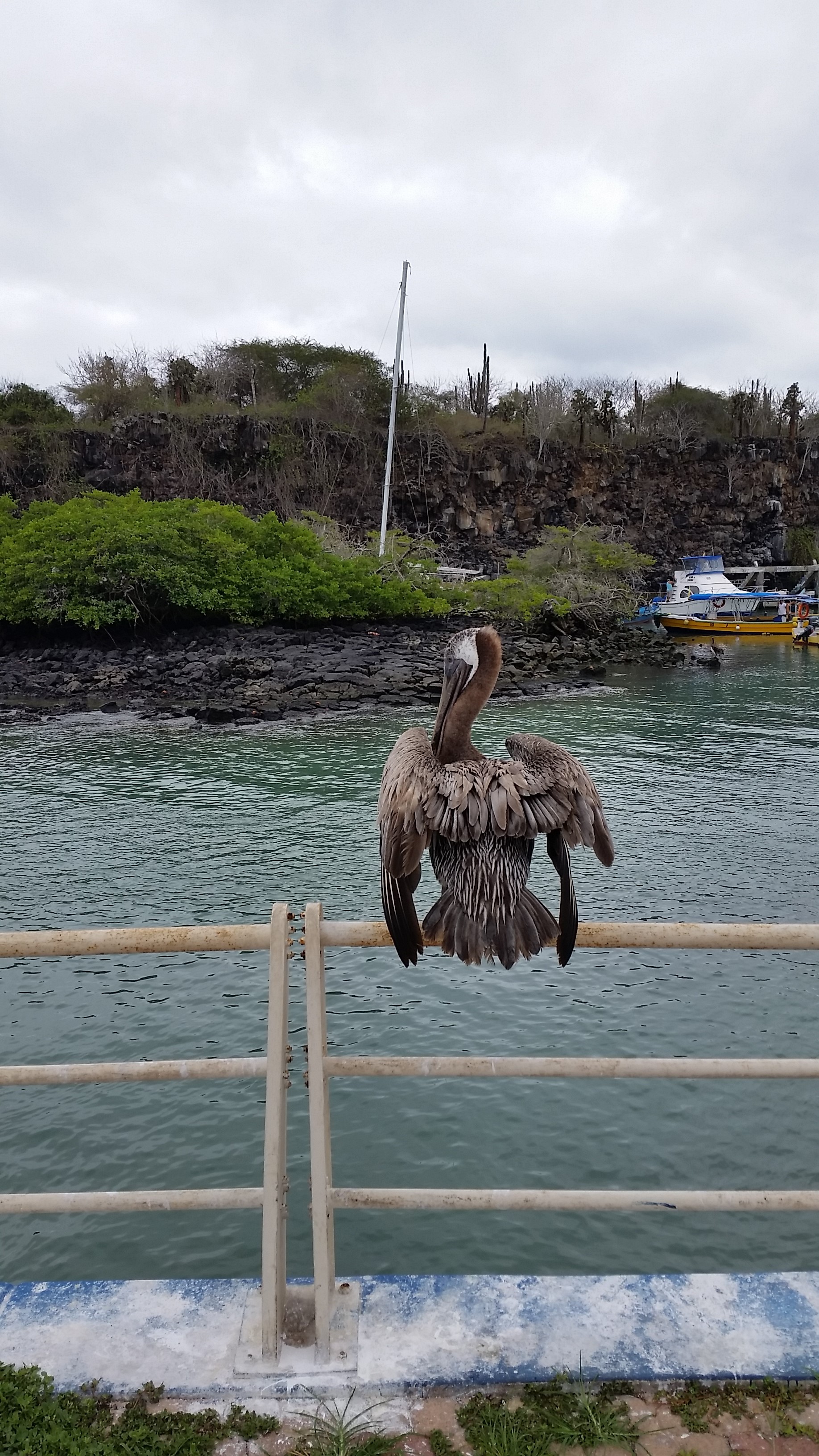
The Sea Lions, Pelicans and Lizards all seem to share space very well.

Pelican Fishing Here.
First Time I Ever Had to Step Over a Sea Lion.
Lizard Crossing.
Lizard Crossing.

There was one grocery store on Santa Cruz and as you can see even the bicycle rack was free game for Sea Lion lounging.

Really? The Grocery Store?

Tomorrow is the Darwin Research Lab and the Ocean, but not sure I will have time to post for a few days.

October 20 – Cheese, Llamas and Horses

Although Tuesday the 20th was a down day (unpack, do laundry, repack) I still have a little more to tell you about Hacienda Zuleta so will use this post to finish that story.

A few noteworthy items regarding the Hacienda is the fact that they have over 600 milking cows and total about 1000 head. They have a small yet very efficient and clean cheese factory where they produce 6 varieties of cheese. Although they have over 600 milking cows they do not use their own milk to make the cheese. They sell the milk which is used for yogurt production and they purchase the milk to make cheese with. Their own breed of cattle does not produce a fatty enough milk to yield cheese. I found this an interesting piece of information but they never did explain why they would have milk producing cattle yet it cannot be used in their own factory. The cheese factory itself was not much different than you would see in Wisconsin, just on a smaller scale. (Sorry, no photos.)

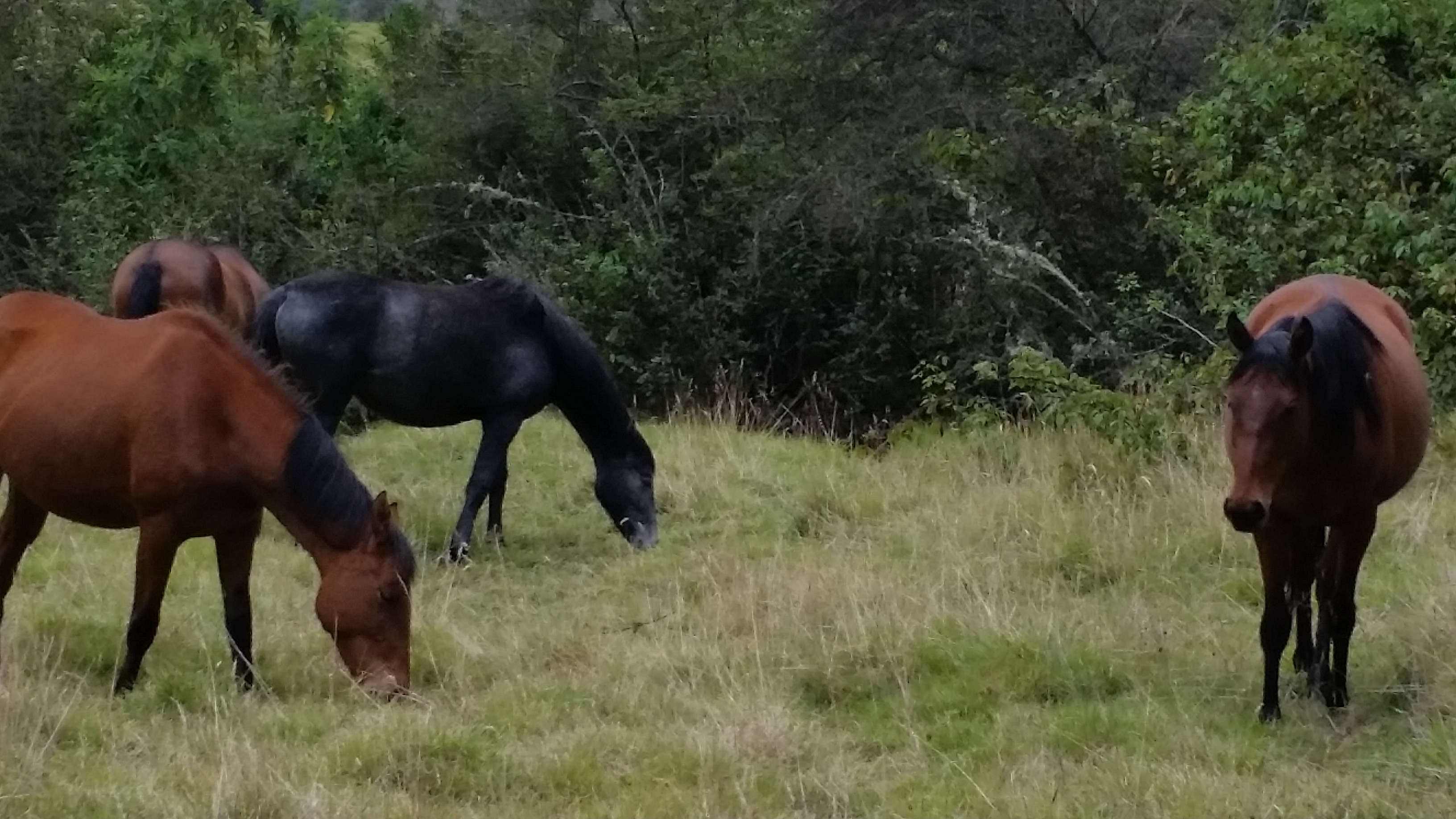
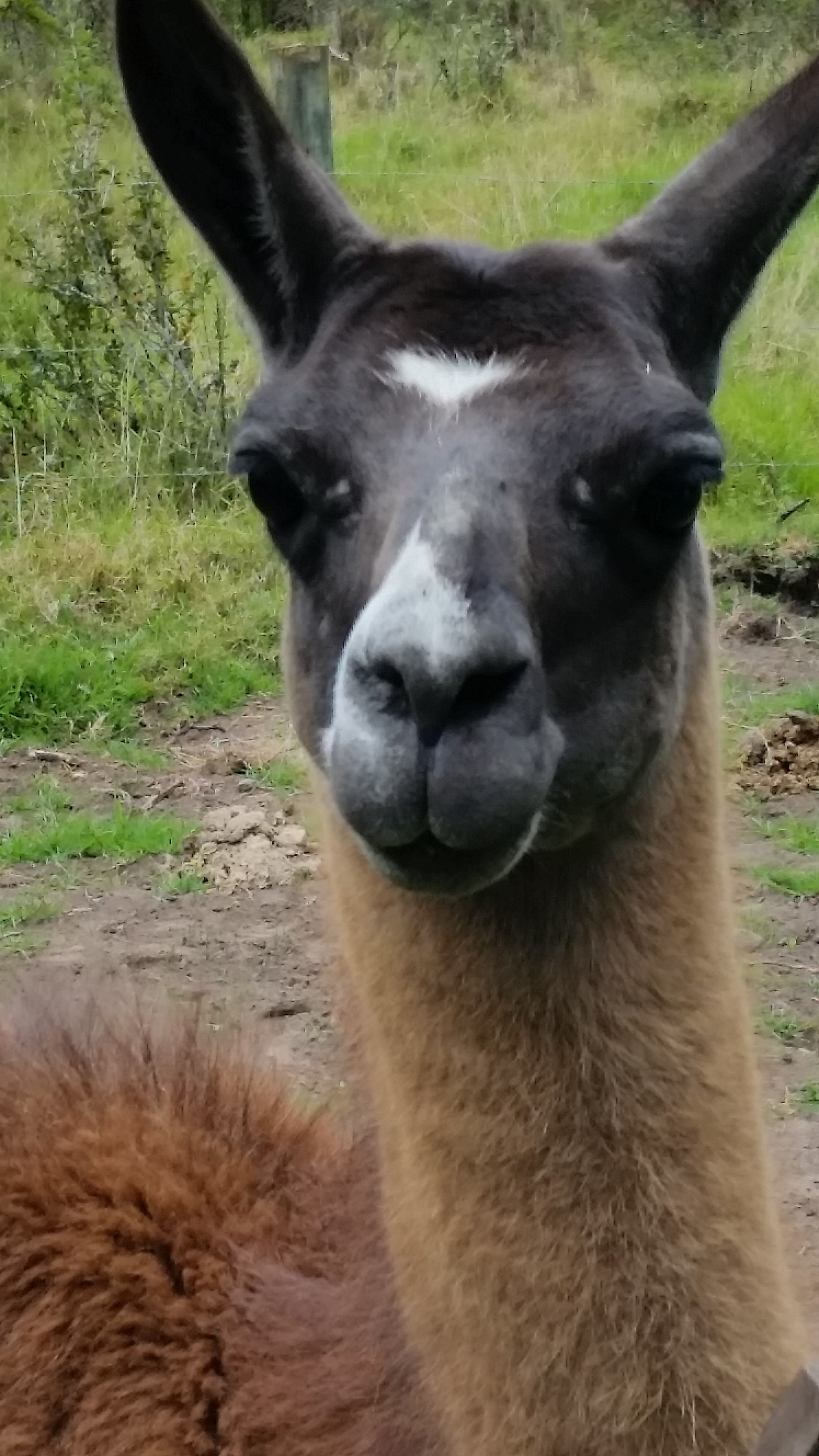
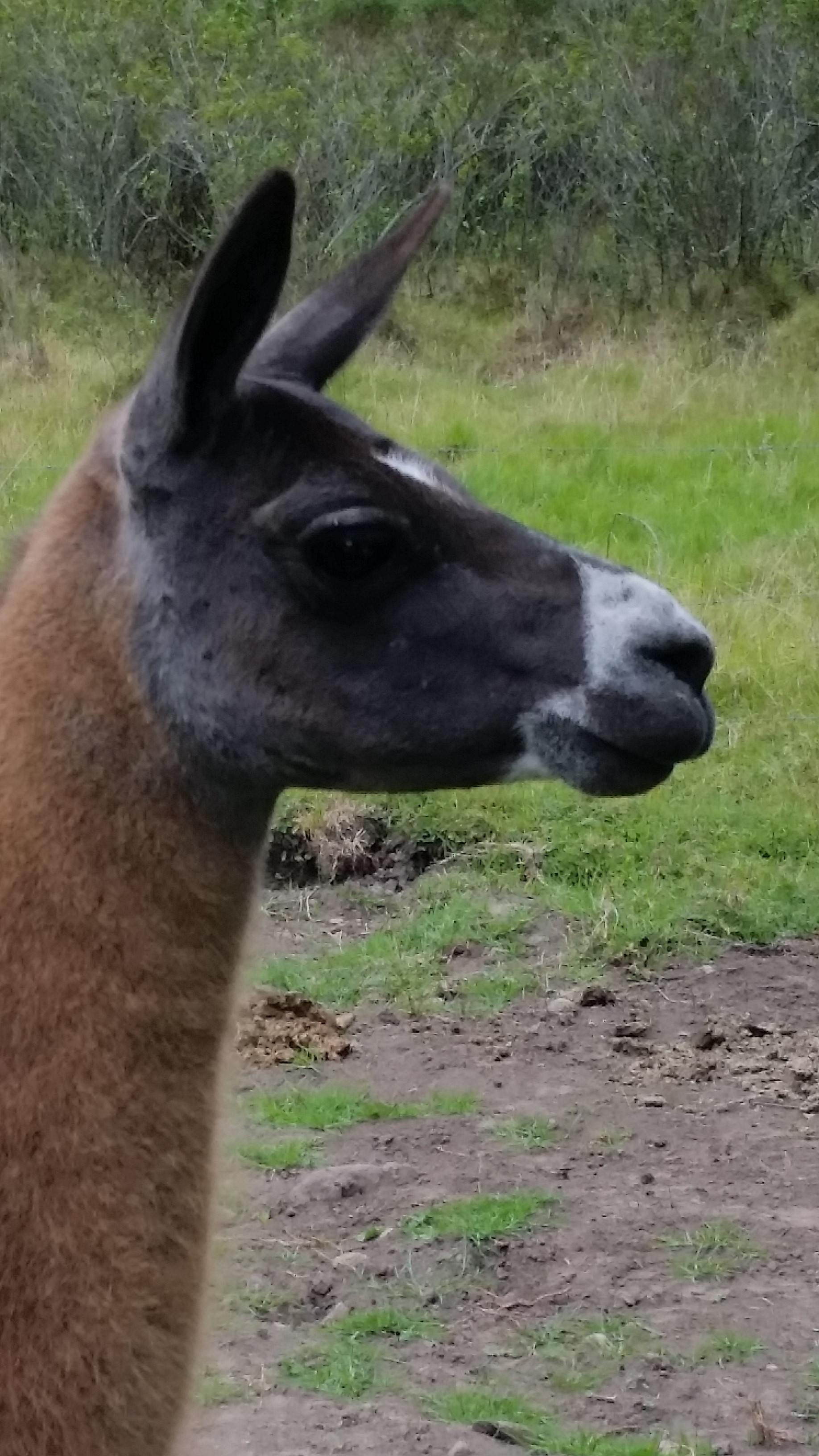
At the Condor retreat there were also horses and llamas. Yann our guide found llamas to be a useless animal. He did state that prior to the Spanish introduction of cattle and horses into Ecuador, the llama was used primarily as a pack-carrying animal, however now they are no longer needed or used for that purpose. The fiber really isn’t even used much because the fine coat of the alpaca is much more of a luxury fiber and the llama meat is not that great. The one trait Yann did credit the llama for is their protective nature which could make them very valuable for a Sheepherder to mix in with the herd. If the Hacienda dogs come to the retreat the llamas will line up in a tight row and ward off the dogs (and I understand they have a pretty serious kick.)

Hacienda Horses Grazing.
They Are a Curious Breed.
This Guy Posed for a Picture.

My next post will be about the Galapagos trip – I can’t wait to write about that trip and share some of the amazing photos we were able to capture.

October 19 – Condors and Spotted Bear

Walking through the organic garden on Sunday we met Yann Potaufeu a French biologist who had completed a 3-month volunteer exchange program working with Condors at Zuleta. Shortly after returning to France, he was offered a full time position working with the “Condor Huasi Project” that focuses on the rehabilitation of the Andean Condors. Now, 3-years later, Yann is managing and working several projects including the Condors, Spotted Bear and the Trout Pond. Yann offered to provide us a private guided tour of the Condor and Trout facilities and we jumped at the chance.

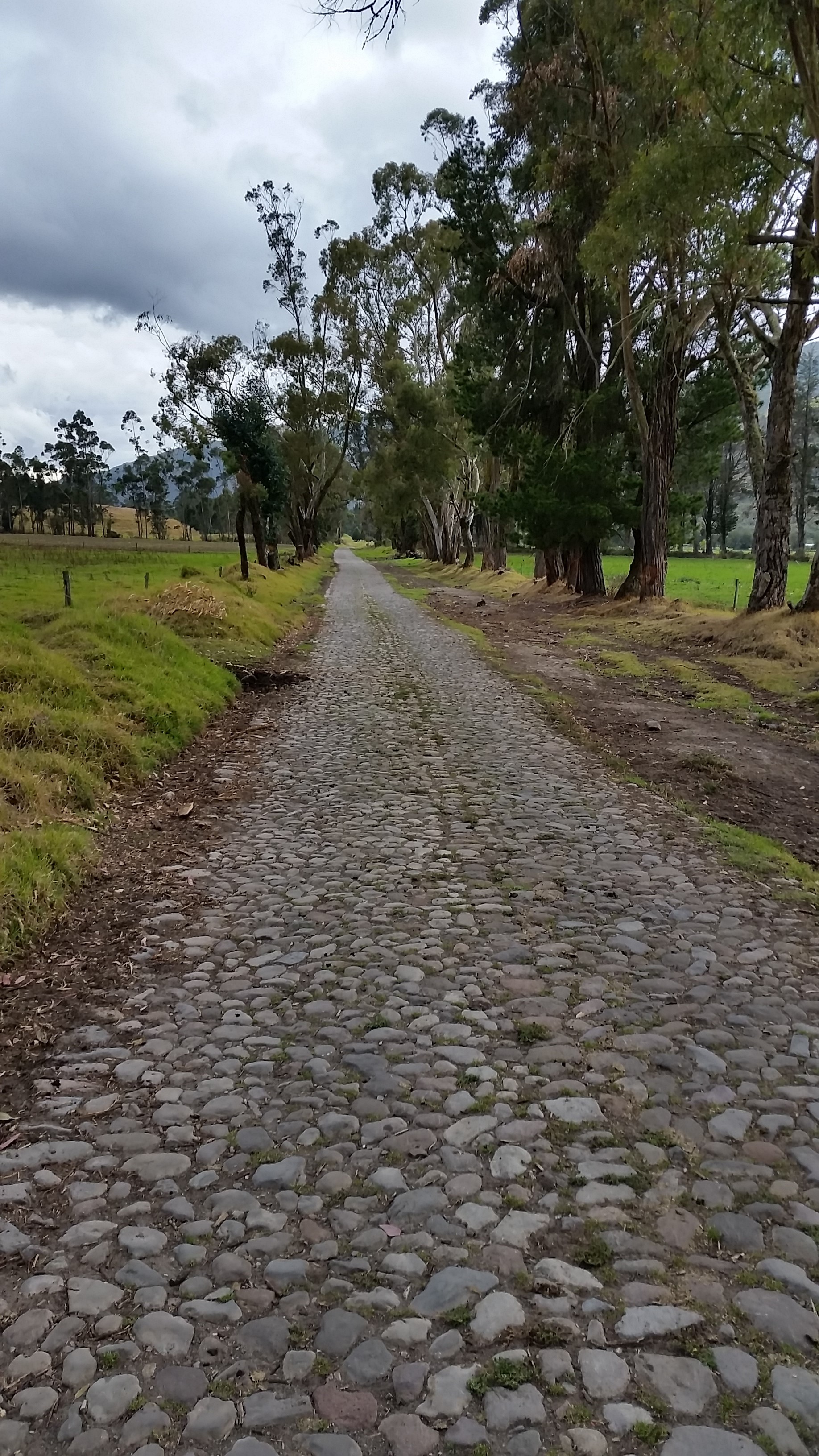
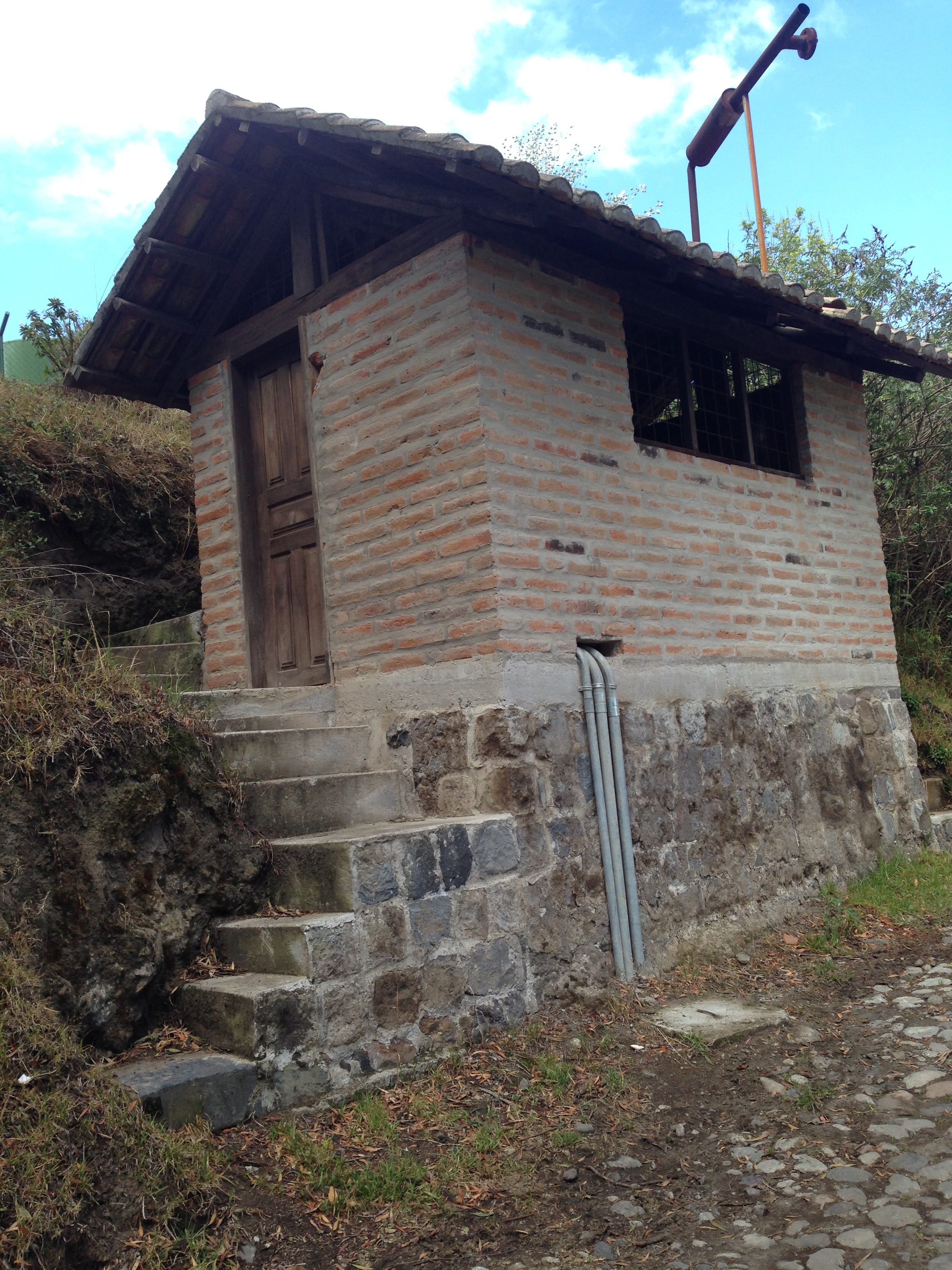
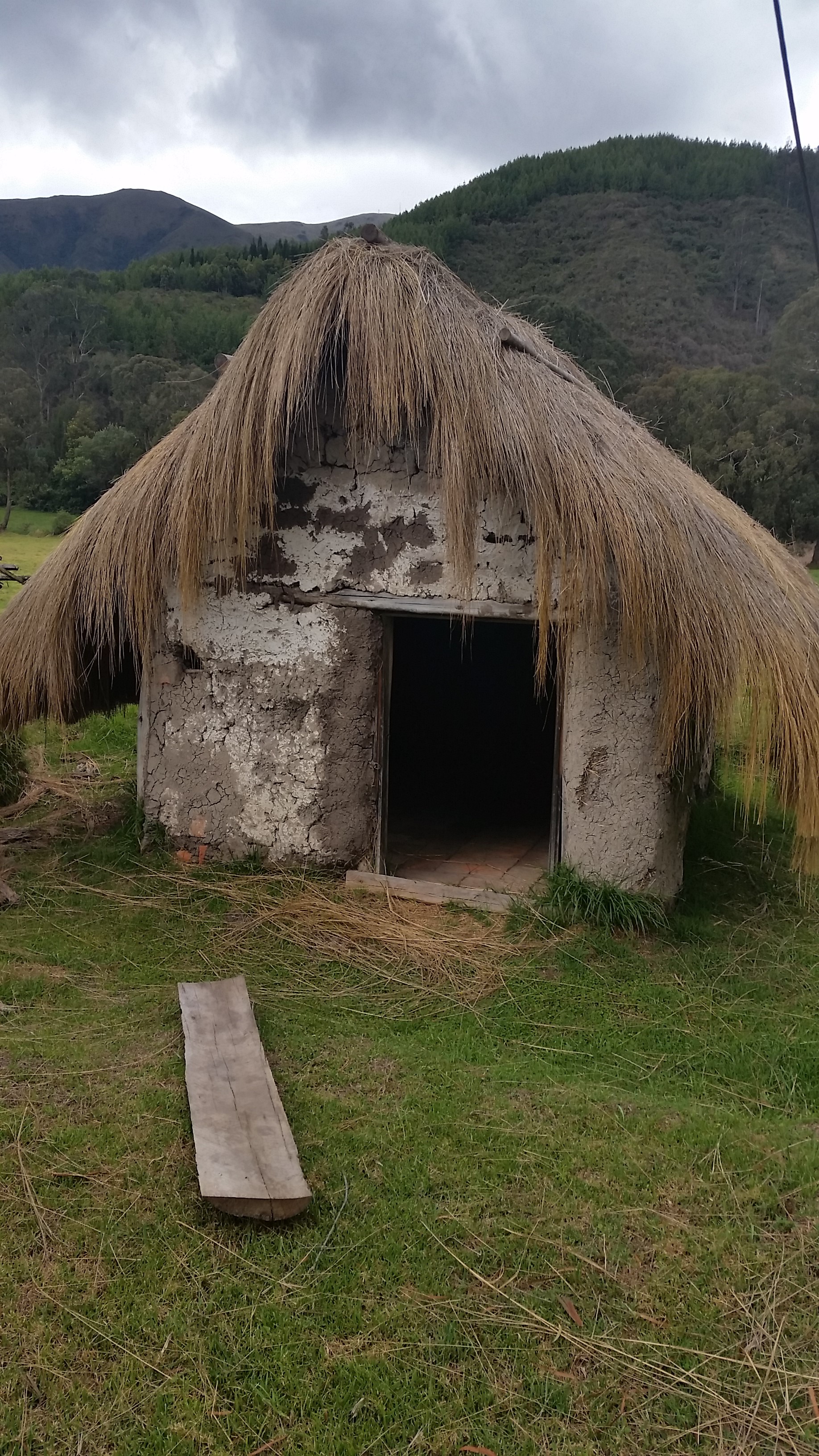
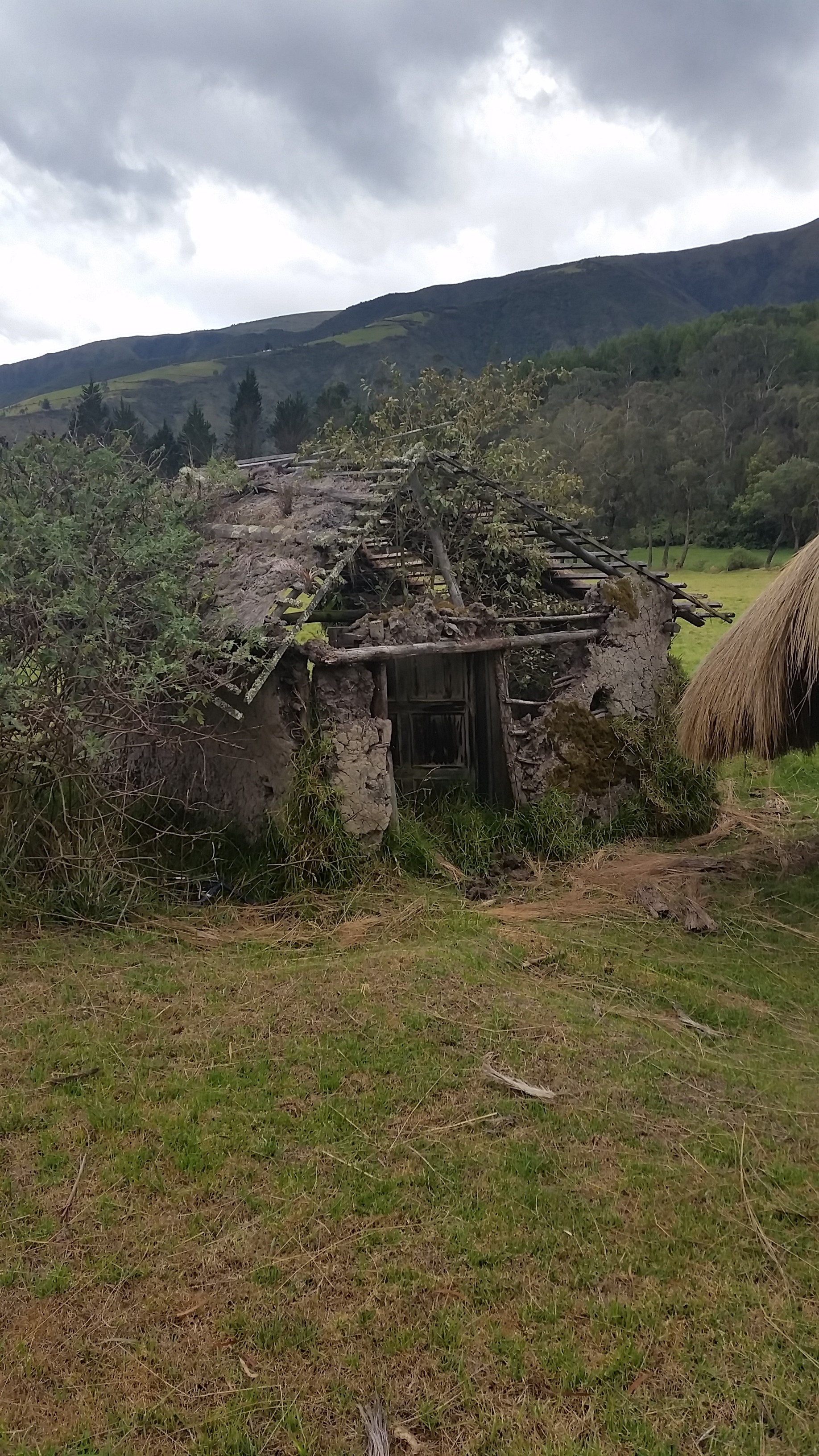
Walking to the Condors was about a 30 minute hike on a cobblestone road. It was a cool little road and we took the time to take some photos of old structures on the property. The cobblestone is not that easy to walk on and I know it is a bumpy ride but it is a road in a beautiful location so I shouldn’t complain.

Yes This is a Road.
Yes This is a Road.
One of the Buildings on the Grounds.
Looks Like a Little Hobbit House.
Not Sure What This Building Could Have Been.

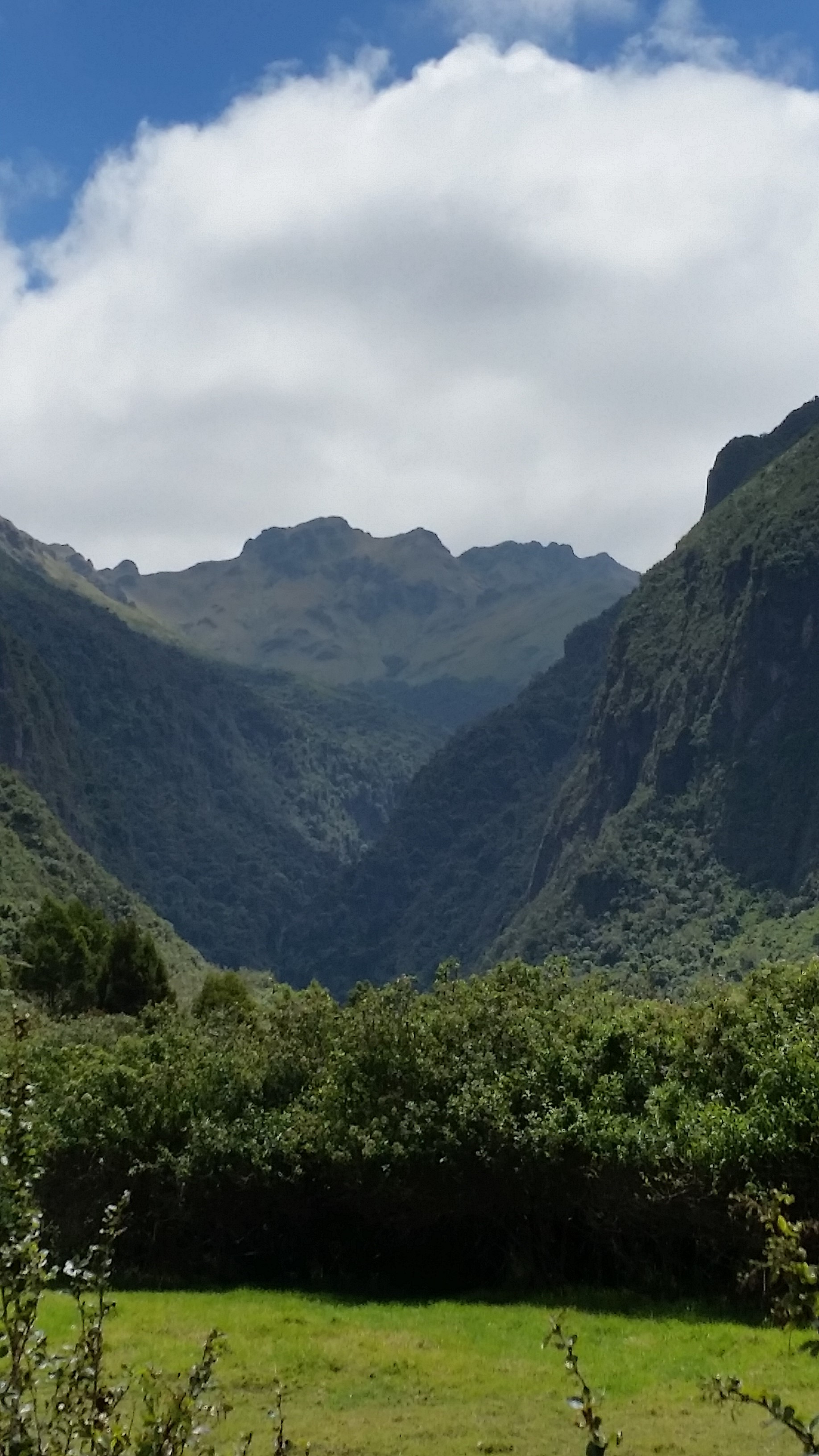
The trail (or road I guess) to the Condors was really beautiful. We would have made the hike just for the scenery, even if there weren’t Trout, Horses, Llama and Condors at the end of the trail.

The Trail View Was Beautiful.

First stop was the trout farm or pond. Photos didn’t show up very good so I am not including them. The Trout are used to feed guests, staff and family at the hacienda and also they are sold to local restaurants and grocery stores. Personally I think there are too many fish in too small a space but I don’t really know anything about fish farms.

There is a mountain stream running through the property and one of the workers rigged up some contraption up to make electricity or charge batteries so the little bit of electricity that is needed on location for the project is made on site.

The Condors in captivity were primarily rescues. Each has a different story, and each story, just as sad. One female is full of pellets, one male was tied by a foot on a short leash, yet a different Condor was confined in a small cage and could never even spread his wings. Farmers like to shoot Condors because they mistakenly believe they kill calves or steal sheep, dogs or even babies. There are so many rumors, however, it is extremely unlikely this has ever happened seeing as Condors do not have bird of prey talons like an eagle. For as large as these majestic birds are, they are mere scavengers or vultures and eat “road kill”. In the wild they will tear the skin from a dead animal such as a cow, sheep, lama, rabbit, whatever they find, and will feed on that but they do not actually pick up, carry away and kill animals. A big part of this project is educating the community, especially the children, what Condors do and do not do and basically what they are all about.

Condors mate for life and currently the facility has 6 couples (one couple with a 5 week old baby) and 2 youngsters (3 and 5 years old). Because of the baby, we had to stay a safe distance from the Condor houses. It is interesting because one couple just does not seem interested in each other after 2 or 3 years together in a cage, so the female will be transferred to a different Condo habitat in Ecuador and the male will be used to train the 3 and 5 year old in the ritual of tearing skin off the prey and other survival habits in hopes that they can someday be released to the wild. The two youngsters never see the humans that feed them and their cage is not open on the side nearest to the activity of the retreat so they do not become too familiar with humans. It was very interesting to learn about the effort and years involved in hopefully releasing young Condors into the wild in an effort to increase the population of this endangered species.

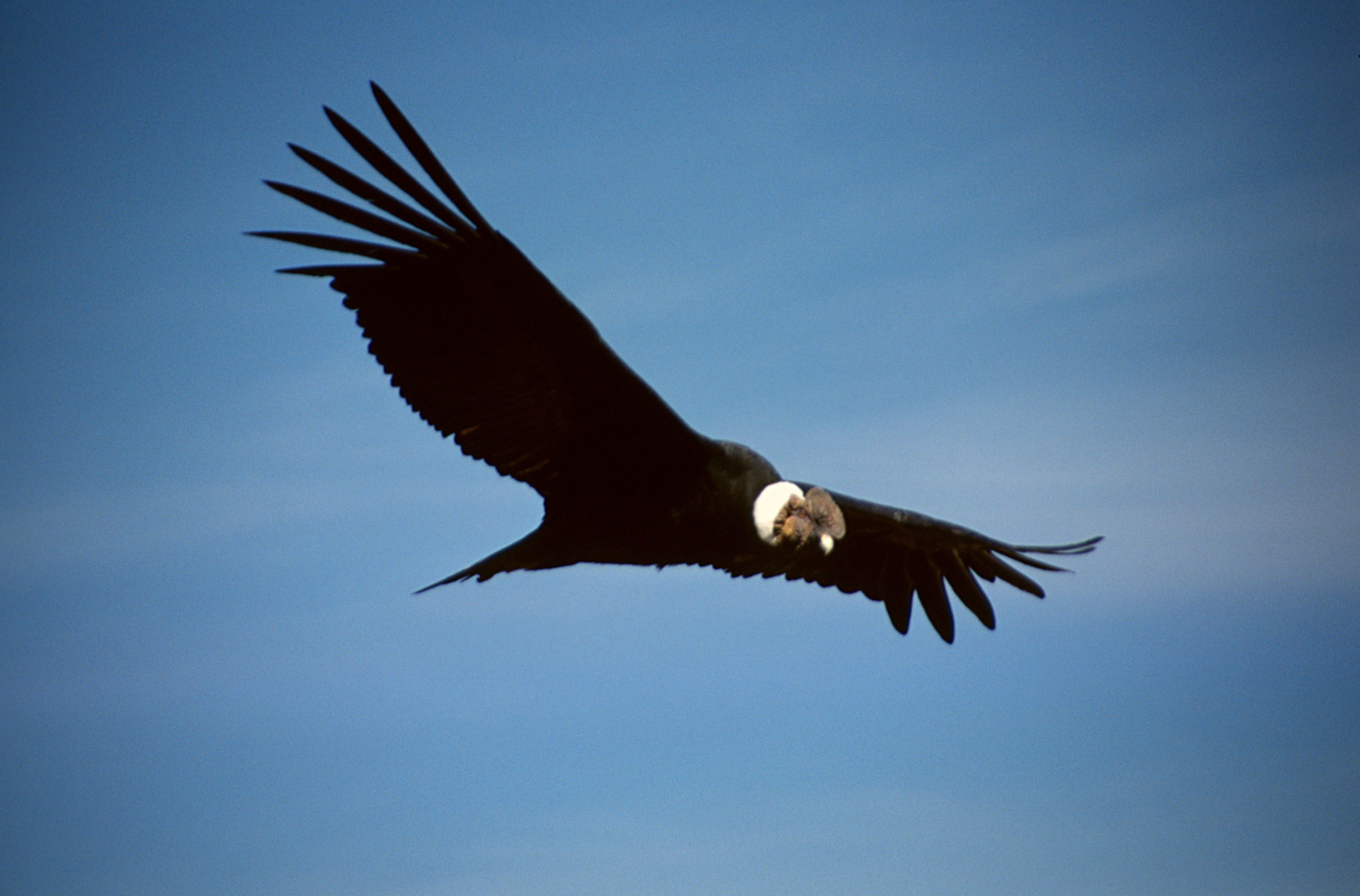
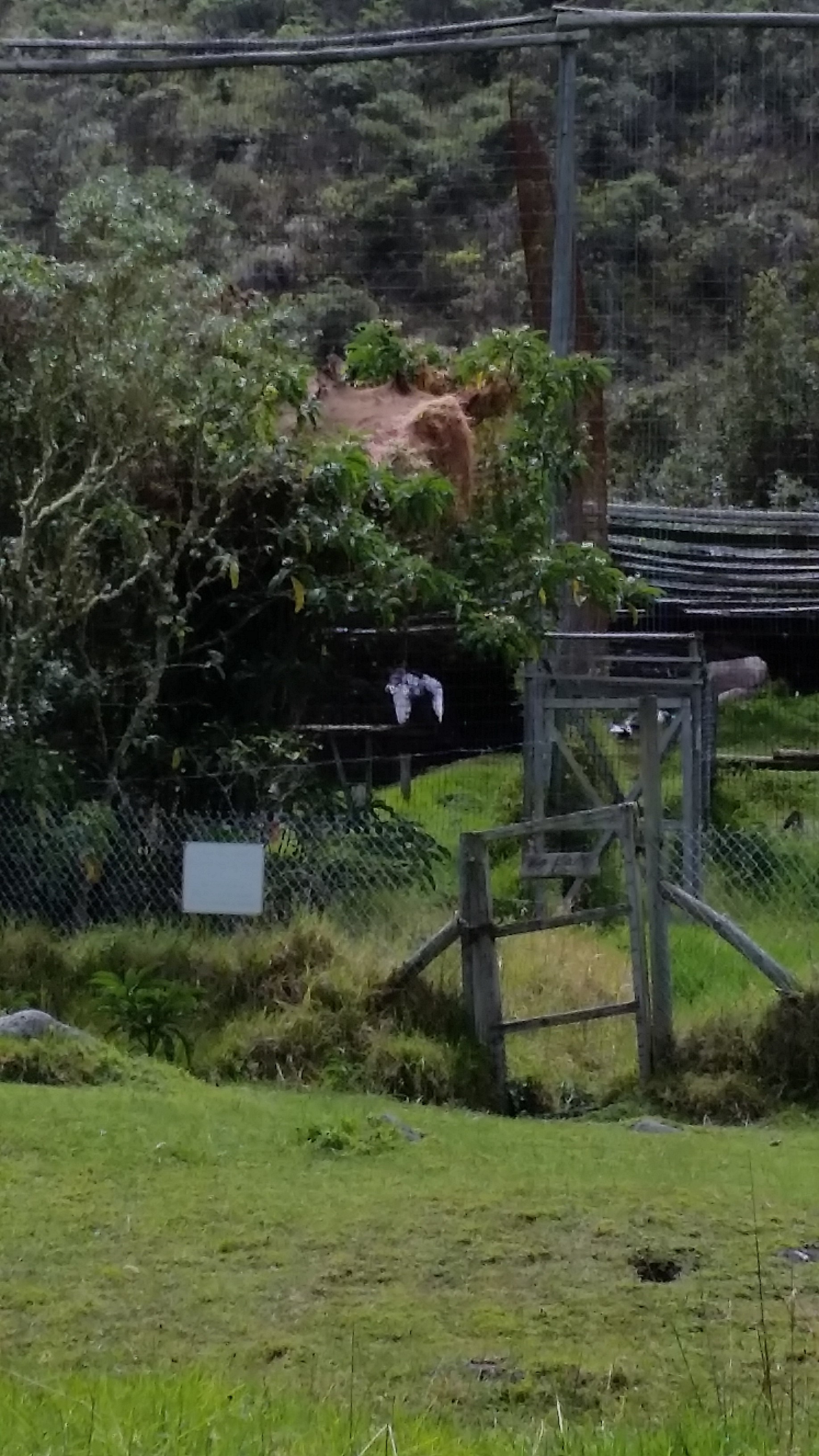
Having to stay such a distance from the cages the photos are not the best, but, we did see a few of the Condors spread their wings. In the photos below the cage photo Tod took, the one of a Condor in flight I copied from the internet, but, the photographer was not listed so I could not give him/her credit.

There are 2 types of Condors, the Andean Condor (the ones we saw) and the California Condor, which lives in the western coastal mountains of the United States and Mexico and in the northern desert mountains of Arizona.

Photo Complements of the Internet.
Photo Complements of the Internet. 9 – 10 foot Wingspan.
The Condor House.
The Condor House.

We did not see any of the spotted Bear but we did see still photos taken by the cameras that Yann has mounted in trees where he sometimes puts fish guts out for a little “treat” for the spotted bears and their cubs.

One of the very interesting and somewhat disturbing things we learned from Yann was that they had several cattle they had purchased from neighboring farms which would be used to feed the condors. The neighboring farmers had nothing to feed their cattle as a direct result of the volcanic ash from Cotopaxi. The ash covered the ground and ruined their crops. With no feed, farmers were forced to sell off their cattle.

Overall, Hacienda Zuleta is amazing and we will plan to stay here again our next trip to Ecuador. We will definitely stay more than one night next time and hopefully enjoy a few more of the activities, or not (maybe we will just retire to the library or one of the numerous seating areas and just read and take in the tranquil surroundings this Hacienda has to offer!)

October 18 – Hacienda Zuleta

Hacienda Zuleta is a Colonial Ecuadorian hotel in the Andean mountain range. It is at 9,600 feet (2,800 meters) above the sea level, and about two hours north of Quito, (unless your driver gets lost, then it is a little over 3 hours from Quito). It is actually much closer to Otavalo and had we realized we were going there during this trip we would have planned the Zuleta and Otavalo trips together.

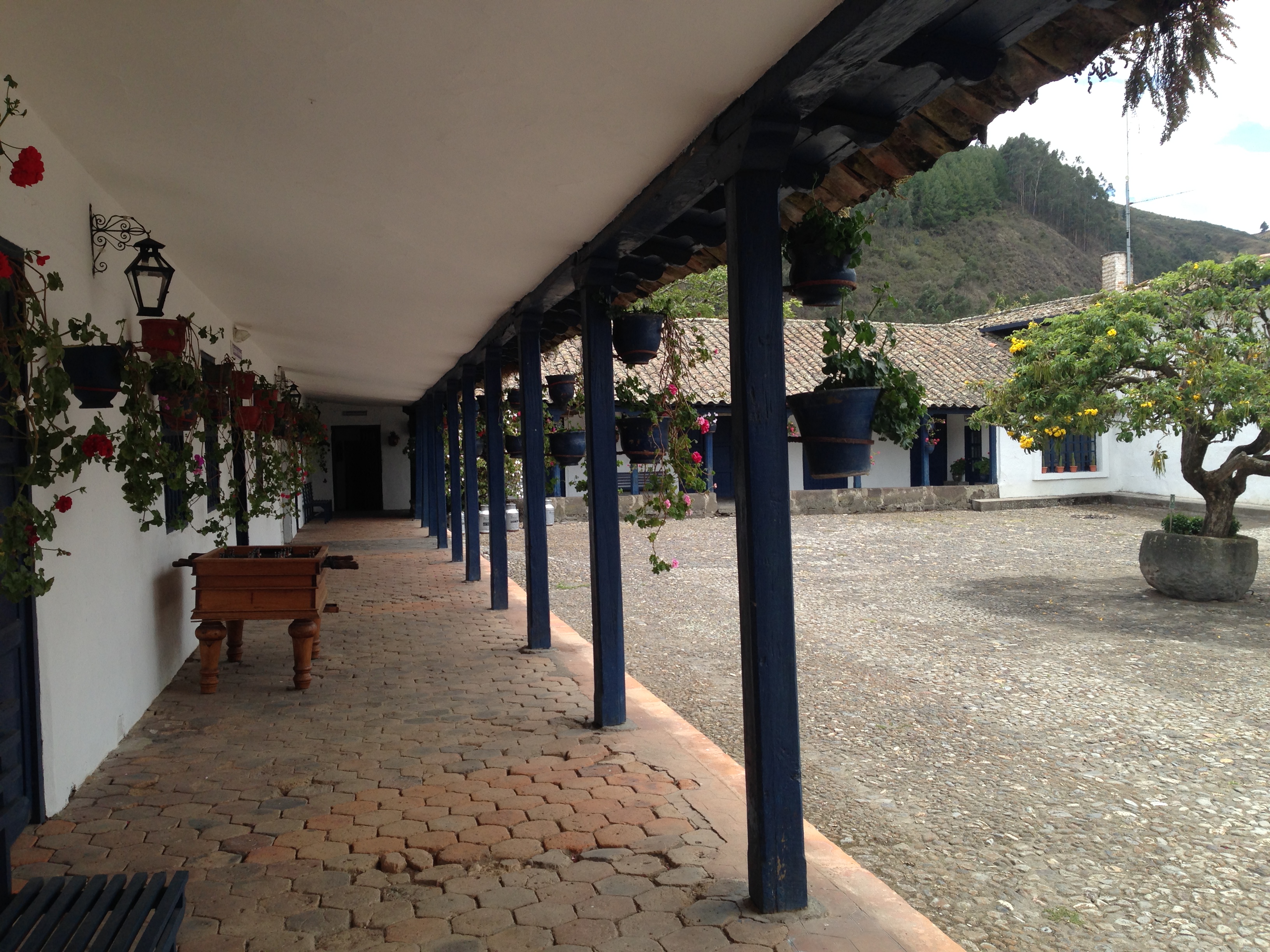
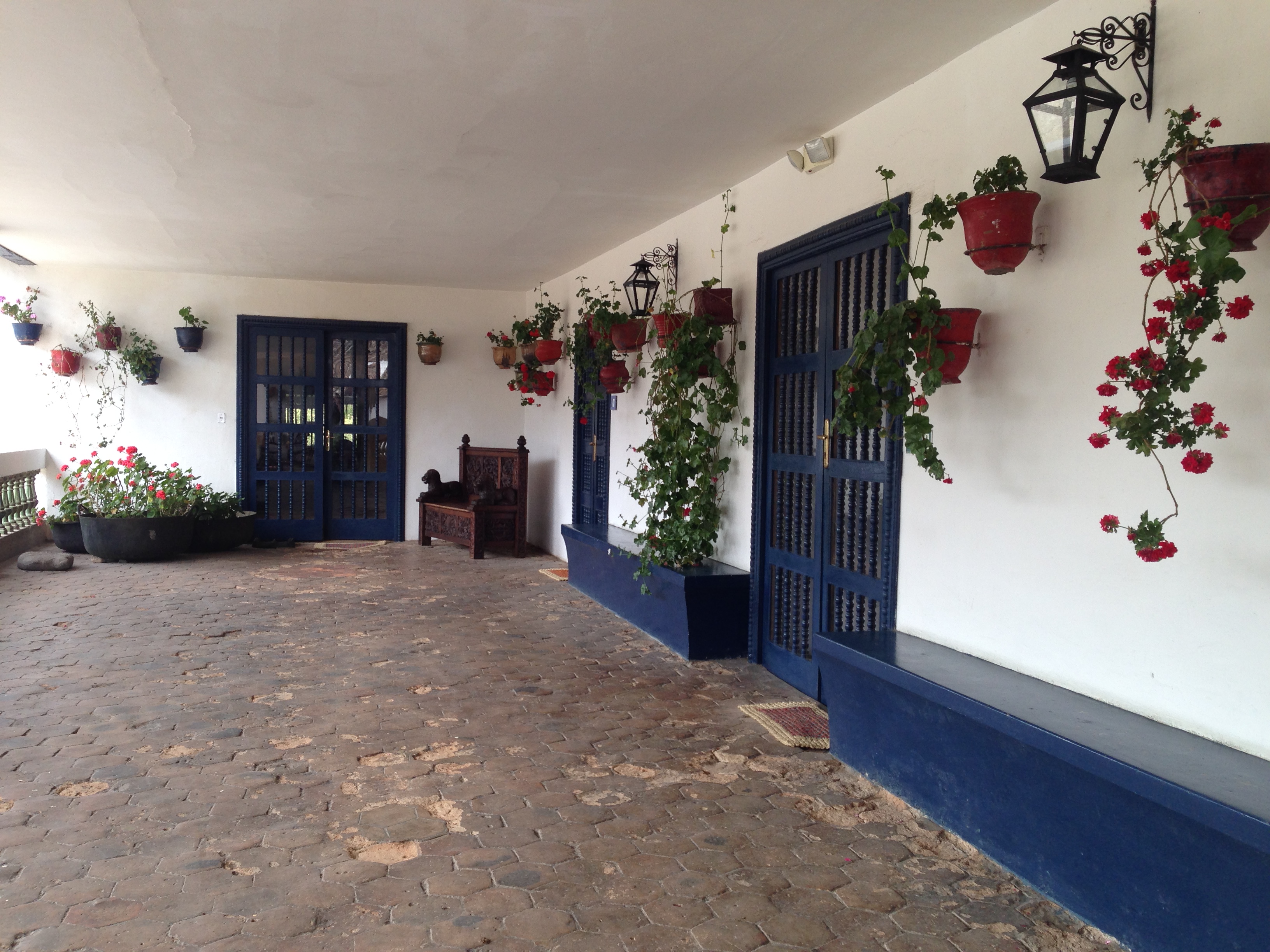
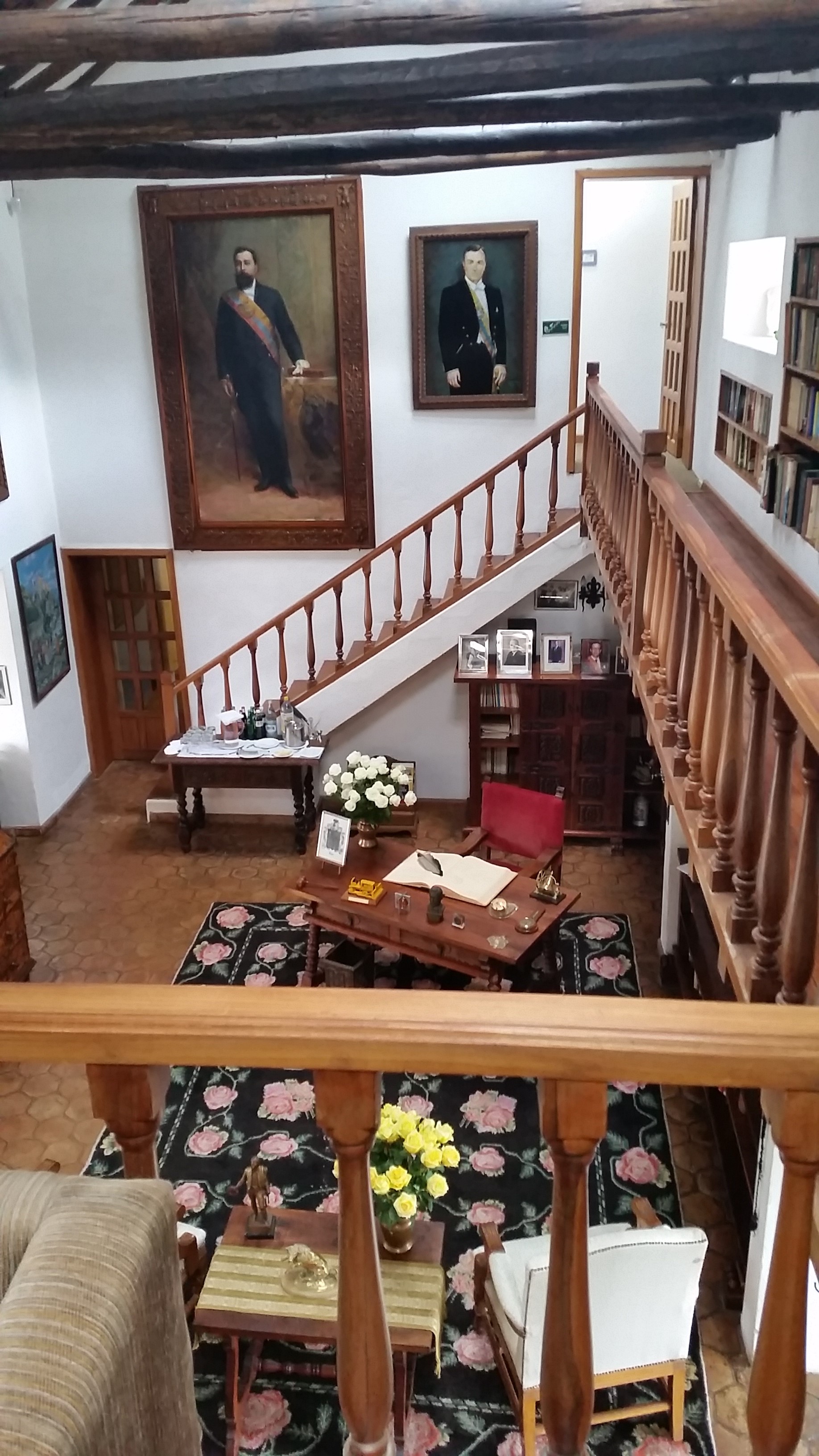
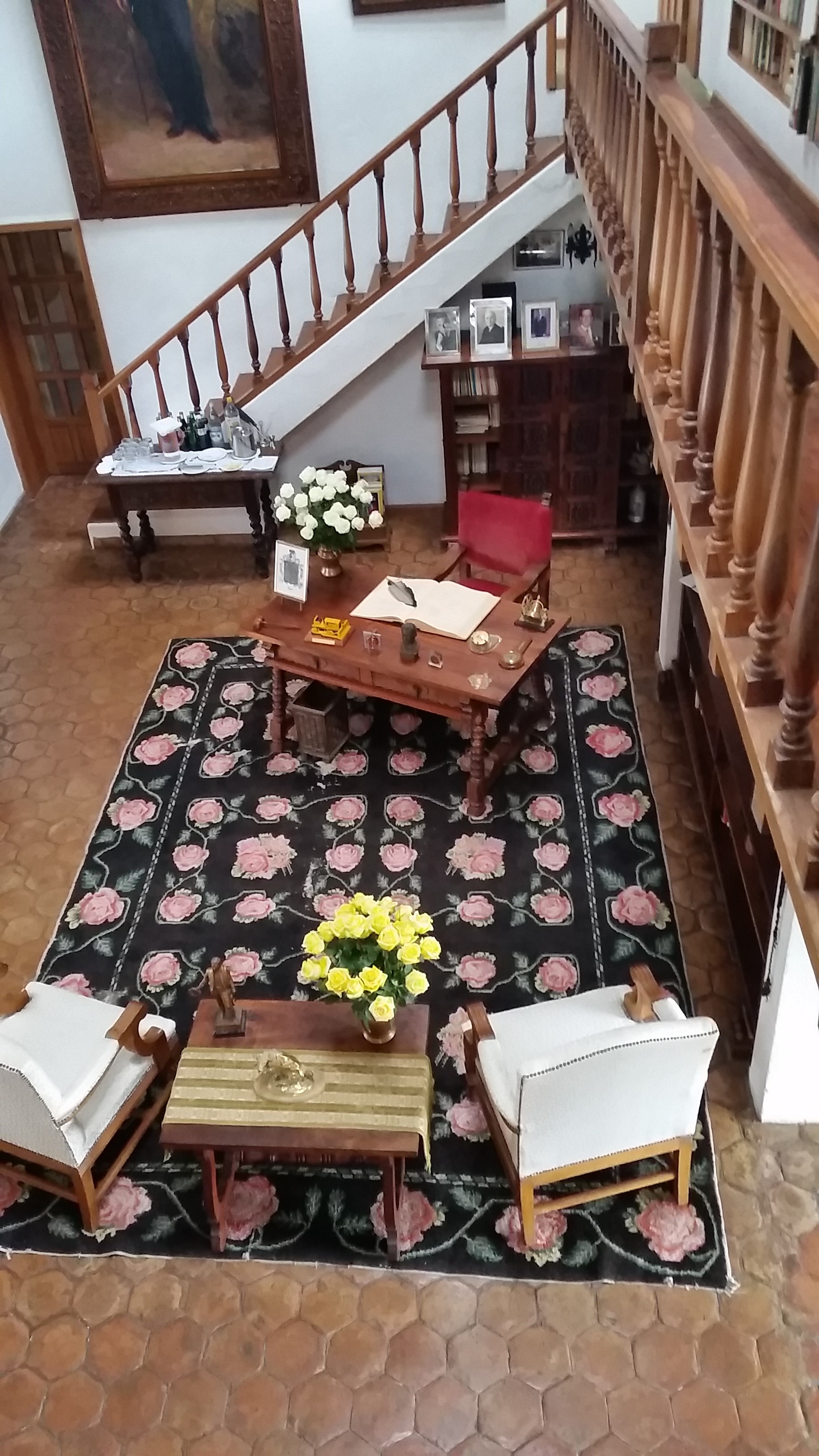
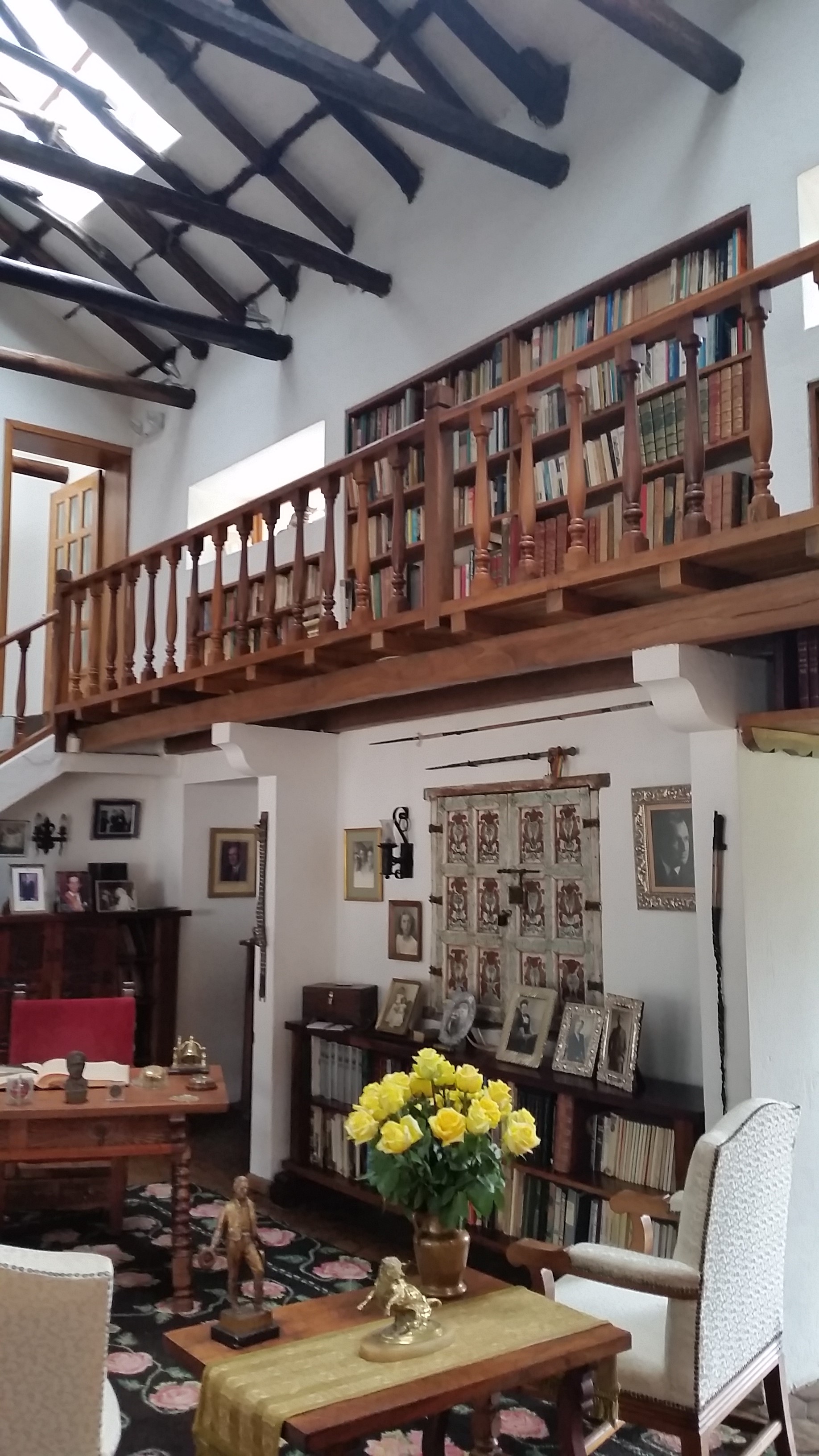
Zuleta itself is a working farm of 4,000 acres (2,000 hectares) that for over 100 years has belonged to the family of Mr. Galo Plaza Lasso, a former president of Ecuador. It was chosen as one of the world’s “Top Ten Finds” by Outside magazine and named as one of the best Ecuador Hotels by National Geographic Traveler. The 14 guest rooms are all in the main building and each has its own fireplace which the staff lights in the evening. I love this place! The main building has the president’s library, several sitting rooms, 2 dining rooms and access throughout to beautiful gardens and outside sitting areas.

Outside the Main Building.
Additional Outside Shot.
Presidents Library.
Presidents Library.
This Library is One of the Sitting Rooms Available.
Filled with Family Photos.

I absolutely loved our room and the doors that opened to a beautiful garden and sitting area. The wood fireplace was very awesome and really the only source of heat. As I mentioned previously, the staff lights all guest fireplaces at about 5:00 PM. Then during the dinner hour they put on more wood for you and, as an added touch, when they turned down the bed they also put hot water bottles – one on each side – in between the sheets for us. It was wonderful to climb into a cozy warm bed with the smell of a fresh wood burning fire and have a hot water bottle to warm your toes.

So Many Humming Birds but Only One with Such a Long Tail.
Not Only a Fireplace but 2 Dozen Roses! Ecuador is a huge exporter of roses.
Tod was Not as Crazy About the Hot Water Bottle as I Was However, He was Tolerant of the Fire!

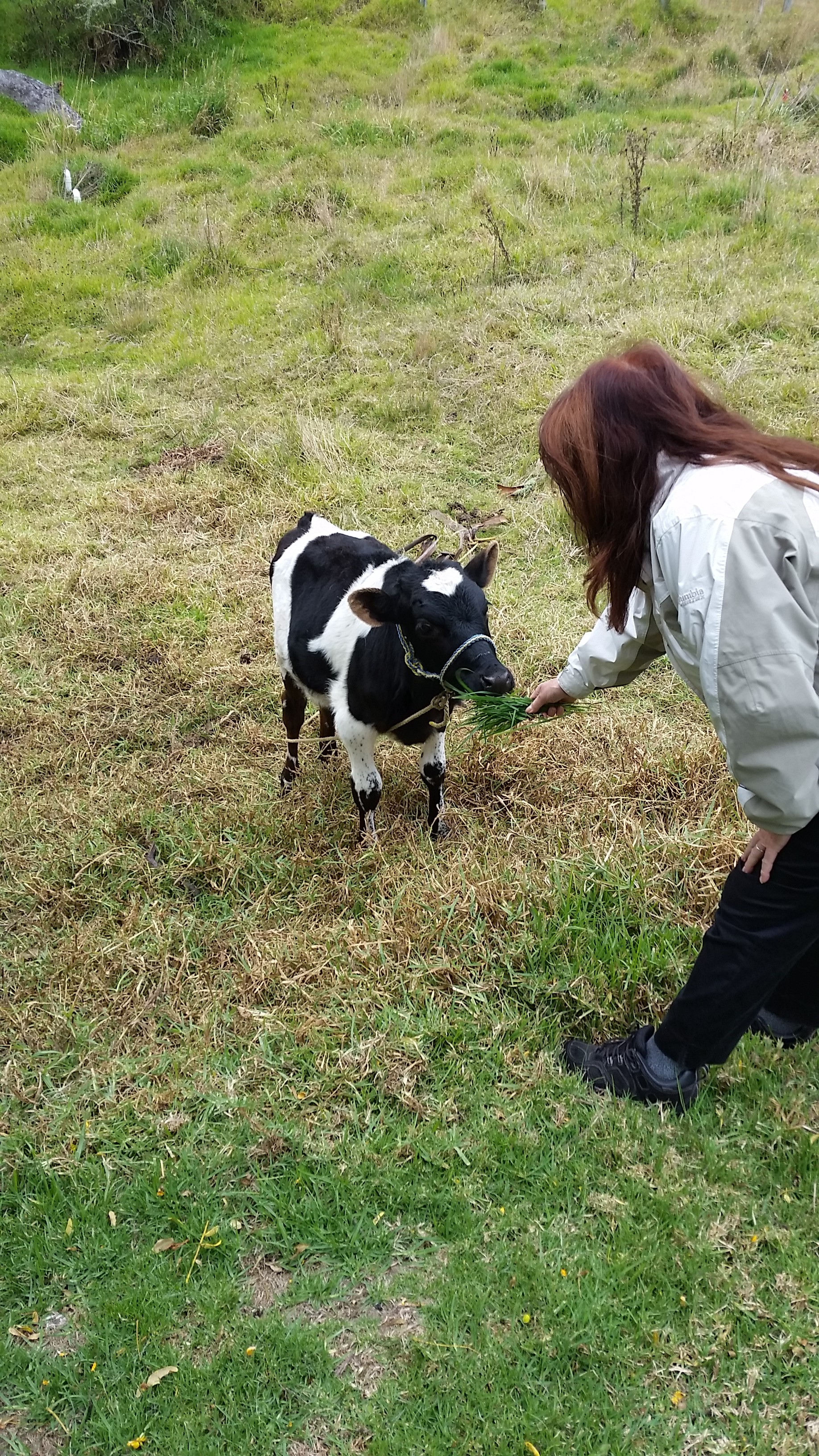
We did a little hiking around and explored the organic garden. I found a small calf mooing away begging to be tied someplace new with fresh grass. I didn’t dare move him but I did feed him several handfuls of grass.

Part of the Organic Garden.
Little Did I Realize This Guy Was Likely Condor Chow.

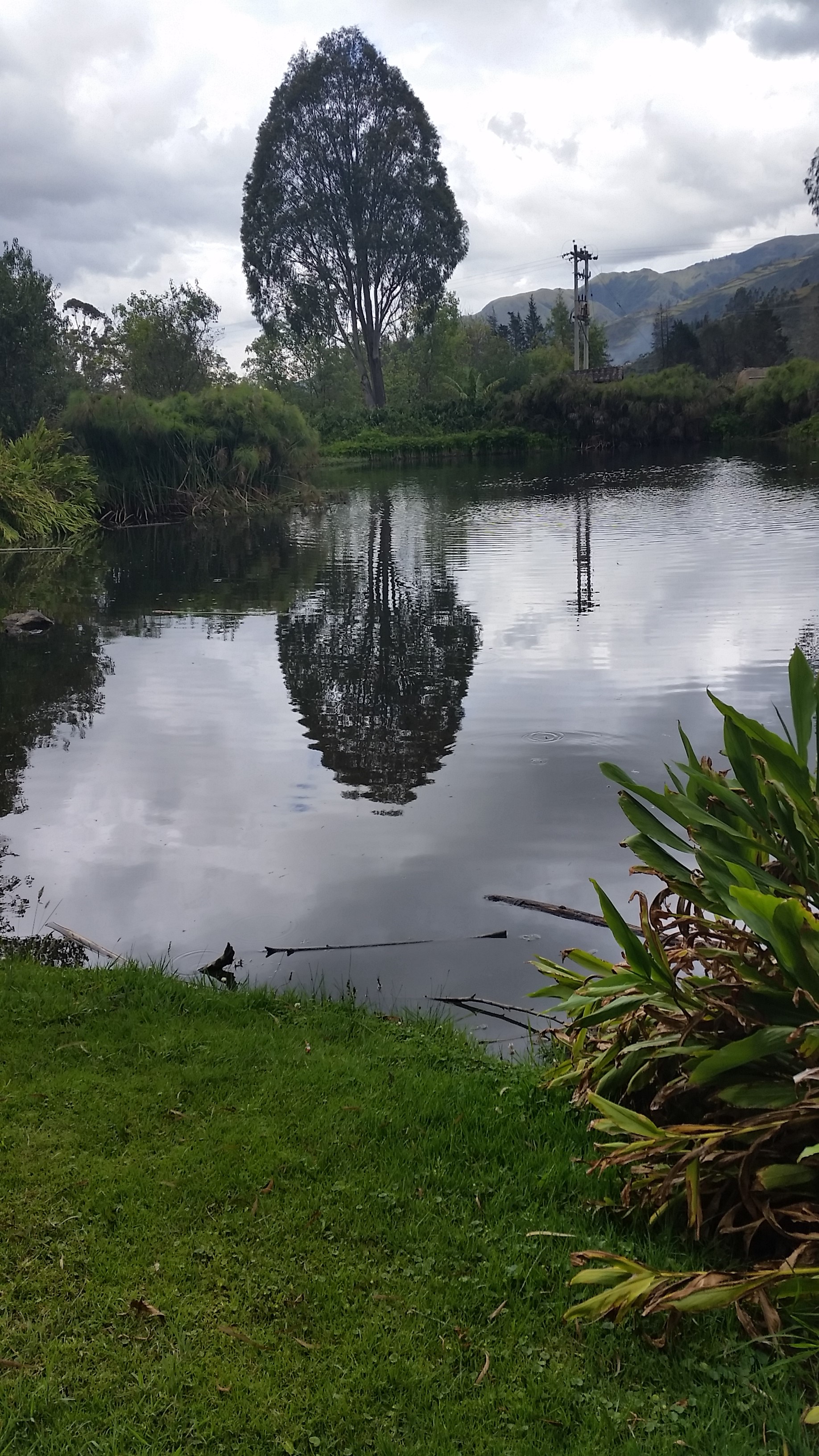
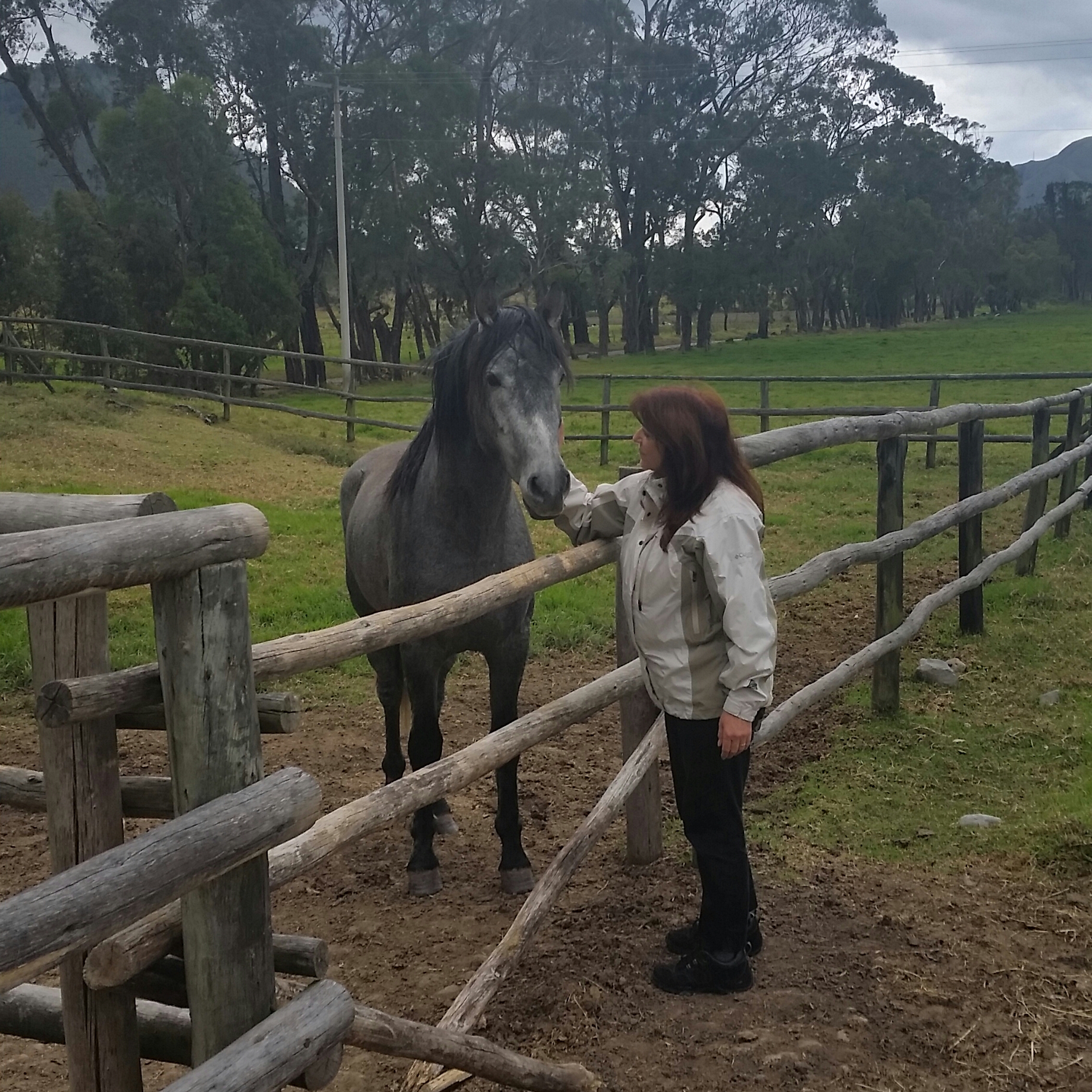
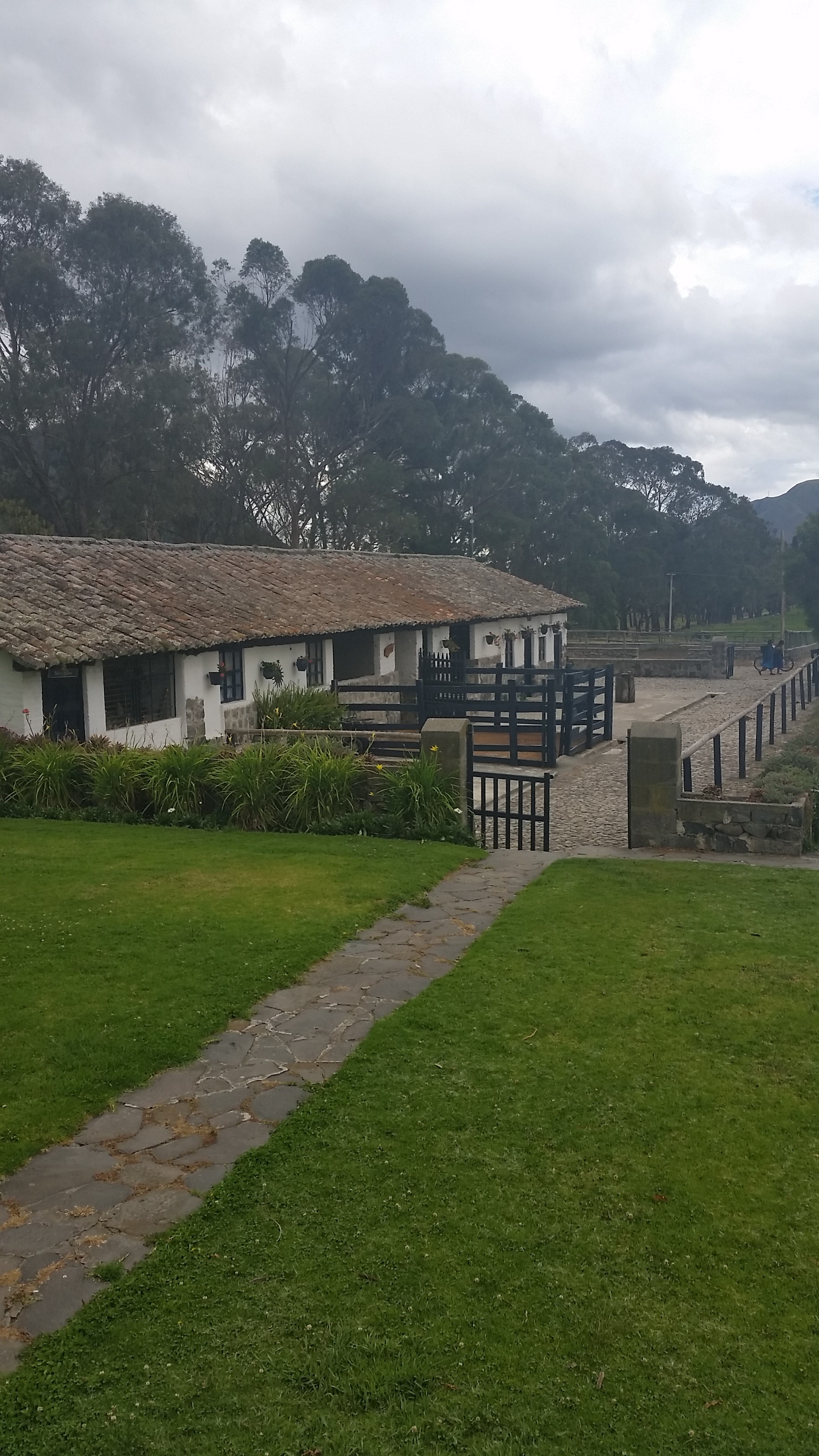
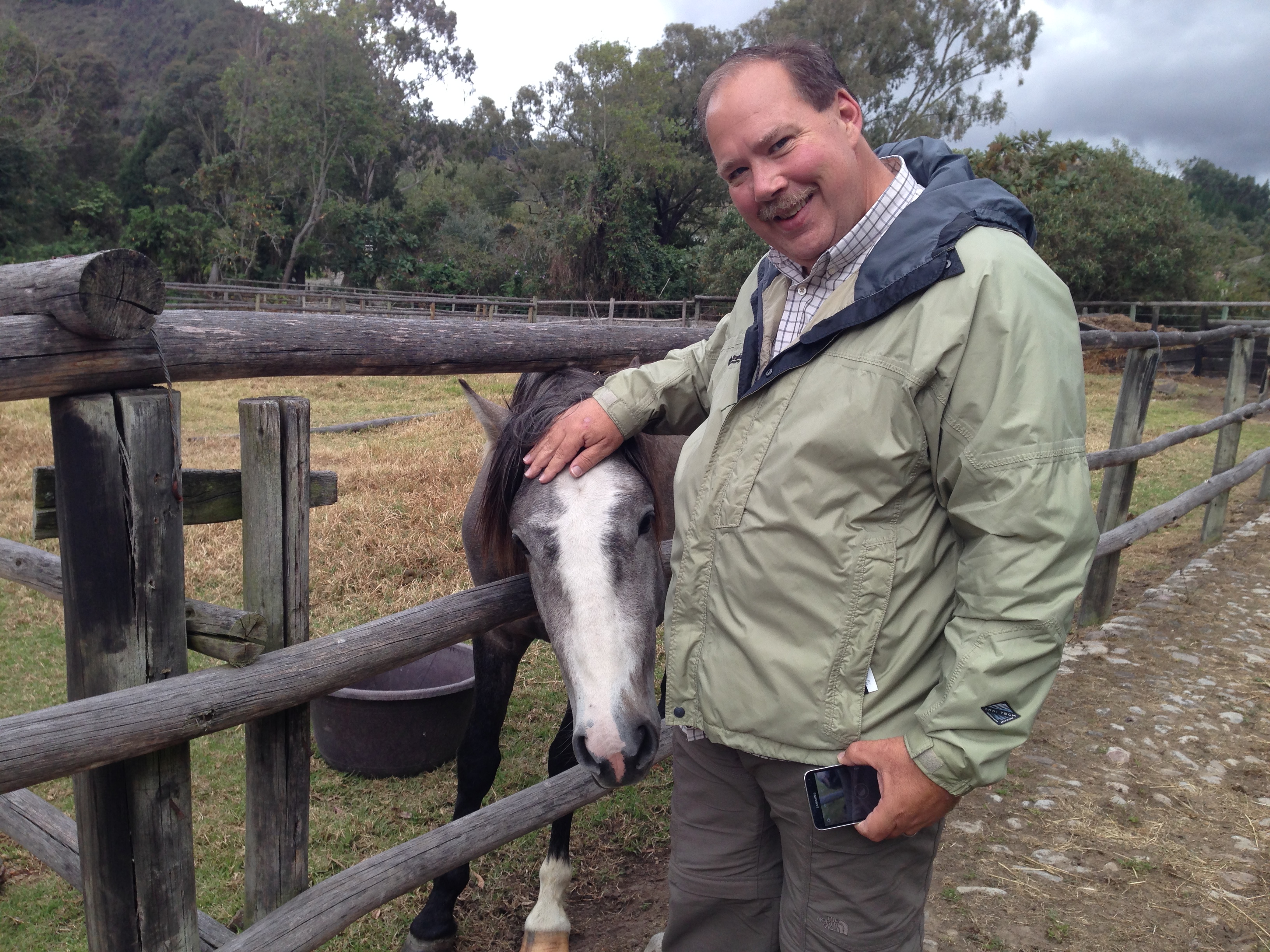
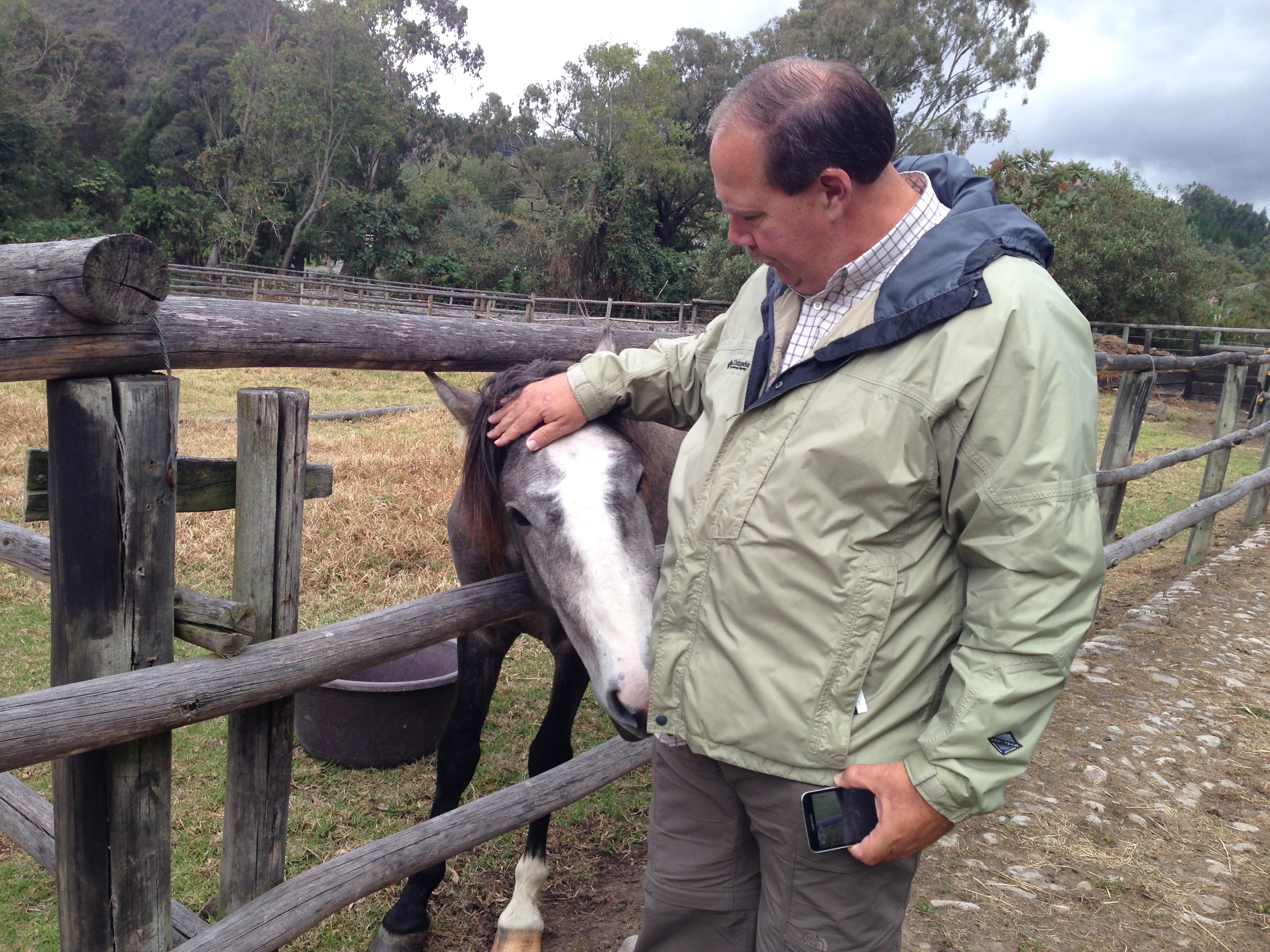
I included a few photos of the stables, horses and the duck pond. We didn’t really have time for horseback riding this trip but we did make time to scare away the ducks (which we did every time we tried to get a picture of them) and to pet the horses.

The Duck-less Duck Pond.
Michele Making a Friend.
One of the Stables.
One of the Stables.
This Guy Likes Tod.
This Guy Likes Tod.
Trying to Steal the Candy in Tod's Pocket.
Trying to Steal the Candy in Tod’s Pocket.

We both love this place and wish we would have known about it sooner because we definitely would have spent a few more nights but our schedule was just too packed to squeeze in even one more night. This location is so quiet and peaceful it makes you feel like you are a million miles from the busy city life.

October 16 – Streets of Cuenca

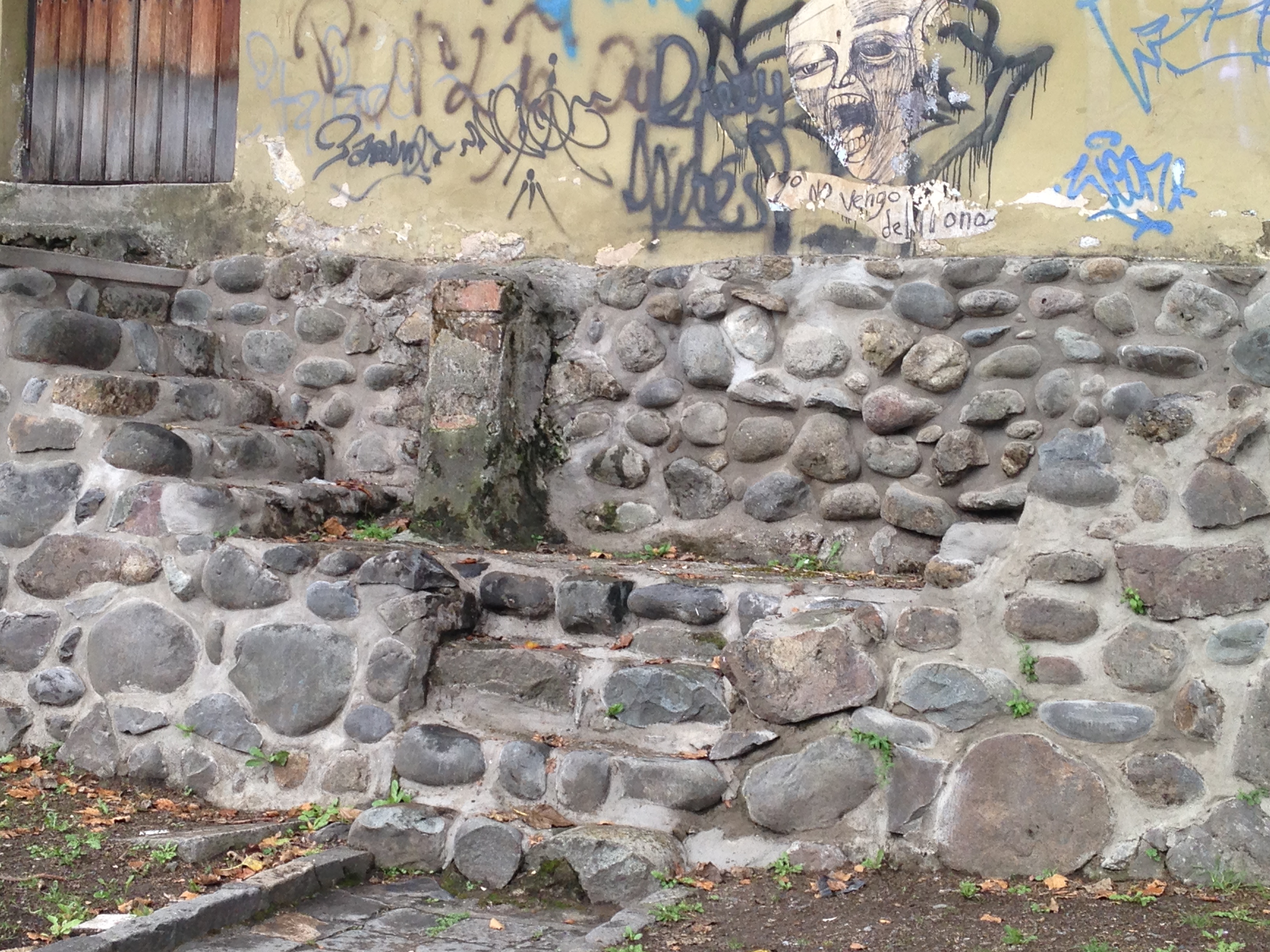
For its size, (400,000 people) Cuenca has to be the cleanest city I have visited, not just Ecuadorian speaking but anyplace really. There is way more graffiti in Ecuador, but other than that, Cuenca is extremely clean. Below is a shot of double stone steps leading to what were once businesses on one of the original cobblestone streets.

Double Stone Steps.
Double Stone Steps.

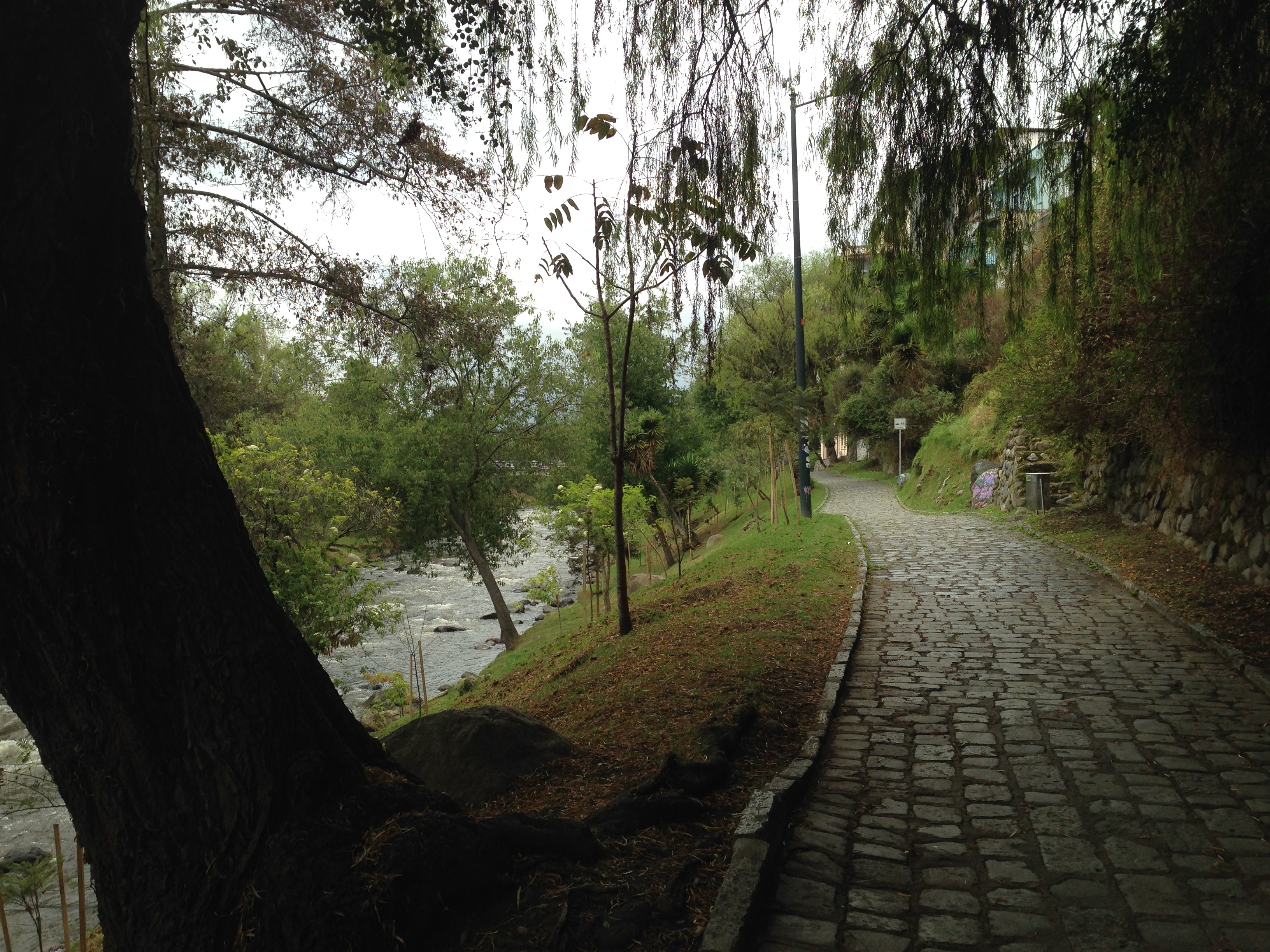
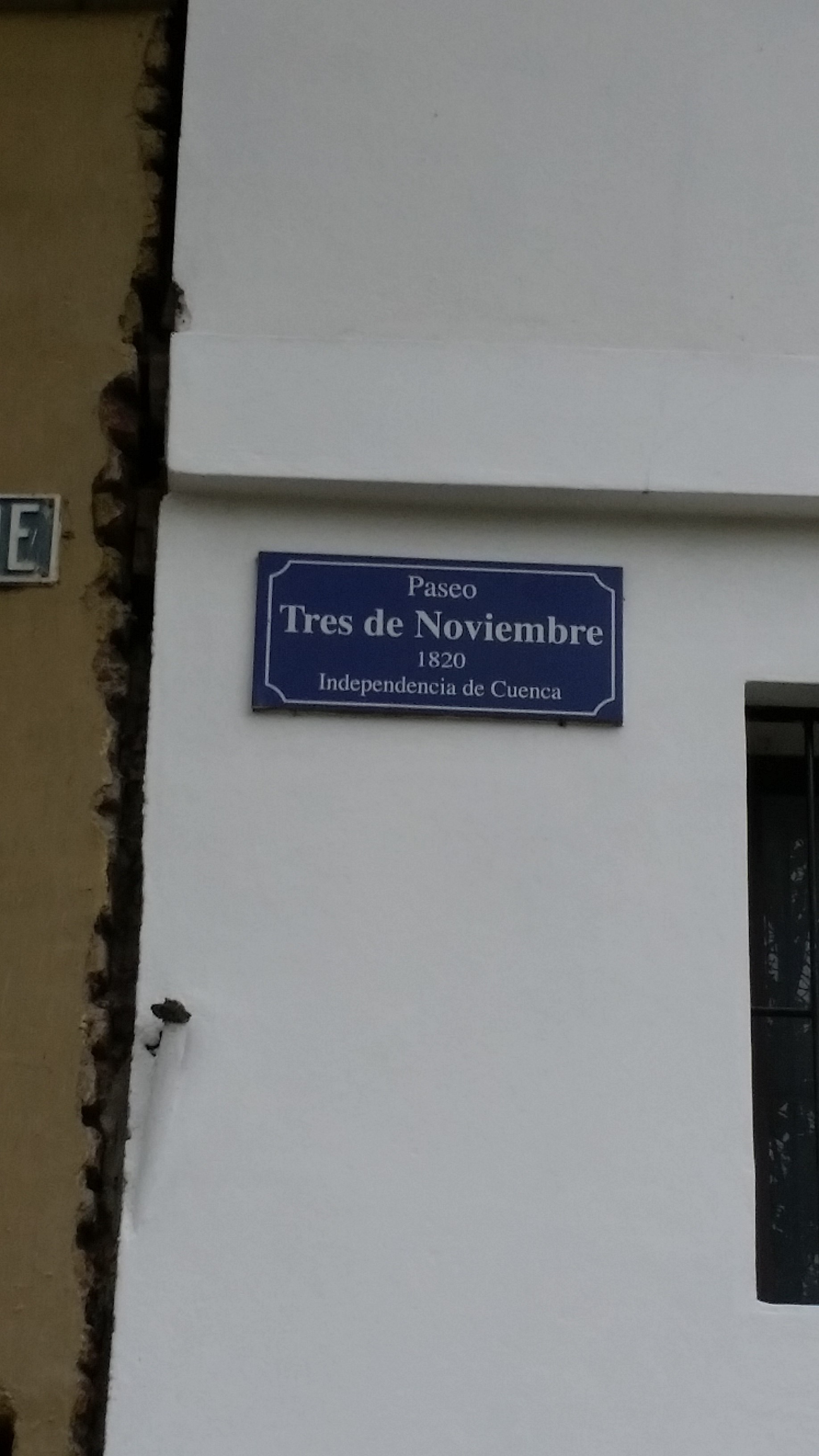
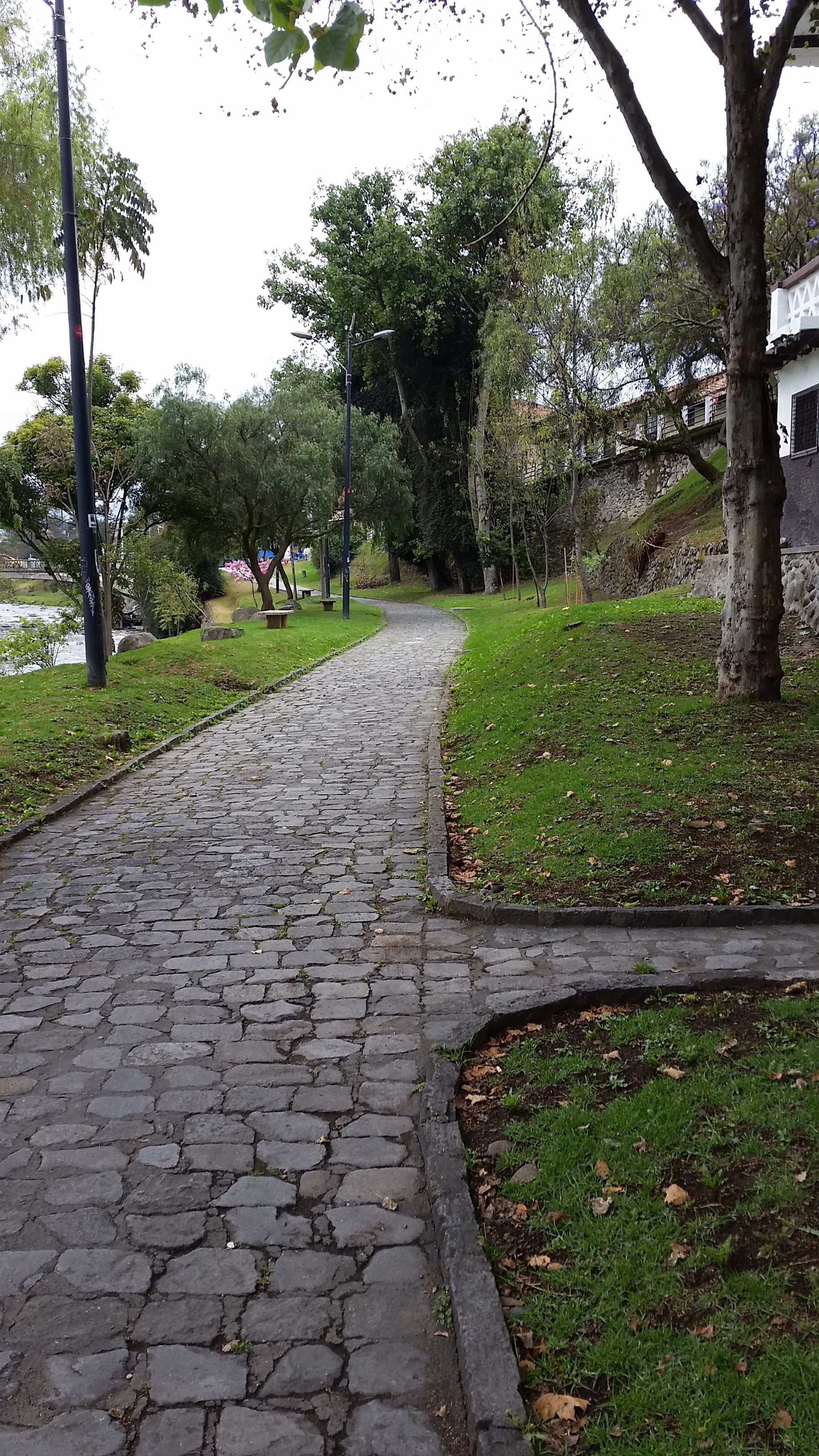
The River walk was very beautiful. On one side of the river is “old town” with all the historical sights and the other side was the new section of Cuenca. We stayed in old town the majority of our trip and loved not only the architecture but the people as well. The River walk is a cobblestone path that once was a street named after Cuenca’s independence. Many streets in Ecuador are named after special dates. The street named “diez de Agosto or 10 de Agusto” / 10 of August is a street in Quito. August 10, 1830 is the official date of the Declaration of Independence of Quito which is a national holiday in Ecuador.

The River Walk is Beautiful! We Love This Place.
3rd of November Sign - Photo Below is the Street.
3rd of November Sign – Photo Below is the Street.
Historic 3rd of November "Street".
Historic 3rd of November “Street”.

These art students from the college across the river let me take their picture. I could not communicate enough to tell them they would be on our blog.

Local Art Students.
Local Art Students.

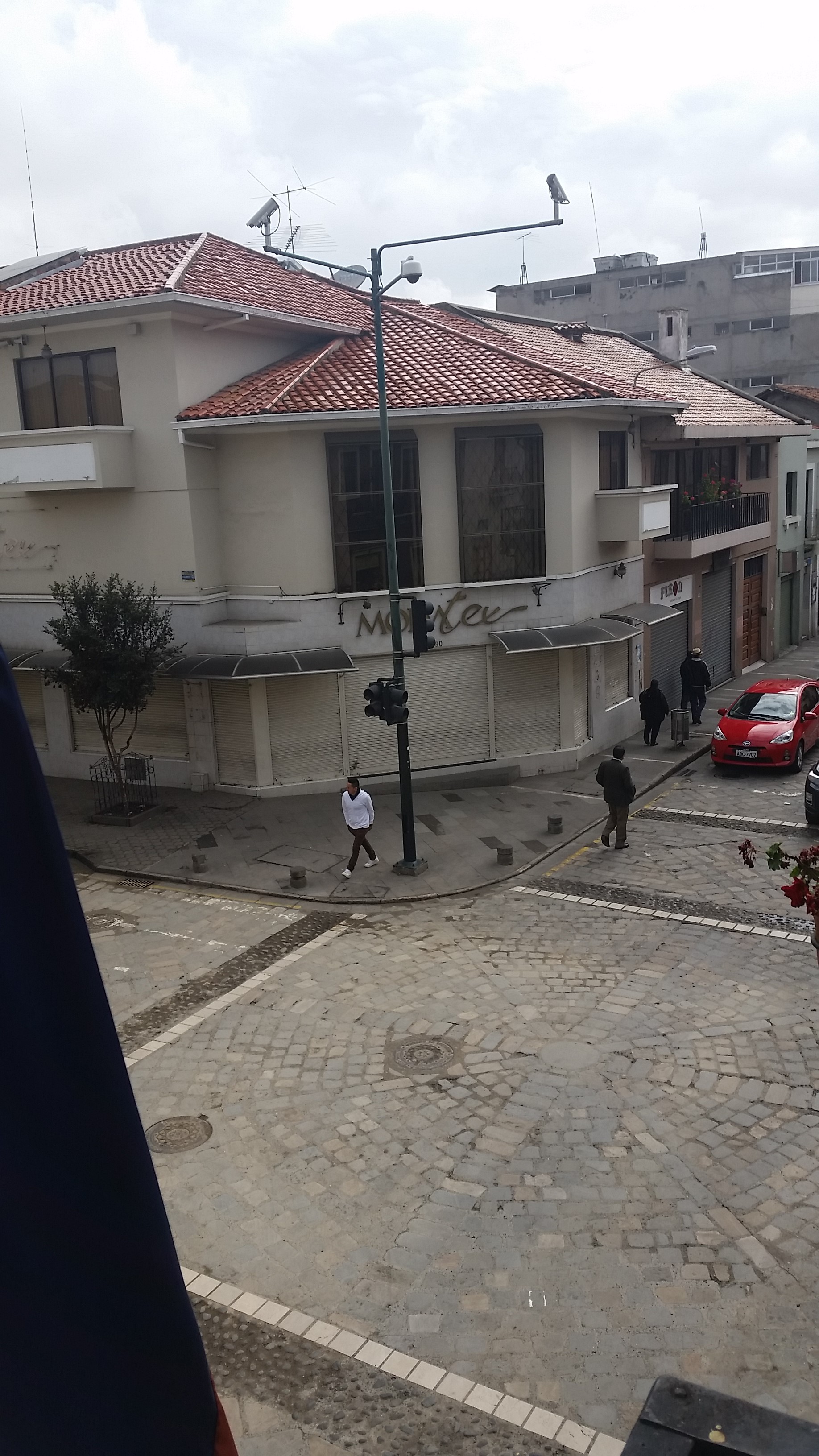
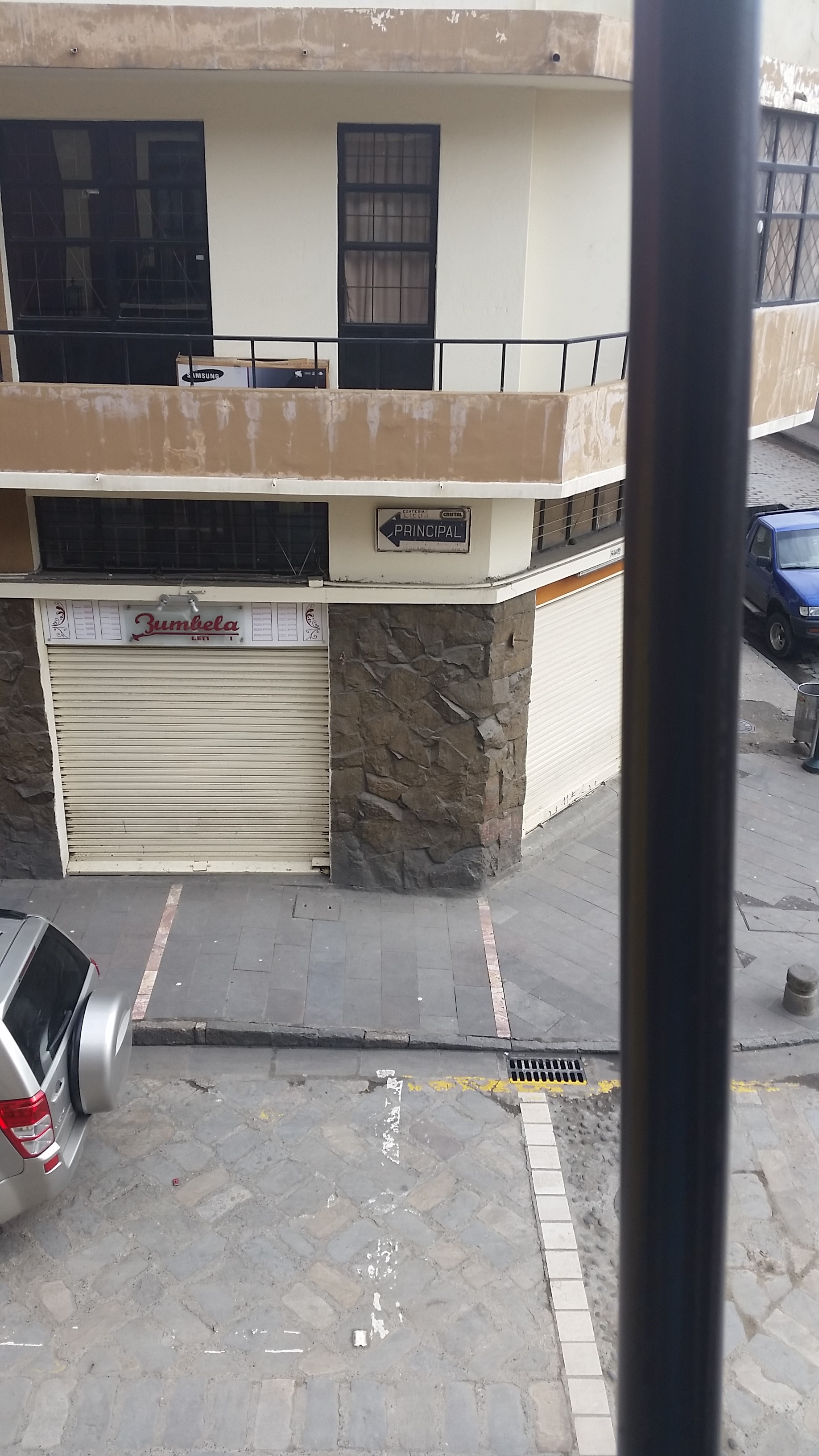
The photos below are to show how deserted the streets look when the businesses are closed. Just a row of garage doors.

Businesses are Closed.
Not Open for Business.

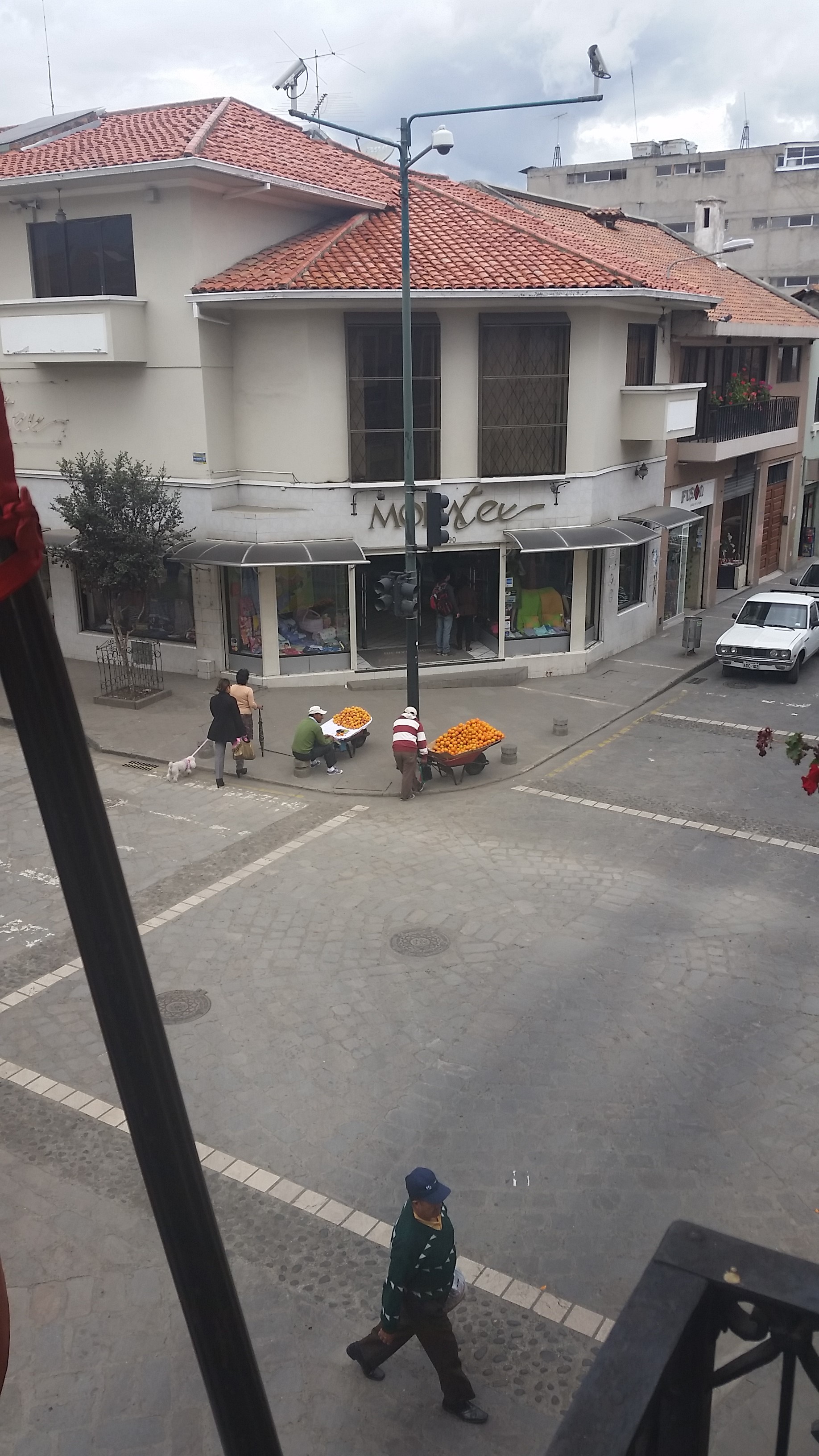
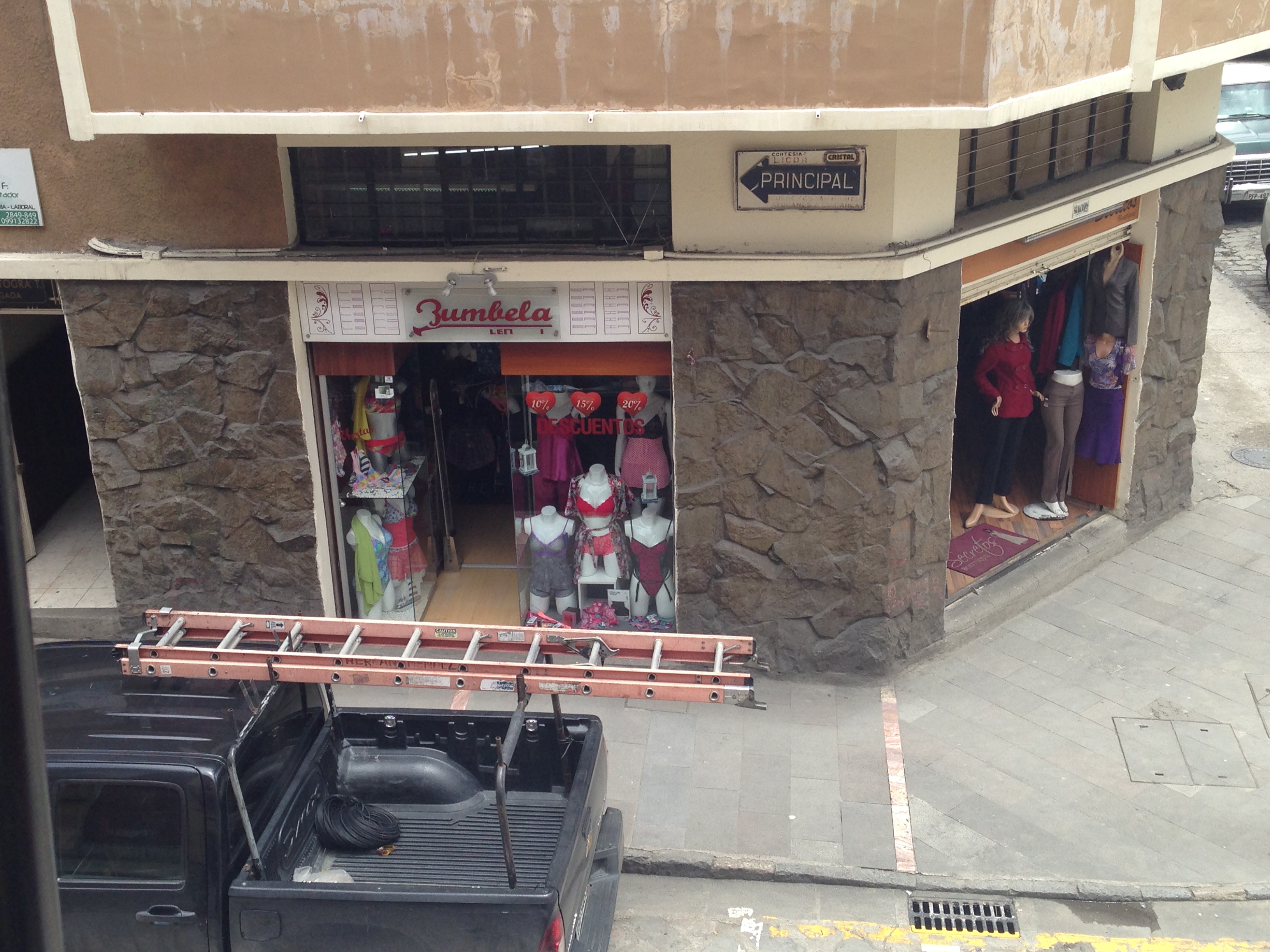
Then as businesses open, doors open, the streets come to life. (Not too early in the morning mind you! It drives me crazy how laid back it is but I think we are starting to get used to it.)

Open for Business.
Open for Business.
The Streets are Coming to Life.

Tod captured this shot of local school girls as they were passing our hotel.

Local School Girls.
Local School Girls.

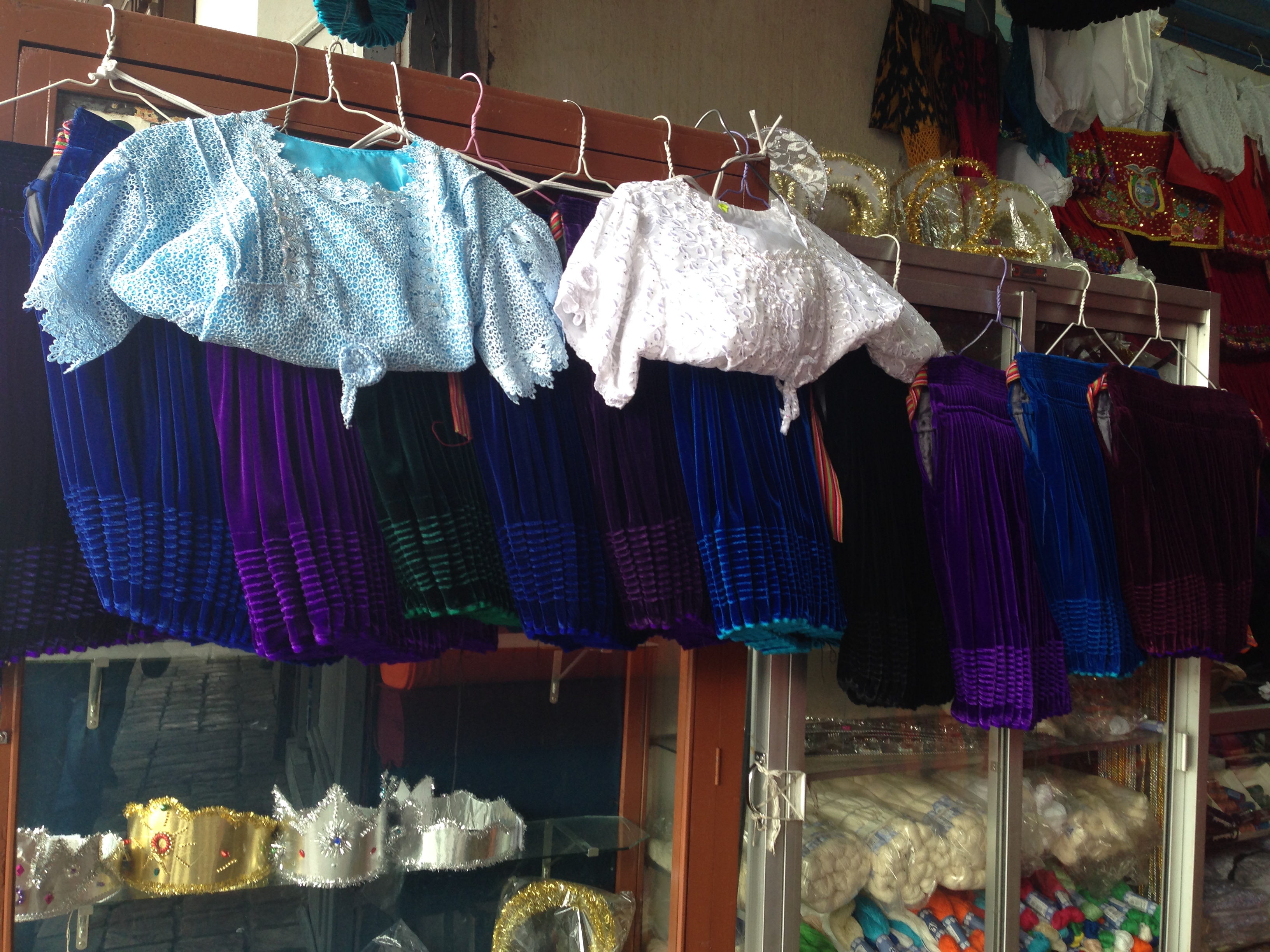
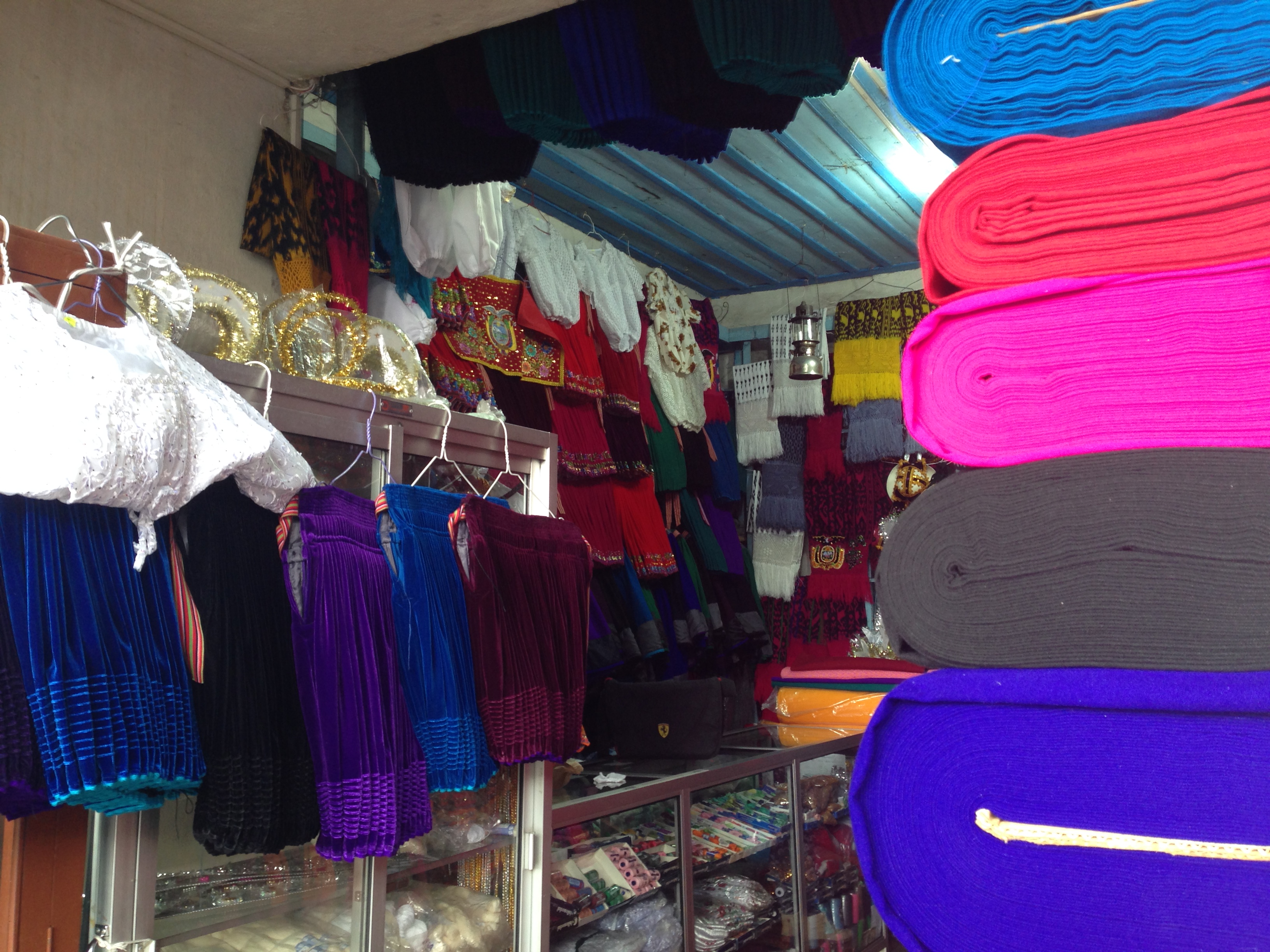
These are the native costumes of Cuenca. Not many of the younger generation dresses in these colorful velvety type material skirts but many of the older generation still do.

Native Dress.
Native Dress.
Native Dress and Material.

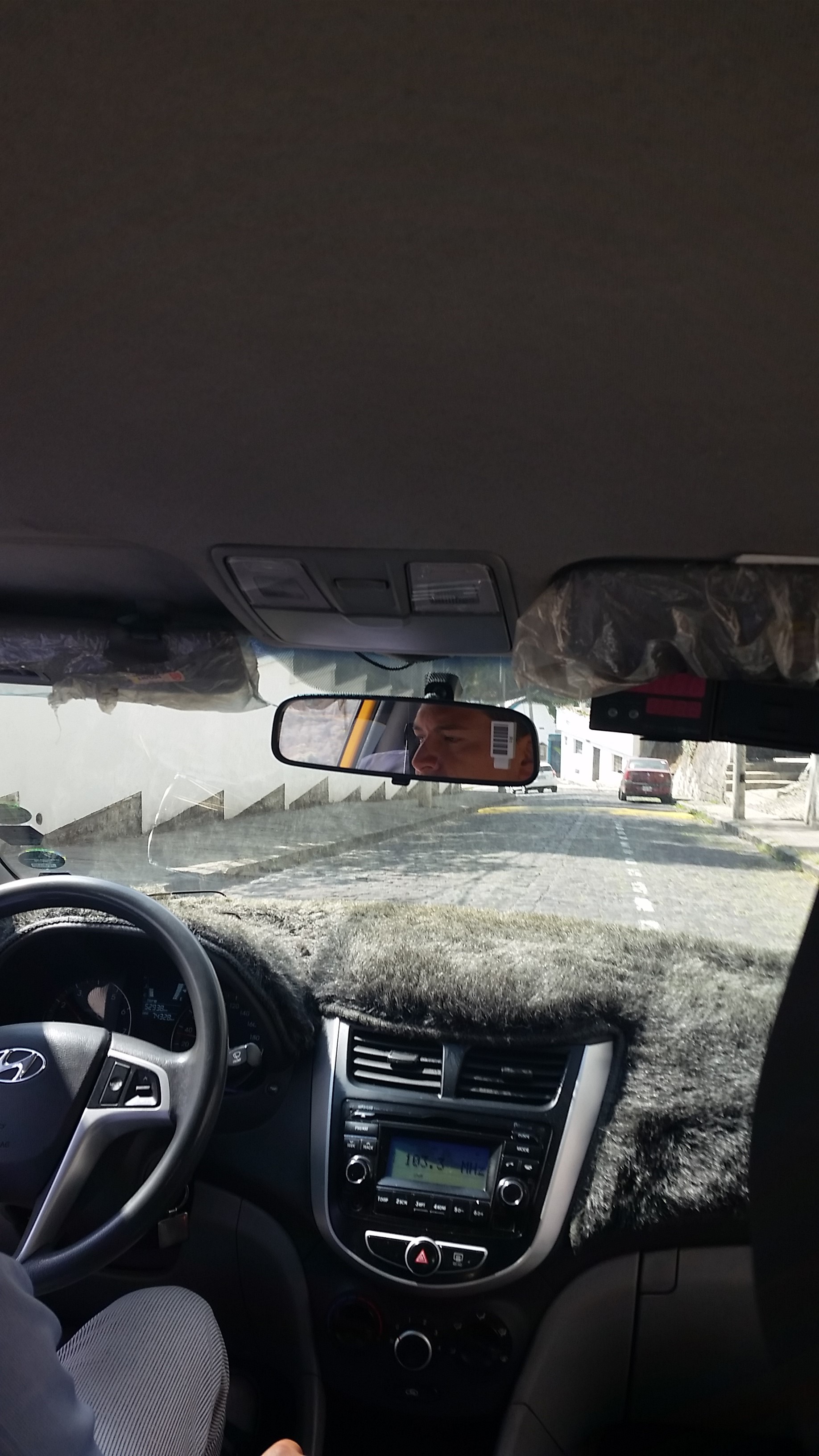
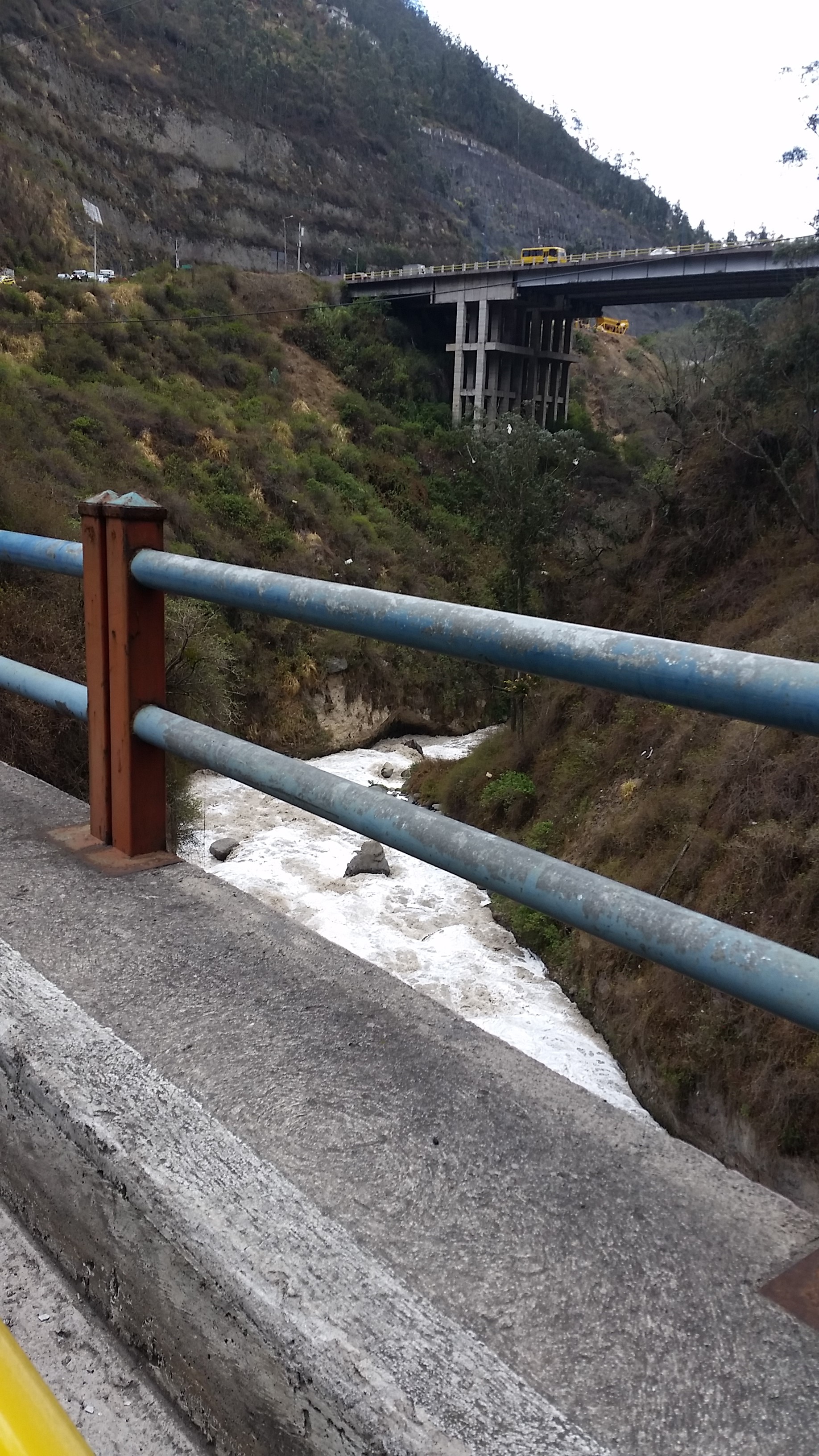
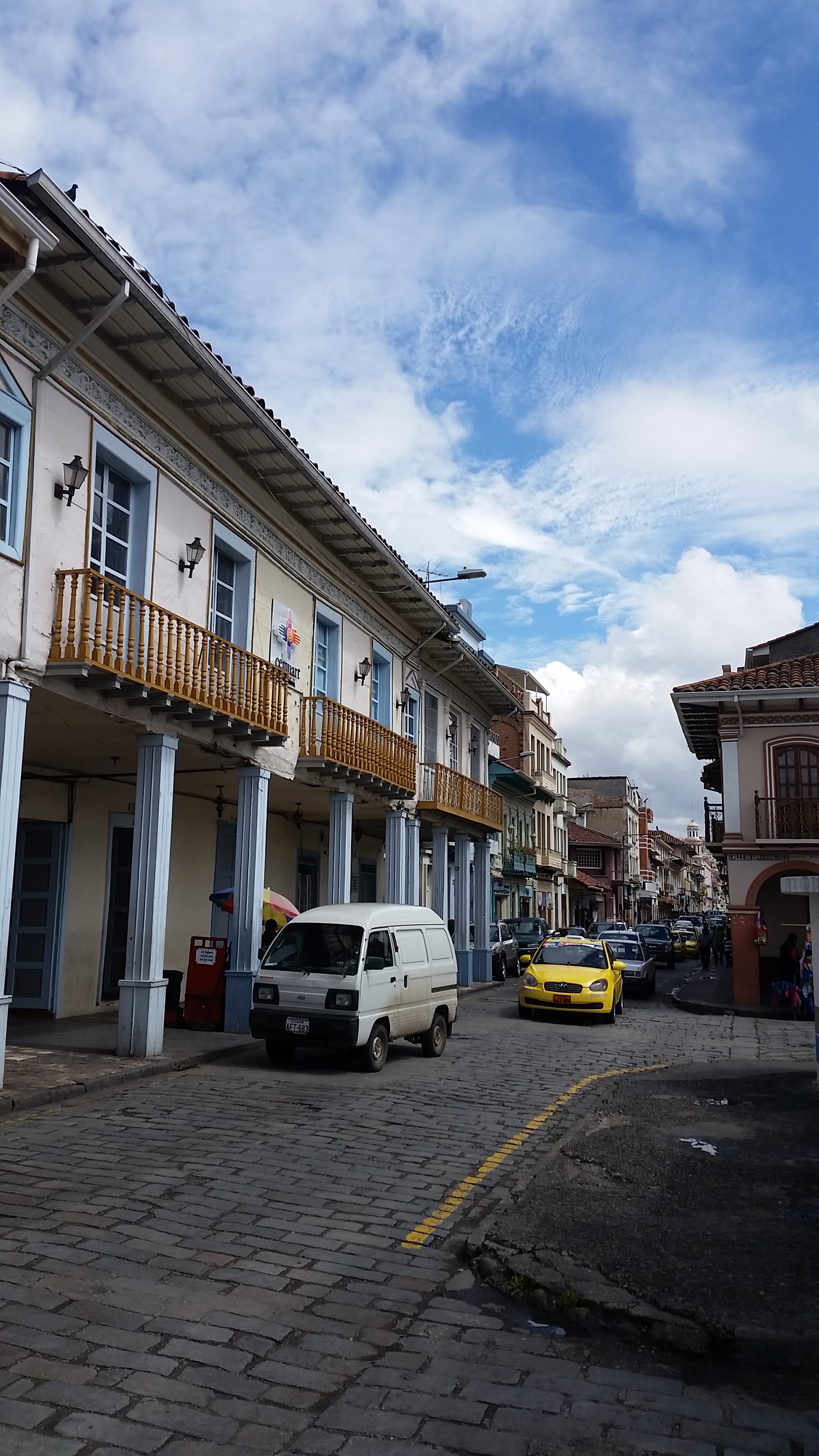
After our final walking tour and coffee in Cuenca we traveled back to Quito via taxi, plane and yet another taxi. Out taxi experience has been on some interesting old cobblestone streets that much to my dismay were “Doble Via” double/two way. These roads are much too narrow for two way traffic but somehow Ecuadorians in every city make it work!

Lots of Fur Going on.
A Long Way Down. Better Not to Look.
These Streets Were NOT Made For Cars.

These old streets must have been made when the city was young and cars were futuristic.