Walking through the organic garden on Sunday we met Yann Potaufeu a French biologist who had completed a 3-month volunteer exchange program working with Condors at Zuleta. Shortly after returning to France, he was offered a full time position working with the “Condor Huasi Project” that focuses on the rehabilitation of the Andean Condors. Now, 3-years later, Yann is managing and working several projects including the Condors, Spotted Bear and the Trout Pond. Yann offered to provide us a private guided tour of the Condor and Trout facilities and we jumped at the chance.
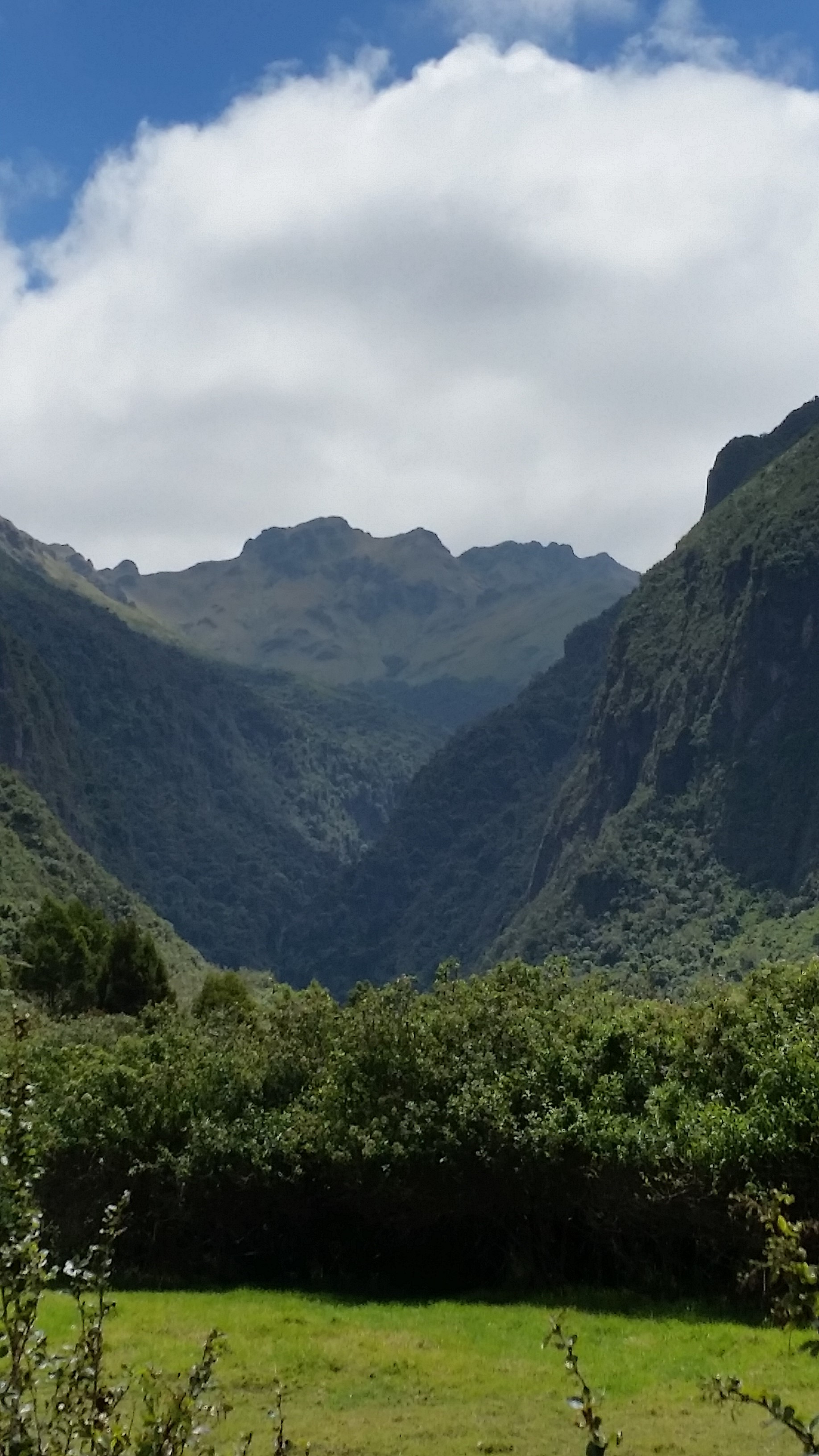
Walking to the Condors was about a 30 minute hike on a cobblestone road. It was a cool little road and we took the time to take some photos of old structures on the property. The cobblestone is not that easy to walk on and I know it is a bumpy ride but it is a road in a beautiful location so I shouldn’t complain.
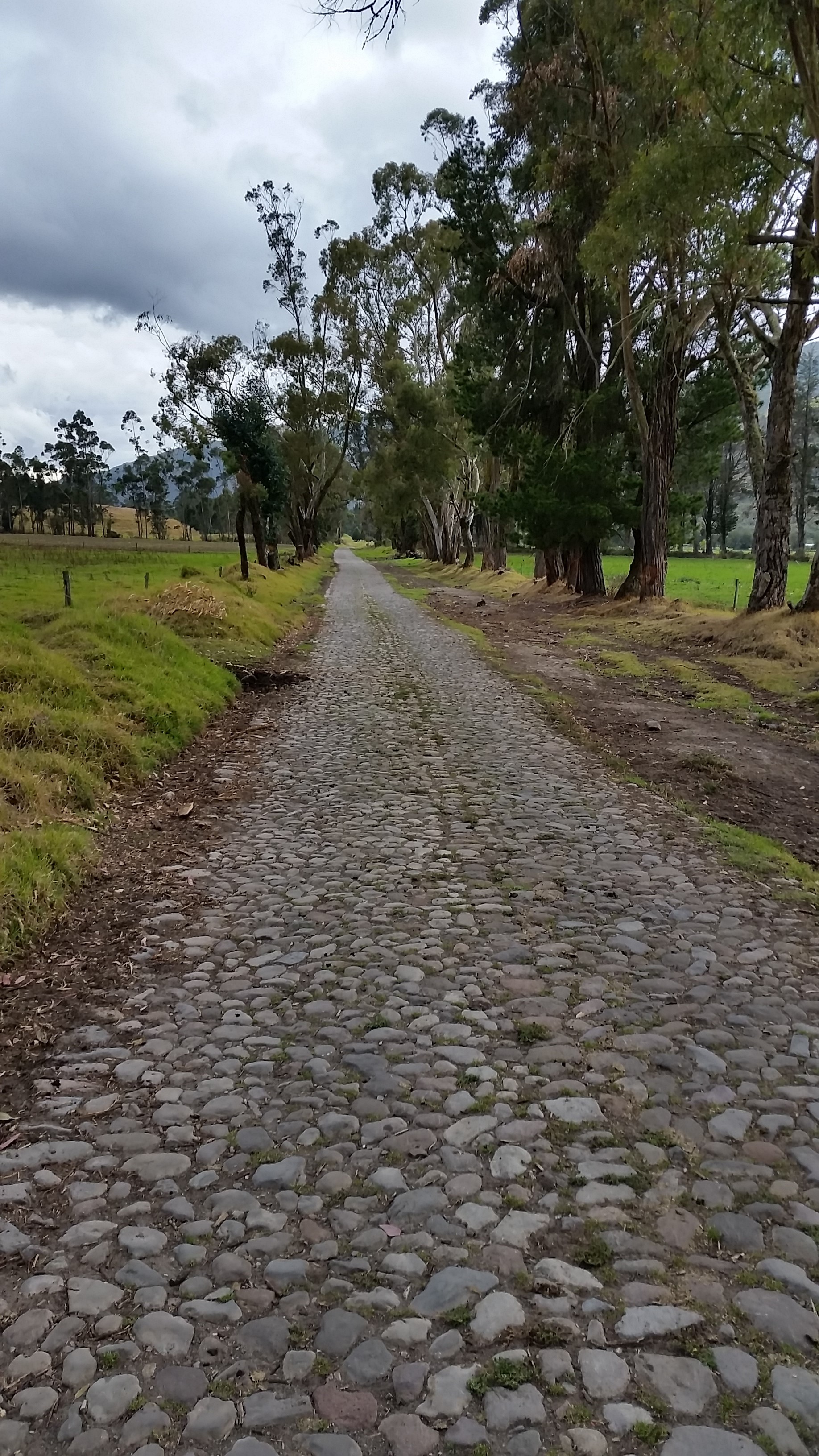
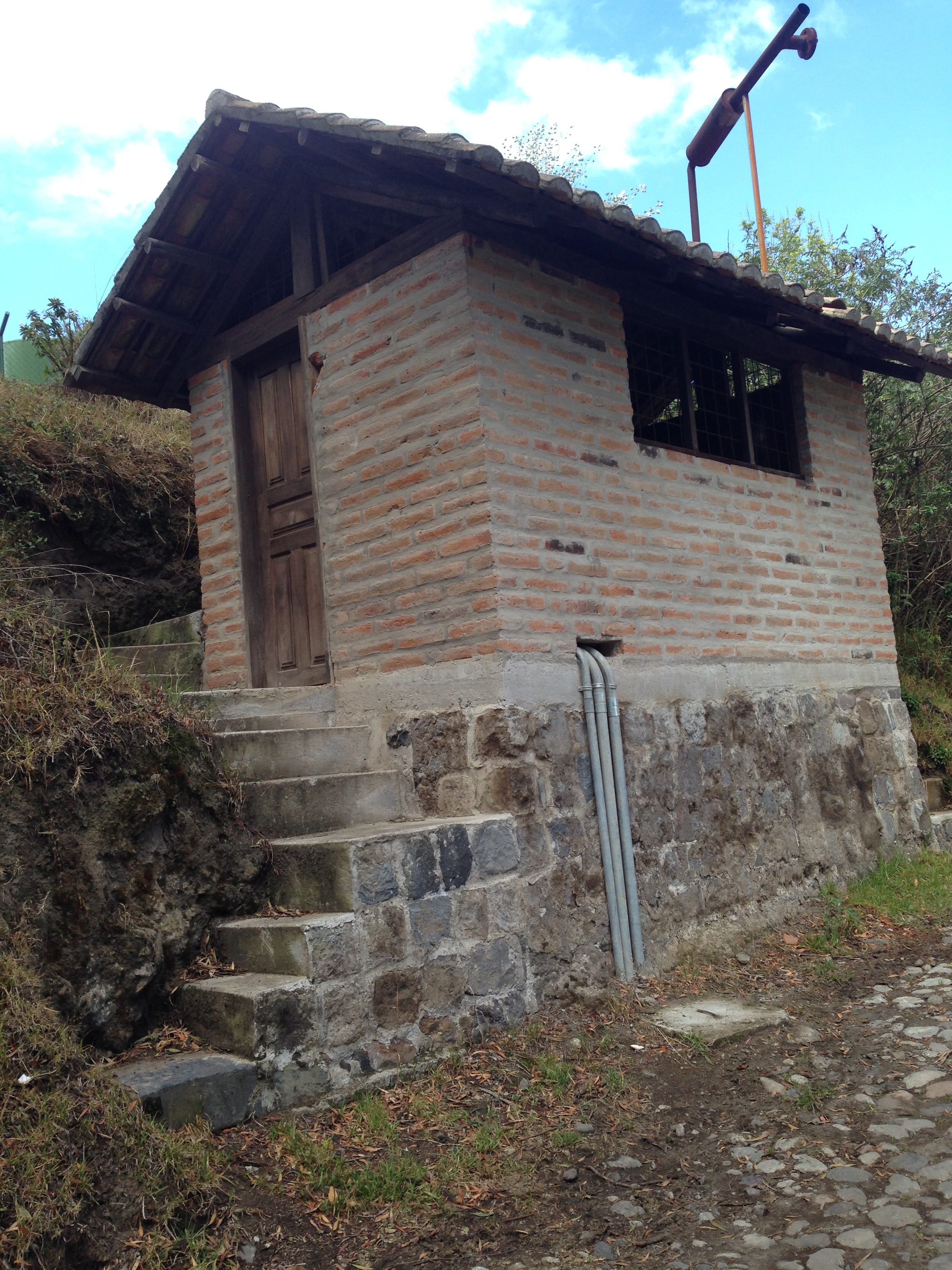
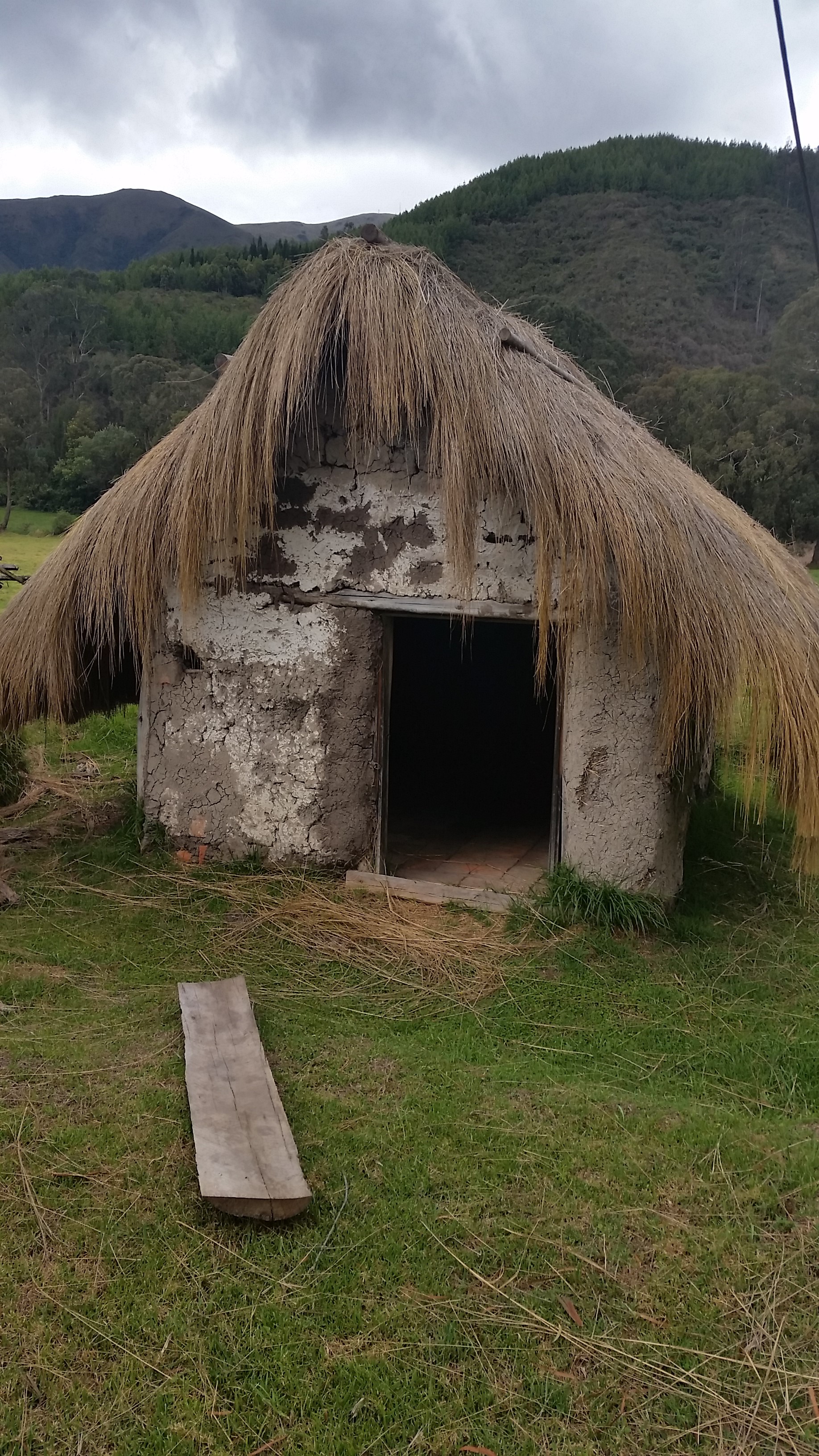
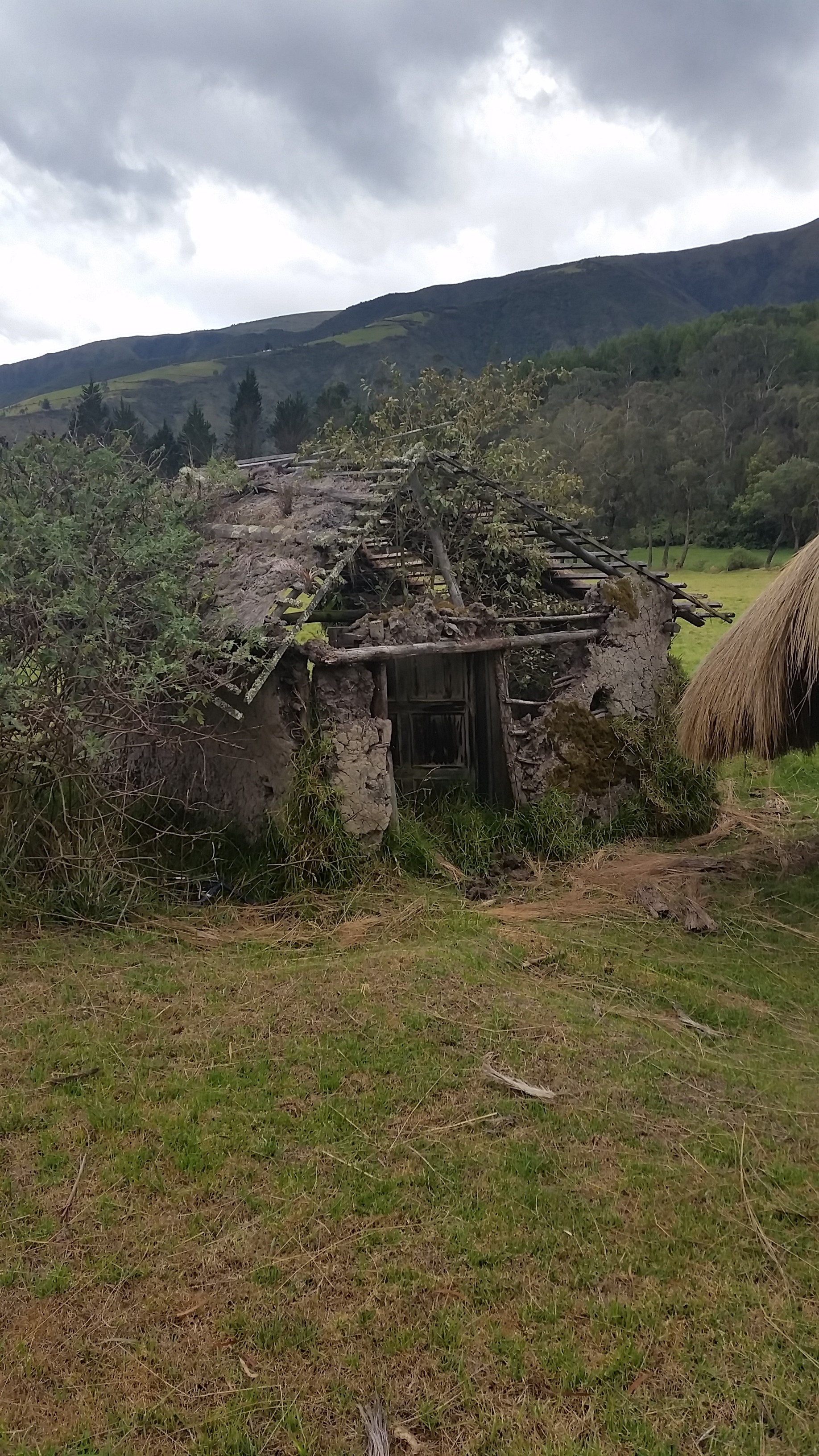
The trail (or road I guess) to the Condors was really beautiful. We would have made the hike just for the scenery, even if there weren’t Trout, Horses, Llama and Condors at the end of the trail.
First stop was the trout farm or pond. Photos didn’t show up very good so I am not including them. The Trout are used to feed guests, staff and family at the hacienda and also they are sold to local restaurants and grocery stores. Personally I think there are too many fish in too small a space but I don’t really know anything about fish farms.
There is a mountain stream running through the property and one of the workers rigged up some contraption up to make electricity or charge batteries so the little bit of electricity that is needed on location for the project is made on site.
The Condors in captivity were primarily rescues. Each has a different story, and each story, just as sad. One female is full of pellets, one male was tied by a foot on a short leash, yet a different Condor was confined in a small cage and could never even spread his wings. Farmers like to shoot Condors because they mistakenly believe they kill calves or steal sheep, dogs or even babies. There are so many rumors, however, it is extremely unlikely this has ever happened seeing as Condors do not have bird of prey talons like an eagle. For as large as these majestic birds are, they are mere scavengers or vultures and eat “road kill”. In the wild they will tear the skin from a dead animal such as a cow, sheep, lama, rabbit, whatever they find, and will feed on that but they do not actually pick up, carry away and kill animals. A big part of this project is educating the community, especially the children, what Condors do and do not do and basically what they are all about.
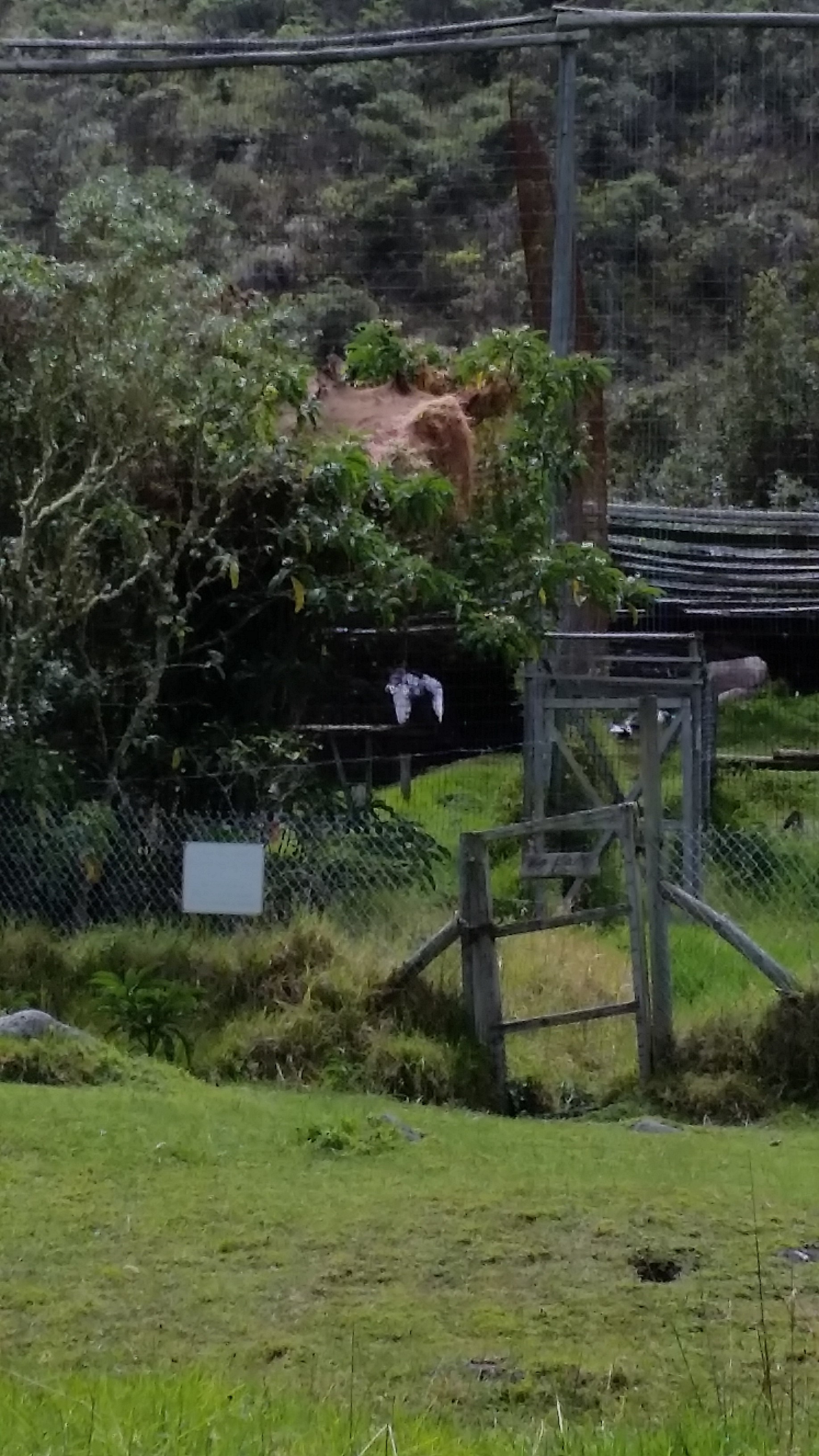
Condors mate for life and currently the facility has 6 couples (one couple with a 5 week old baby) and 2 youngsters (3 and 5 years old). Because of the baby, we had to stay a safe distance from the Condor houses. It is interesting because one couple just does not seem interested in each other after 2 or 3 years together in a cage, so the female will be transferred to a different Condo habitat in Ecuador and the male will be used to train the 3 and 5 year old in the ritual of tearing skin off the prey and other survival habits in hopes that they can someday be released to the wild. The two youngsters never see the humans that feed them and their cage is not open on the side nearest to the activity of the retreat so they do not become too familiar with humans. It was very interesting to learn about the effort and years involved in hopefully releasing young Condors into the wild in an effort to increase the population of this endangered species.
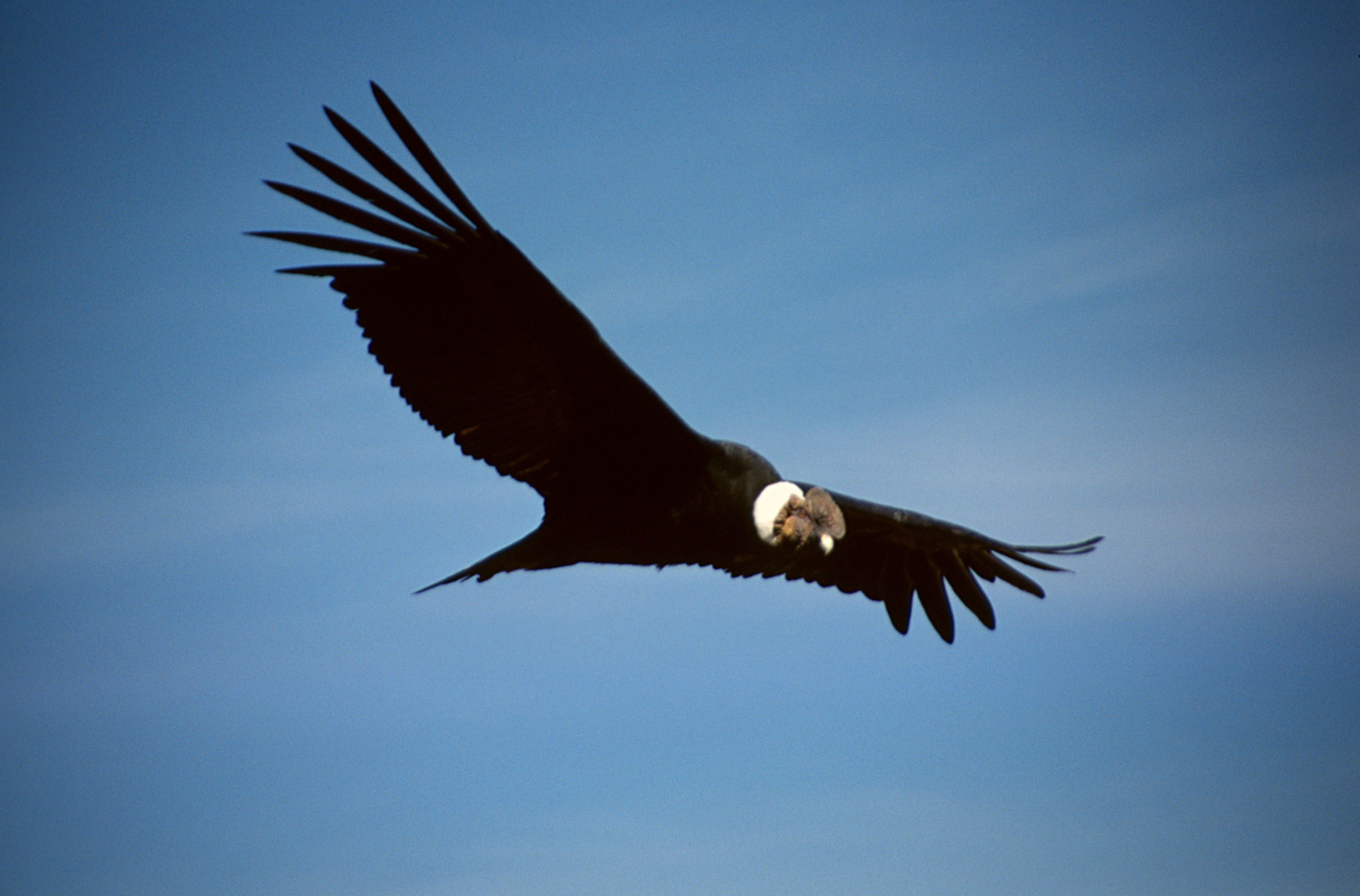
Having to stay such a distance from the cages the photos are not the best, but, we did see a few of the Condors spread their wings. In the photos below the cage photo Tod took, the one of a Condor in flight I copied from the internet, but, the photographer was not listed so I could not give him/her credit.
There are 2 types of Condors, the Andean Condor (the ones we saw) and the California Condor, which lives in the western coastal mountains of the United States and Mexico and in the northern desert mountains of Arizona.
We did not see any of the spotted Bear but we did see still photos taken by the cameras that Yann has mounted in trees where he sometimes puts fish guts out for a little “treat” for the spotted bears and their cubs.
One of the very interesting and somewhat disturbing things we learned from Yann was that they had several cattle they had purchased from neighboring farms which would be used to feed the condors. The neighboring farmers had nothing to feed their cattle as a direct result of the volcanic ash from Cotopaxi. The ash covered the ground and ruined their crops. With no feed, farmers were forced to sell off their cattle.
Overall, Hacienda Zuleta is amazing and we will plan to stay here again our next trip to Ecuador. We will definitely stay more than one night next time and hopefully enjoy a few more of the activities, or not (maybe we will just retire to the library or one of the numerous seating areas and just read and take in the tranquil surroundings this Hacienda has to offer!)
 5117 Melbourne St., Unit 4103