Little did we know how this travel day would unfold but we were braced for an adventure. The trip to Otavalo is about 55 – 60 miles and takes and estimated 1 hour 50 minutes. Otavalo is a city with a population of about 90,000 including the surrounding smaller native villages. The primary reason for this excursion is to attend the Saturday Market where the indigenous Otavaleños sell their weaving such as handmade blankets, tablecloths, tagua nut jewelry, hand crafted silver jewelry, musical instruments, dream catchers, leather goods, fake shrunken heads, indigenous costumes, hand-painted platters and trays, purses, clothing, spices, raw foods and spools of wool. This market site boasts to be the oldest continuous operating market in the world dating as far back as 2000 years BC. I don’t know if that is fact or fictional boasting, but, it sounded intriguing.

To travel to Otavalo we had to get to the northern most bus terminal in Quito where we would catch the northbound bus to Carcelen and at the end of that route get on a bus to Otavalo. (Easy right?) We were doing great and feeling quite pleased with ourselves right up until we got off the bus in Carcelen. We went in the exit and never did find our bus or a ticket window or a police officer to ask, but some guy approached us, likely helping his friend to fill his van, and directed us out of the station to a van already filled with people. They somehow made room for us and off we were in a van filled with people that unknown to us were headed for some village 20 miles north of Otavalo. The driver did not even speak Spanish much less English, he was native Indian and spoke the Quichuan language. Luckily the other guy in the front seat did speak Spanish so Tod could communicate enough to let them know we needed to get out in Otavalo (I am not sure but I think that somehow Tod has a GPS built into his head). It really wasn’t a bad trip and we made it in record time (1 hour 15 minutes) likely because we skipped all the bus stops along the way. The shuttle van dropped us off on the highway at the edge of Otavalo and gave us directions to the town square – we thought about just getting a taxi and giving him the hotel name and address but what fun would that have been? We navigated to within 3 blocks of our hotel before I found 2 police officers and asked for directions. Not bad for 2 gringos in a city where Quichuan is the first language for all, Spanish or French a second language for many and for a limited few, English, is a third language.
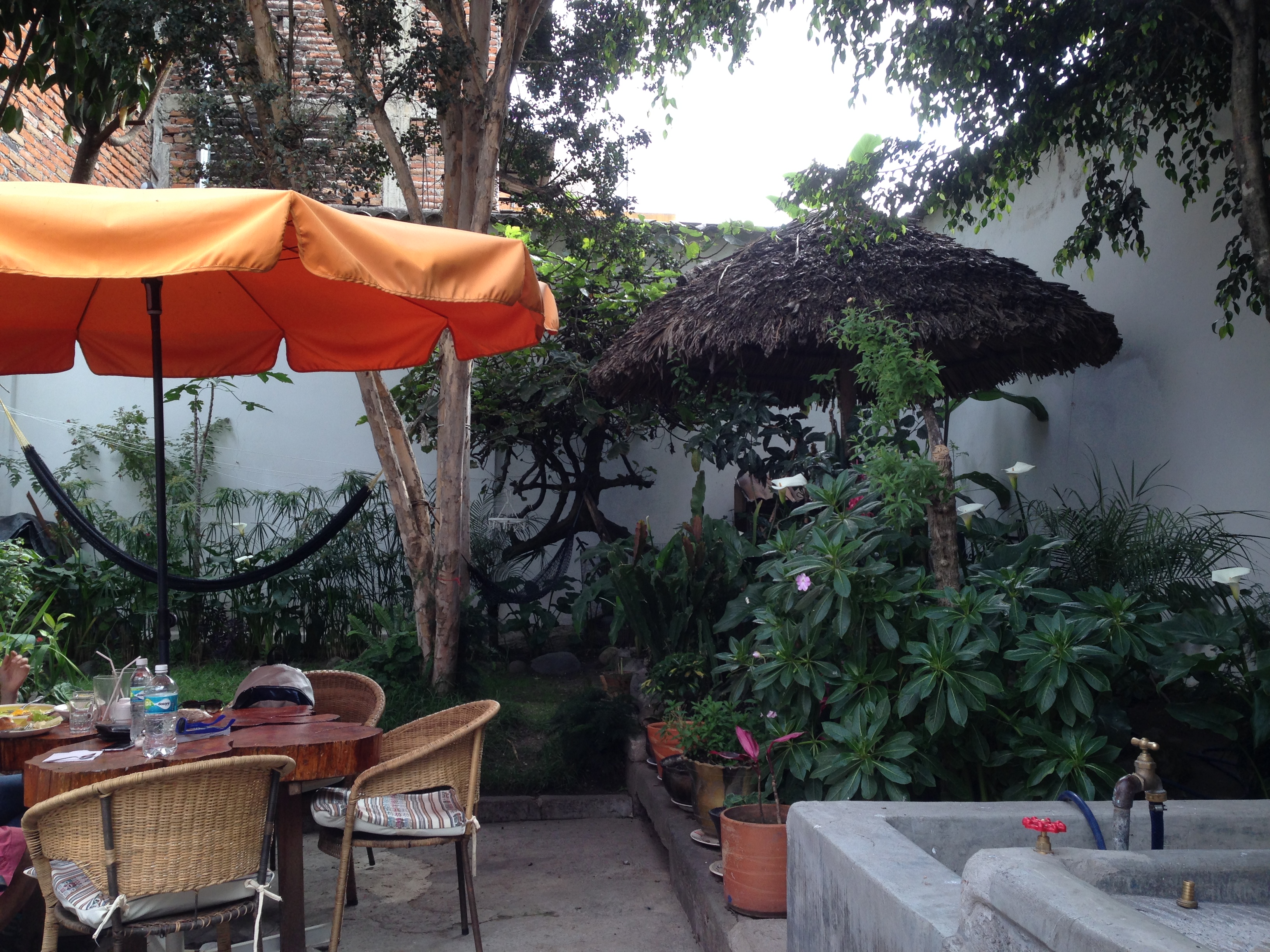
After we checked into our hotel (Hostal Otavalo Prince) and regrouped a little we headed out on foot to see what there was to see and to find Ecomontes Tours. We learned of this company by means of a brochure in our hotel room and found they had hiking tours of Cuicocha Lake. Cuicocha was once a volcano that imploded, after which the crater flooded. Anyway the touring company was on the same street as the hotel so should have been easy to spot (logical right?) but there are street vendors everywhere and the businesses, if labeled, are not always labeled in spots that you can see. We eventually did find it after walking right past it the first time. It had a huge sign that said “TOURS” on the side of the building, nothing in the front and no way to identify it unless approaching from the east. We were too late in the day to hike around Cuicocha crater-lake so we booked it for Saturday and extended our stay in Otavalo. After securing our tour, we found a quaint little restaurant that had a cool outside dining and garden area. In the garden were two hammocks, I guess if you eat too much you could go lay in the hammocks and rest for a while. The single staff person (cook, hostess, waitress, table busser) spoke Quichuan and Spanish but no English, however, several of the diners were speaking English, other than ourselves, it was the most English language we had heard in over a week.
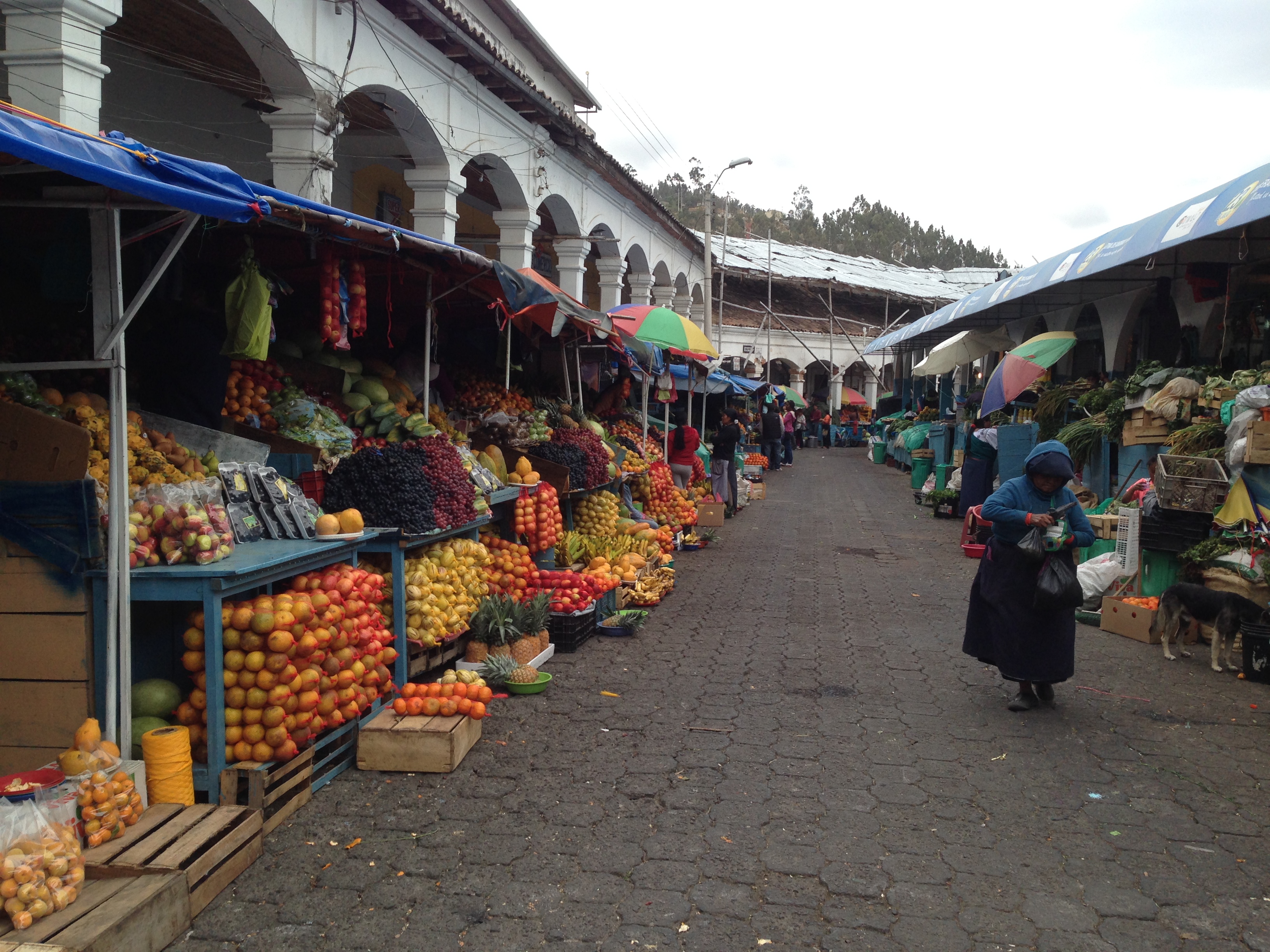
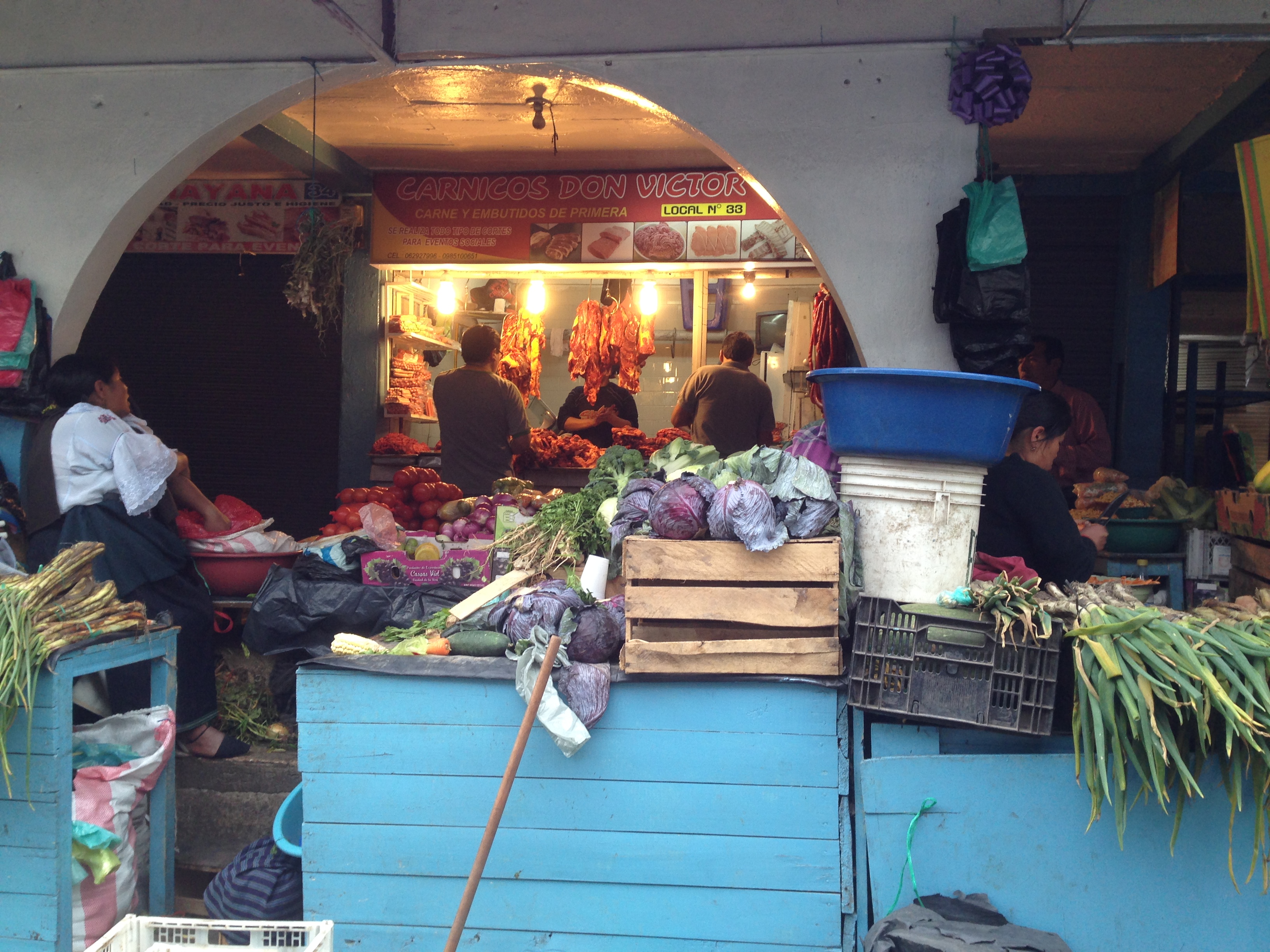
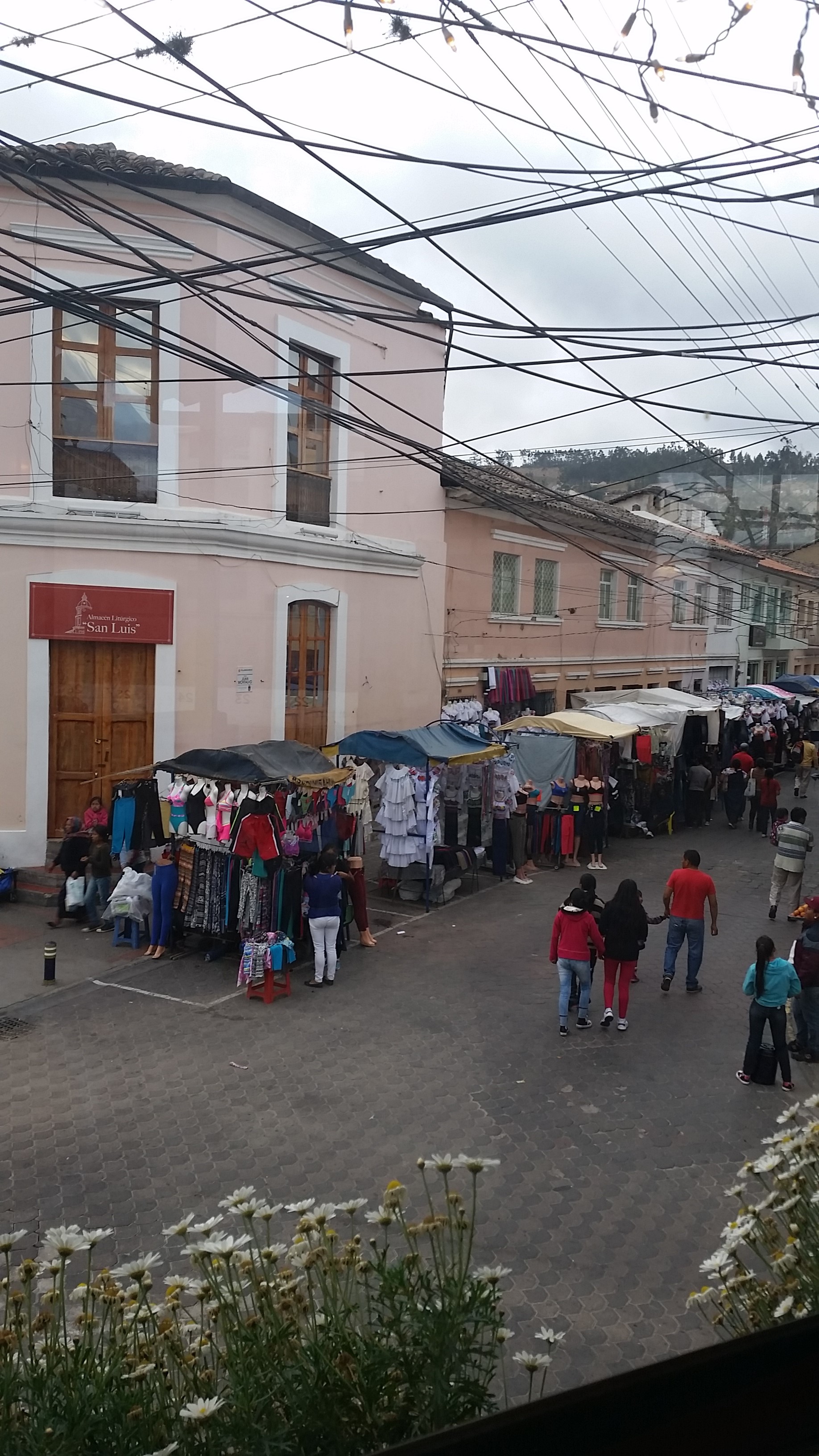
We walked around Otavalo and found an open market that was huge. Part of it was outdoors (see photos below) and some of it was indoors, but all of it was open. Fruit, vegetables, meat, fish and herbs, it appears the craft markets are in the town square. The meat section made me almost sick! There were whole pigs, tables of whole skinned chickens, other tables with what must have been cuts of beef and tables of whole fish (now when I say whole on the pigs and fish I mean with the heads on! Yuck!).
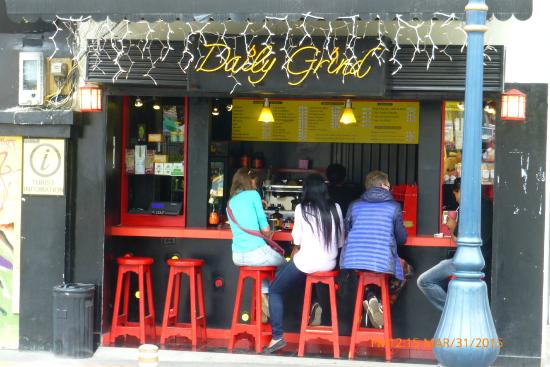
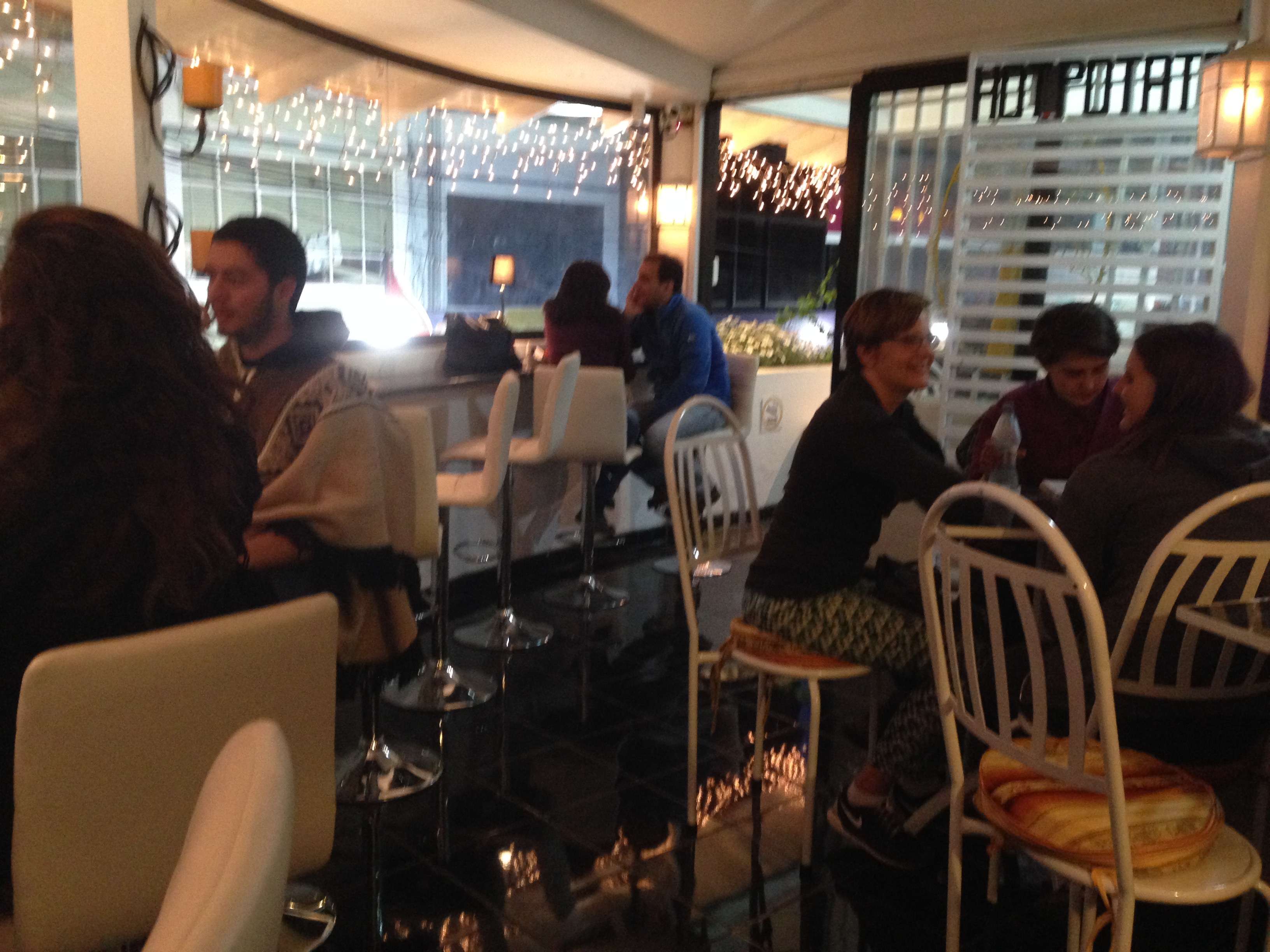
We had enough walking and headed to a coffee shop that we had spotted earlier that day (The Daily Grind). The “Hot Potato” was just upstairs and a young man, who we were soon to find out was named Jorge, directed us upstairs to the Hot Potato which had just opened. In the Hot Potato you could get coffee, a few different drinks, wine, beer (one brand but a light and a dark), and soup of the day. This place was great, we met Bonnie an expat from New York. Bonnie has been in Ecuador for 16 years and appears to be the financial backer. She lives between New York and Ecuador, she owns a house in one of the surrounding communities and works with the local government to build schools. It was interesting to learn that she gets most of the funding to build these schools by working with two local artists (one painter and one silver smith). Bonnie purchases their art, transports and sells it in New York, then uses the profits to build schools. She has really embraced the Ecuadorian culture in this community which is primarily the Indigenous Otavaleño Indian.
 5117 Melbourne St., Unit 4103