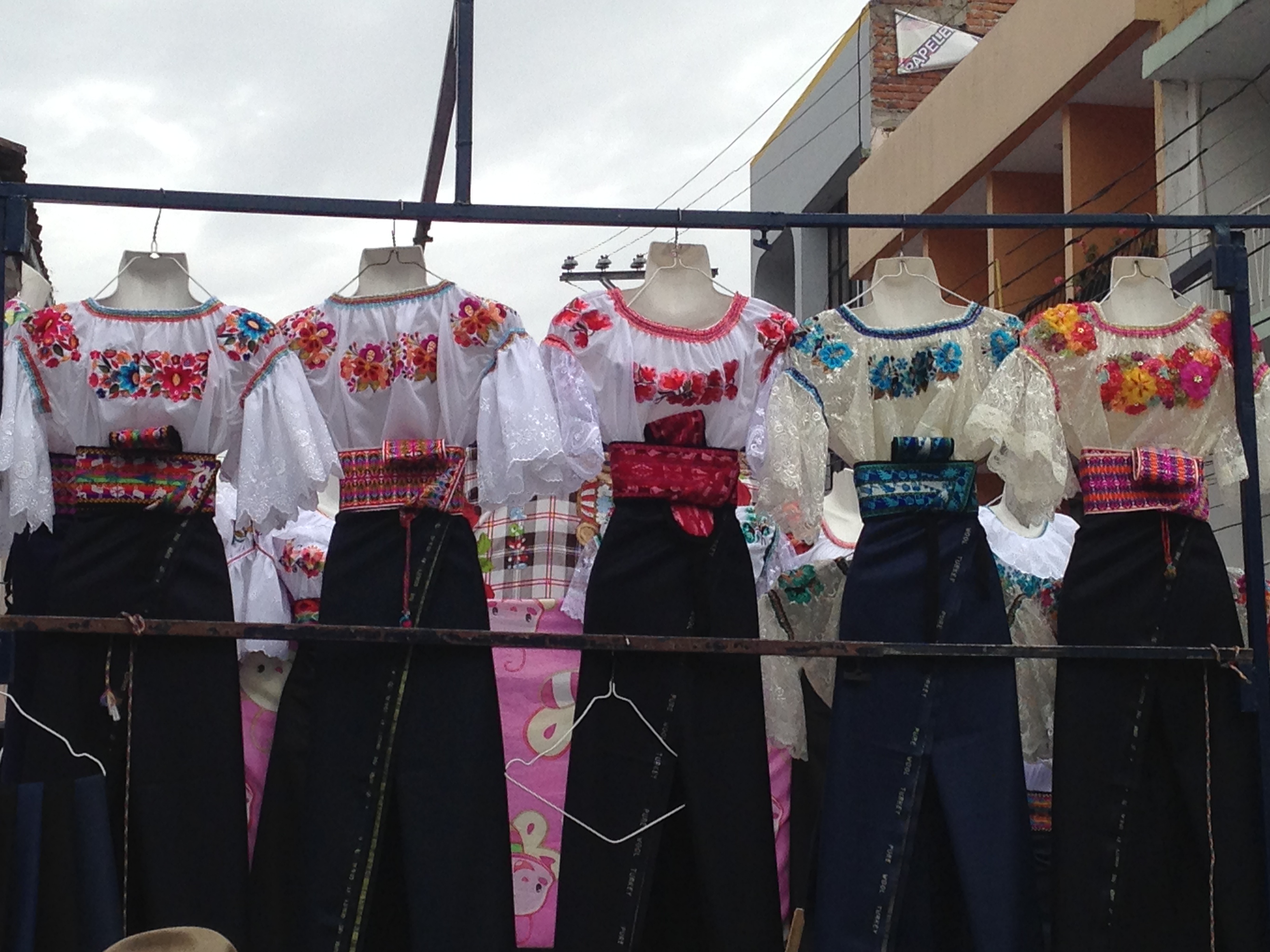
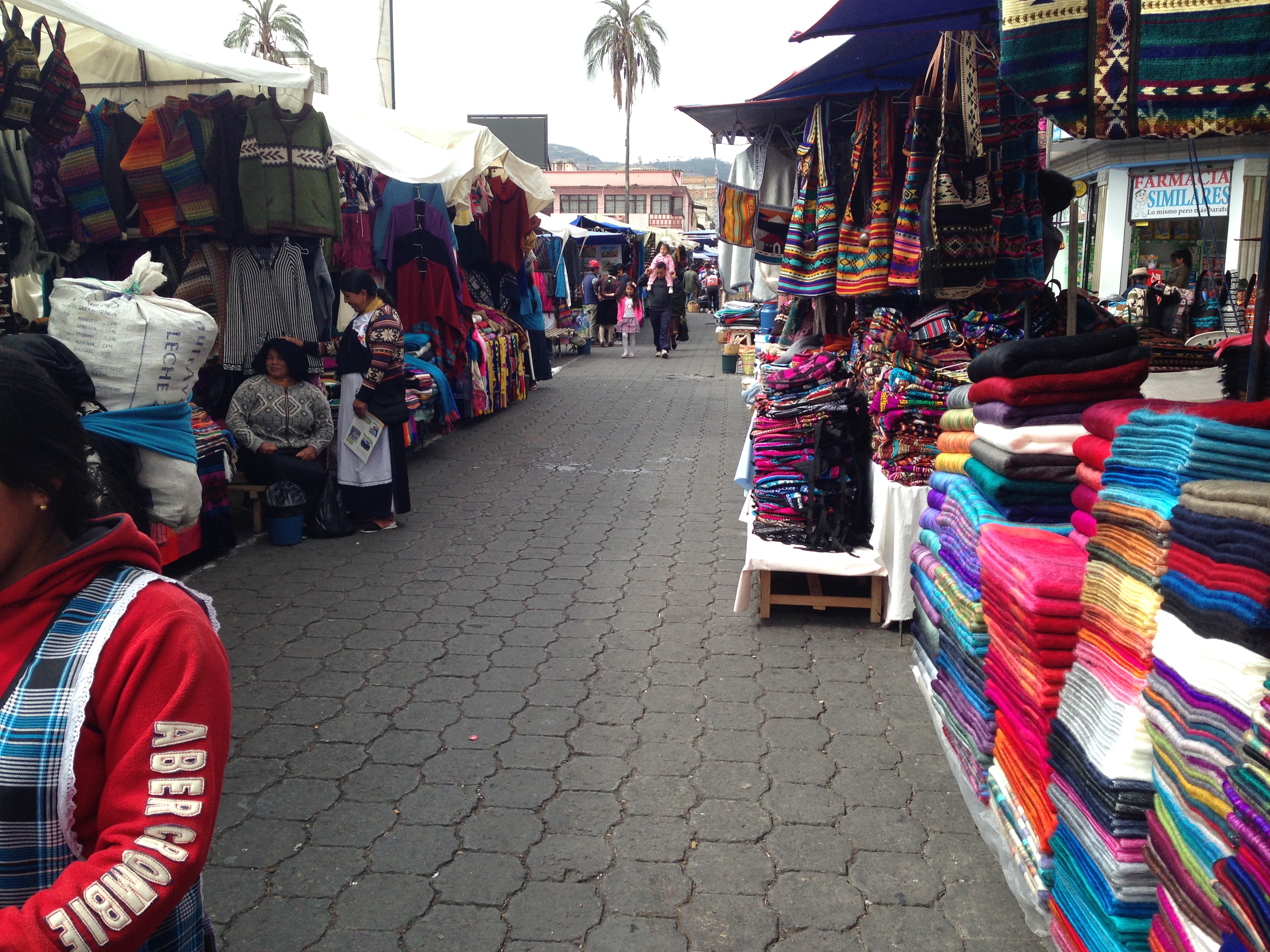
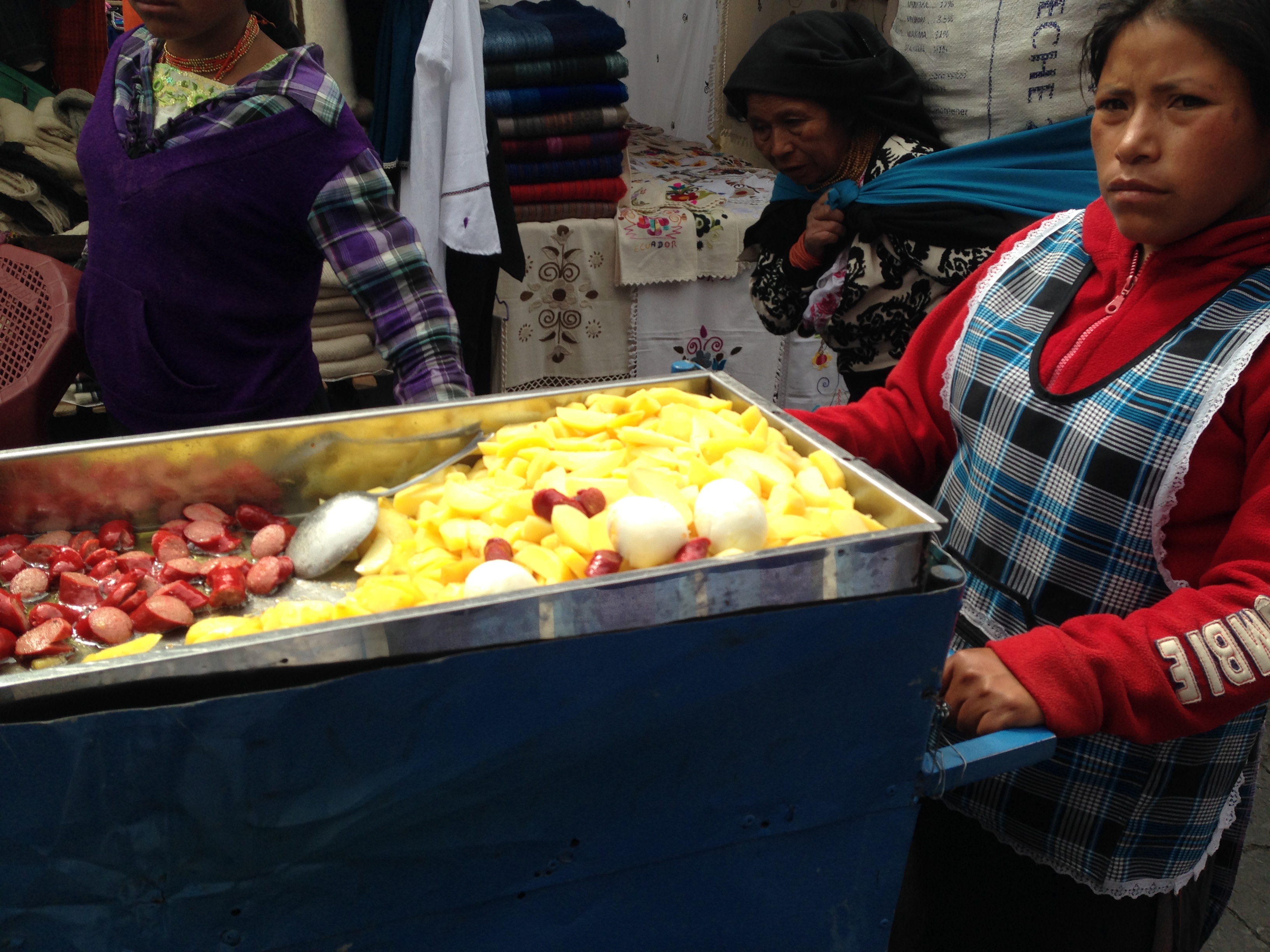
The Otavalo Market is open seven days a week with many local vendors participating, however, Saturday is the main market of the week, and is huge covering so many streets we could not even see everything in one Saturday. The hand made goods are simply amazing and most are of extreme quality. I am not sure why more Ecuadorian products are not sold in other parts of the world. Locals specialize in the production of hand-woven woolen goods, wooden handicrafts, paintings and many hand-made products. Anyone that has visited Otavalo will agree that this market is a must-see destination when in Ecuador. Where Quito seems to be more of a Spanish culture with a hint of Indian, picturesque Otavalo is more of an Indian culture with a hint of Spanish.


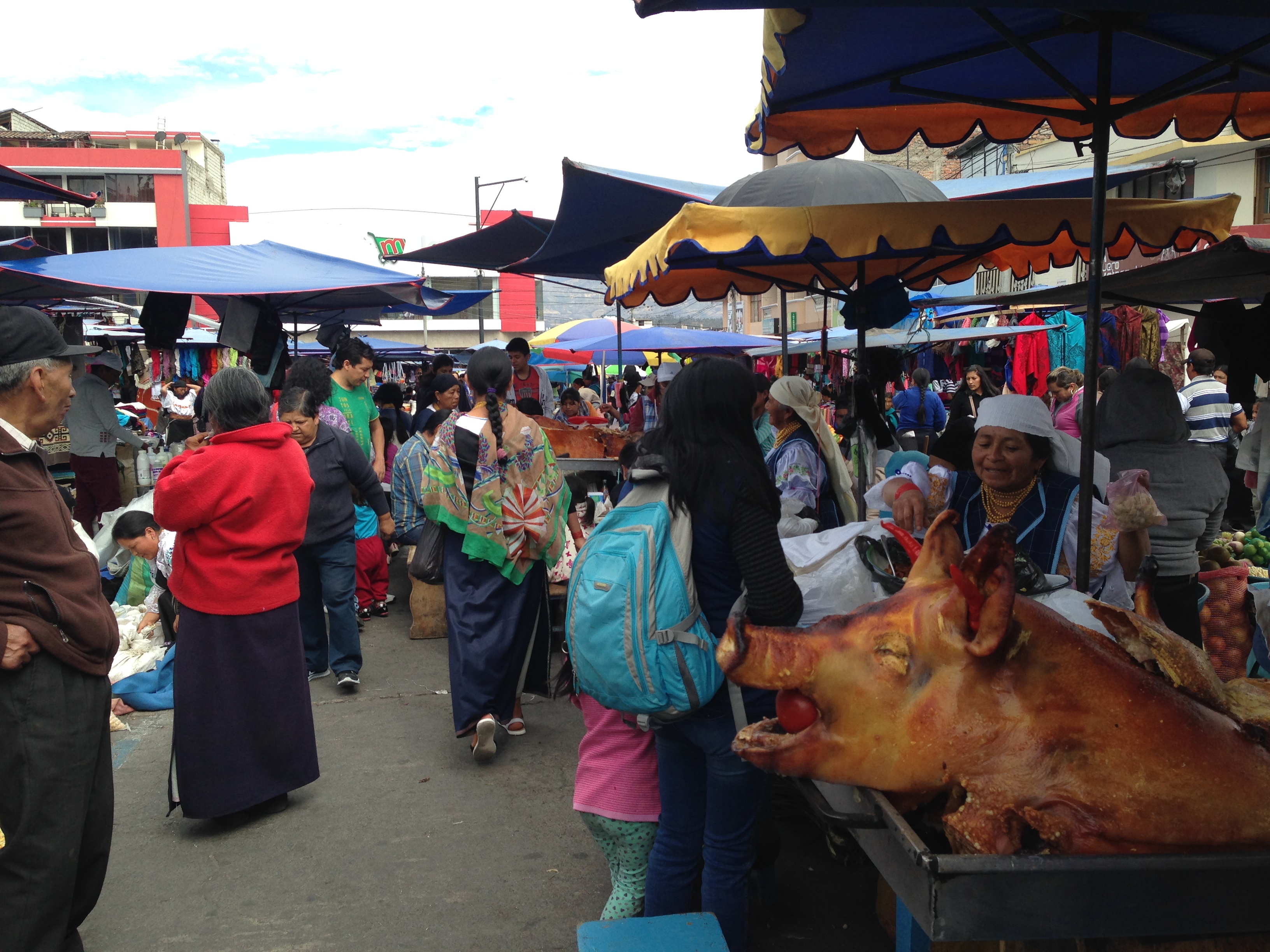
The hog tables are interesting – a full cooked pig is the center of the table and people just sit at the table, order lunch and are served a plate right there. God forgive me but the sight of it just about gaged me although I am not sure which is more disgusting to me the row of raw chickens or the stuffed pig.

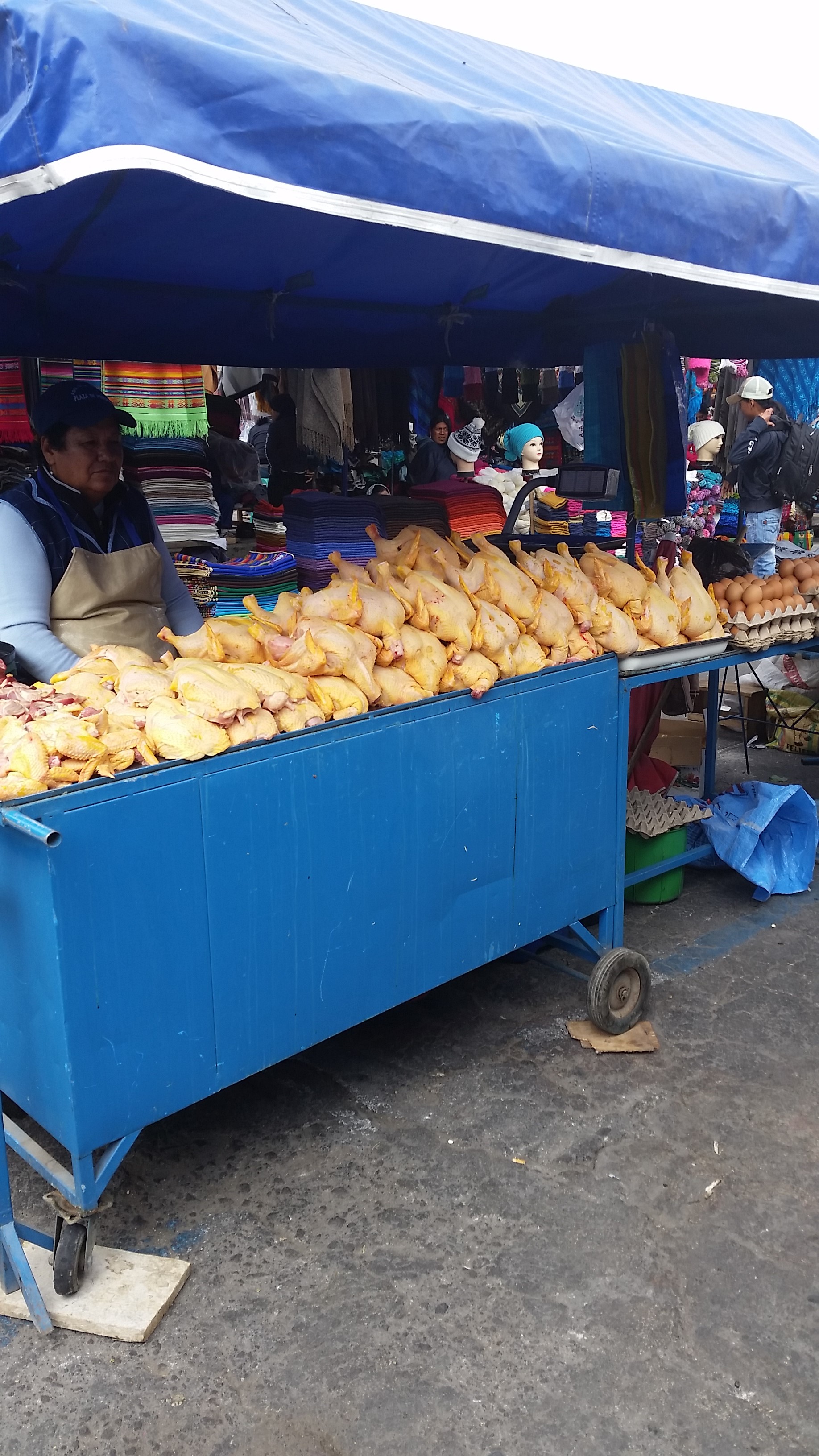
We found some amazing items to purchase from Maluantho’s hand crafted silver collection to Diego Buitrón’s original paintings. Tod even found a woven hat and I scored with an absolutely beautiful cloak. When visiting this market, make sure to have cash and in smaller bills – most vendors cannot accept credit nor can they make change for larger bills. You can haggle prices which we did with everything, but be gentle, as sales from this one day a week is how many of these locals survive.
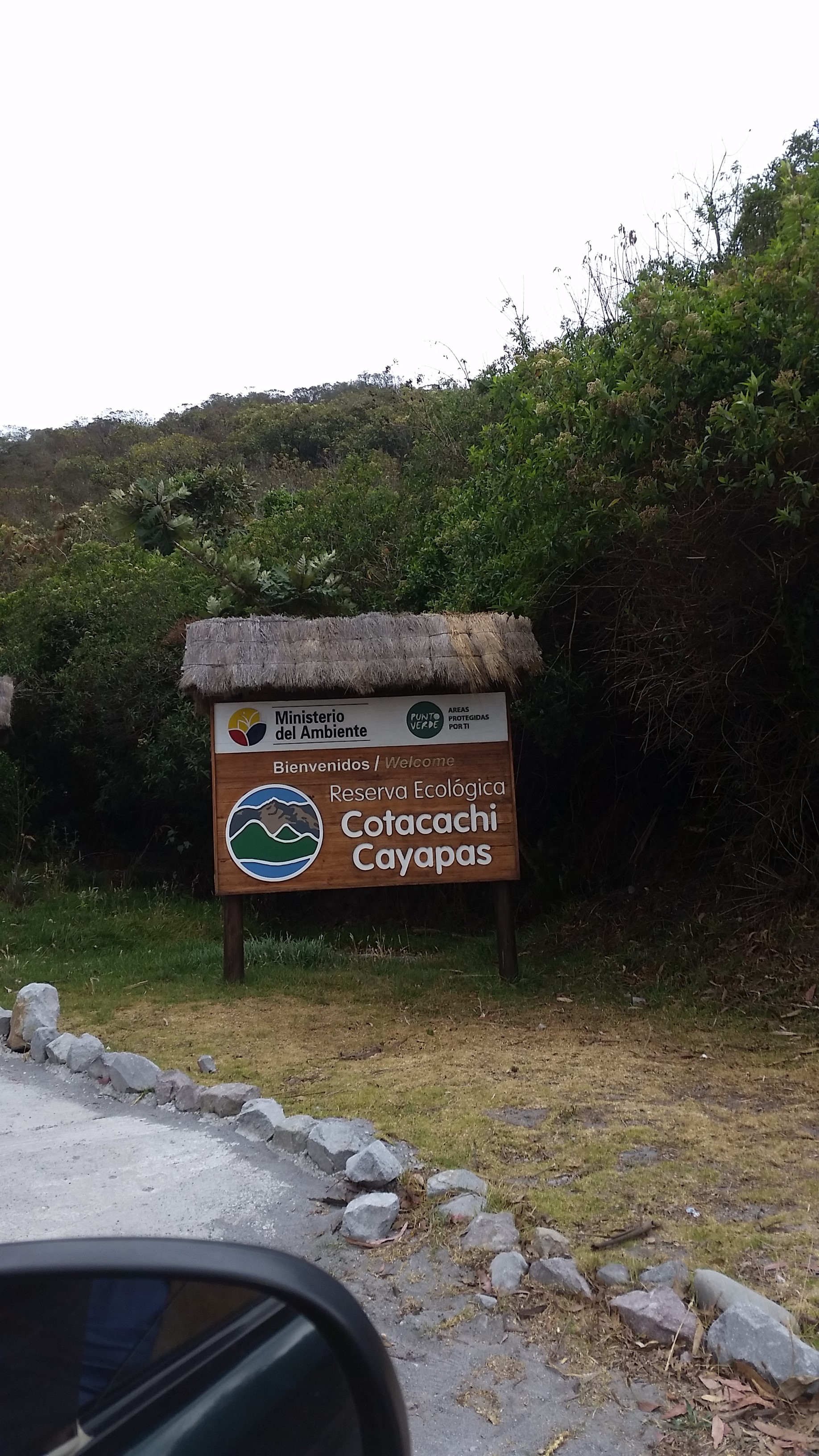
Enough of the market for one day and on to touring the crater-lake.
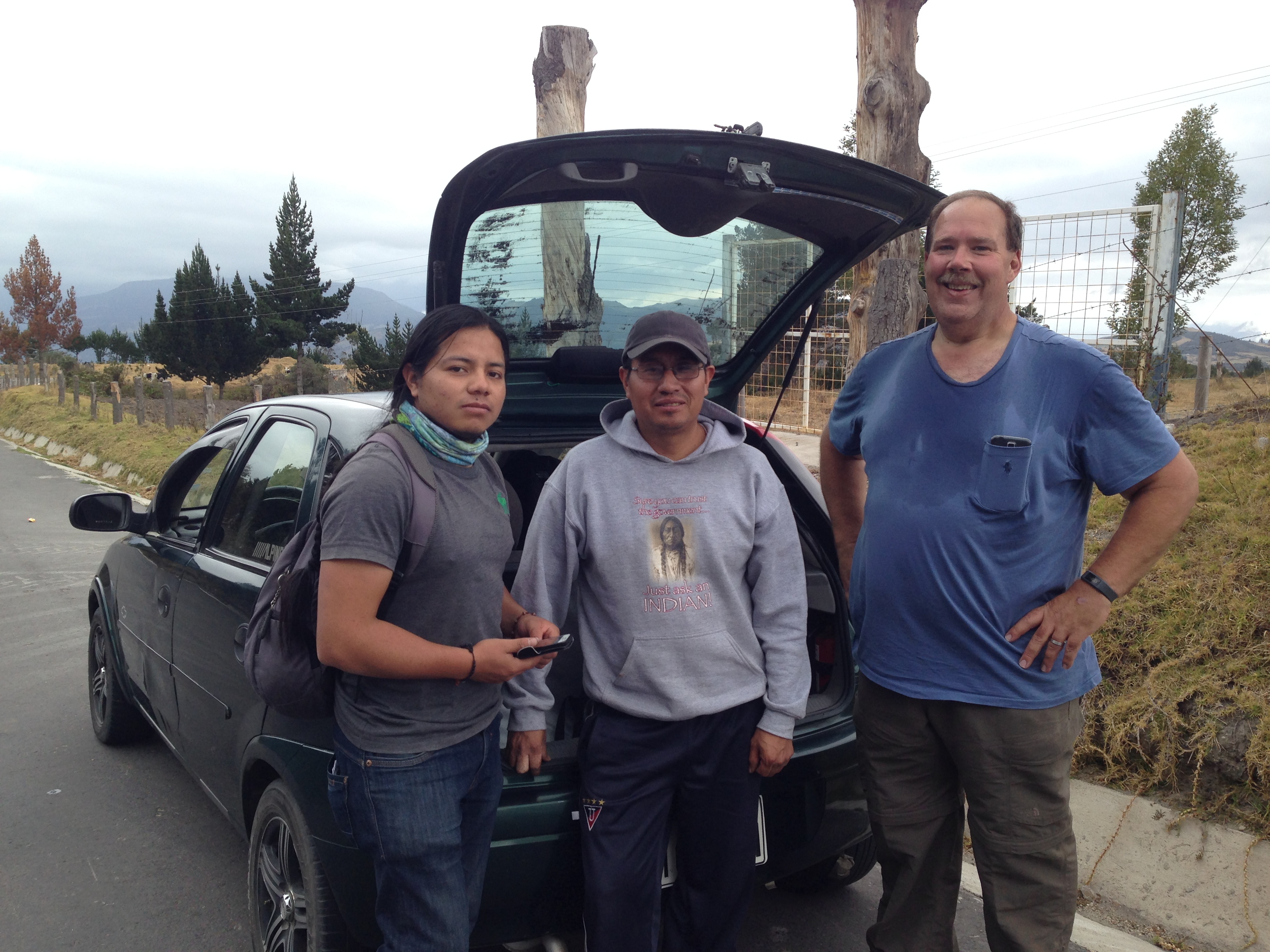
Our tour guide was Diego and our driver was Edwin both were super nice and very knowledgeable about the history of Cuicocha and the indigenous plant and wild life of the area. Diego spoke his native language Otavaleño, Spanish and English. Edwin spoke Otavaleño and Spanish.
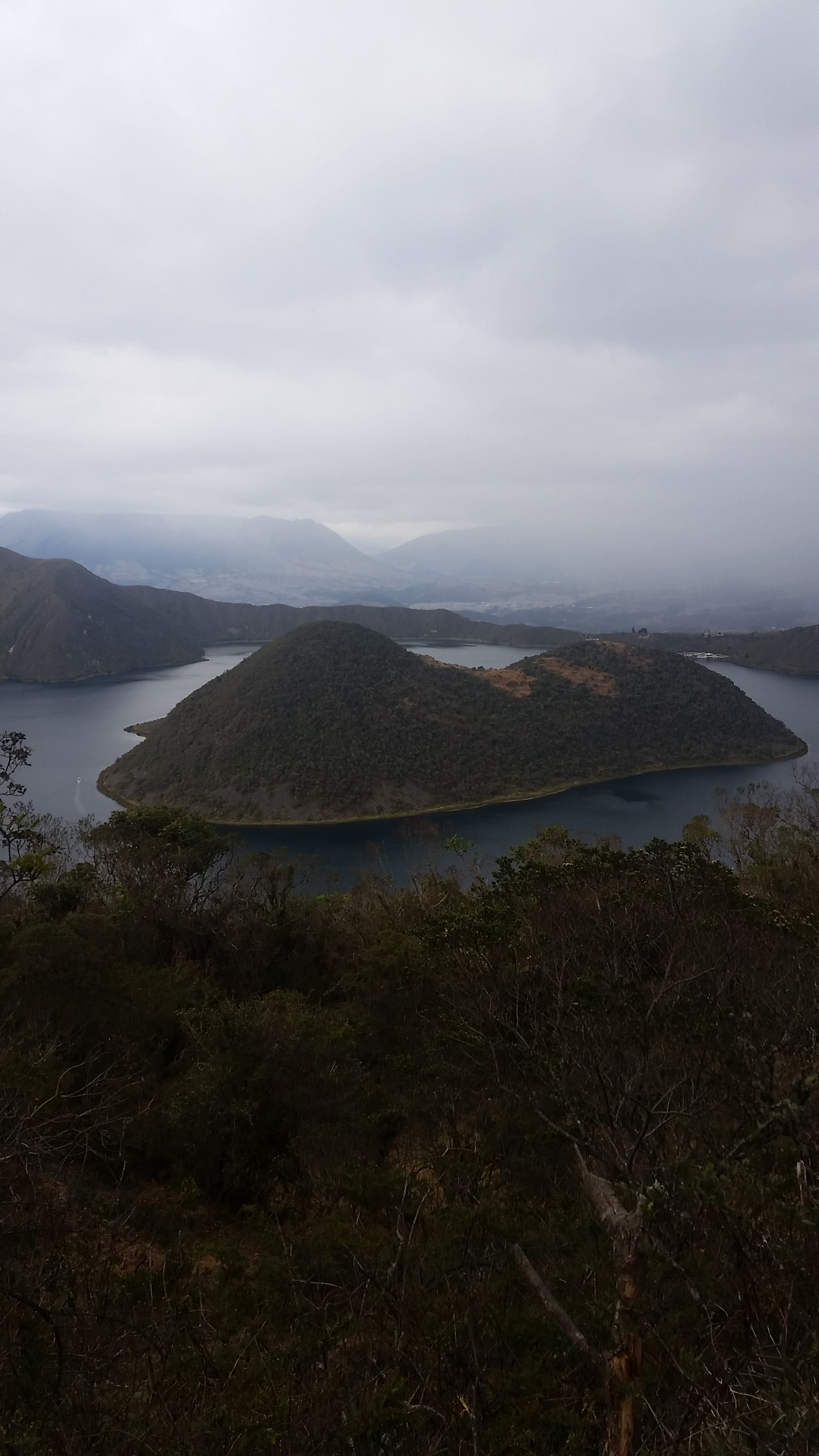
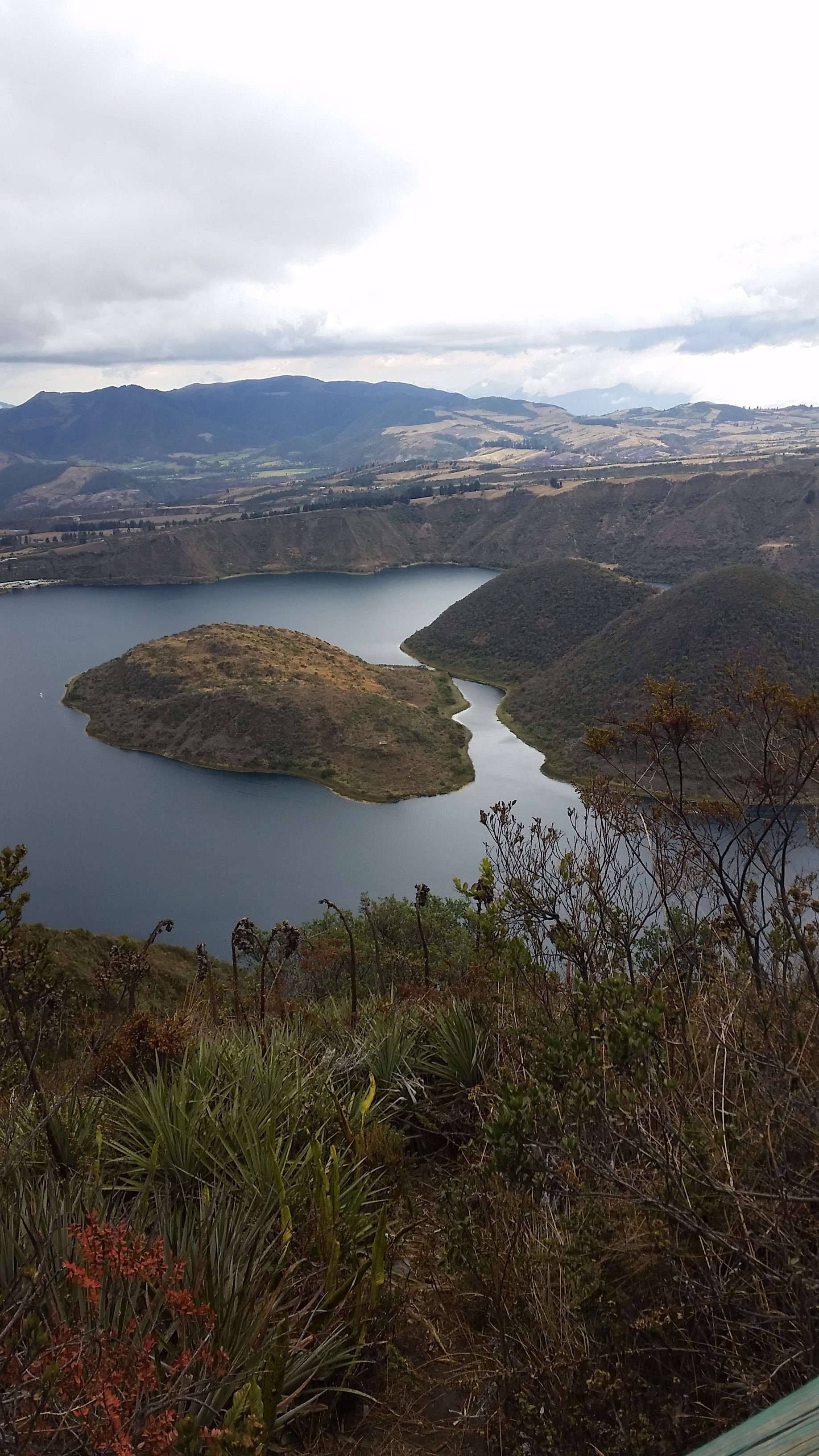
As I had stated earlier, Cuicocha was once a volcano that imploded, after which the crater flooded which resulted in the Cuicocha Lake. Eruptive activity at Cuicocha began an estimated 4500 years ago and continued until about 1300 years ago. Cuicocha Lake is over 600 feet deep and very clean and clear. The name Cuicocha translates to Kichwa: Kuykucha, “Lake of Guinea Pigs” or Kuychikucha, “Rainbow Lake”. I like to think of it as “Rainbow Lake” even though guinea pigs are a primary staple and considered an excellent source of protein by the Otavaleño people, I cannot come to terms with people eating guinea pigs.
As you can see from the photos the lake is a beautiful blue and most days you can see bubbles coming up in-between the formed islands proving that there is some sort of volcanic activity still going on in Cuicocha.
The trek around was up and down with a few level spots I think put there just to keep you from giving up. It seemed mostly uphill but I am sure that was partially due to being back up in elevation.
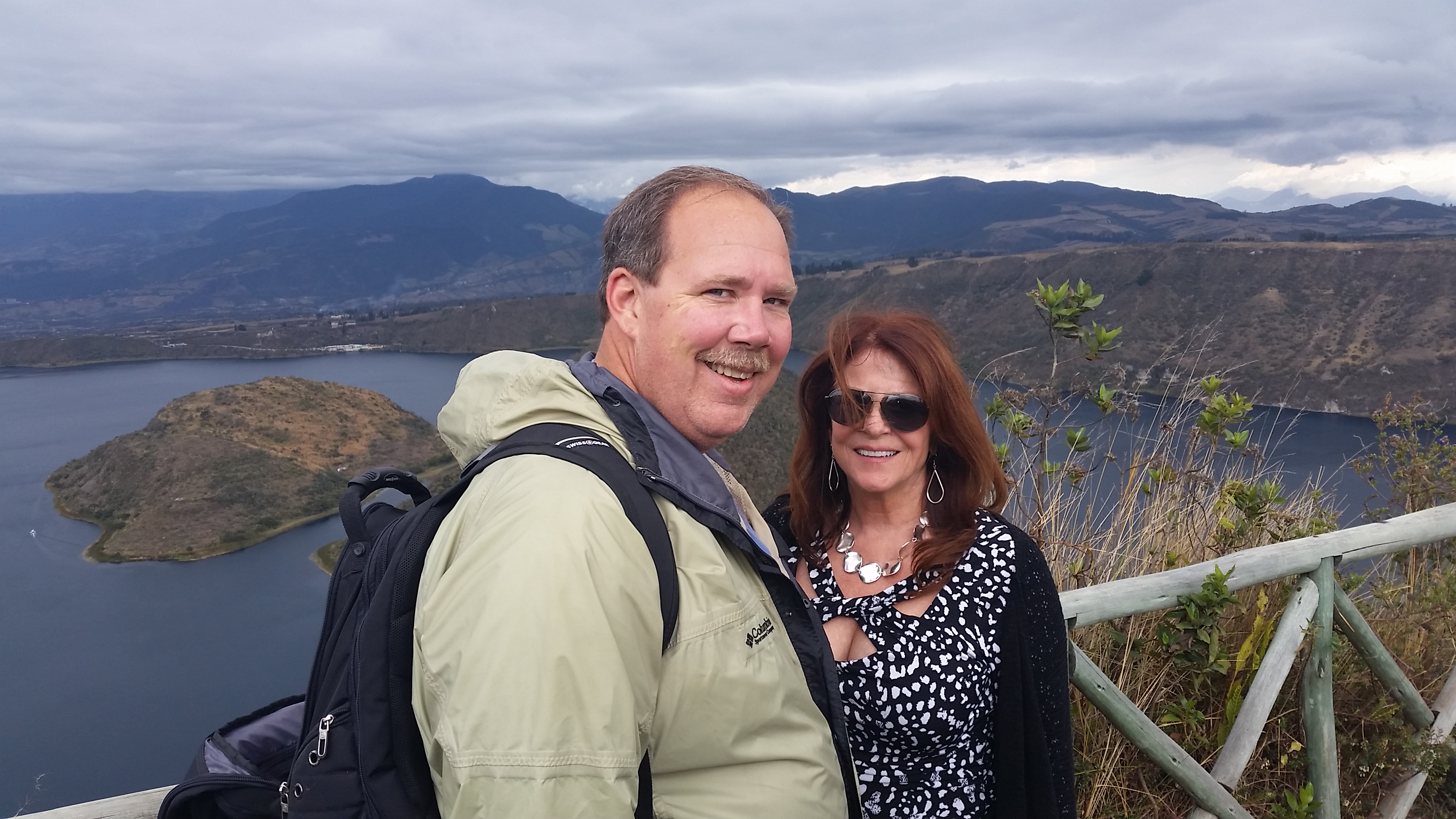
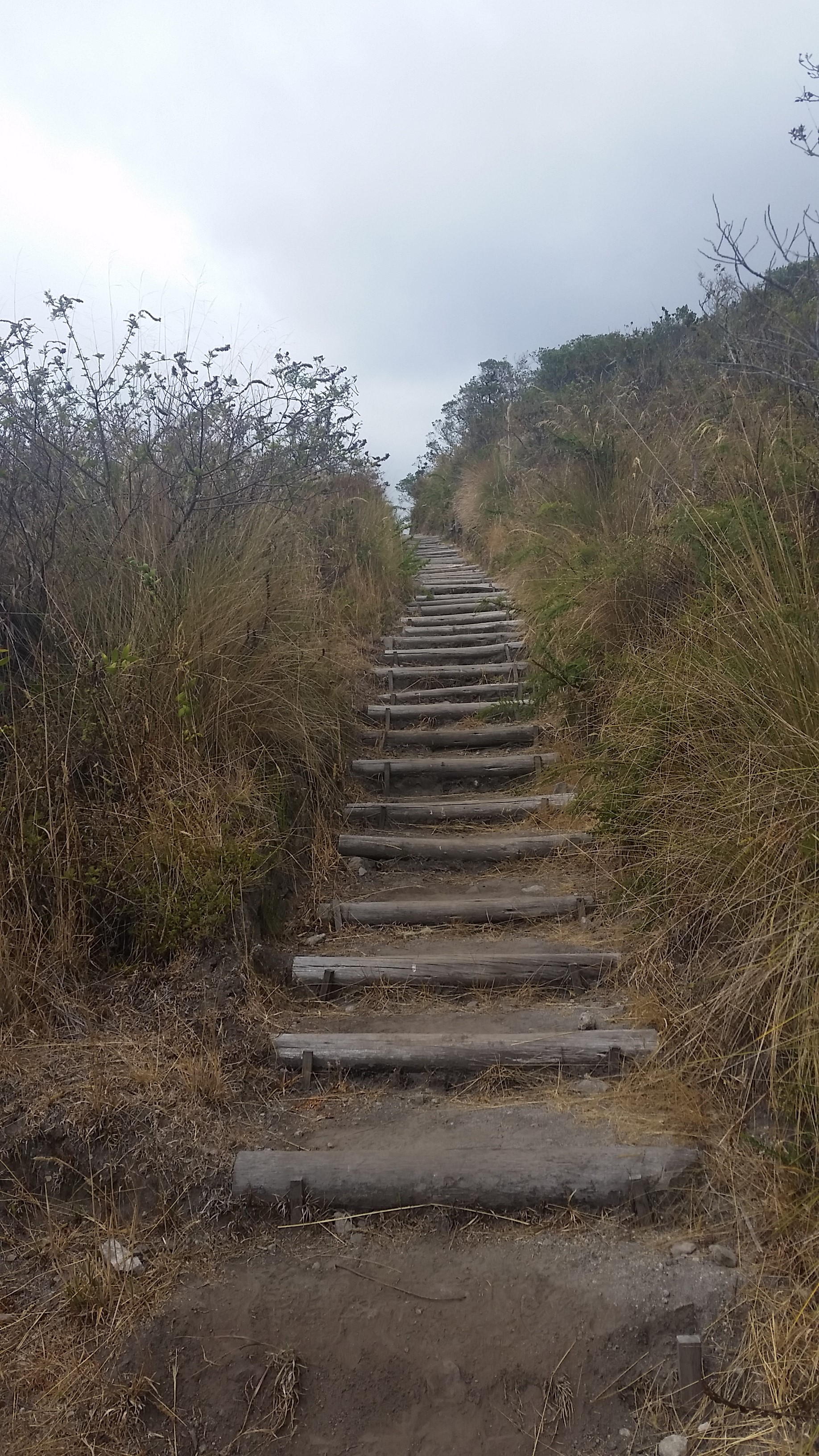
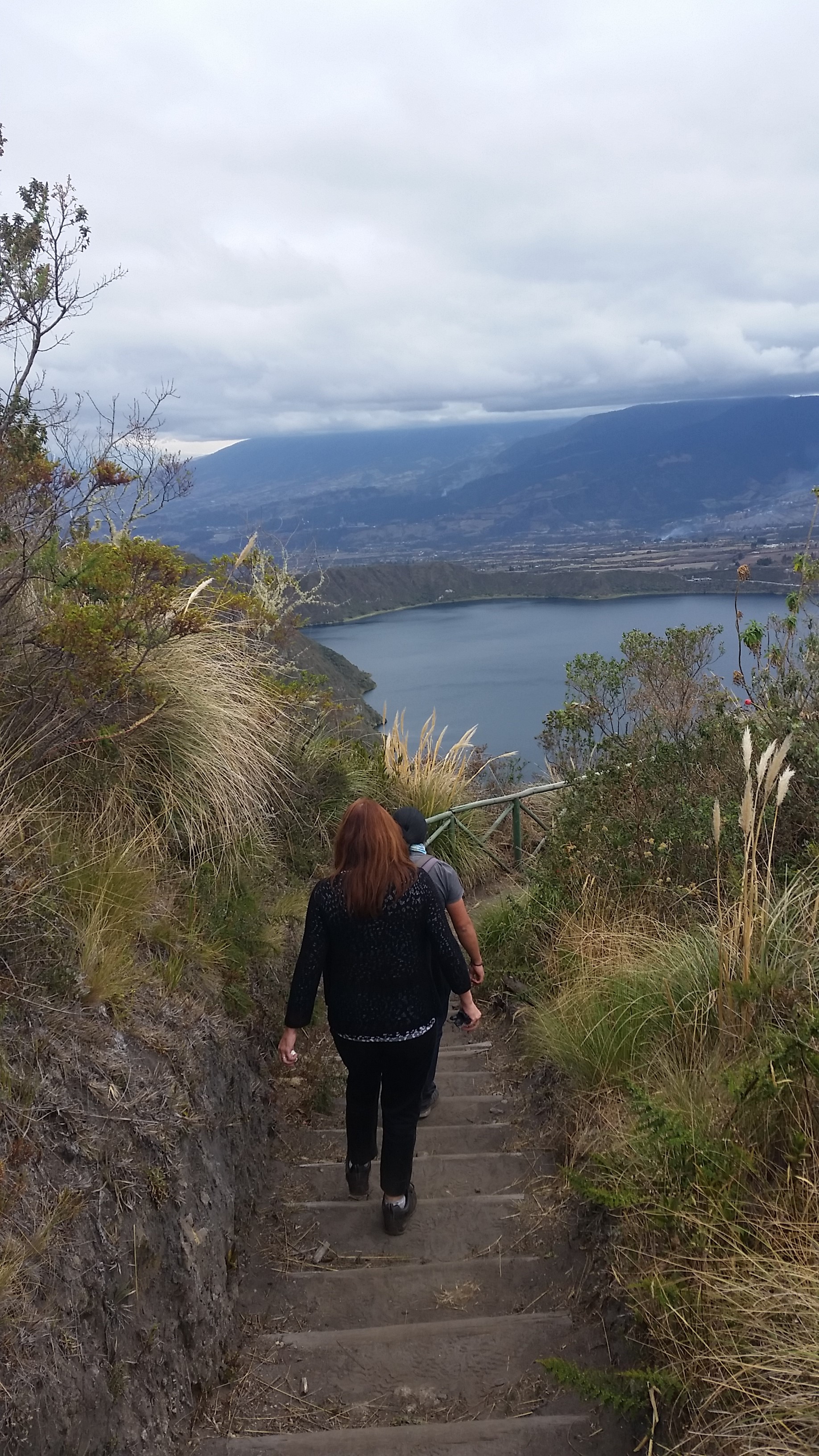
The elevation (11,500 feet) combined with the constant up and down made the hike difficult but quite honestly we both felt it was well worth it and if given an opportunity would do it again. Thanks to Diego and Edwin for making this possible.
 5117 Melbourne St., Unit 4103