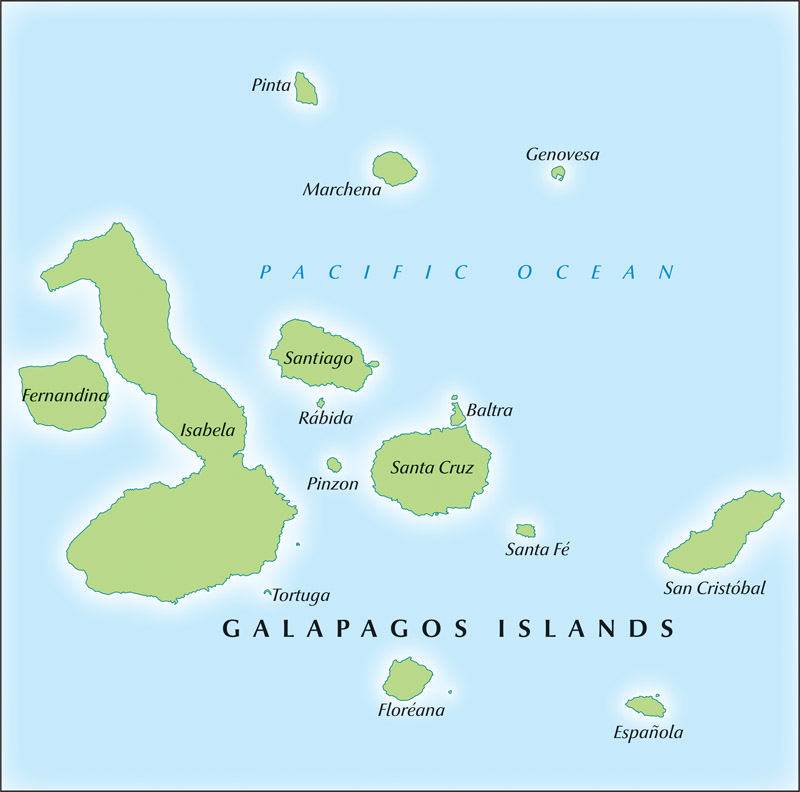
The Galápagos has four inhabited islands: Santa Cruz, San Cristóbal, Isabela, and Floréana. The other islands are not inhabited by humans, and do not permit any over-night stays. In fact, they are only accessible from 6 am to 6 pm. There are 2 airports, one on Baltra and the other on San Cristóbal.
Even from Ecuador, getting to the Galápagos Islands is an experience quite possibly not for the apprehensive traveler. From Quito we took the 45 minute cab ride to the airport then flew to Baltra, which other than the airport, is uninhabited. (Baltra was a US Army Air Force base during WWII and after the war the facilities were given to the Ecuadorian government.) Flying into Baltra was such a disappointment, it is a desert wasteland, and I mistakenly thought I was flying into this tropical paradise with giant tortoises and unique vegetation!
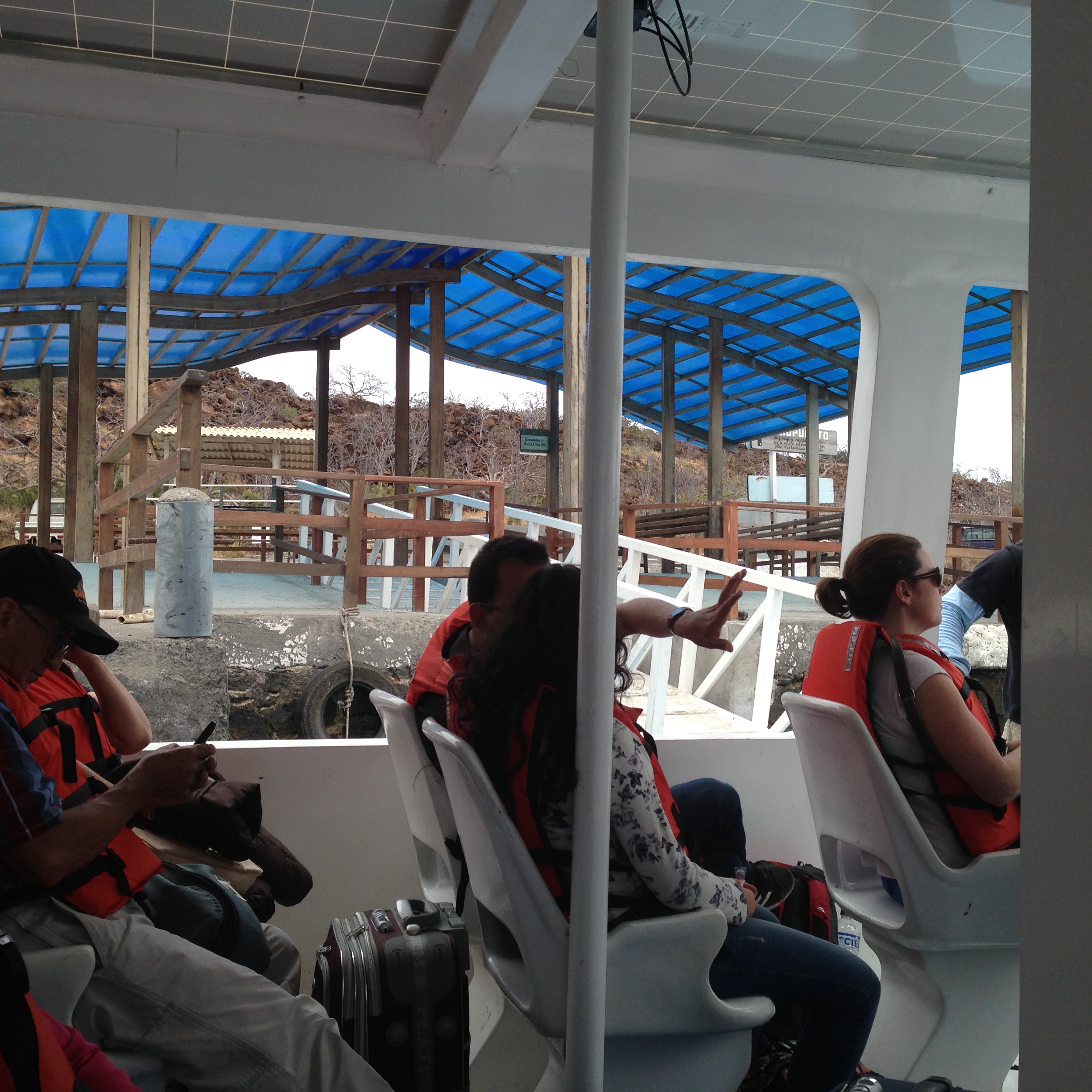
From the airport we took a bus (5-10 minutes) to the Ferry Docks and then a Ferry (10 minutes) to Santa Cruz.
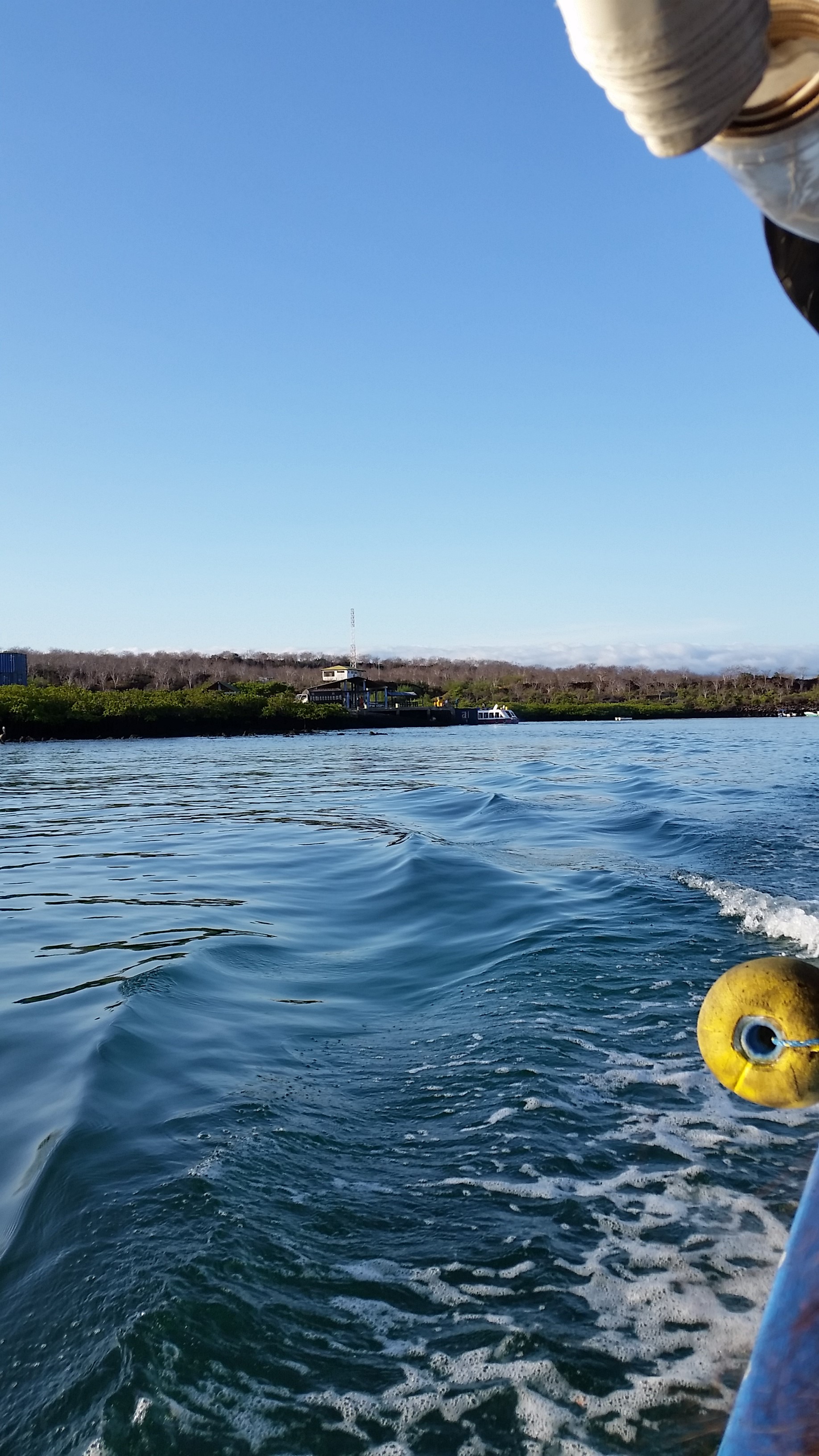
Galapagos Islands MapOn The Ferry from Baltra.Ferry View.
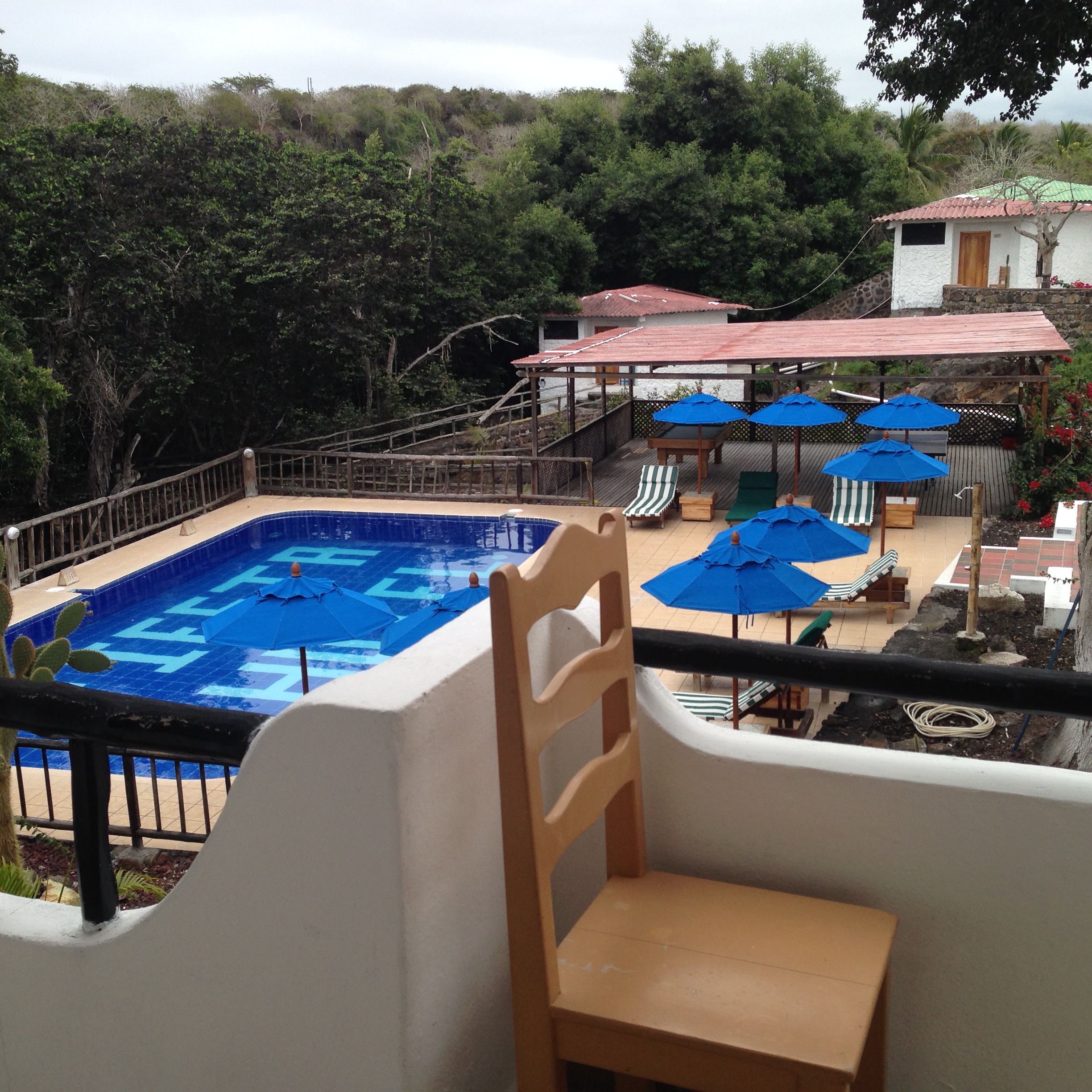
From the docks at Santa Cruz we hired a taxi and took the 45 minute ride to our hotel. Santa Cruz was much more how I expected the Galápagos Islands to be. Lush, tropical, beautiful, mountains, ocean, everything I was expecting. Our hotel was small, quaint and off the main drag far enough so it was quiet but close enough to walk to everything.
Hotel Fiesta Honeymoon Welcome.View of the Grounds.Deck Grounds View.Love the Pool Area. We Sat Here Every Night.
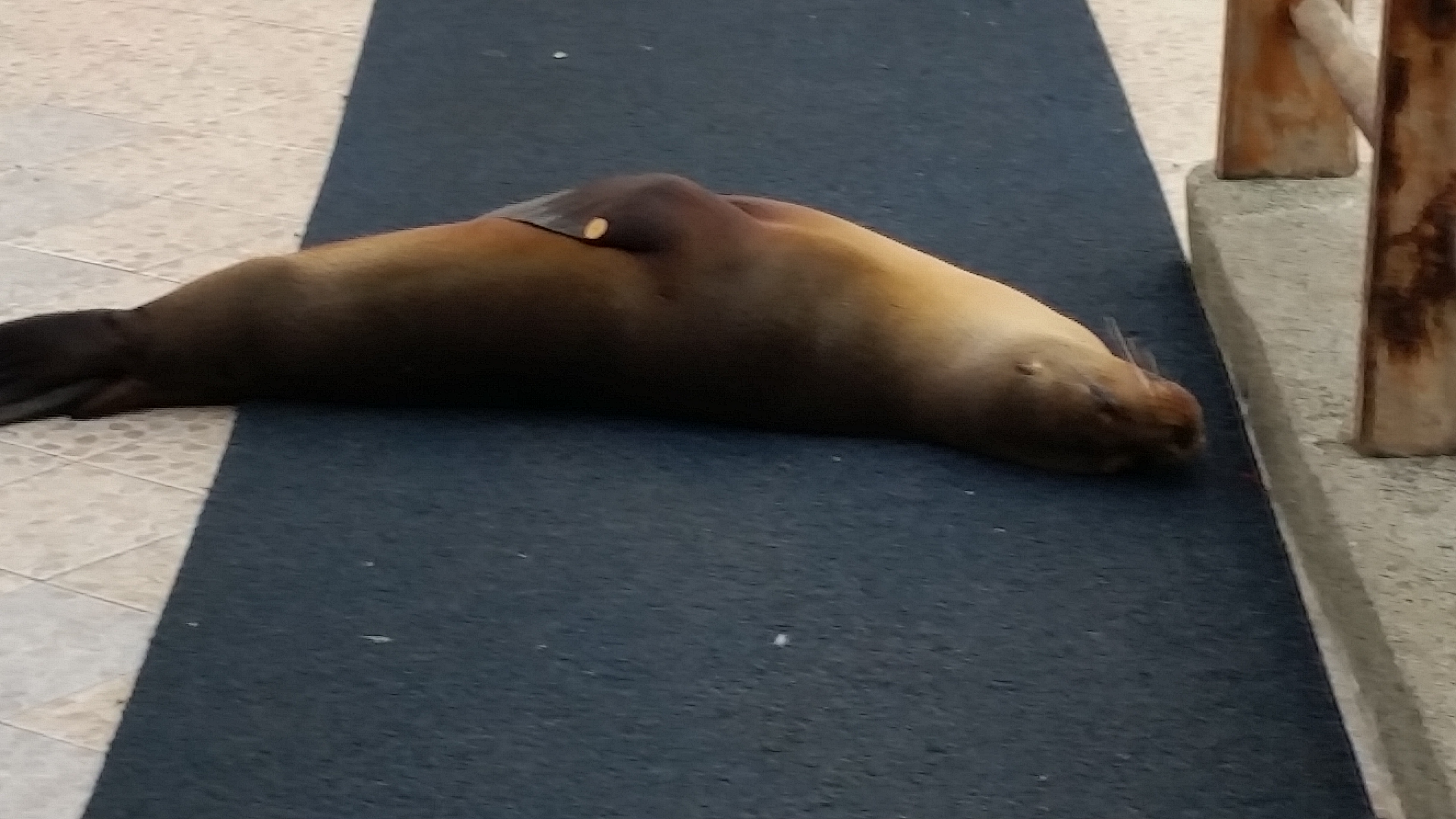
We did not waste much time at the hotel and we were off to explore the downtown. What we found was everything we had been hoping for. Small little shops and restaurants, friendly charming people, and the piers. One pier seemed to be for tourist transport and the other more for fishing boats. We walked along both and that is when we came to realize that the benches on the fishing pier were more for Sea Lions than people (well at least the Sea Lions seemed to think so!) And the piers themselves were lounging places for the Sea Lions. It was crazy, it’s the first time in my life that I had to actually step over a Sea Lion. He/she was not about to move for me.
Just a Little Afternoon Siesta.No Way Was the Sea Lion Moving for Tod.
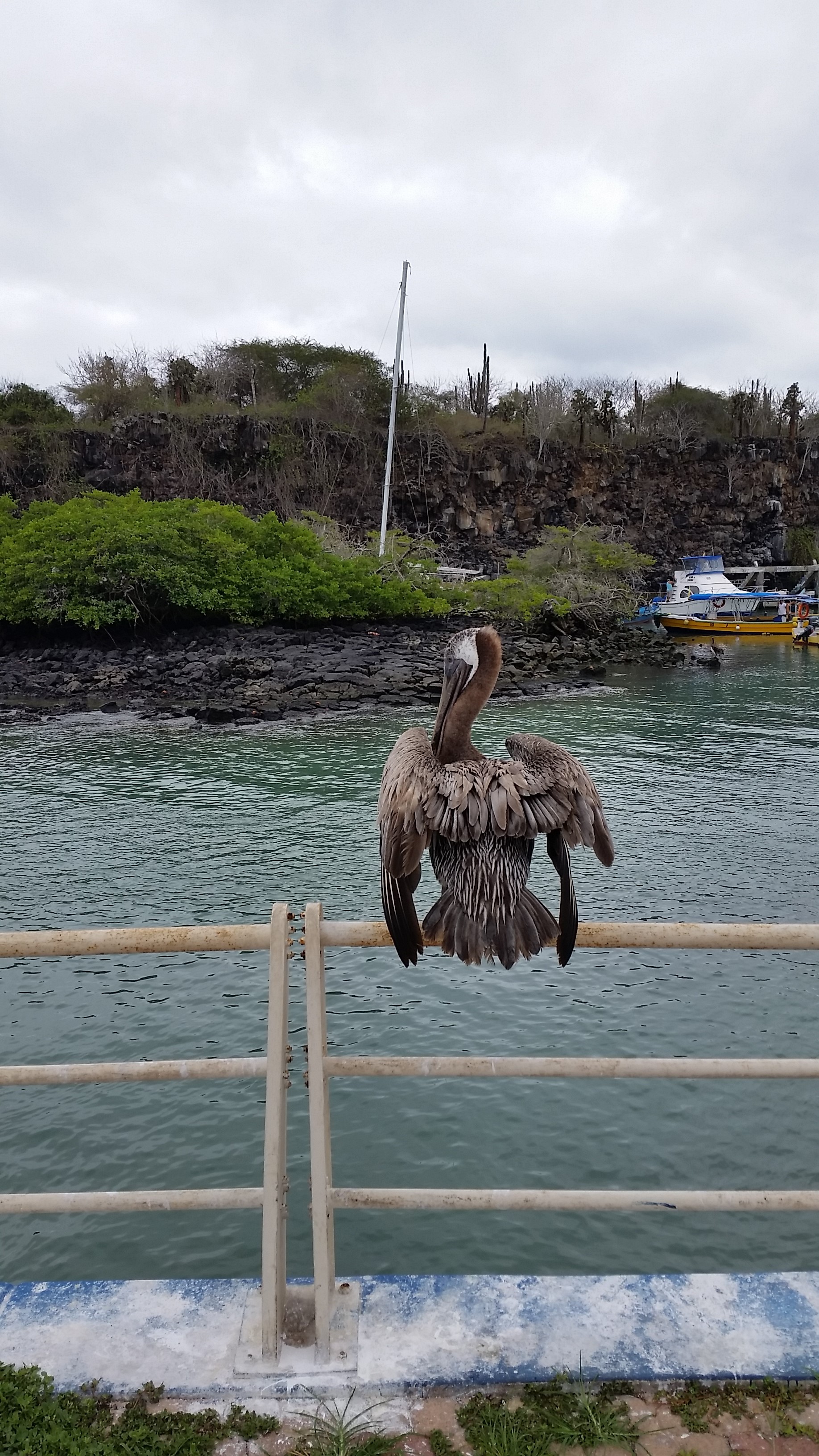
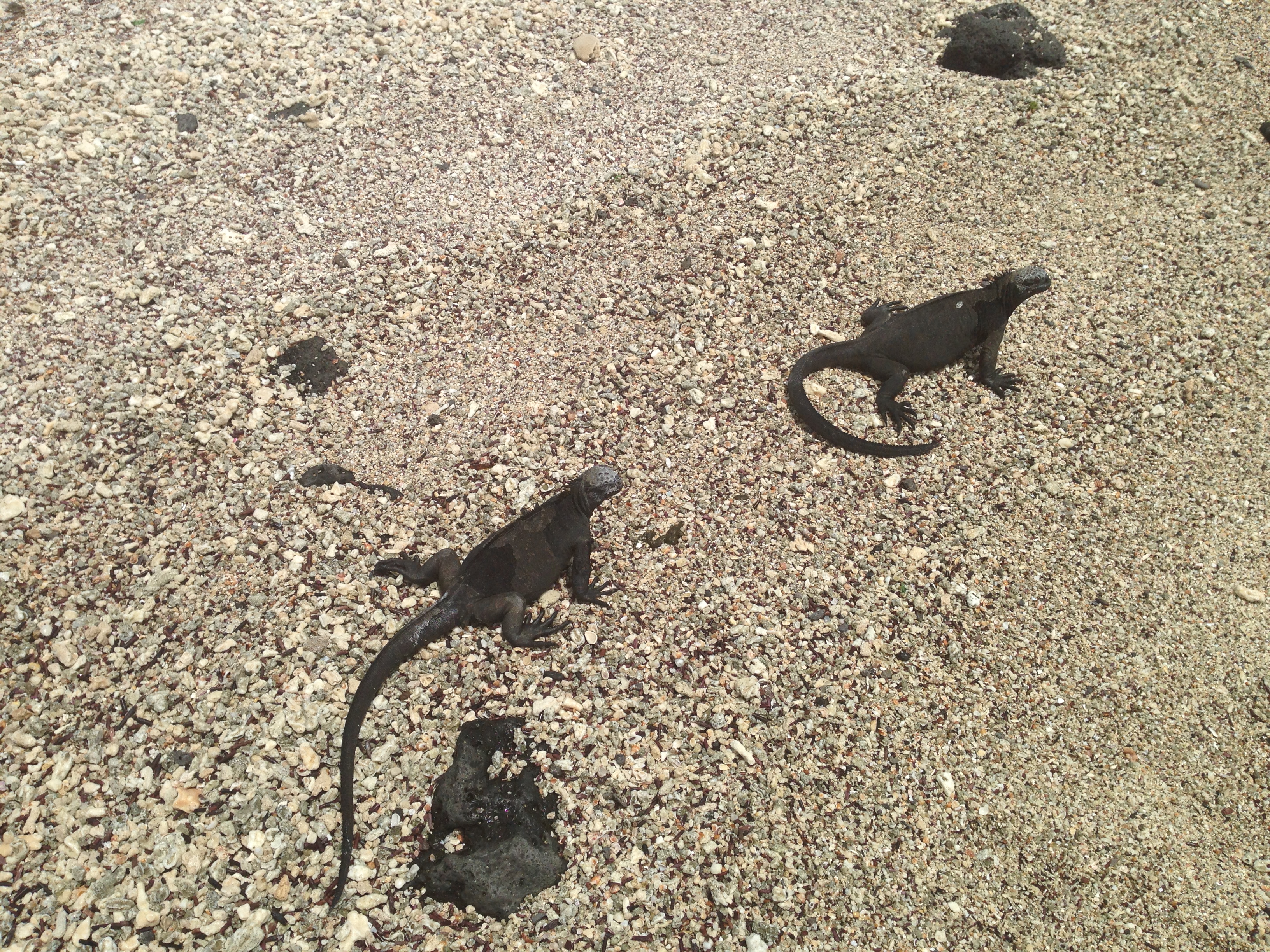
The Sea Lions, Pelicans and Lizards all seem to share space very well.
Pelican Fishing Here.First Time I Ever Had to Step Over a Sea Lion.Lizard Crossing.
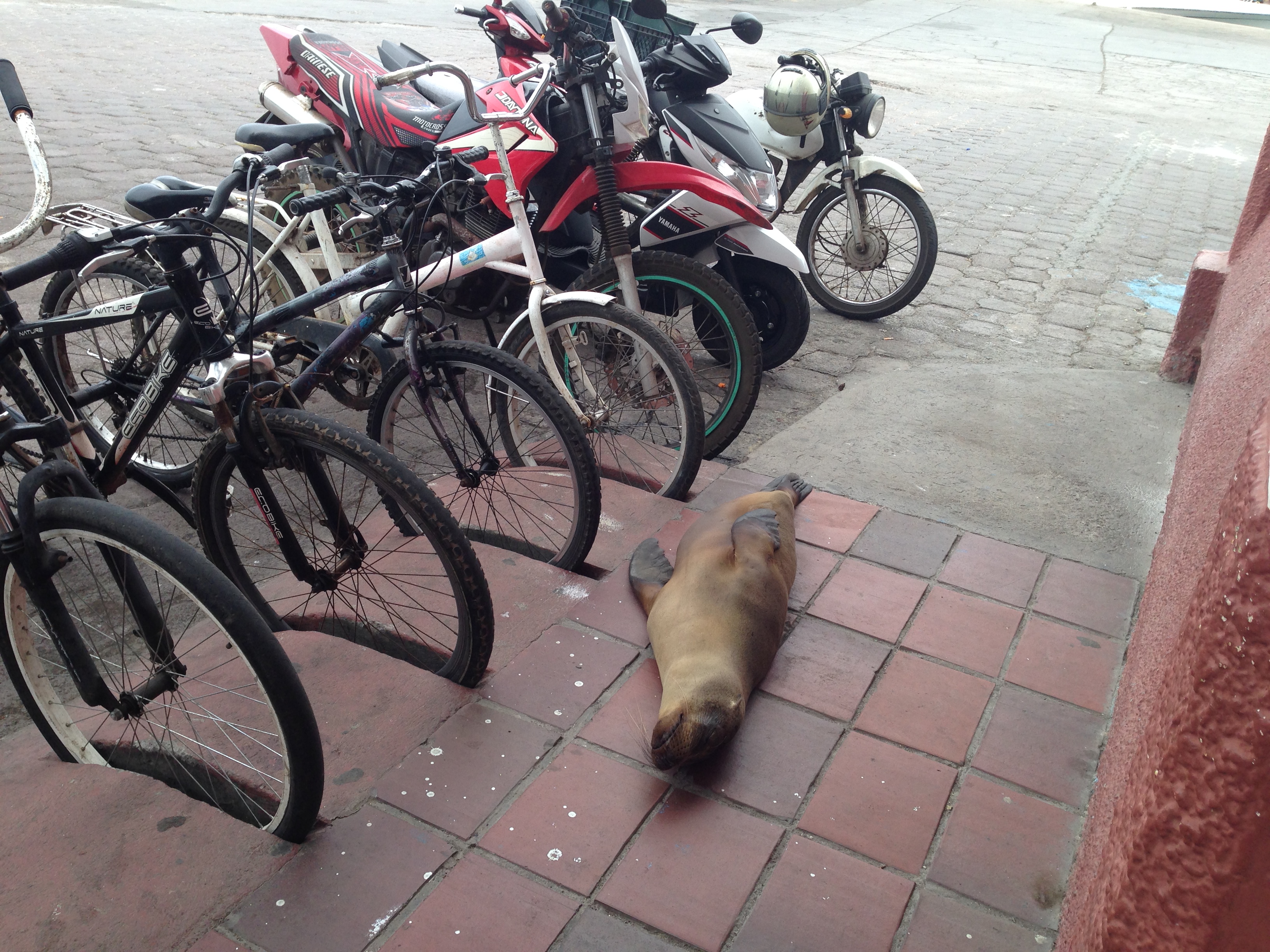
There was one grocery store on Santa Cruz and as you can see even the bicycle rack was free game for Sea Lion lounging.
Really? The Grocery Store?
Tomorrow is the Darwin Research Lab and the Ocean, but not sure I will have time to post for a few days.
Although Tuesday the 20th was a down day (unpack, do laundry, repack) I still have a little more to tell you about Hacienda Zuleta so will use this post to finish that story.
A few noteworthy items regarding the Hacienda is the fact that they have over 600 milking cows and total about 1000 head. They have a small yet very efficient and clean cheese factory where they produce 6 varieties of cheese. Although they have over 600 milking cows they do not use their own milk to make the cheese. They sell the milk which is used for yogurt production and they purchase the milk to make cheese with. Their own breed of cattle does not produce a fatty enough milk to yield cheese. I found this an interesting piece of information but they never did explain why they would have milk producing cattle yet it cannot be used in their own factory. The cheese factory itself was not much different than you would see in Wisconsin, just on a smaller scale. (Sorry, no photos.)
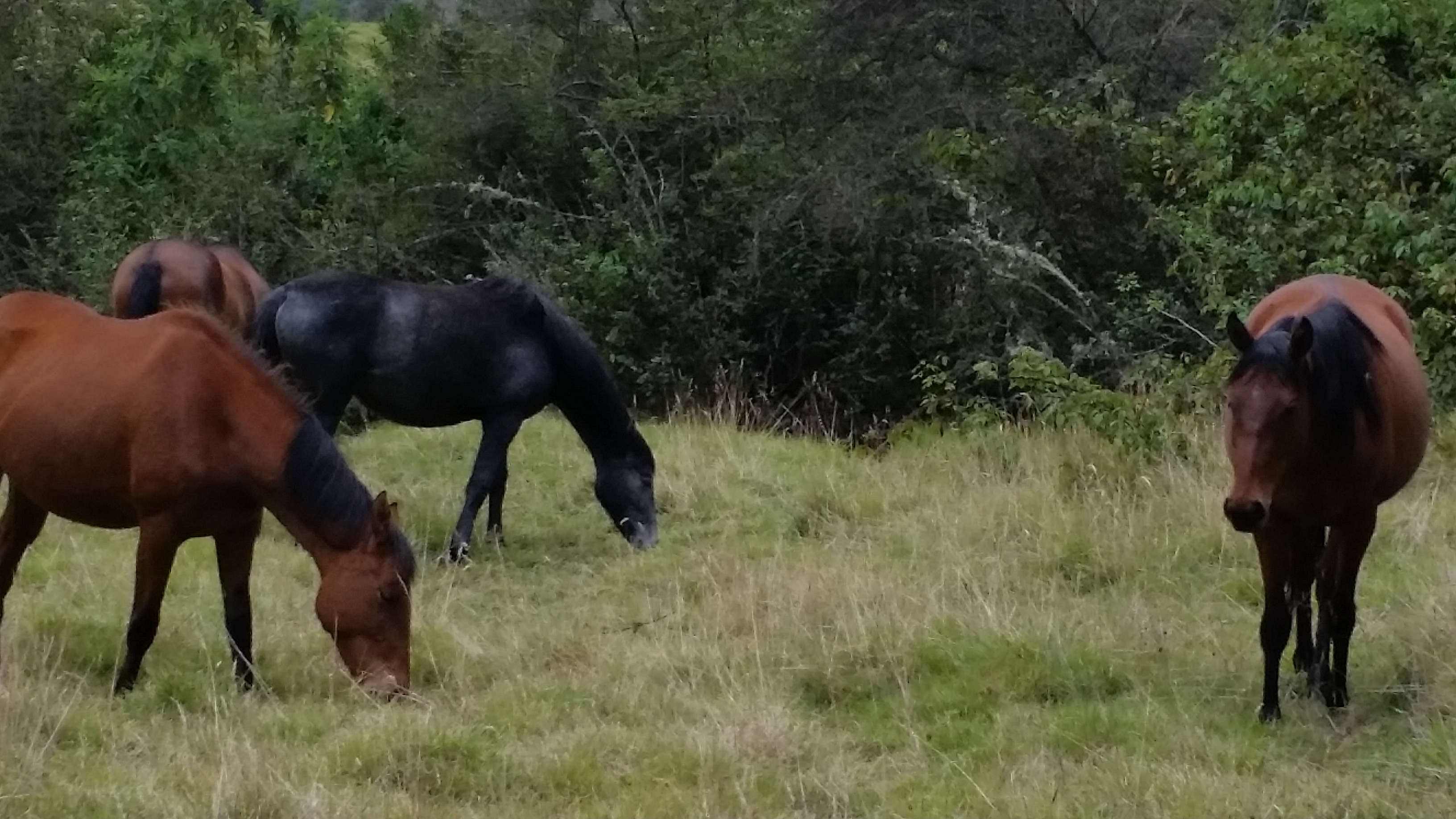
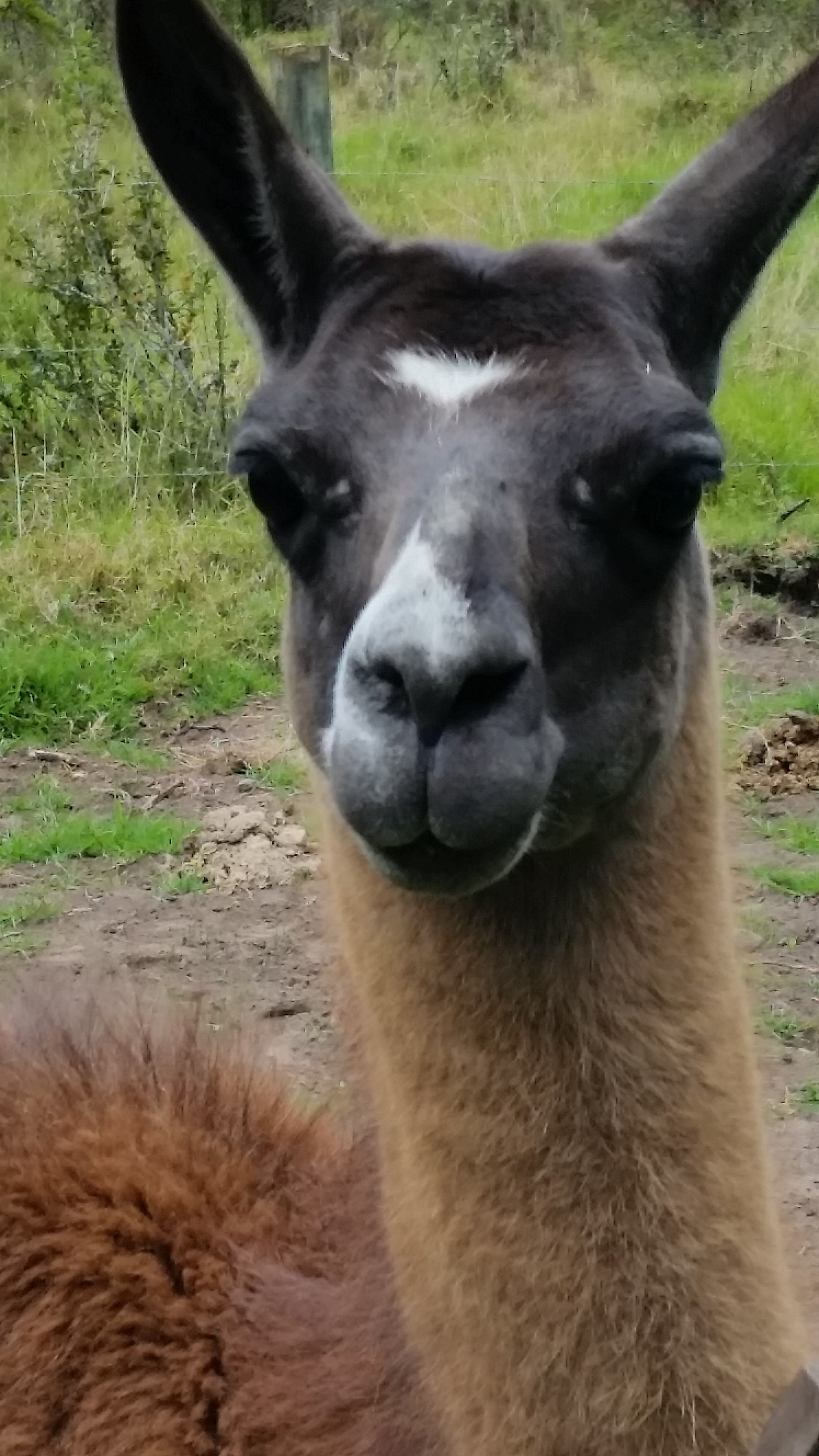
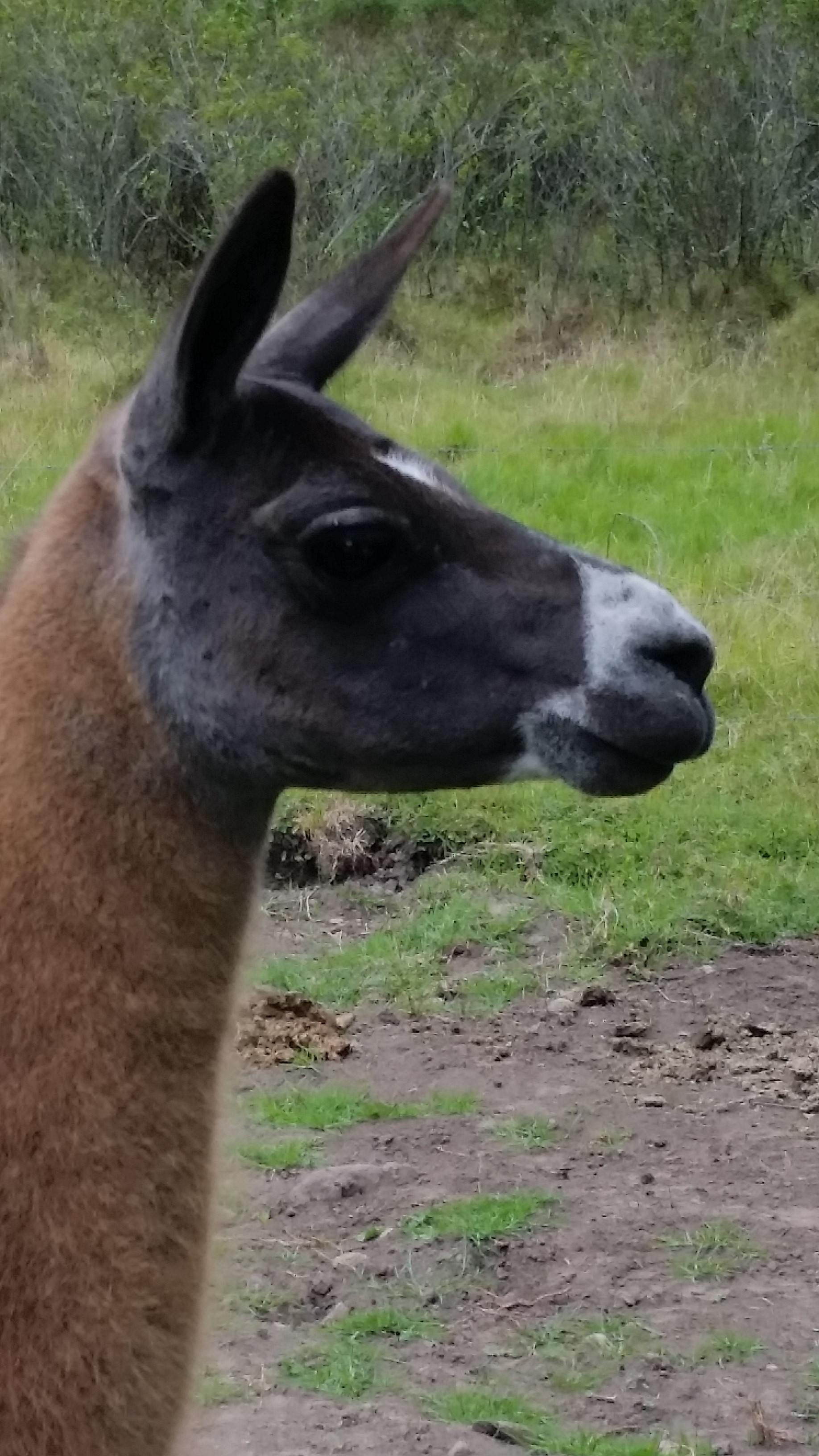
At the Condor retreat there were also horses and llamas. Yann our guide found llamas to be a useless animal. He did state that prior to the Spanish introduction of cattle and horses into Ecuador, the llama was used primarily as a pack-carrying animal, however now they are no longer needed or used for that purpose. The fiber really isn’t even used much because the fine coat of the alpaca is much more of a luxury fiber and the llama meat is not that great. The one trait Yann did credit the llama for is their protective nature which could make them very valuable for a Sheepherder to mix in with the herd. If the Hacienda dogs come to the retreat the llamas will line up in a tight row and ward off the dogs (and I understand they have a pretty serious kick.)
Hacienda Horses Grazing.They Are a Curious Breed.This Guy Posed for a Picture.
My next post will be about the Galapagos trip – I can’t wait to write about that trip and share some of the amazing photos we were able to capture.
Walking through the organic garden on Sunday we met Yann Potaufeu a French biologist who had completed a 3-month volunteer exchange program working with Condors at Zuleta. Shortly after returning to France, he was offered a full time position working with the “Condor Huasi Project” that focuses on the rehabilitation of the Andean Condors. Now, 3-years later, Yann is managing and working several projects including the Condors, Spotted Bear and the Trout Pond. Yann offered to provide us a private guided tour of the Condor and Trout facilities and we jumped at the chance.
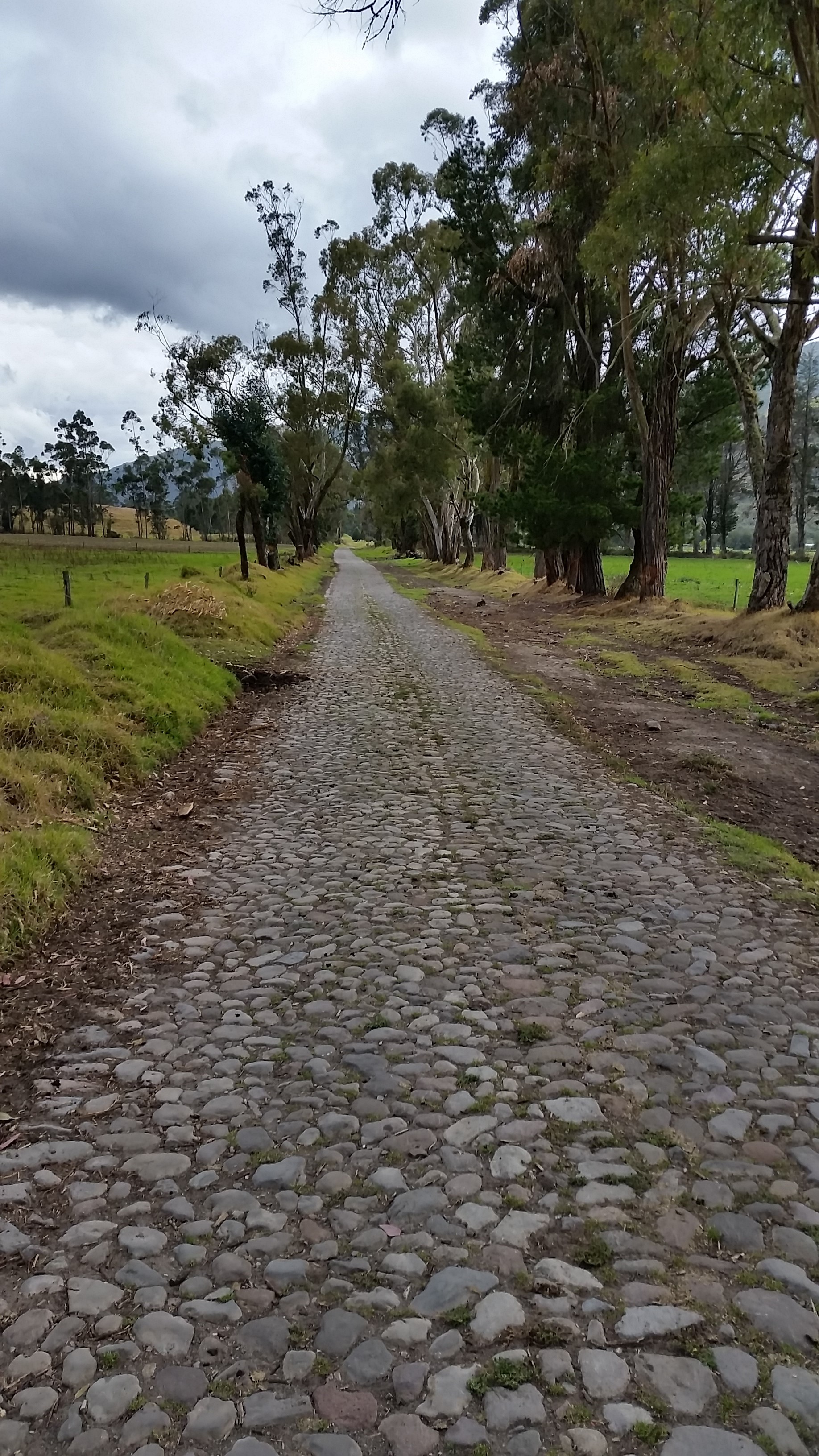
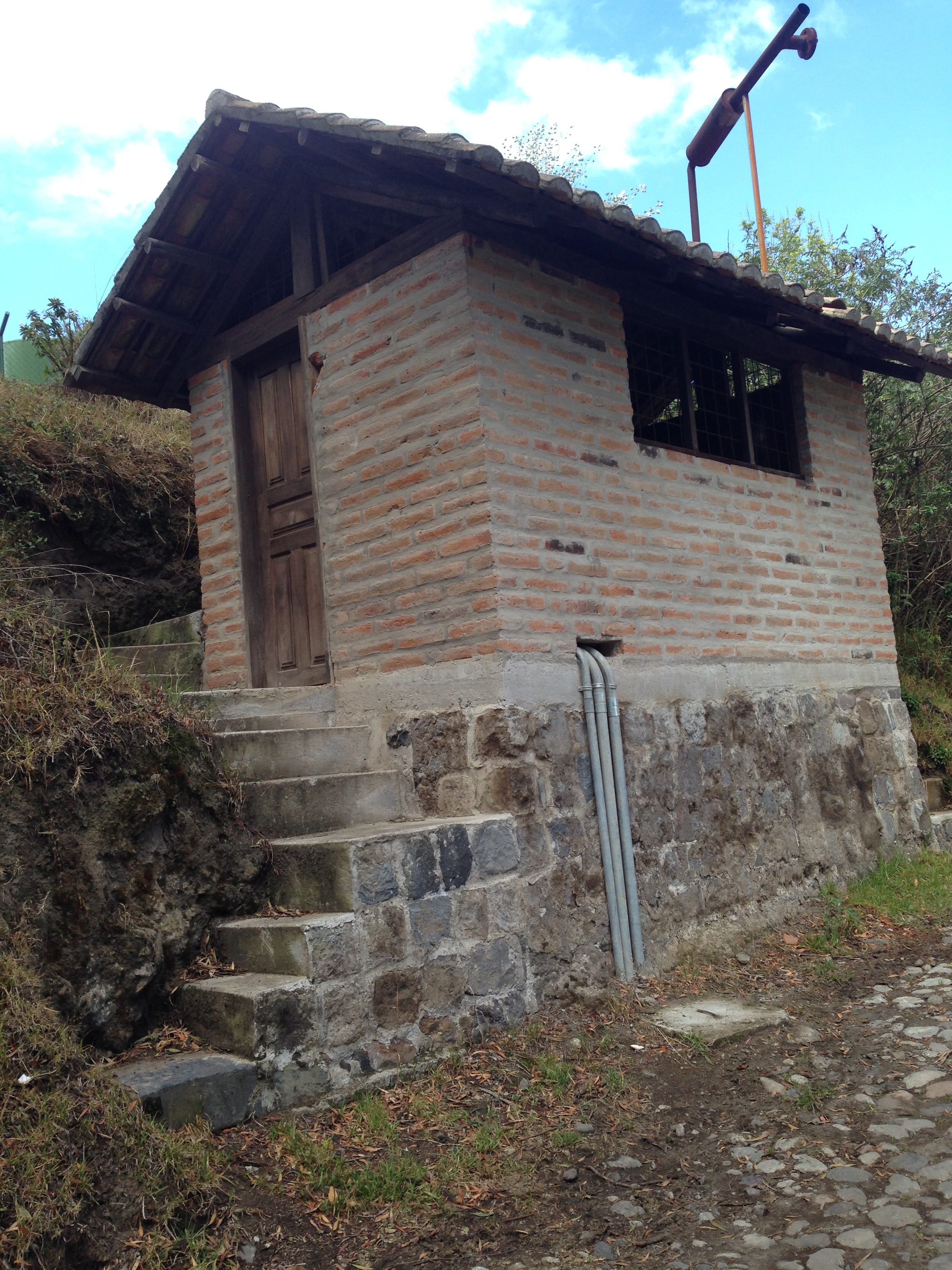
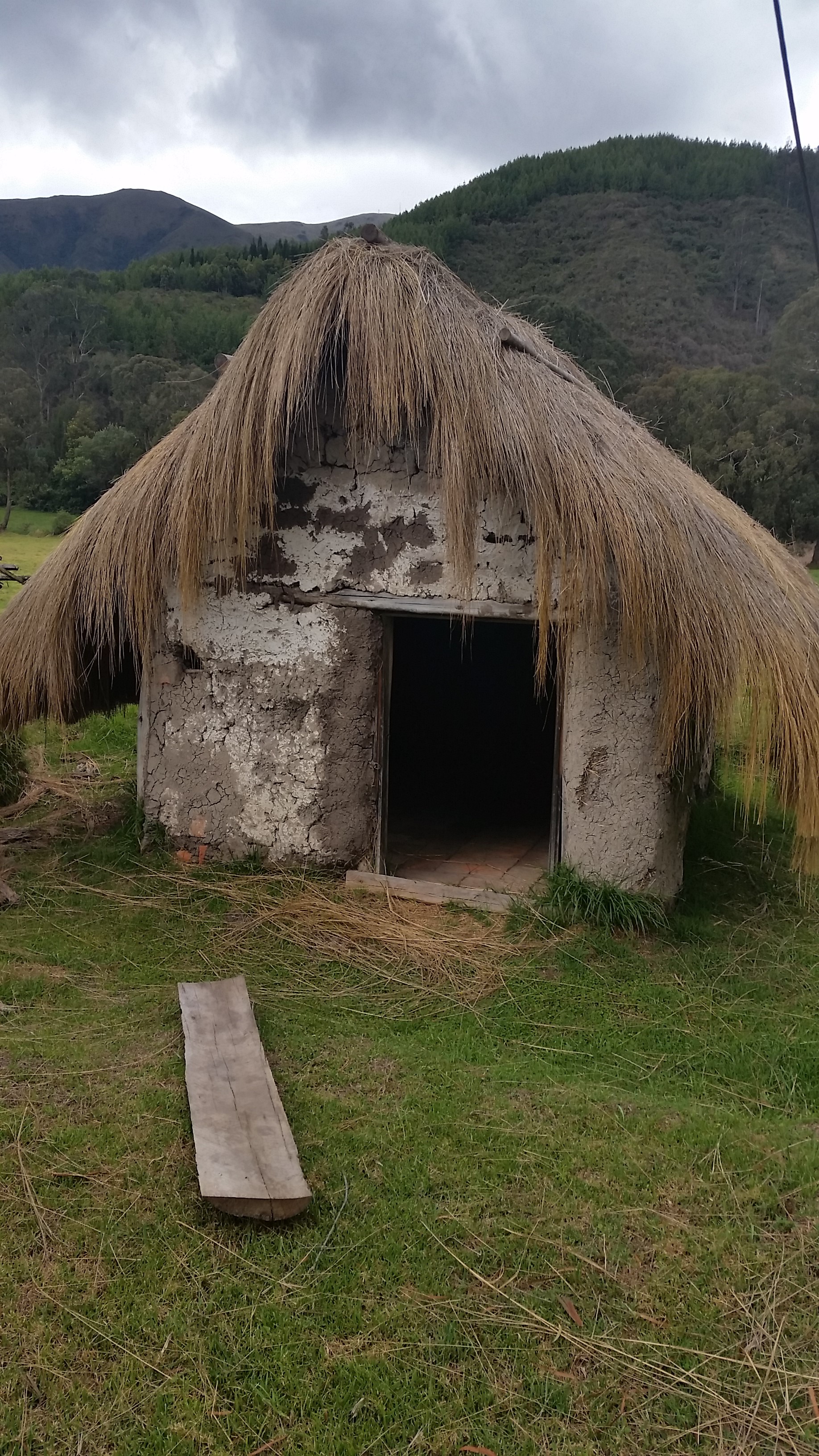
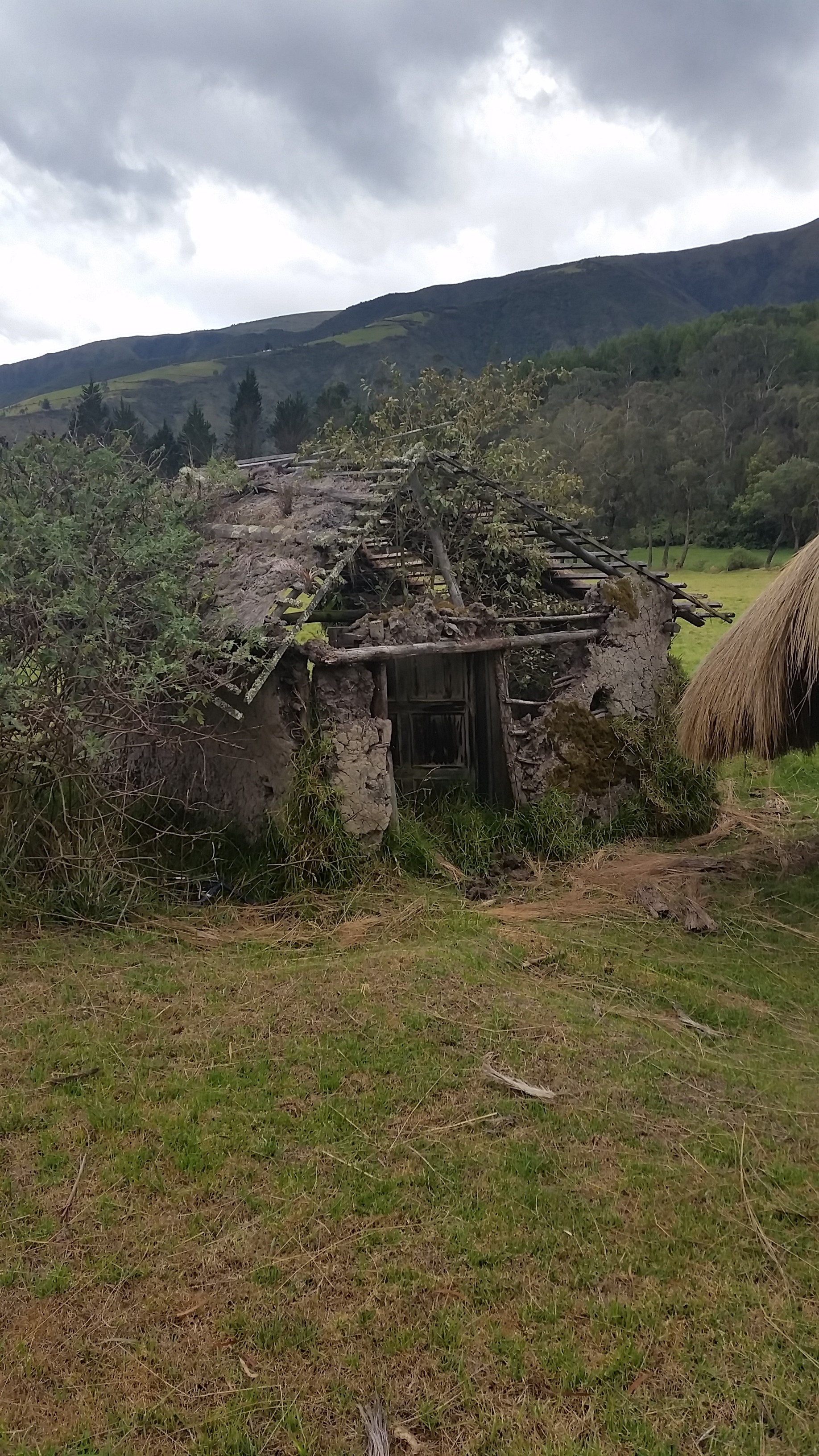
Walking to the Condors was about a 30 minute hike on a cobblestone road. It was a cool little road and we took the time to take some photos of old structures on the property. The cobblestone is not that easy to walk on and I know it is a bumpy ride but it is a road in a beautiful location so I shouldn’t complain.
Yes This is a Road.One of the Buildings on the Grounds.Looks Like a Little Hobbit House.Not Sure What This Building Could Have Been.
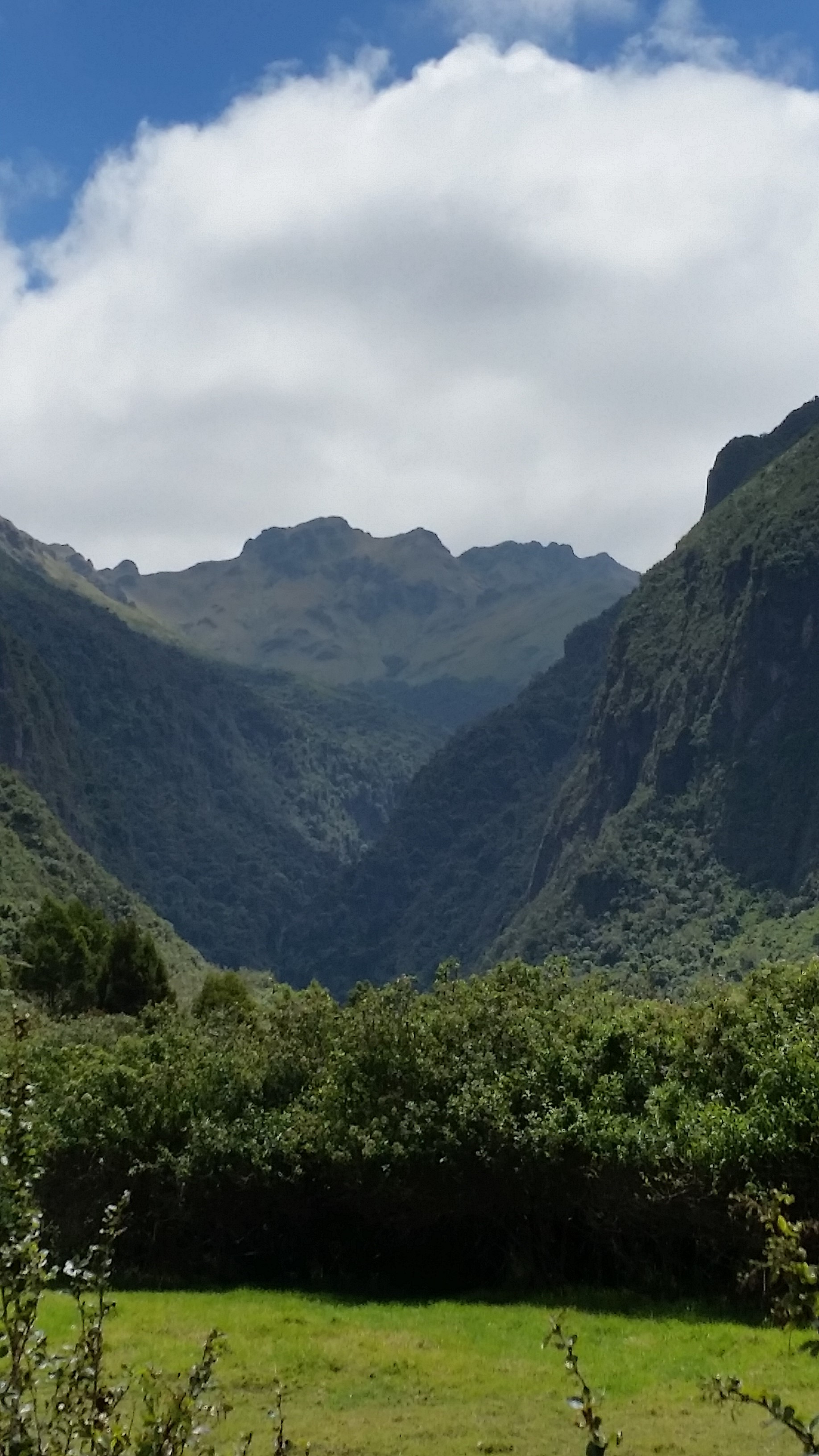
The trail (or road I guess) to the Condors was really beautiful. We would have made the hike just for the scenery, even if there weren’t Trout, Horses, Llama and Condors at the end of the trail.
The Trail View Was Beautiful.
First stop was the trout farm or pond. Photos didn’t show up very good so I am not including them. The Trout are used to feed guests, staff and family at the hacienda and also they are sold to local restaurants and grocery stores. Personally I think there are too many fish in too small a space but I don’t really know anything about fish farms.
There is a mountain stream running through the property and one of the workers rigged up some contraption up to make electricity or charge batteries so the little bit of electricity that is needed on location for the project is made on site.
The Condors in captivity were primarily rescues. Each has a different story, and each story, just as sad. One female is full of pellets, one male was tied by a foot on a short leash, yet a different Condor was confined in a small cage and could never even spread his wings. Farmers like to shoot Condors because they mistakenly believe they kill calves or steal sheep, dogs or even babies. There are so many rumors, however, it is extremely unlikely this has ever happened seeing as Condors do not have bird of prey talons like an eagle. For as large as these majestic birds are, they are mere scavengers or vultures and eat “road kill”. In the wild they will tear the skin from a dead animal such as a cow, sheep, lama, rabbit, whatever they find, and will feed on that but they do not actually pick up, carry away and kill animals. A big part of this project is educating the community, especially the children, what Condors do and do not do and basically what they are all about.
Condors mate for life and currently the facility has 6 couples (one couple with a 5 week old baby) and 2 youngsters (3 and 5 years old). Because of the baby, we had to stay a safe distance from the Condor houses. It is interesting because one couple just does not seem interested in each other after 2 or 3 years together in a cage, so the female will be transferred to a different Condo habitat in Ecuador and the male will be used to train the 3 and 5 year old in the ritual of tearing skin off the prey and other survival habits in hopes that they can someday be released to the wild. The two youngsters never see the humans that feed them and their cage is not open on the side nearest to the activity of the retreat so they do not become too familiar with humans. It was very interesting to learn about the effort and years involved in hopefully releasing young Condors into the wild in an effort to increase the population of this endangered species.
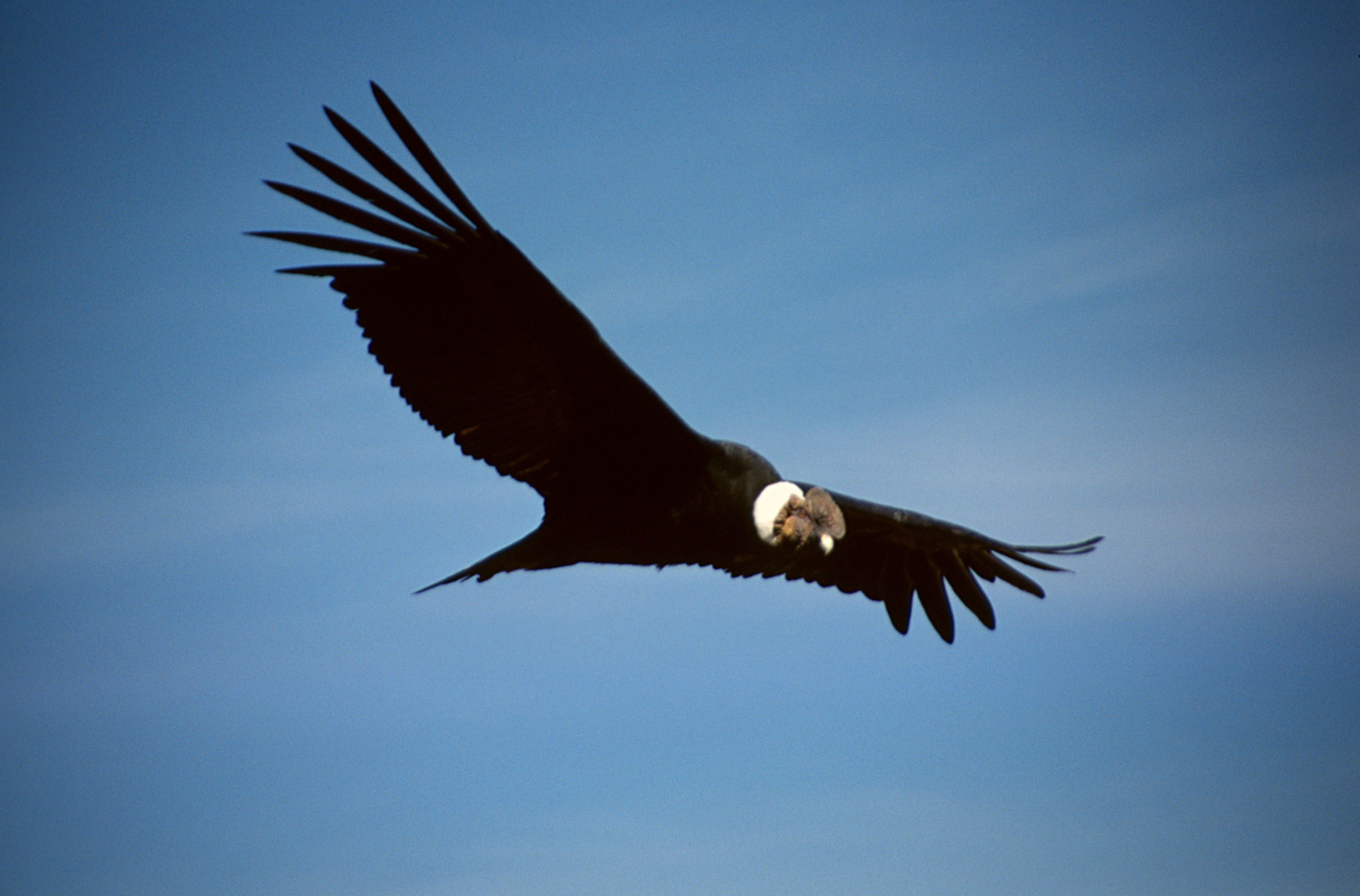
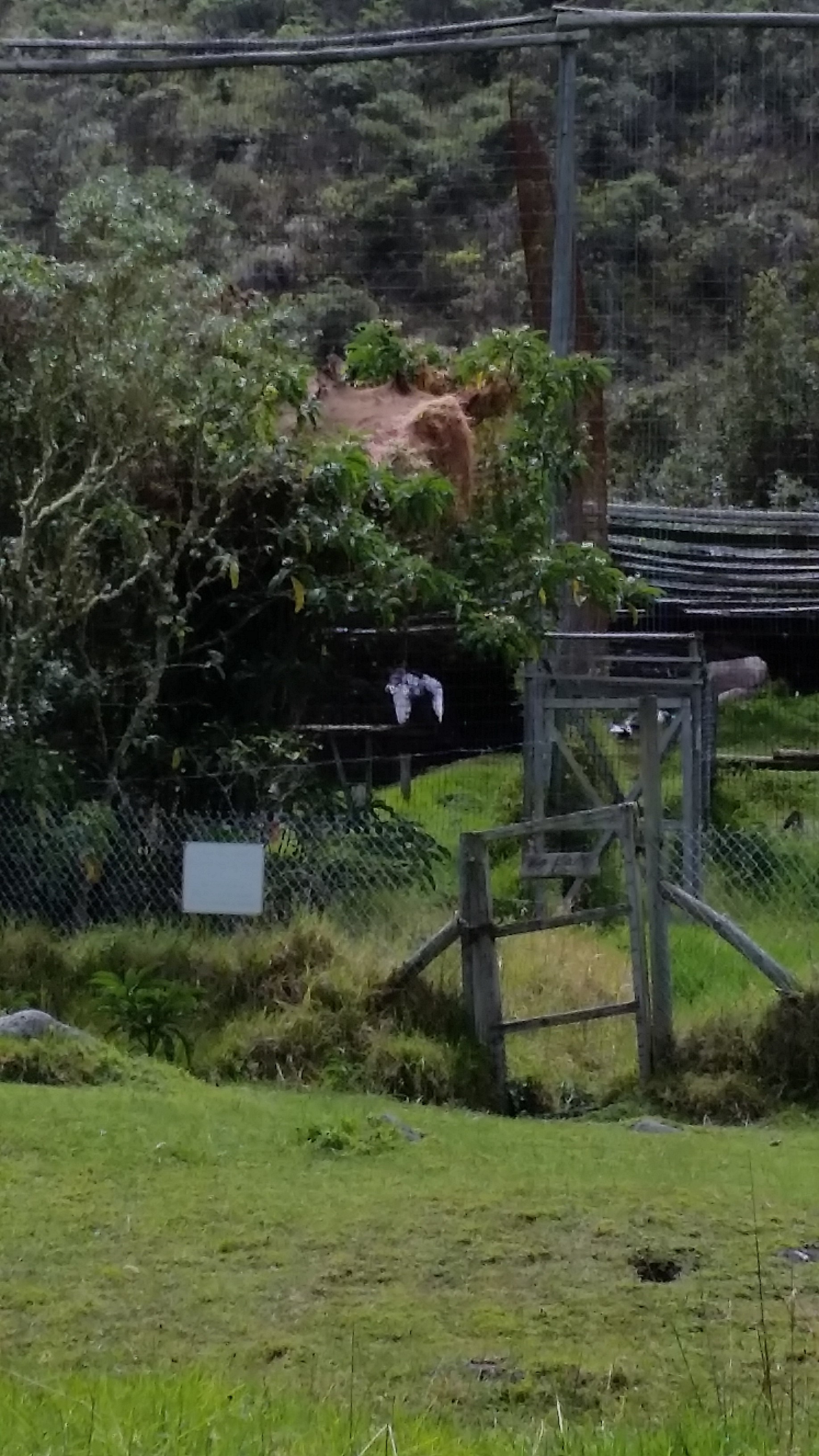
Having to stay such a distance from the cages the photos are not the best, but, we did see a few of the Condors spread their wings. In the photos below the cage photo Tod took, the one of a Condor in flight I copied from the internet, but, the photographer was not listed so I could not give him/her credit.
There are 2 types of Condors, the Andean Condor (the ones we saw) and the California Condor, which lives in the western coastal mountains of the United States and Mexico and in the northern desert mountains of Arizona.
Photo Complements of the Internet. 9 – 10 foot Wingspan.The Condor House.
We did not see any of the spotted Bear but we did see still photos taken by the cameras that Yann has mounted in trees where he sometimes puts fish guts out for a little “treat” for the spotted bears and their cubs.
One of the very interesting and somewhat disturbing things we learned from Yann was that they had several cattle they had purchased from neighboring farms which would be used to feed the condors. The neighboring farmers had nothing to feed their cattle as a direct result of the volcanic ash from Cotopaxi. The ash covered the ground and ruined their crops. With no feed, farmers were forced to sell off their cattle.
Overall, Hacienda Zuleta is amazing and we will plan to stay here again our next trip to Ecuador. We will definitely stay more than one night next time and hopefully enjoy a few more of the activities, or not (maybe we will just retire to the library or one of the numerous seating areas and just read and take in the tranquil surroundings this Hacienda has to offer!)
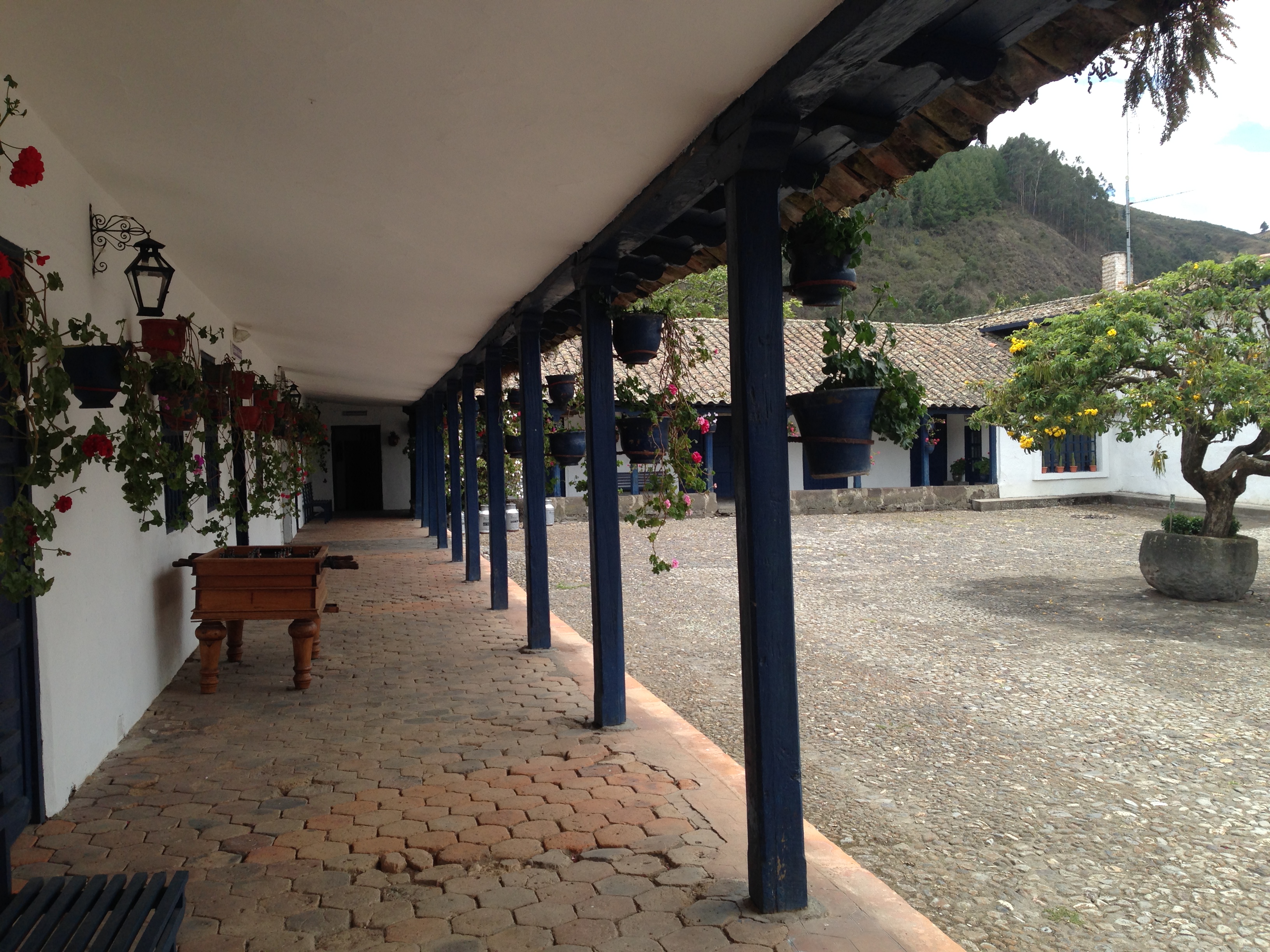
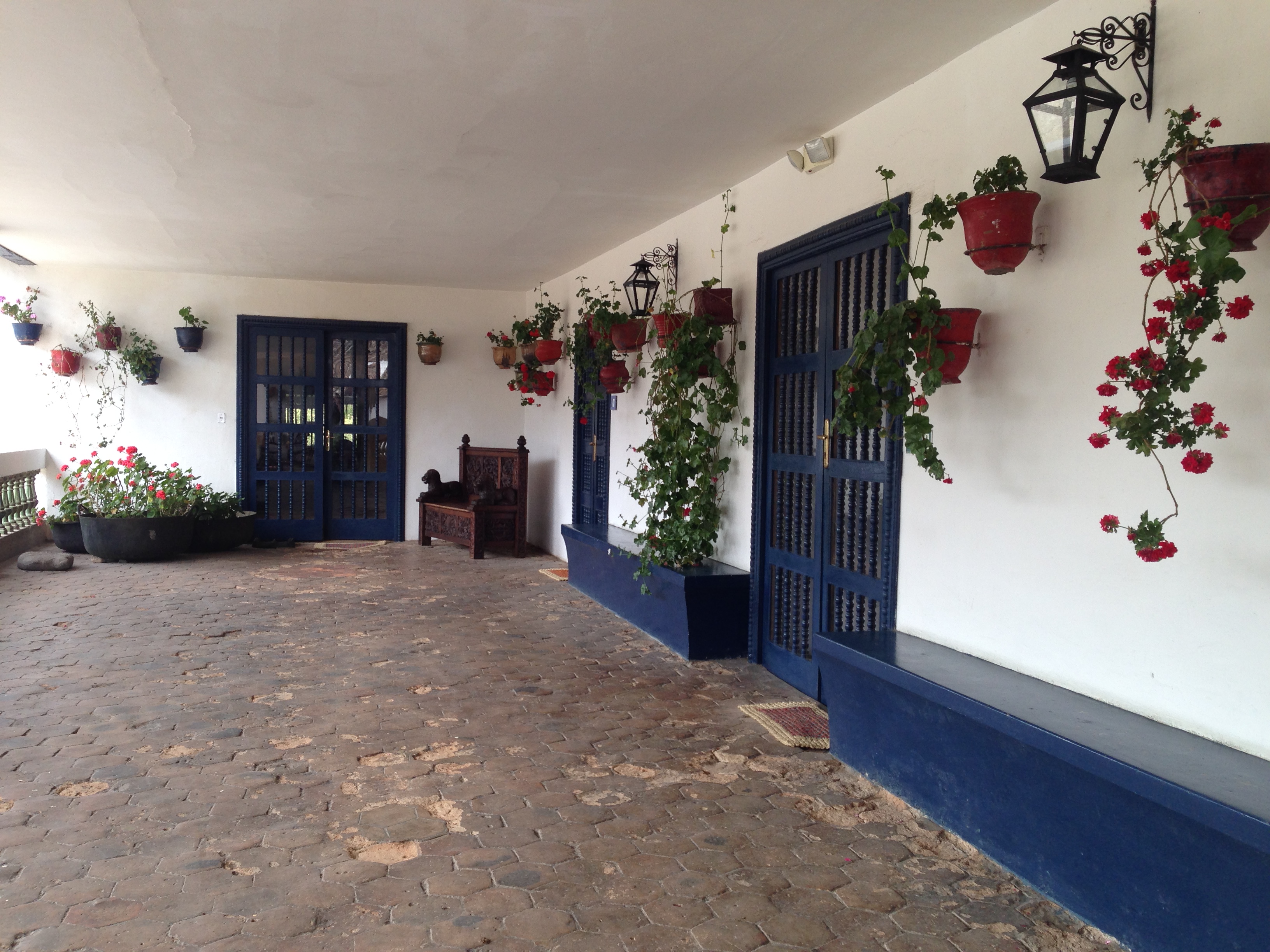
Hacienda Zuleta is a Colonial Ecuadorian hotel in the Andean mountain range. It is at 9,600 feet (2,800 meters) above the sea level, and about two hours north of Quito, (unless your driver gets lost, then it is a little over 3 hours from Quito). It is actually much closer to Otavalo and had we realized we were going there during this trip we would have planned the Zuleta and Otavalo trips together.
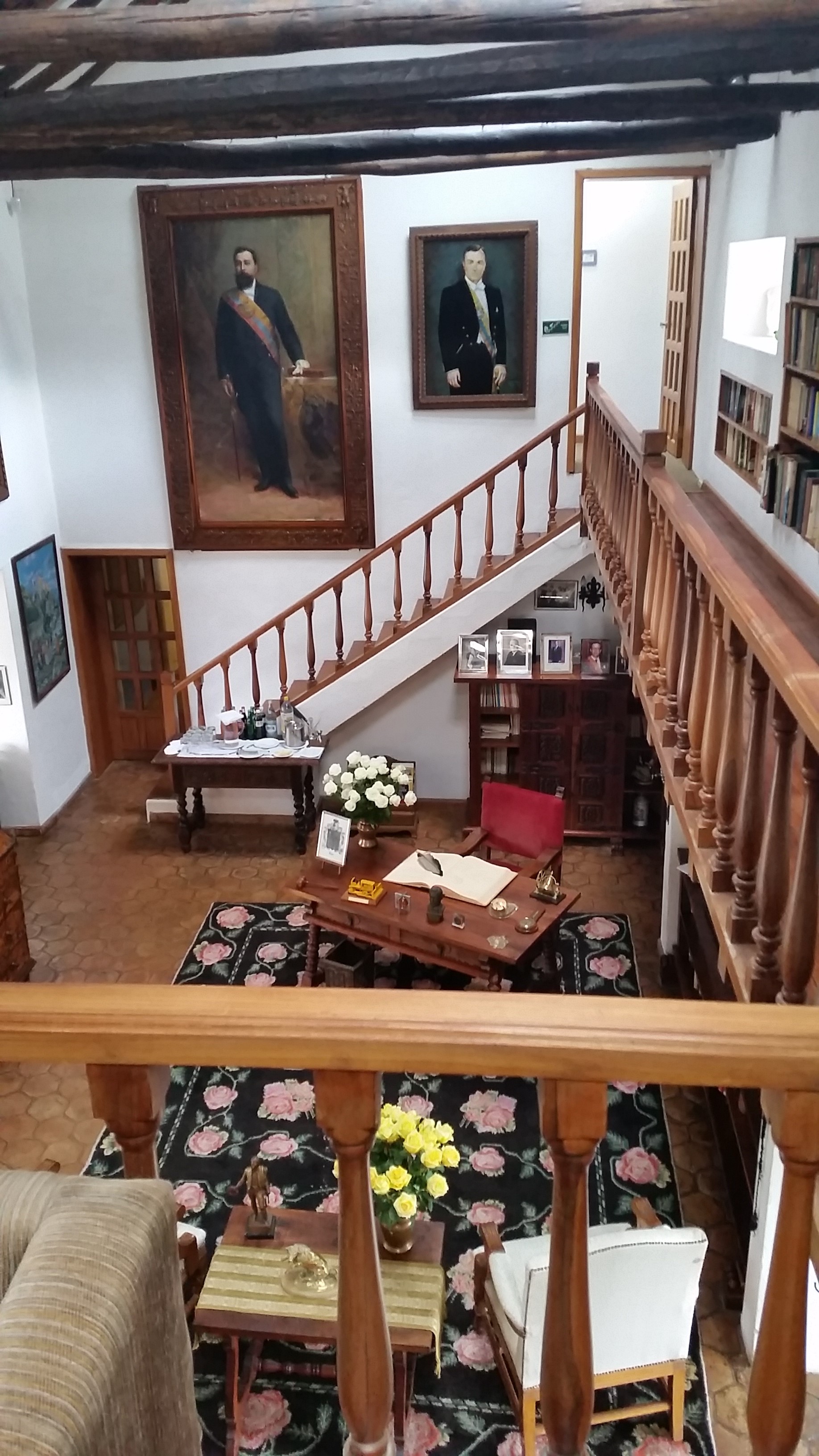
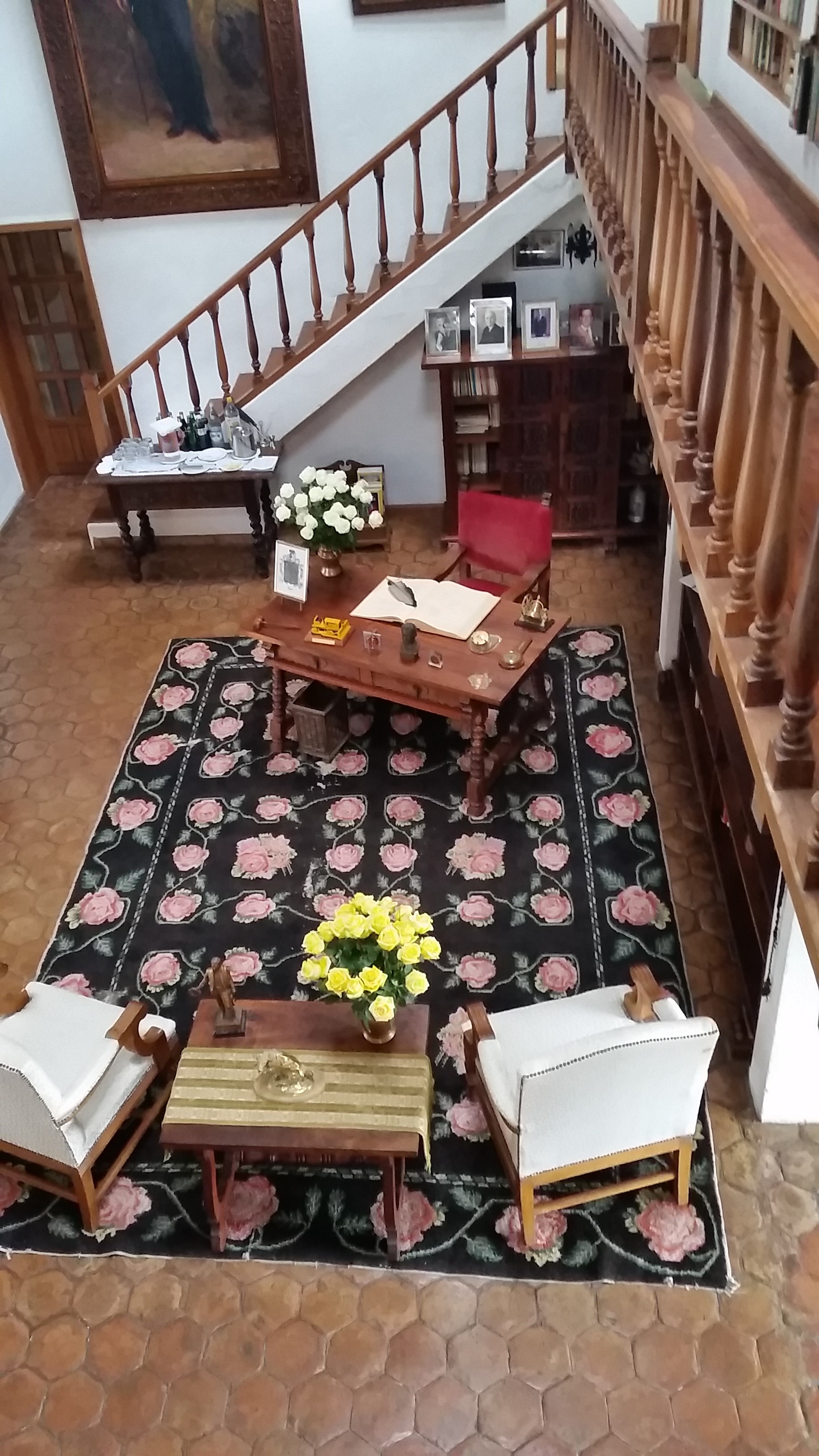
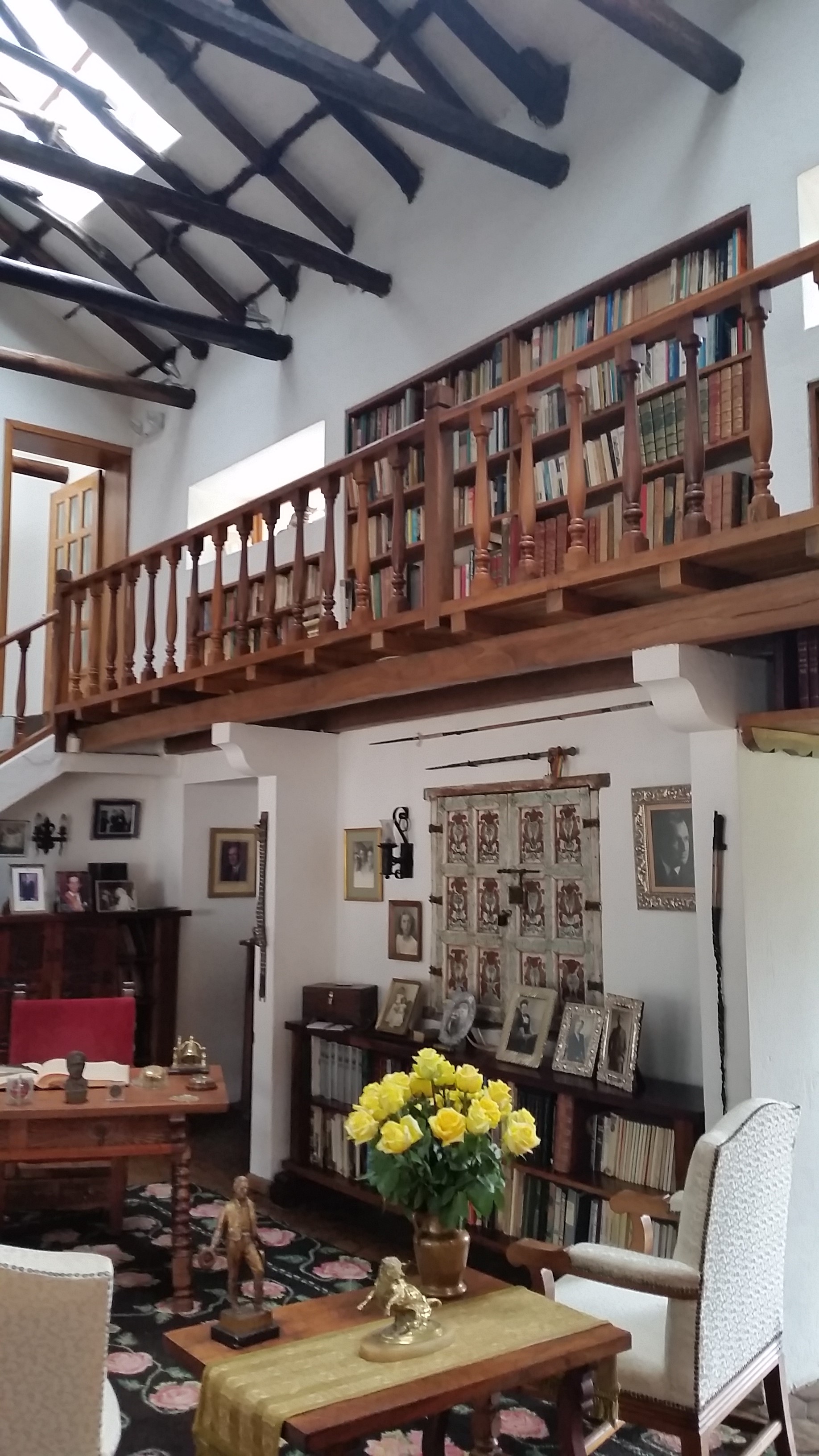
Zuleta itself is a working farm of 4,000 acres (2,000 hectares) that for over 100 years has belonged to the family of Mr. Galo Plaza Lasso, a former president of Ecuador. It was chosen as one of the world’s “Top Ten Finds” by Outside magazine and named as one of the best Ecuador Hotels by National Geographic Traveler. The 14 guest rooms are all in the main building and each has its own fireplace which the staff lights in the evening. I love this place! The main building has the president’s library, several sitting rooms, 2 dining rooms and access throughout to beautiful gardens and outside sitting areas.
Outside the Main Building.Additional Outside Shot.Presidents Library.This Library is One of the Sitting Rooms Available.Filled with Family Photos.
I absolutely loved our room and the doors that opened to a beautiful garden and sitting area. The wood fireplace was very awesome and really the only source of heat. As I mentioned previously, the staff lights all guest fireplaces at about 5:00 PM. Then during the dinner hour they put on more wood for you and, as an added touch, when they turned down the bed they also put hot water bottles – one on each side – in between the sheets for us. It was wonderful to climb into a cozy warm bed with the smell of a fresh wood burning fire and have a hot water bottle to warm your toes.
So Many Humming Birds but Only One with Such a Long Tail.Not Only a Fireplace but 2 Dozen Roses! Ecuador is a huge exporter of roses.Tod was Not as Crazy About the Hot Water Bottle as I Was However, He was Tolerant of the Fire!
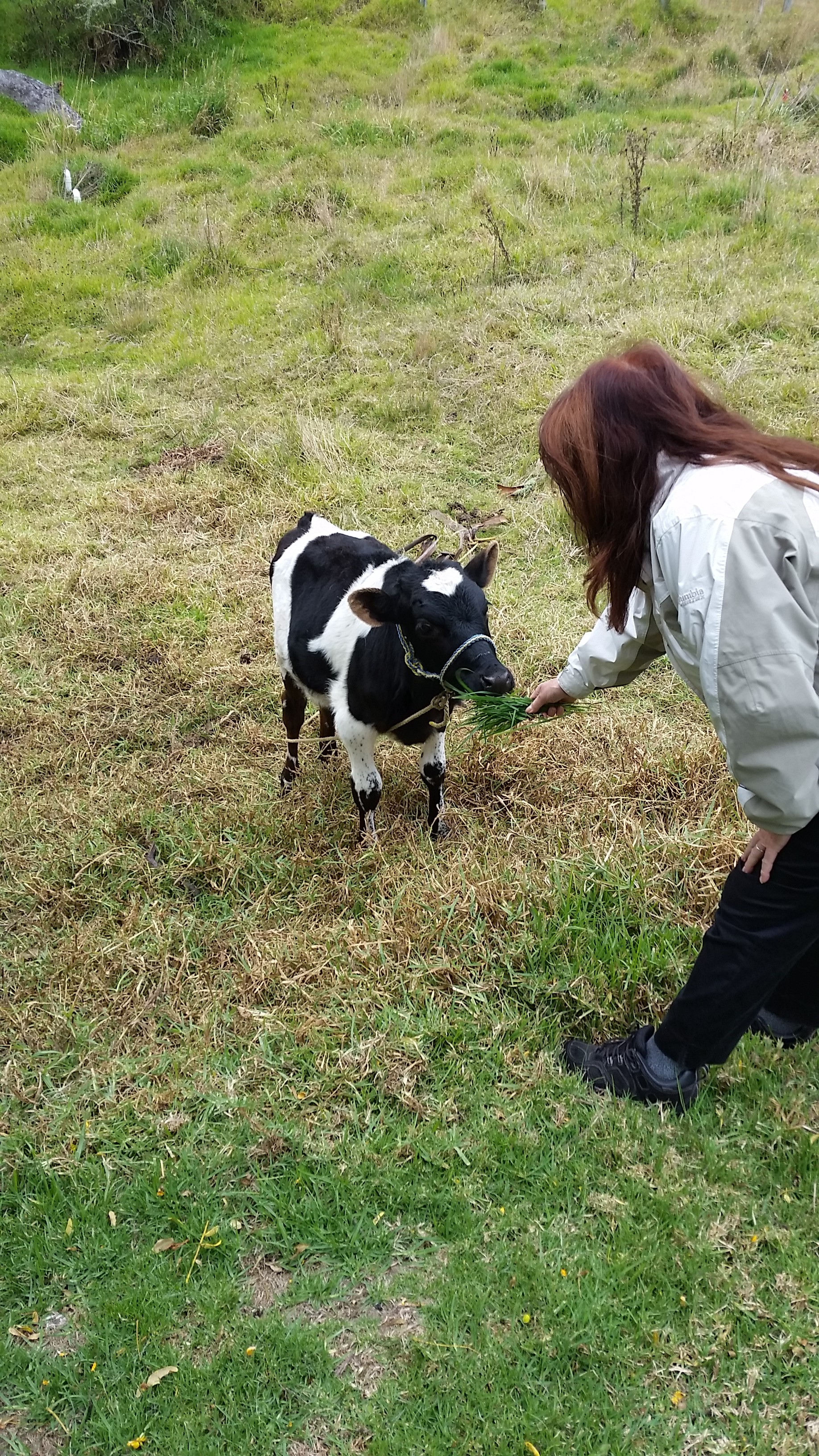
We did a little hiking around and explored the organic garden. I found a small calf mooing away begging to be tied someplace new with fresh grass. I didn’t dare move him but I did feed him several handfuls of grass.
Part of the Organic Garden.Little Did I Realize This Guy Was Likely Condor Chow.
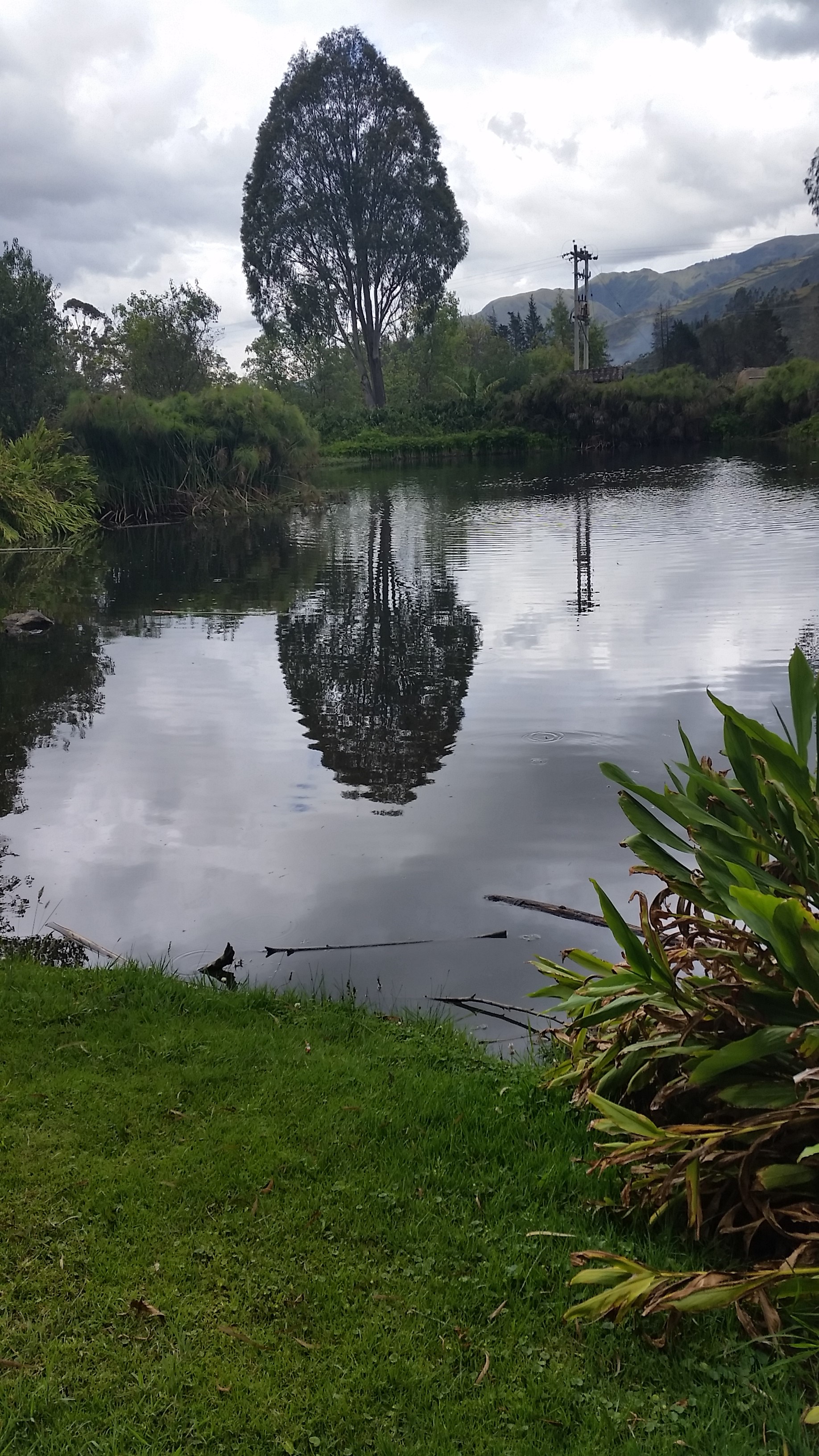
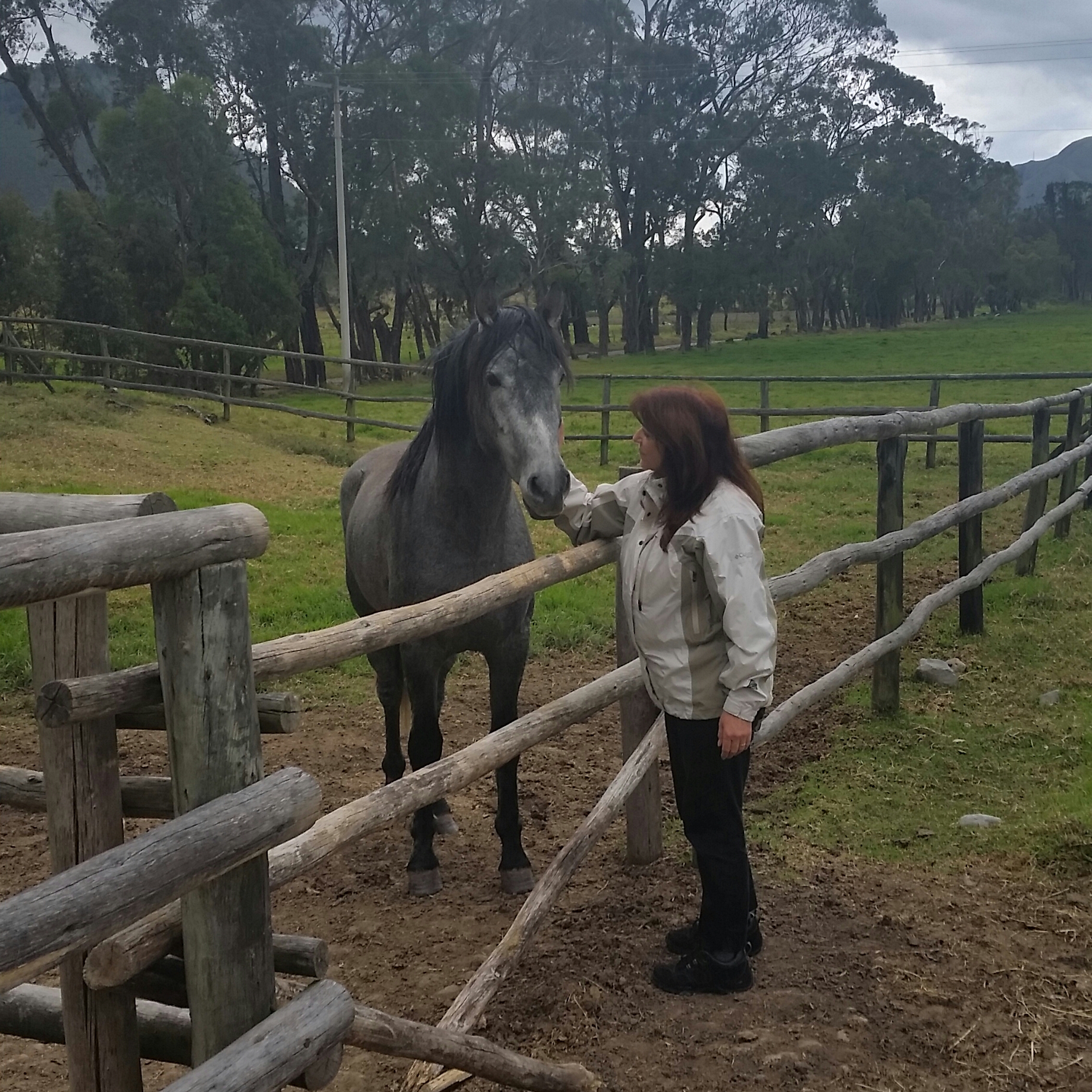
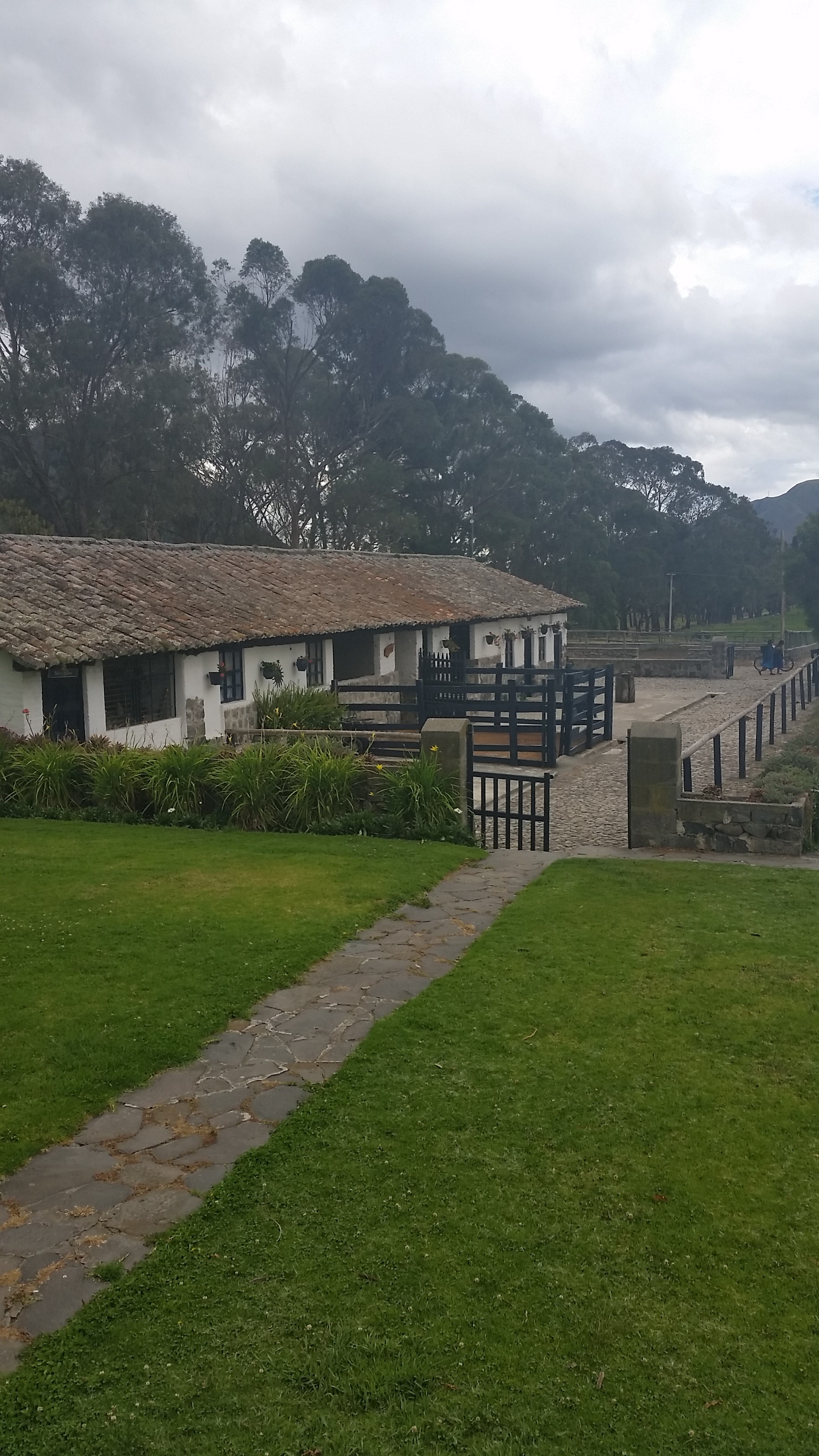
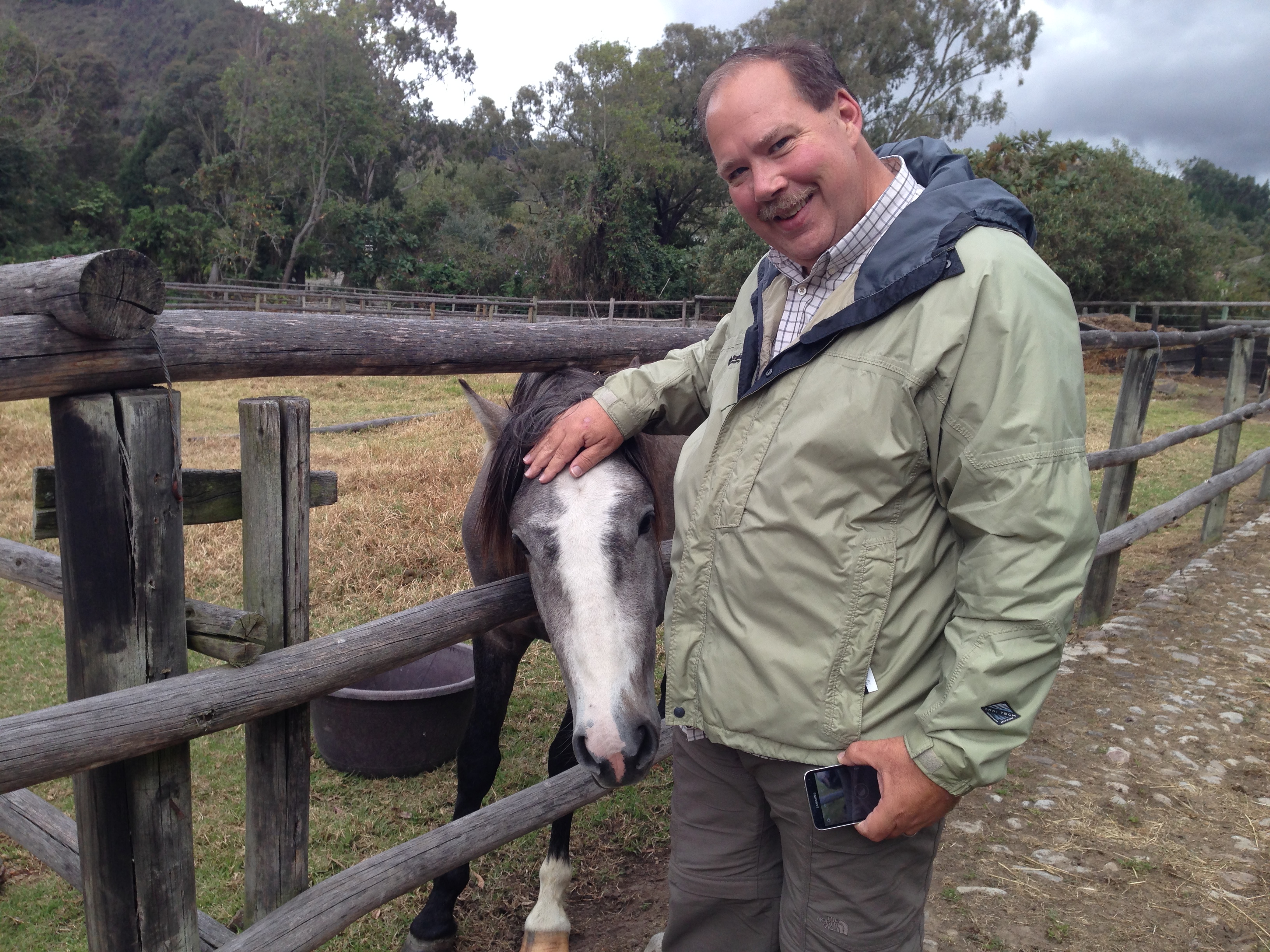
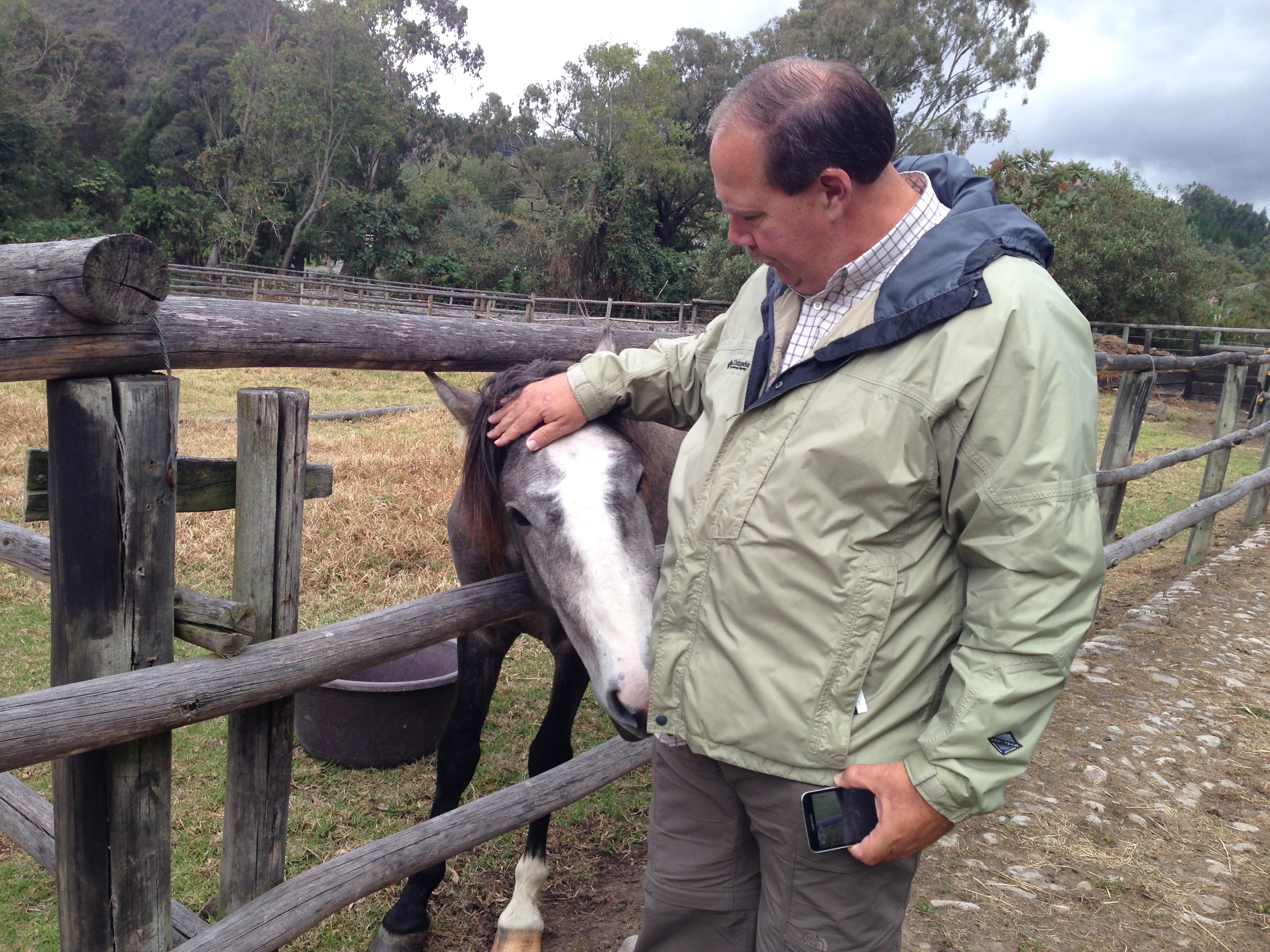
I included a few photos of the stables, horses and the duck pond. We didn’t really have time for horseback riding this trip but we did make time to scare away the ducks (which we did every time we tried to get a picture of them) and to pet the horses.
The Duck-less Duck Pond.Michele Making a Friend.One of the Stables.This Guy Likes Tod.Trying to Steal the Candy in Tod’s Pocket.
We both love this place and wish we would have known about it sooner because we definitely would have spent a few more nights but our schedule was just too packed to squeeze in even one more night. This location is so quiet and peaceful it makes you feel like you are a million miles from the busy city life.
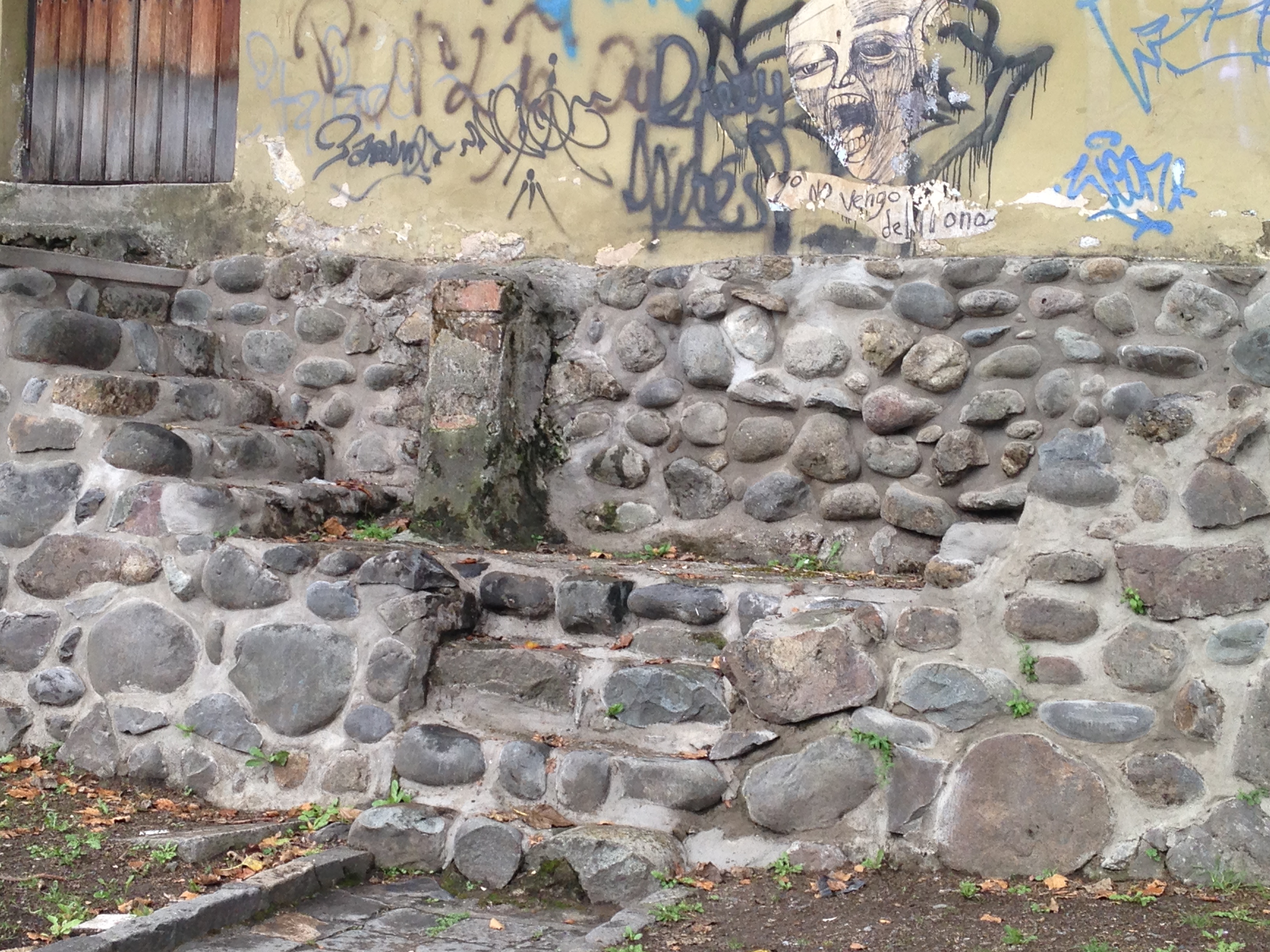
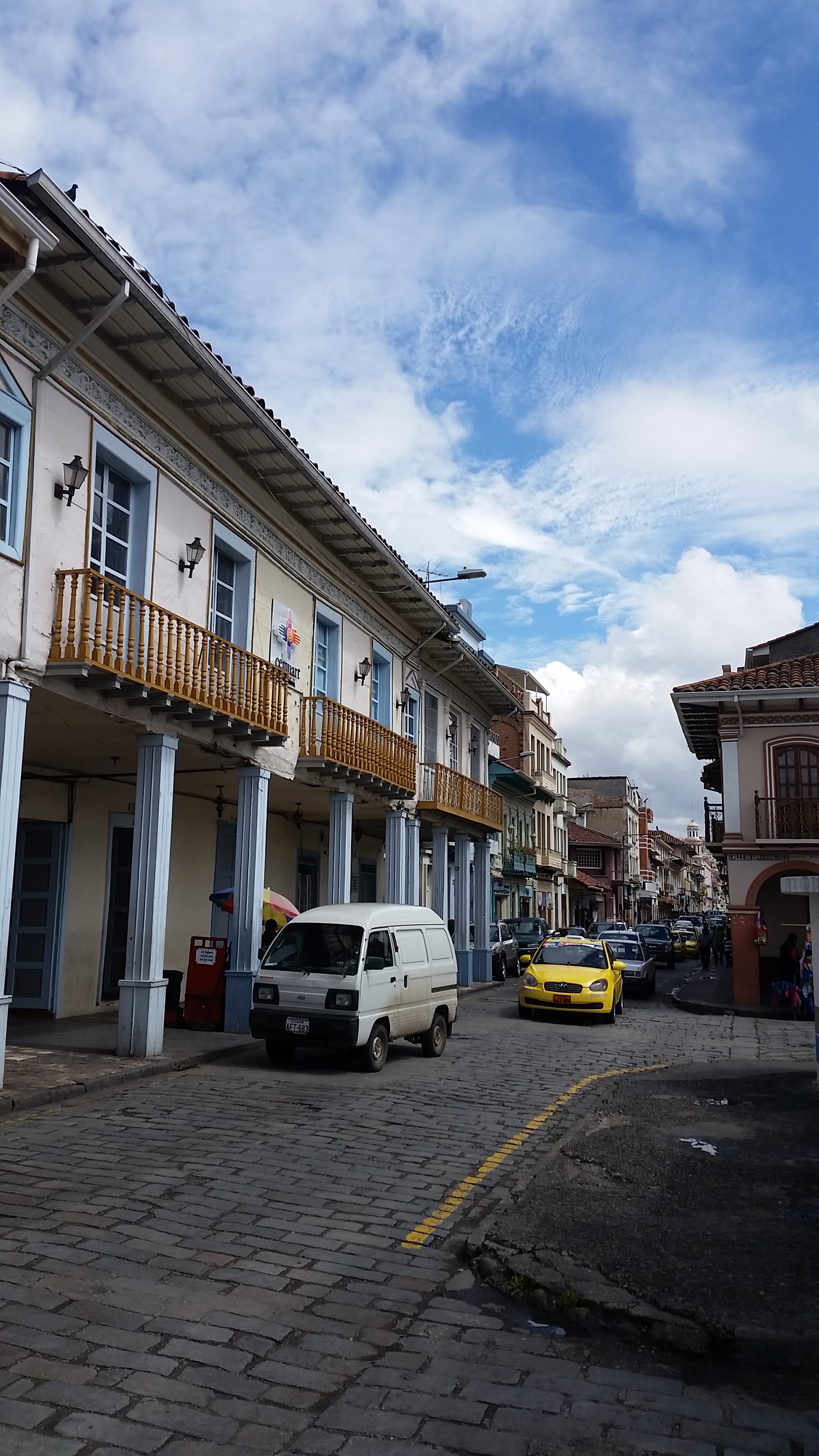
For its size, (400,000 people) Cuenca has to be the cleanest city I have visited, not just Ecuadorian speaking but anyplace really. There is way more graffiti in Ecuador, but other than that, Cuenca is extremely clean. Below is a shot of double stone steps leading to what were once businesses on one of the original cobblestone streets.
Double Stone Steps.
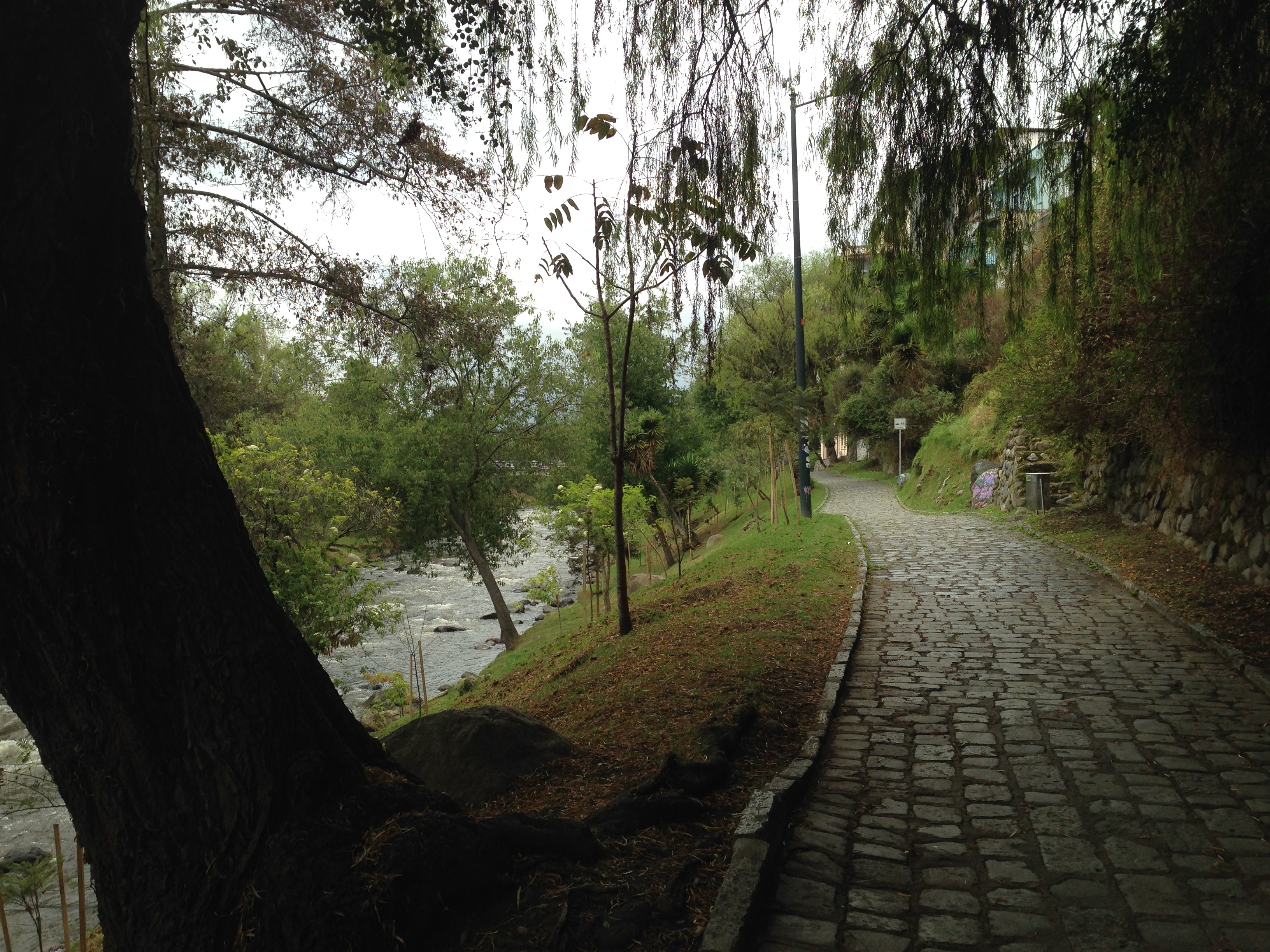
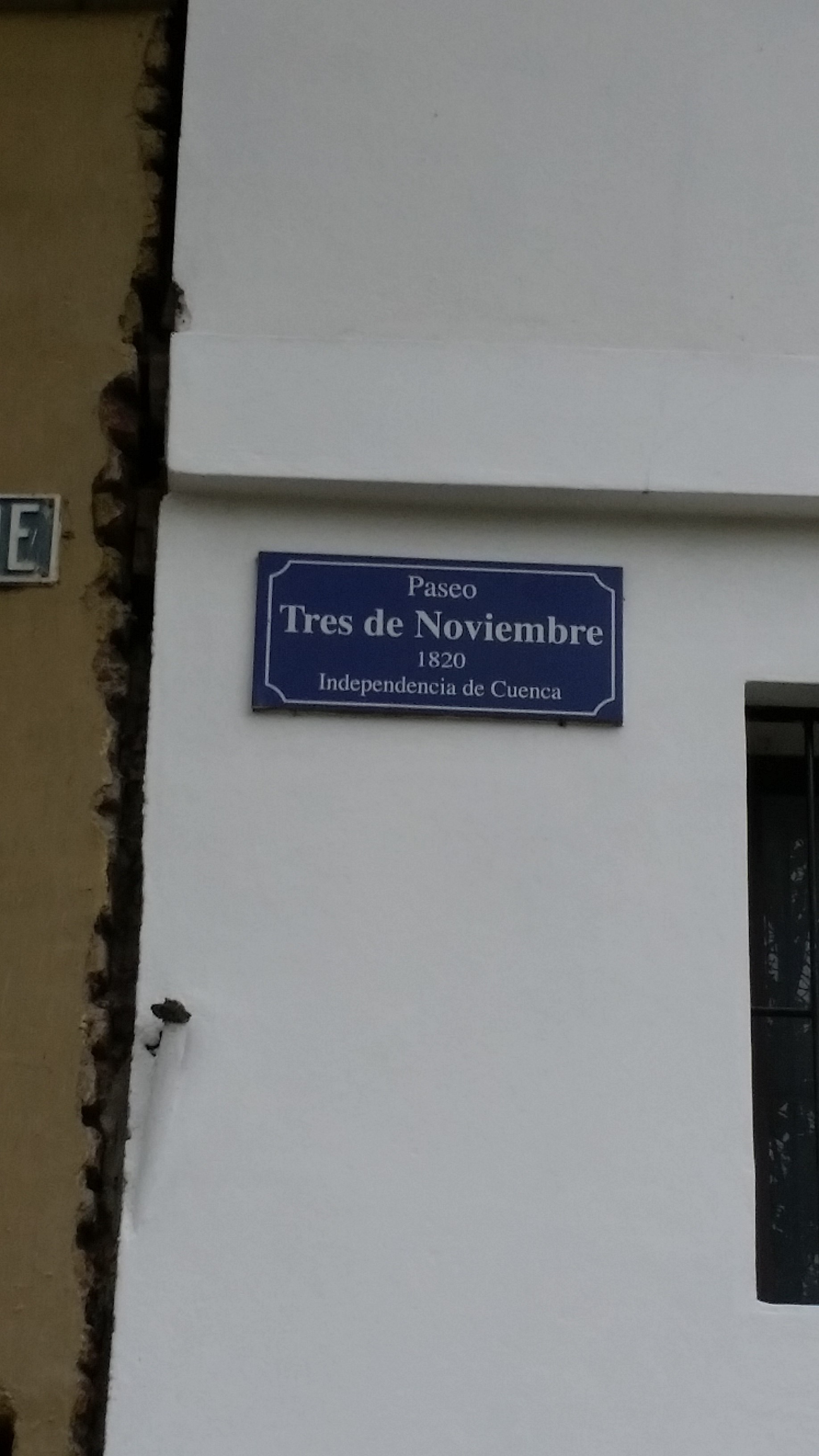
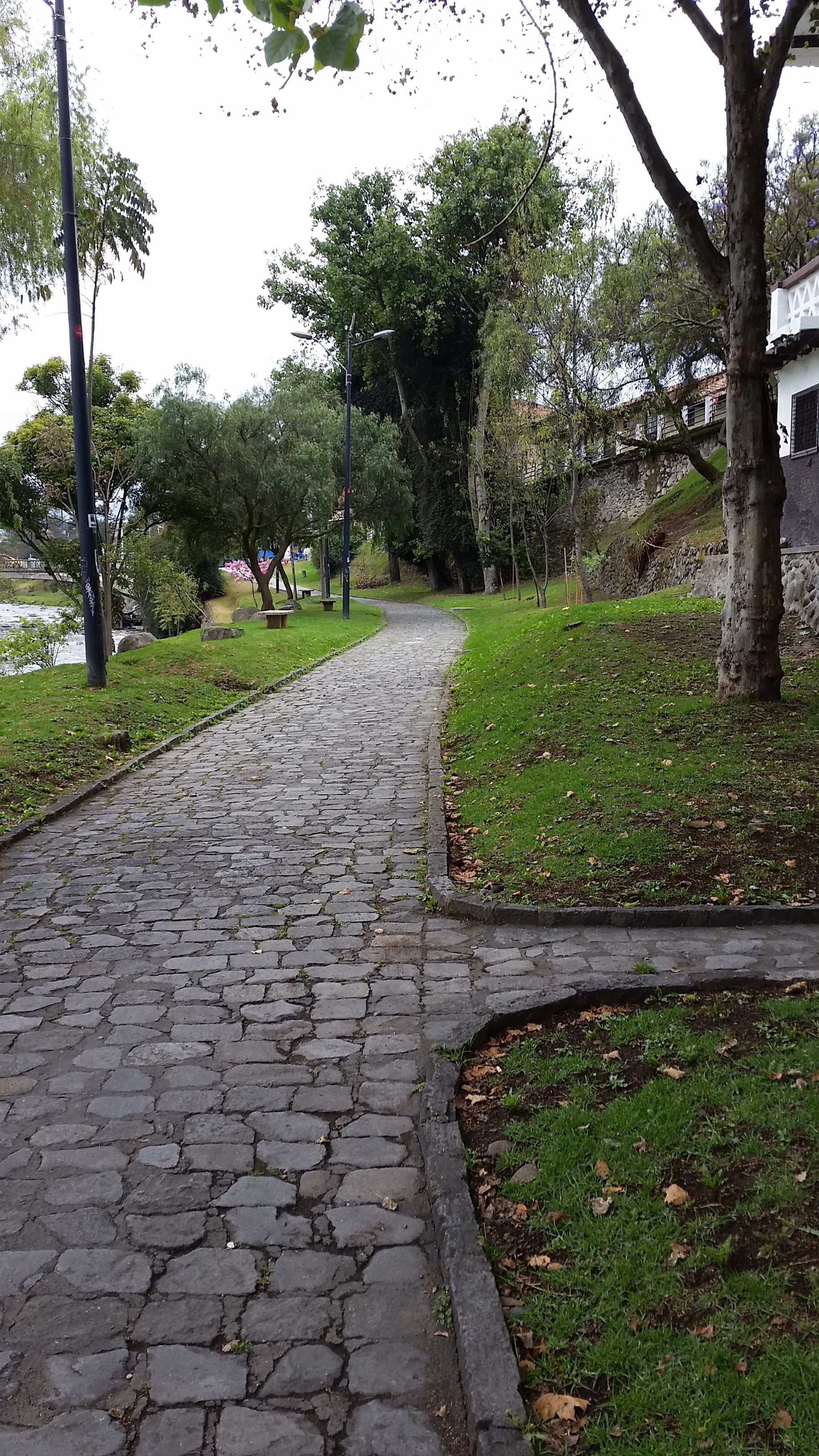
The River walk was very beautiful. On one side of the river is “old town” with all the historical sights and the other side was the new section of Cuenca. We stayed in old town the majority of our trip and loved not only the architecture but the people as well. The River walk is a cobblestone path that once was a street named after Cuenca’s independence. Many streets in Ecuador are named after special dates. The street named “diez de Agosto or 10 de Agusto” / 10 of August is a street in Quito. August 10, 1830 is the official date of the Declaration of Independence of Quito which is a national holiday in Ecuador.
The River Walk is Beautiful! We Love This Place.3rd of November Sign – Photo Below is the Street.Historic 3rd of November “Street”.
These art students from the college across the river let me take their picture. I could not communicate enough to tell them they would be on our blog.
Local Art Students.
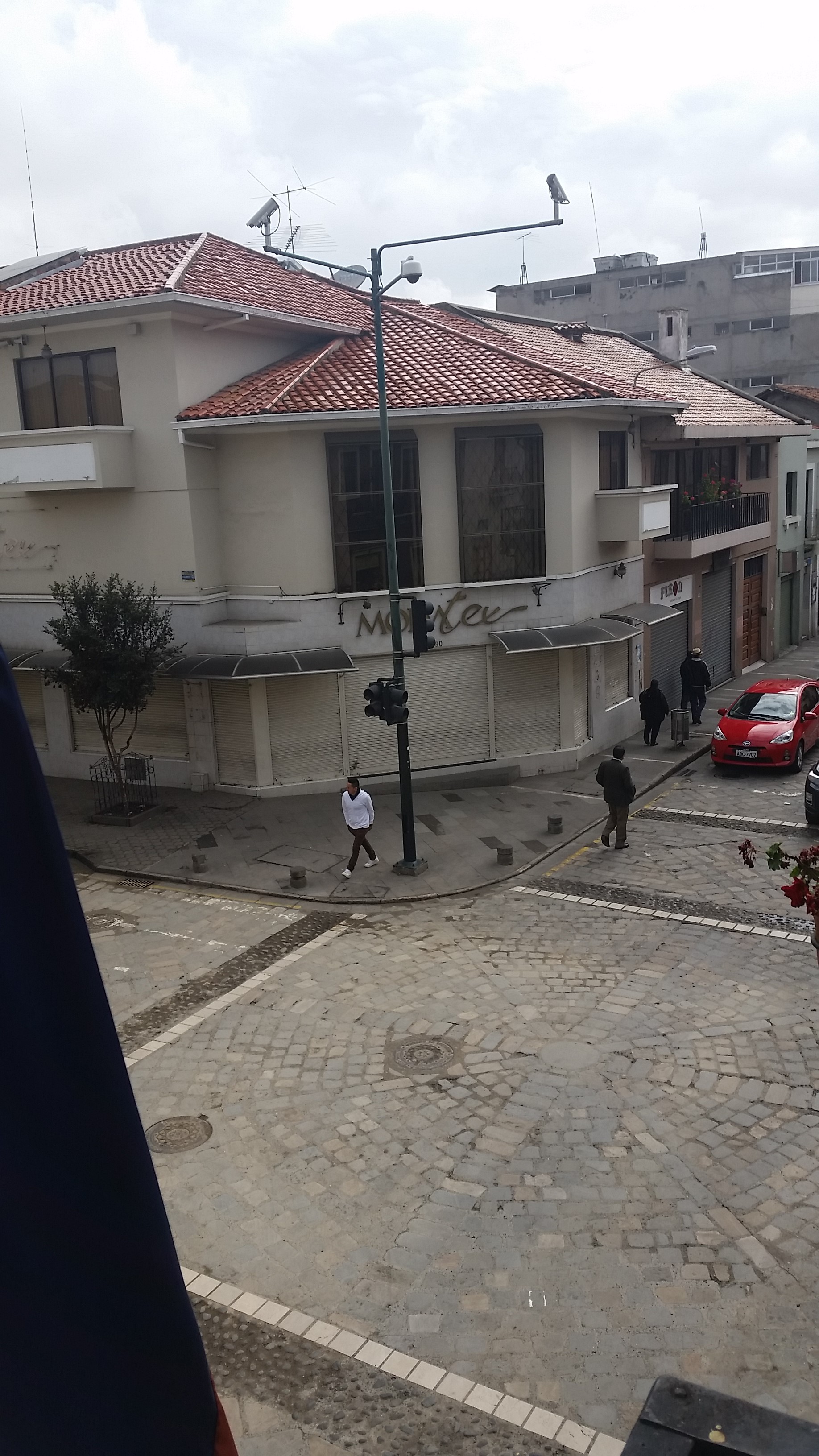
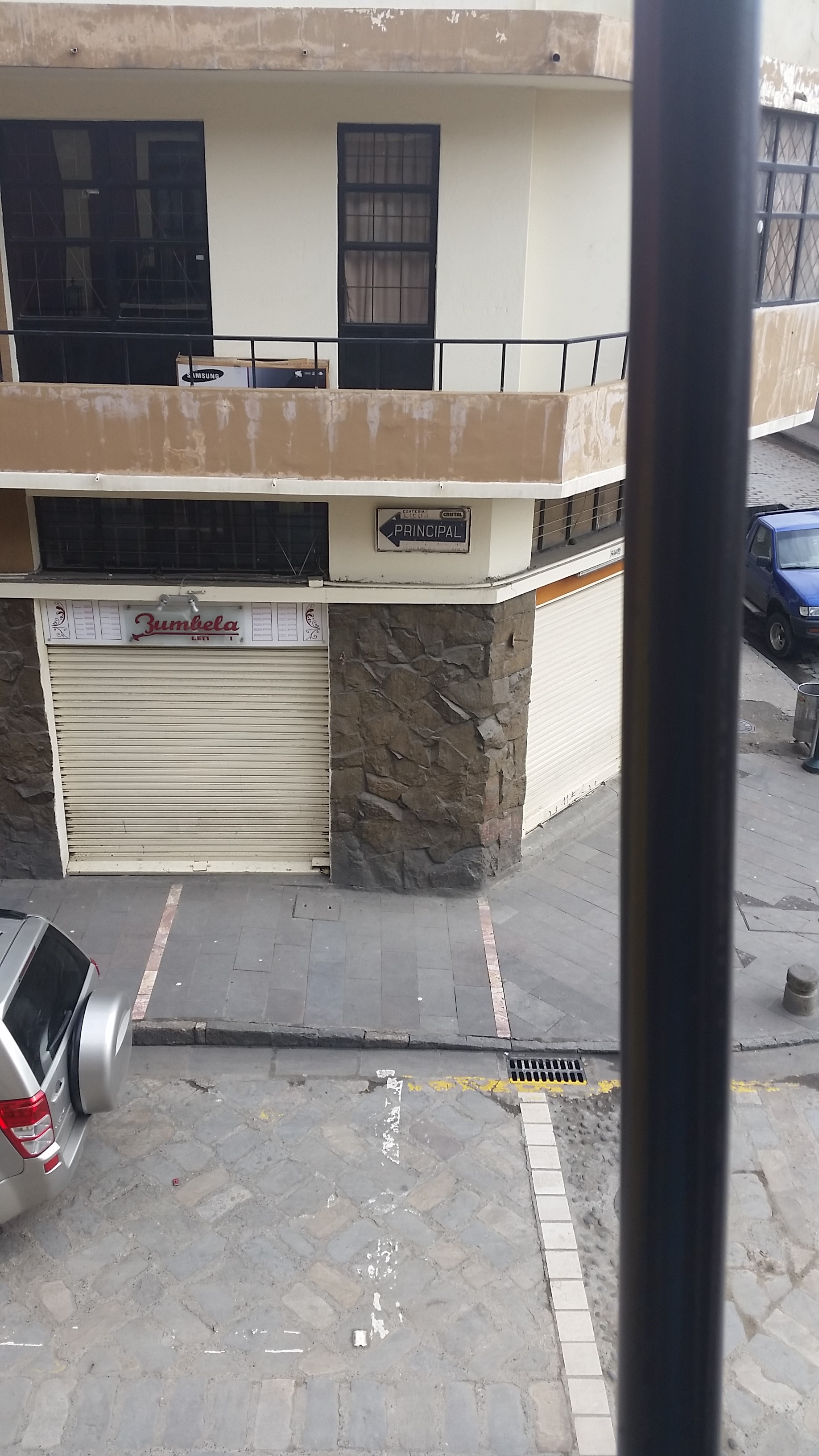
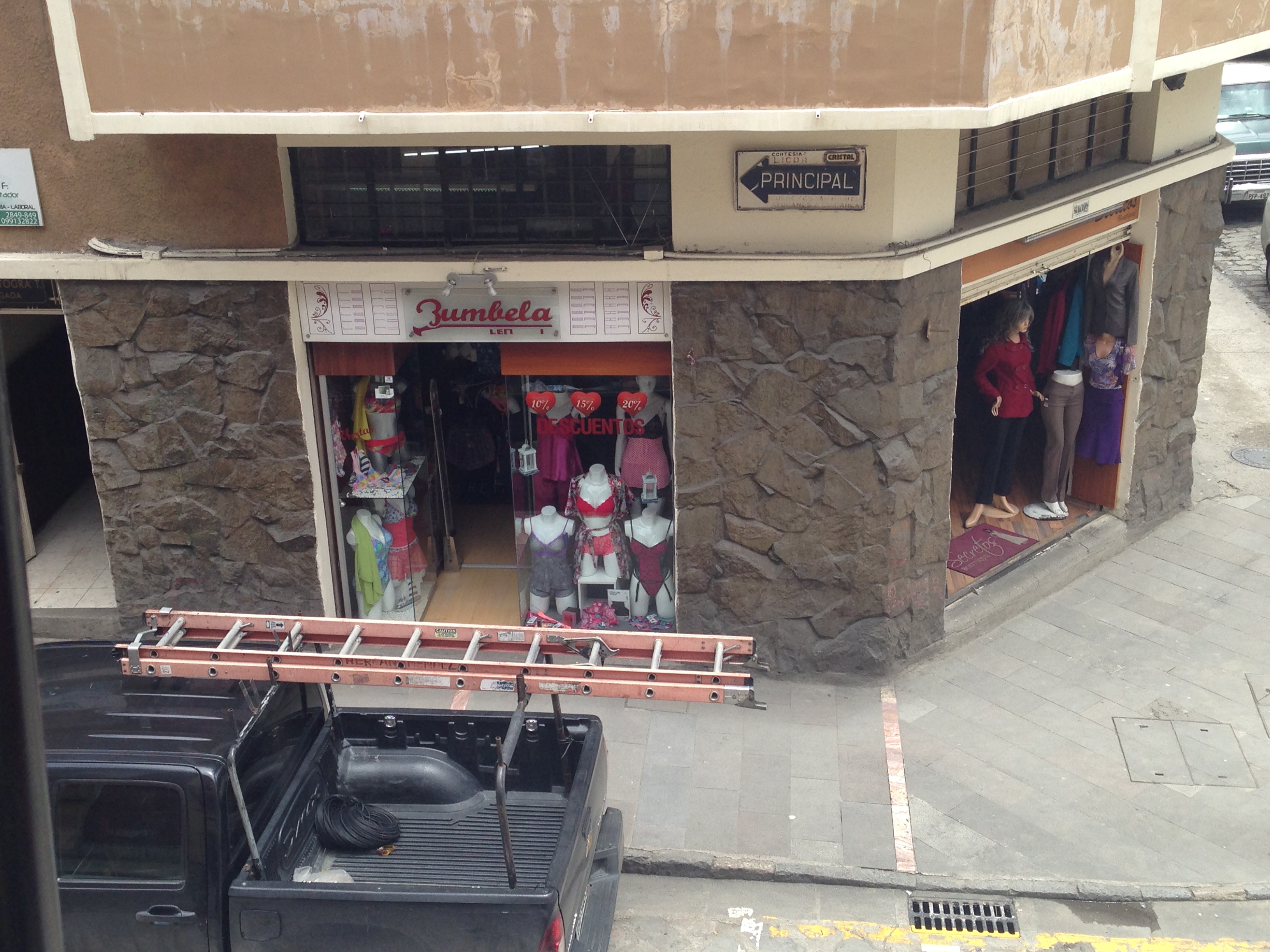
The photos below are to show how deserted the streets look when the businesses are closed. Just a row of garage doors.
Businesses are Closed.Not Open for Business.
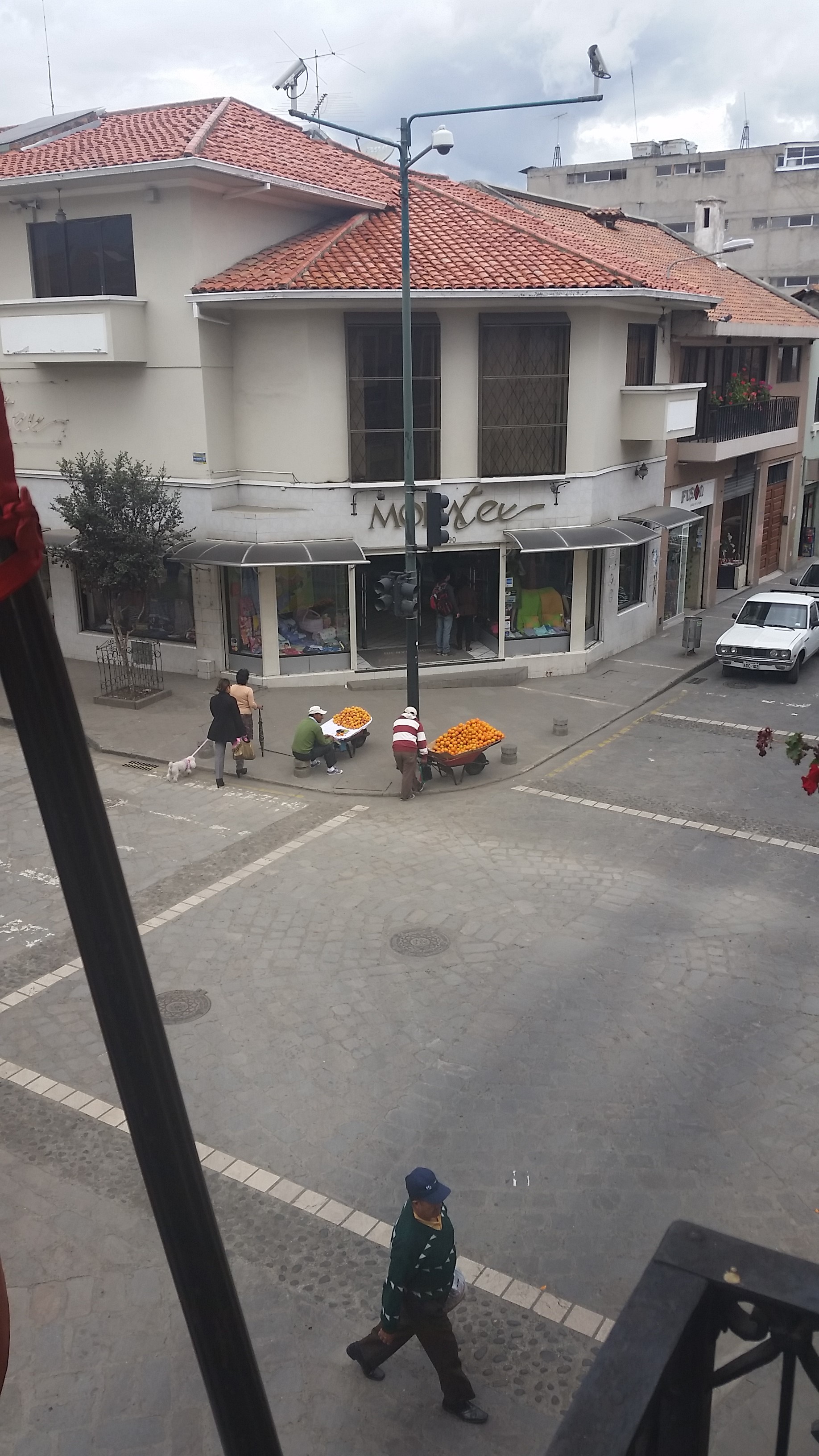
Then as businesses open, doors open, the streets come to life. (Not too early in the morning mind you! It drives me crazy how laid back it is but I think we are starting to get used to it.)
Open for Business.The Streets are Coming to Life.
Tod captured this shot of local school girls as they were passing our hotel.
Local School Girls.
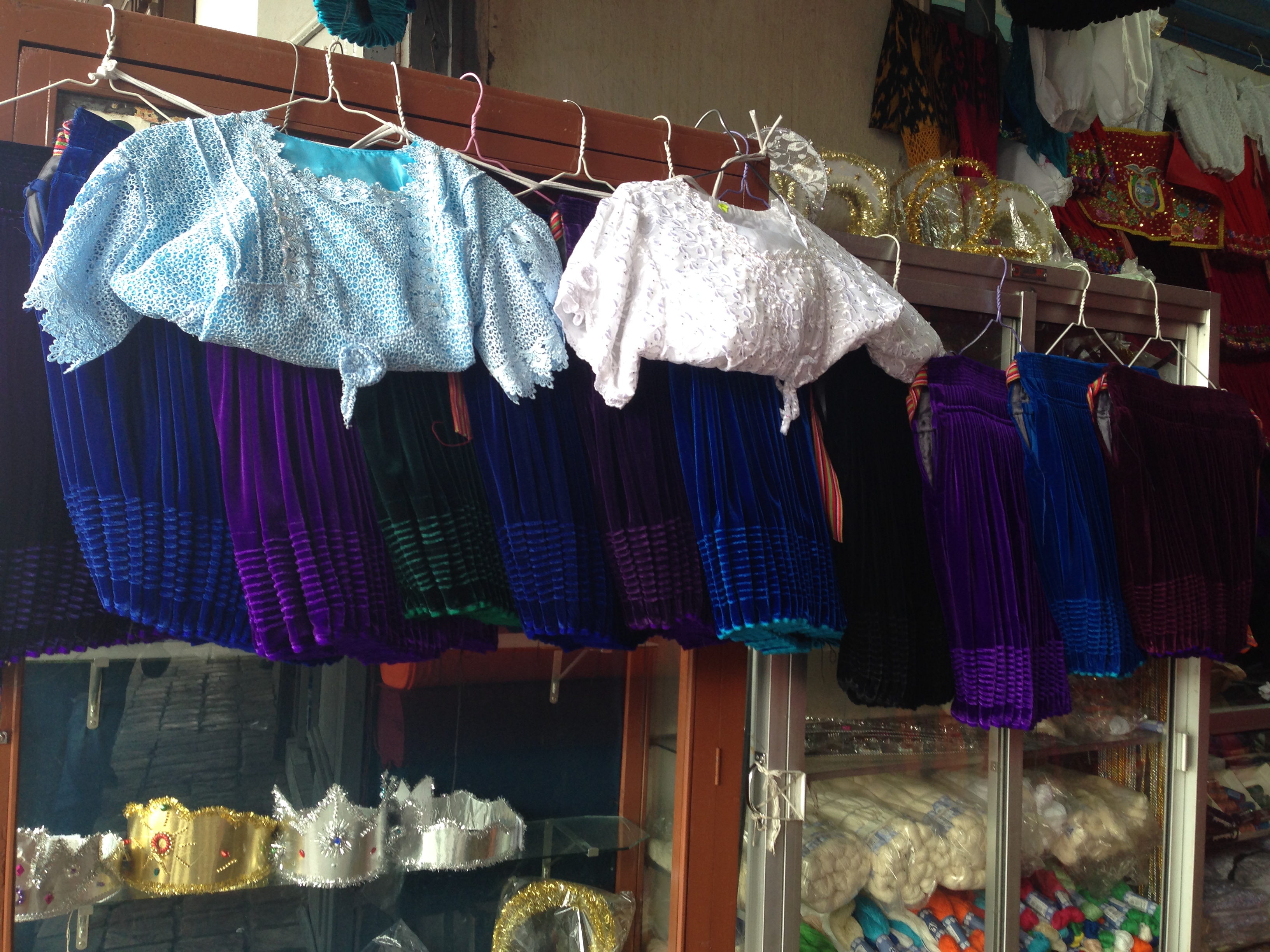
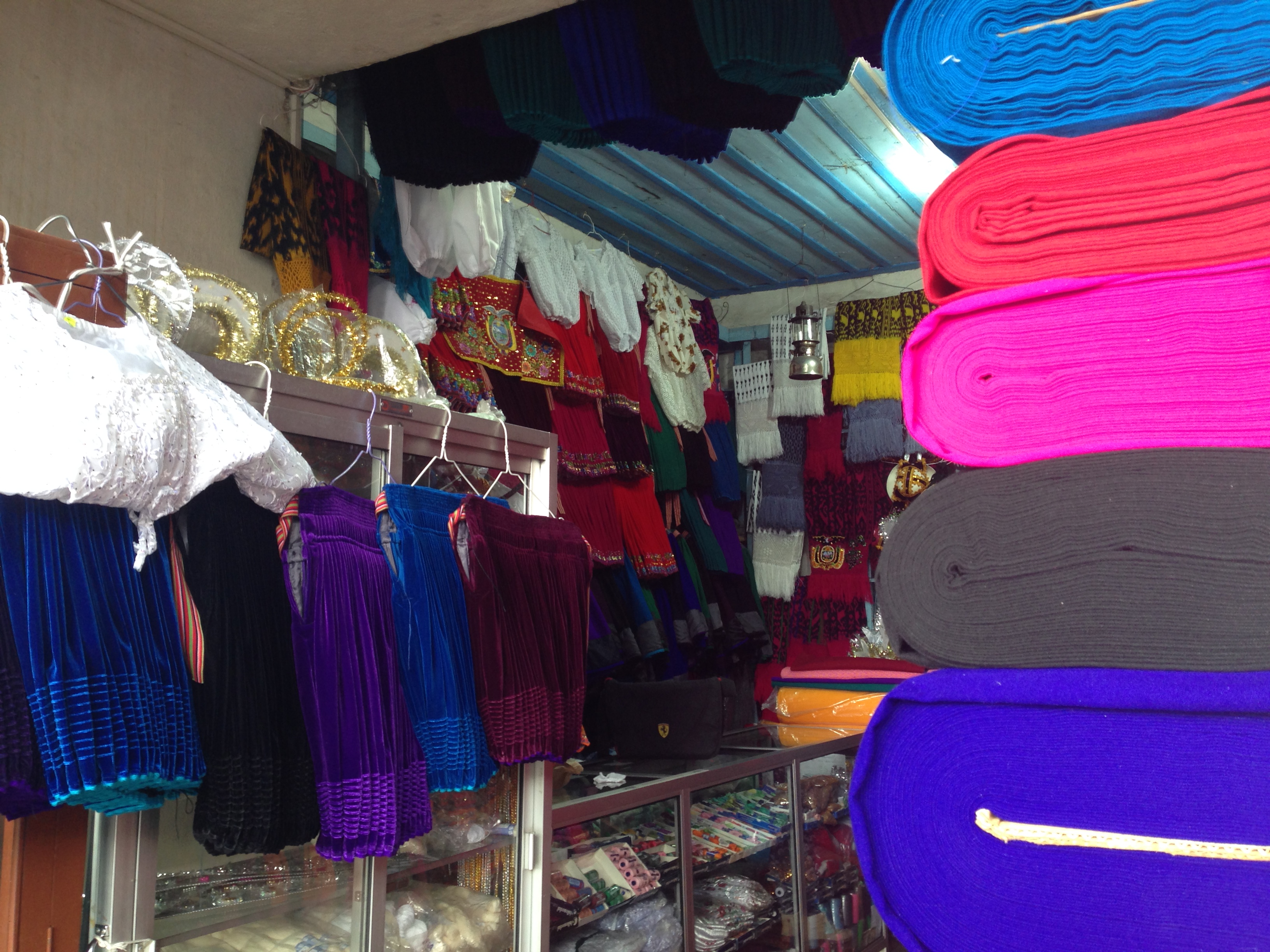
These are the native costumes of Cuenca. Not many of the younger generation dresses in these colorful velvety type material skirts but many of the older generation still do.
Native Dress.Native Dress and Material.
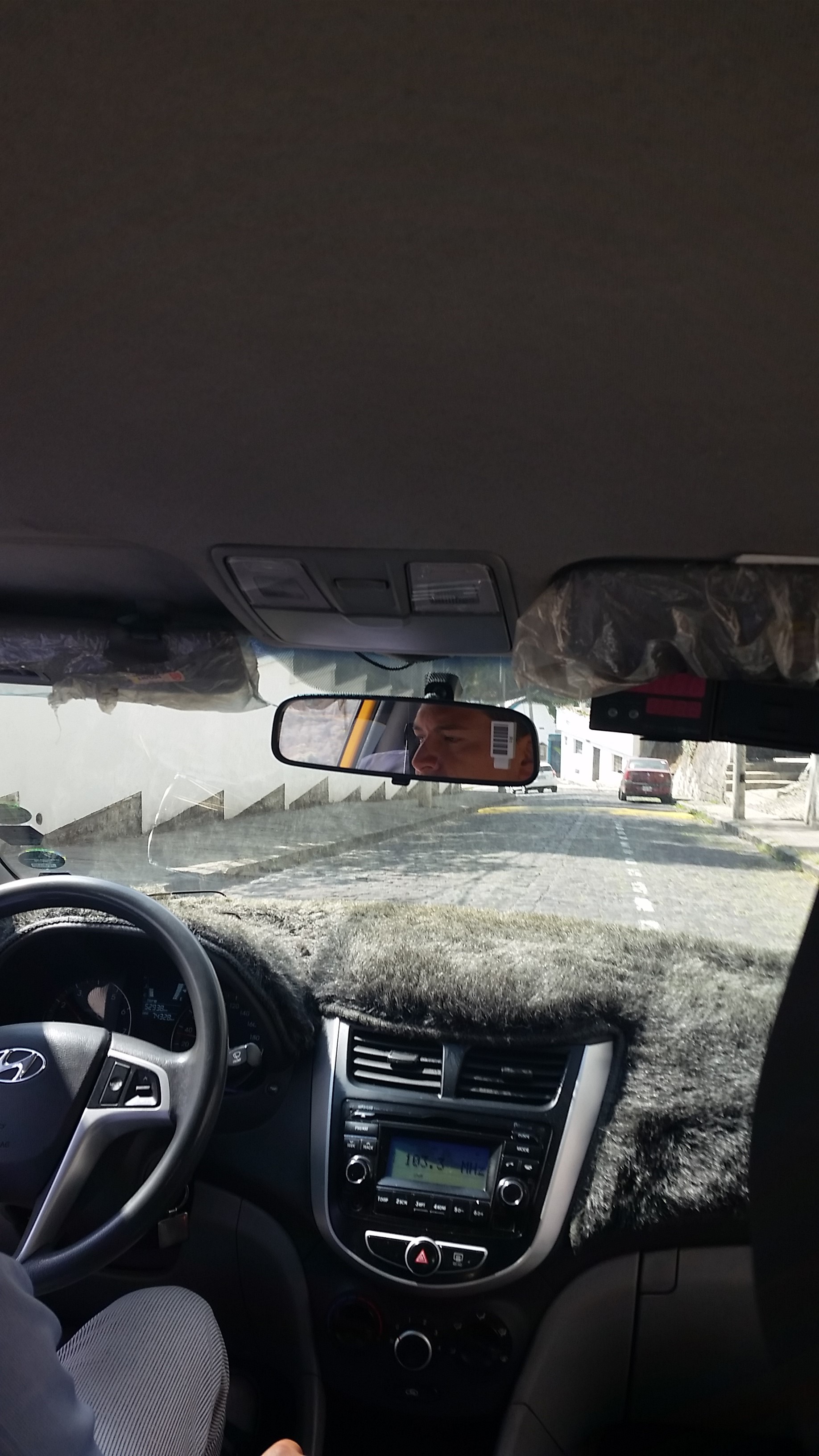
After our final walking tour and coffee in Cuenca we traveled back to Quito via taxi, plane and yet another taxi. Out taxi experience has been on some interesting old cobblestone streets that much to my dismay were “Doble Via” double/two way. These roads are much too narrow for two way traffic but somehow Ecuadorians in every city make it work!
Lots of Fur Going on.A Long Way Down. Better Not to Look.These Streets Were NOT Made For Cars.
These old streets must have been made when the city was young and cars were futuristic.
Greetings friends and family. This post is out of sequence simply because I did not have enough time to catch up on our adventure in Cuenca before we head out to our next Ecuadorian destination. I have so much more to tell you about Cuenca but it will have to wait until we return from Hacienda Zuleta.
Hacienda Zuleta is a farm / Condor retreat near Otavalo. Tod hired a driver to pick us up at 9:00 this morning for the 2 – 3 hour trip to the Condor retreat. This trip is an early birthday present for me as I wanted to have a picnic lunch with the Lamas and Condors in this legendary setting. Our friend Bonnie told us about how wonderful this place is so we looked it up on-line and found a small window of time where we had no other “outings” planned and booked the trip.
(Don’t worry, we are not missing the Packer game – Tod is taping it so we will watch it in place of Monday night football. Please don’t text or email either of us about the game highlights or score.)
Off to finish getting ready as our driver will be here within the hour. What an awesome birthday this will be! (How do you think Tod will ever top this birthday gift? He has a year to plan:)
Until our next post, be well and remember, life is too short to drink bad coffee!
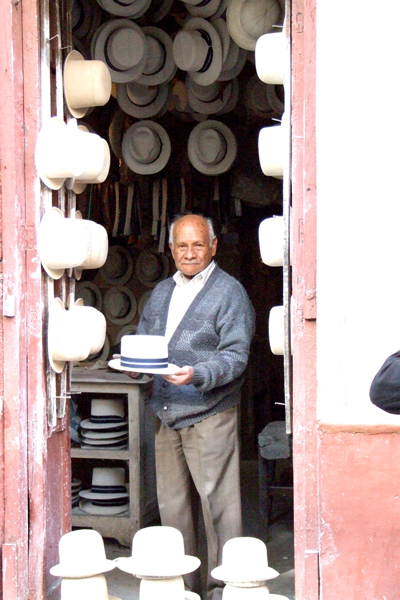
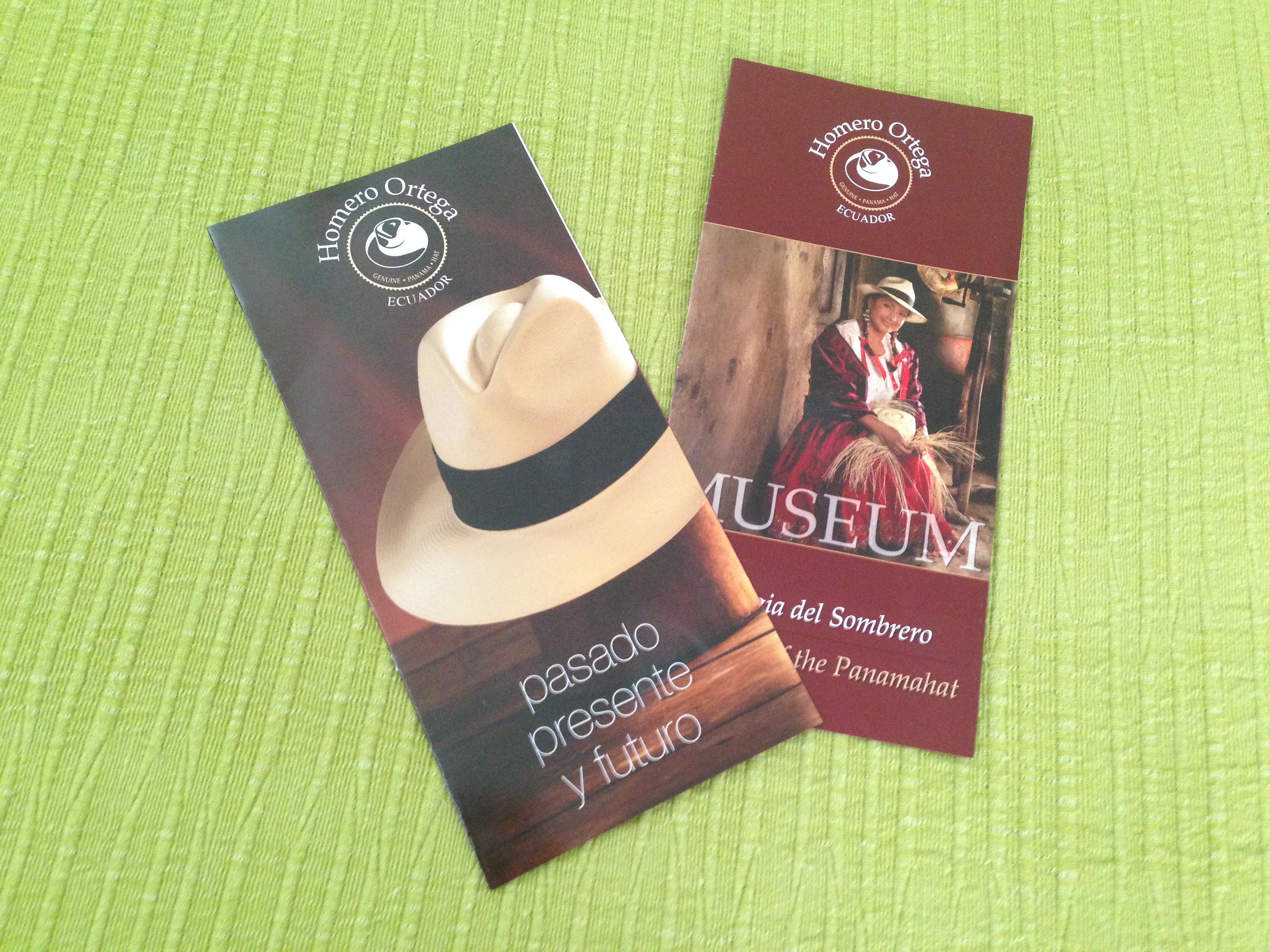
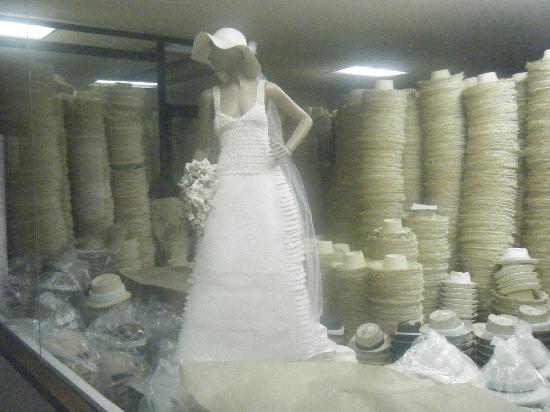
Tod wanted to visit Cuenca because of the historic architecture and I wanted to see the Panama Hat Factory. Ecuador’s most famous export is called a “Panama” hat. Exporting of the Panama hat began as early as the 1800’s. In the 1800’s Panama was part of what is now Colombia. Ecuador had very little traffic, tourist or otherwise, Panama on the other hand was a very busy corner of South America. Ecuador’s strong, lightweight straw hats were in demand so the exporting to Panama began. When asked where they got their hats people would reply “Panama” however would neglect to mention, “Oh, yes, it was made in Ecuador”. The hats were soon known as the “Panama” hat and now, a few centuries later, are still called Panama hats. And although we toured 2 factories and peeked our noses into the shop of Alberto Pollo – Casa del Sombrero – whose family has been in the hat business since 1900, we took no photos. The few photos we have are from the internet or of our packaged purchases. Touring the factories and trying on the sombreros was a highlight of this trip and I still cannot believe neither of us thought of taking pictures.
Alberto Pulla – Casa del Sombrero – Hat House.Panama Hat Purchases!Factory and Museum Brochures.Panama Wedding Hat.
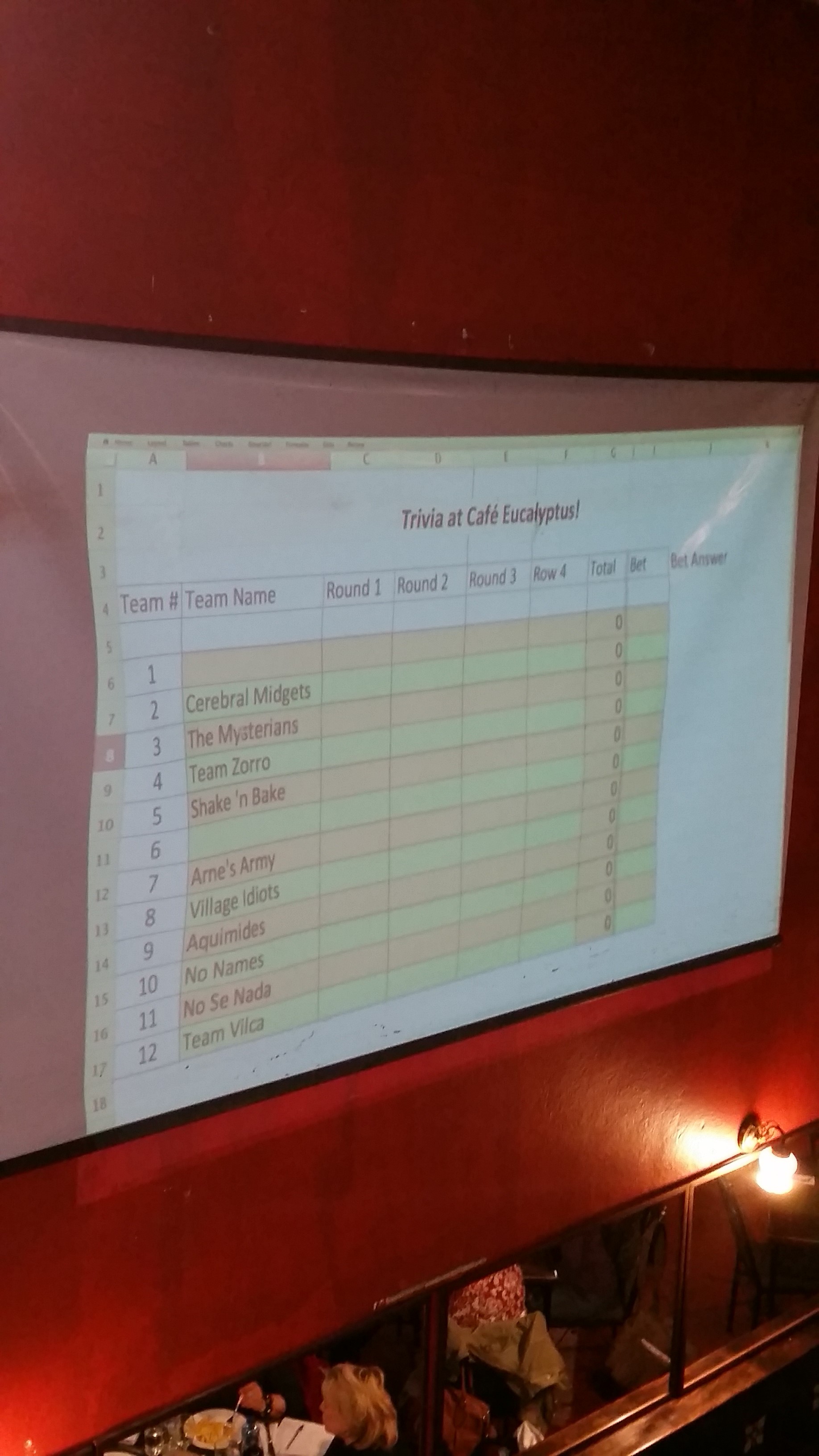
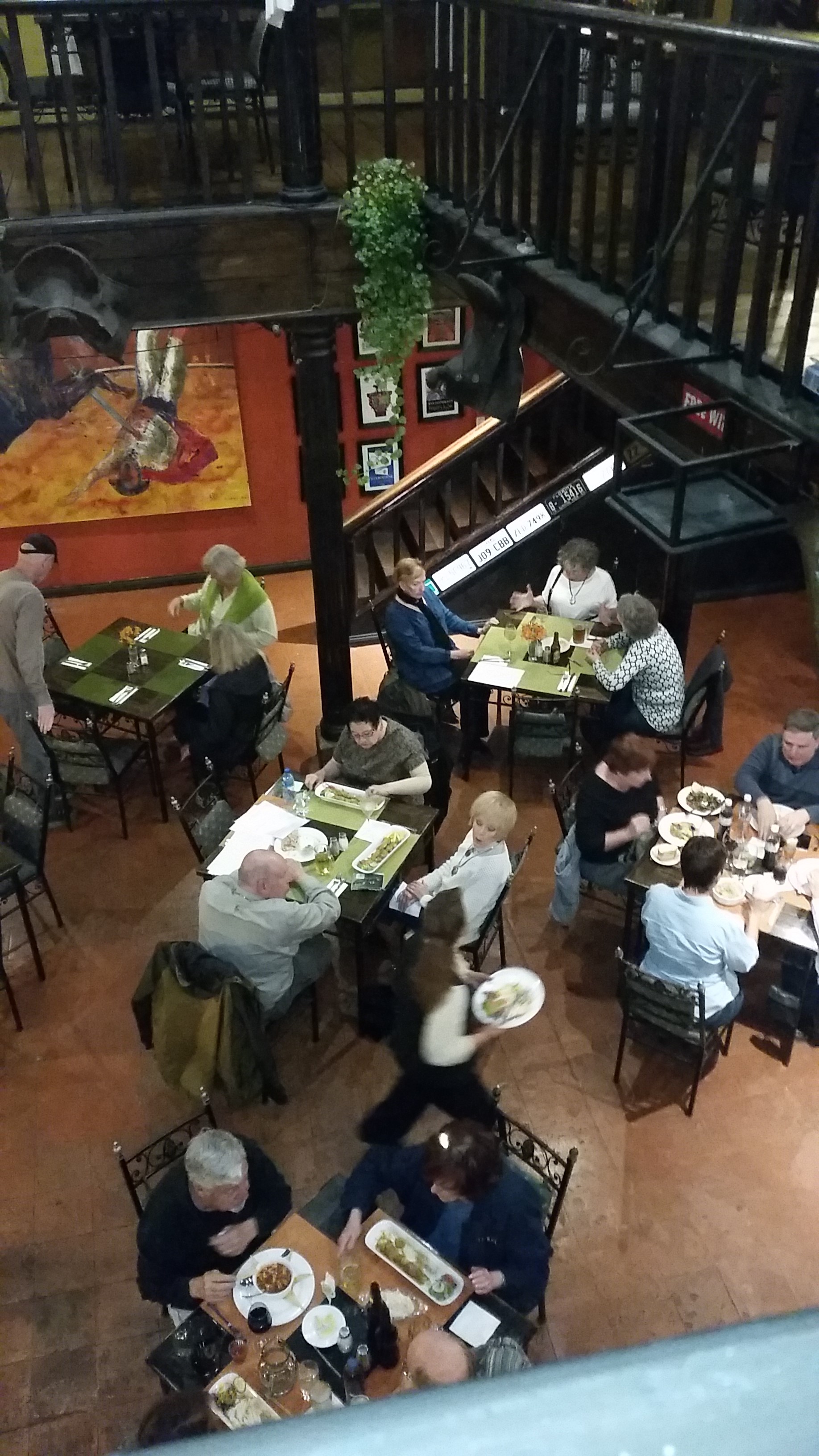
Along with the hotels, architecture and beautiful cathedrals, Cuenca is also known for its tourist attraction / night activities. Cuenca seems to have a strong population of expats and there are gathering areas such as specific coffee shops and restaurants which cater to the English speakers. We found Café Eucalyptus which is owned by an expat originally from the US. We really went there because they advertised several vegetarian options. Little did we know we had walked into Gringo trivia night at Café Eucalyptus. We were whisked to an upstairs table as the downstairs was reserved for the trivia teams. What a hoot we stumbled across! The tables filled up one by one with mostly retired expats, everyone seemed to know each other. Apparently Café Eucalyptus hosts trivia one night a week, salsa dance lessons one night, live music on the weekends and so on. Just a place for dinner and socializing in English. The website promises that on cooler nights they offer a blazing fireplace, plenty of sofa space and free marshmallows. What a concept! Real log fireplaces upstairs and down with free marshmallows.
Trivia Score Board! Returning Teams.Trivia Teams.Downstairs at the Eucalyptus. Not a Trivia Night.
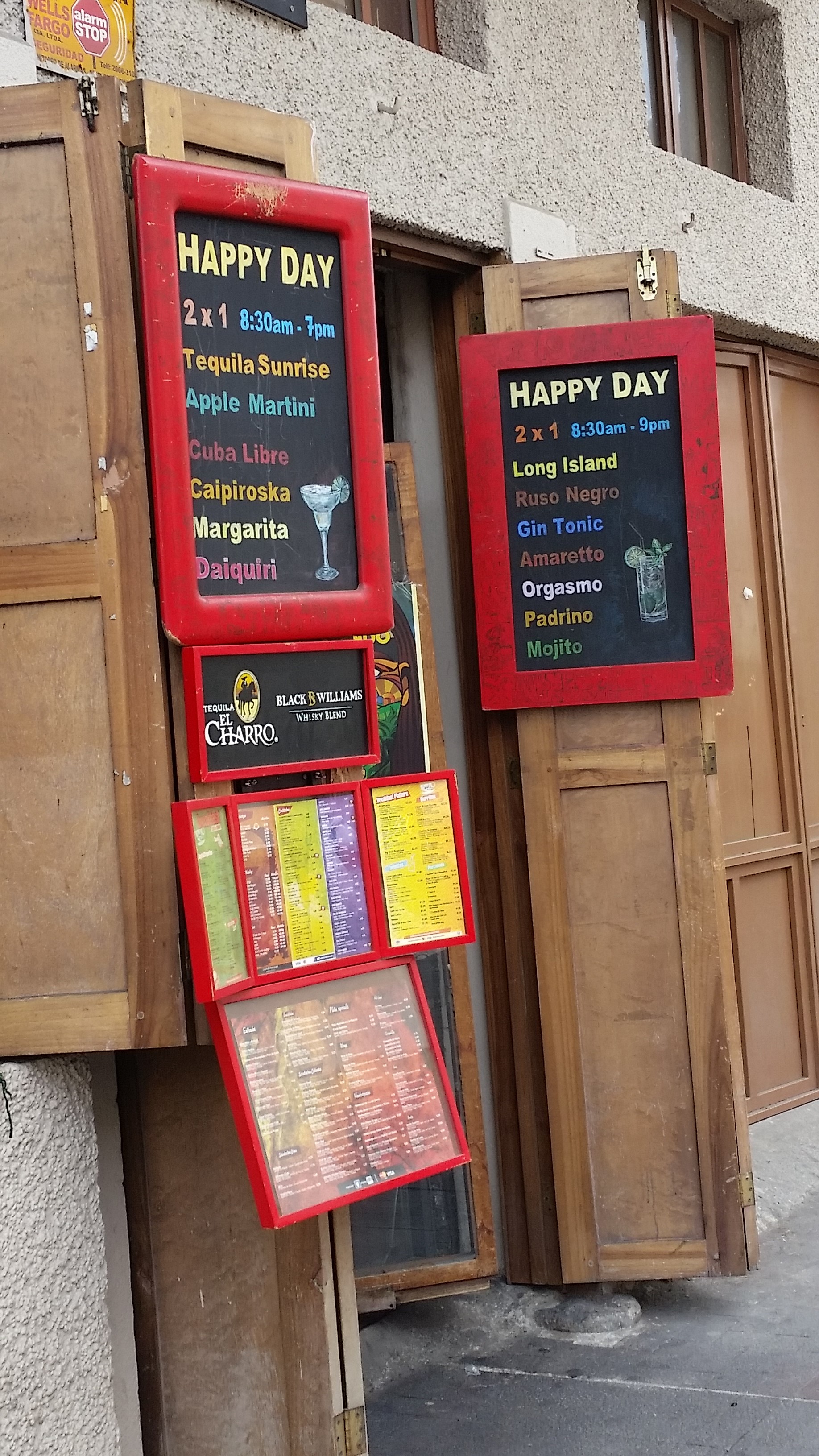
It did not surprise me at one point to see several Gringos standing around this place that advertised “Happy Day” not “Happy Hour” and they specialize in subs and shots.
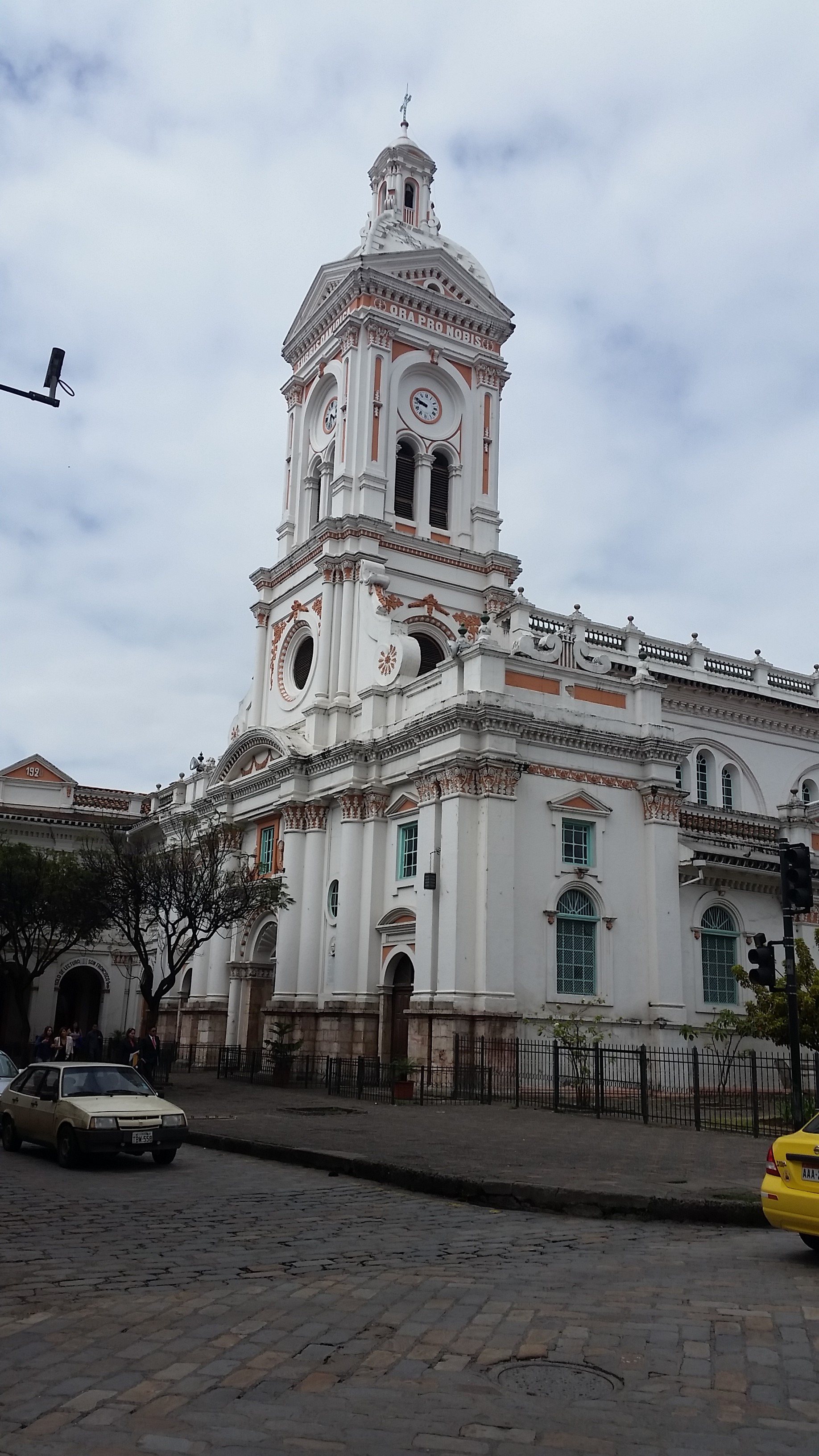
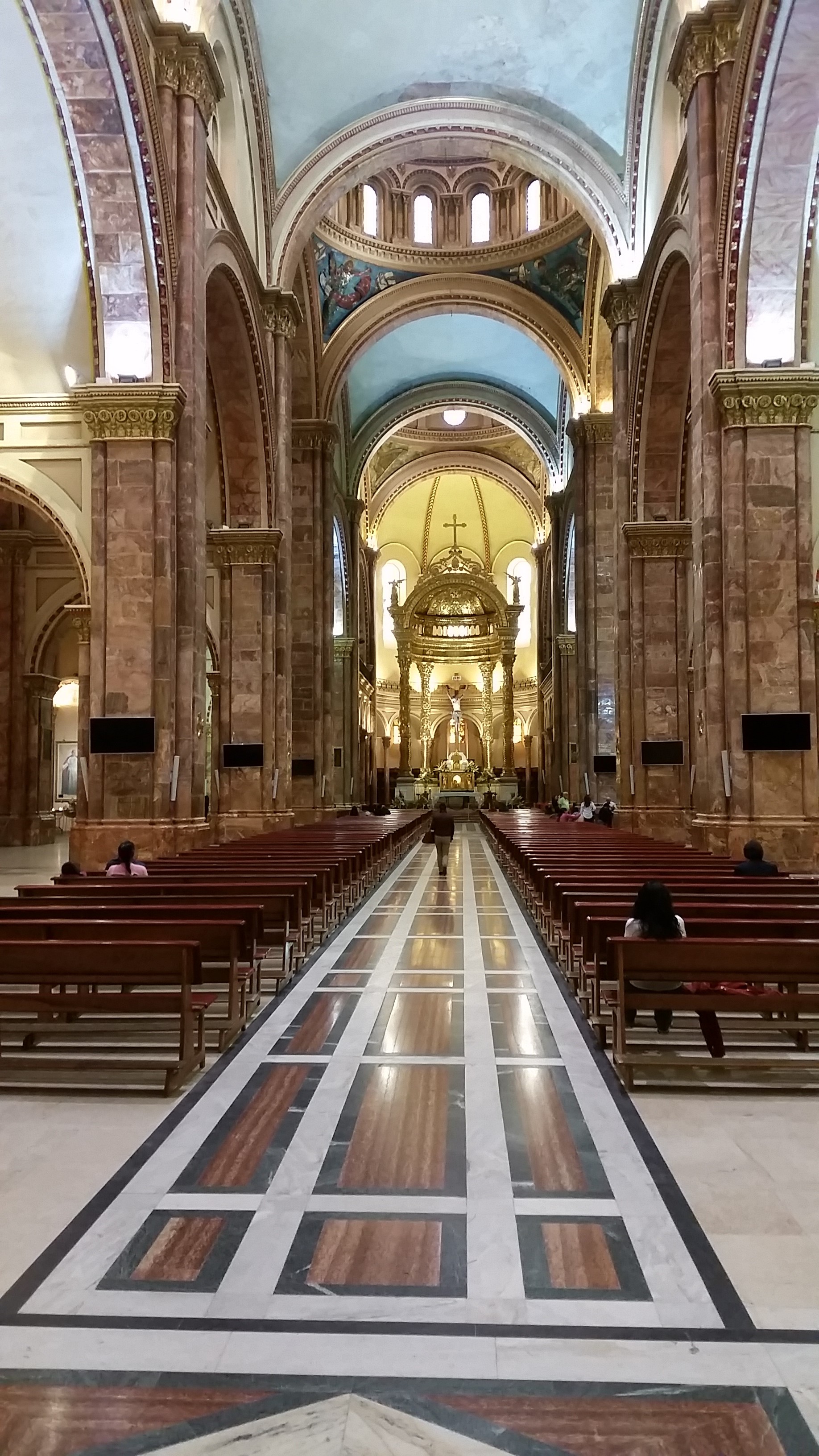
Cuenca is known for its historical buildings and stunning architecture. Nothing portrays this more than the 52 cathedrals of Cuenca. (One for every Sunday of the year.) The cathedrals are everywhere you look in the historic section of Cuenca, you cannot walk a block without having a church or church steeple in view. I wish we would have had the time to tour each one but we did tour as many as we could. Most of the churches have 3 services a day with an open door policy.
Two Churches.Twin Tower White Church.Single Tower.
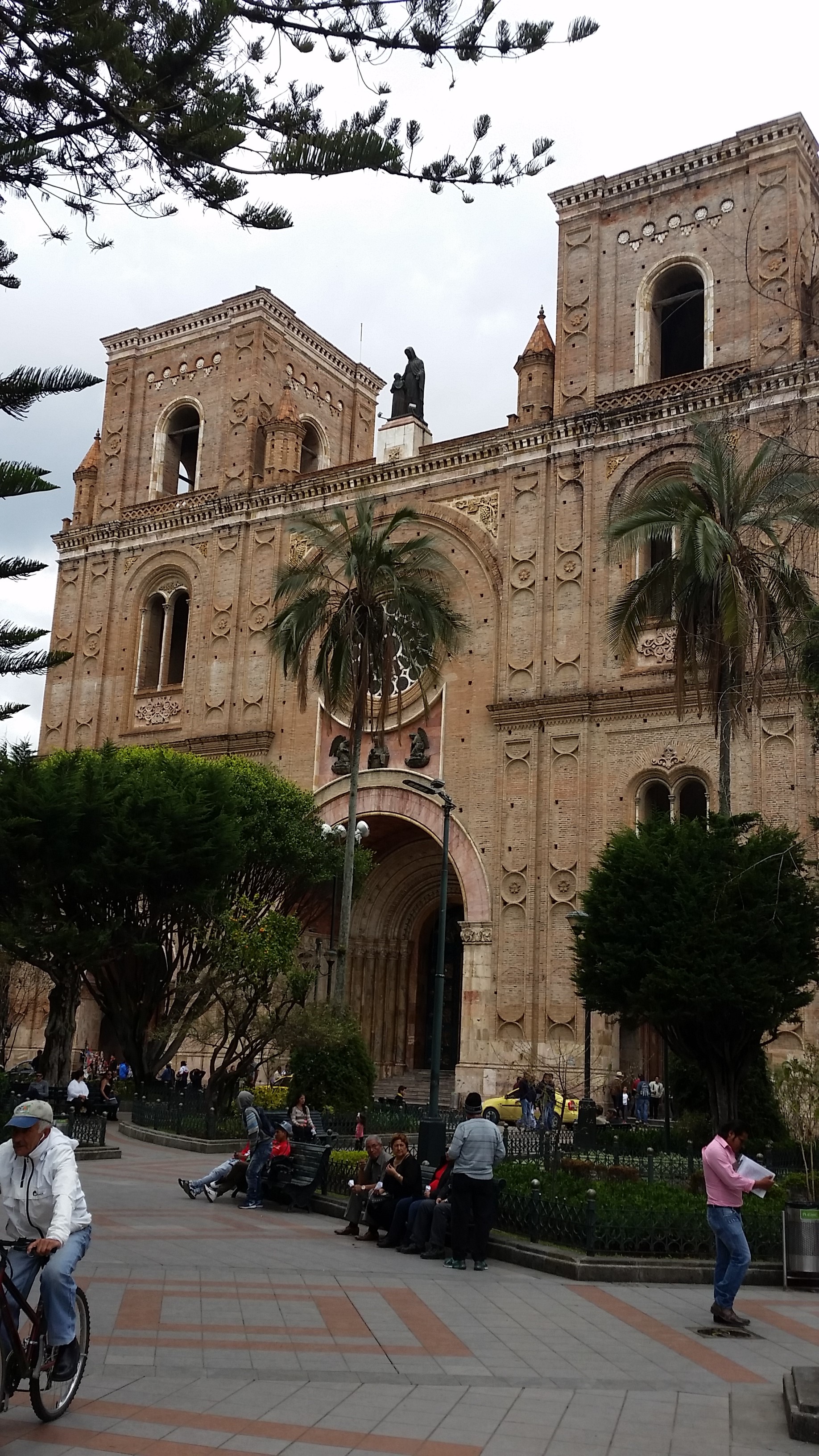
In the town’s main square there are two cathedrals, the “old” church which began construction in 1557 (the year Cuenca was founded) is no longer used for services and the “new” cathedral which began construction in 1885, services are still held in the new cathedral each day. The towers of the old cathedral were used by the Ecuadoran expedition team that was measuring the arcs/radius of the earth in 1736. These early measurements of the Earth’s curvature on the Equator enabled the first accurate determination of the size of the Earth.
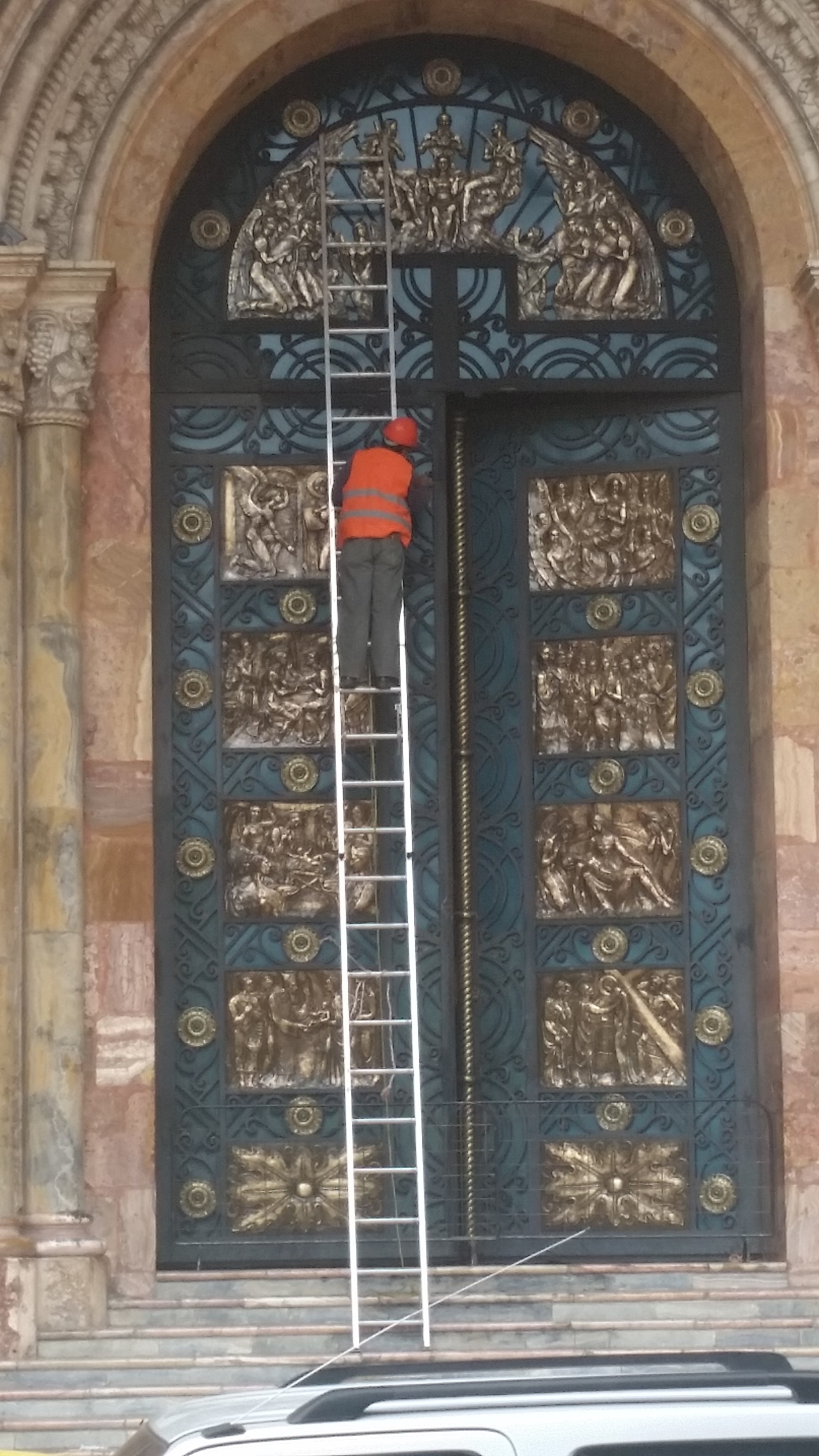
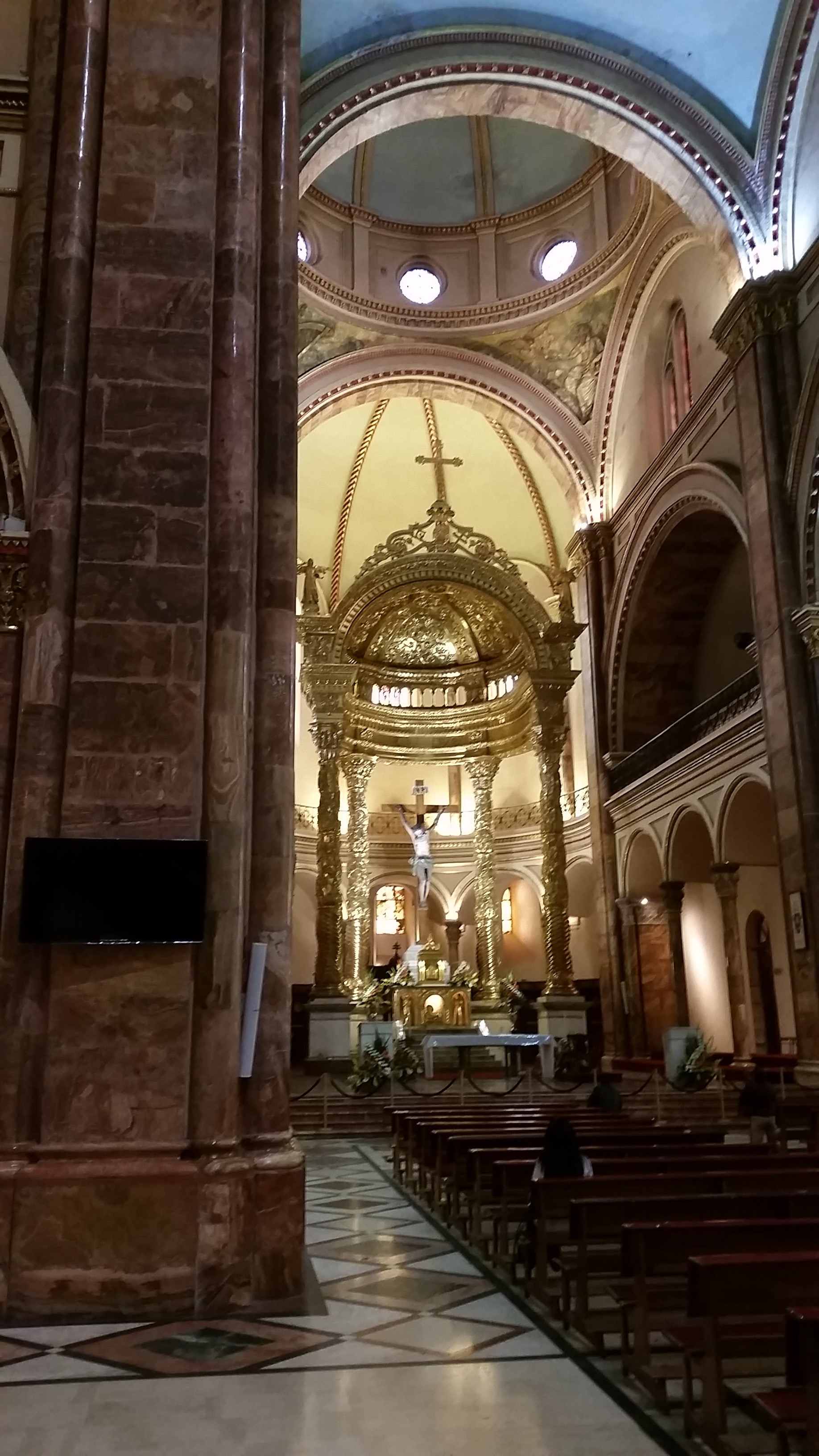
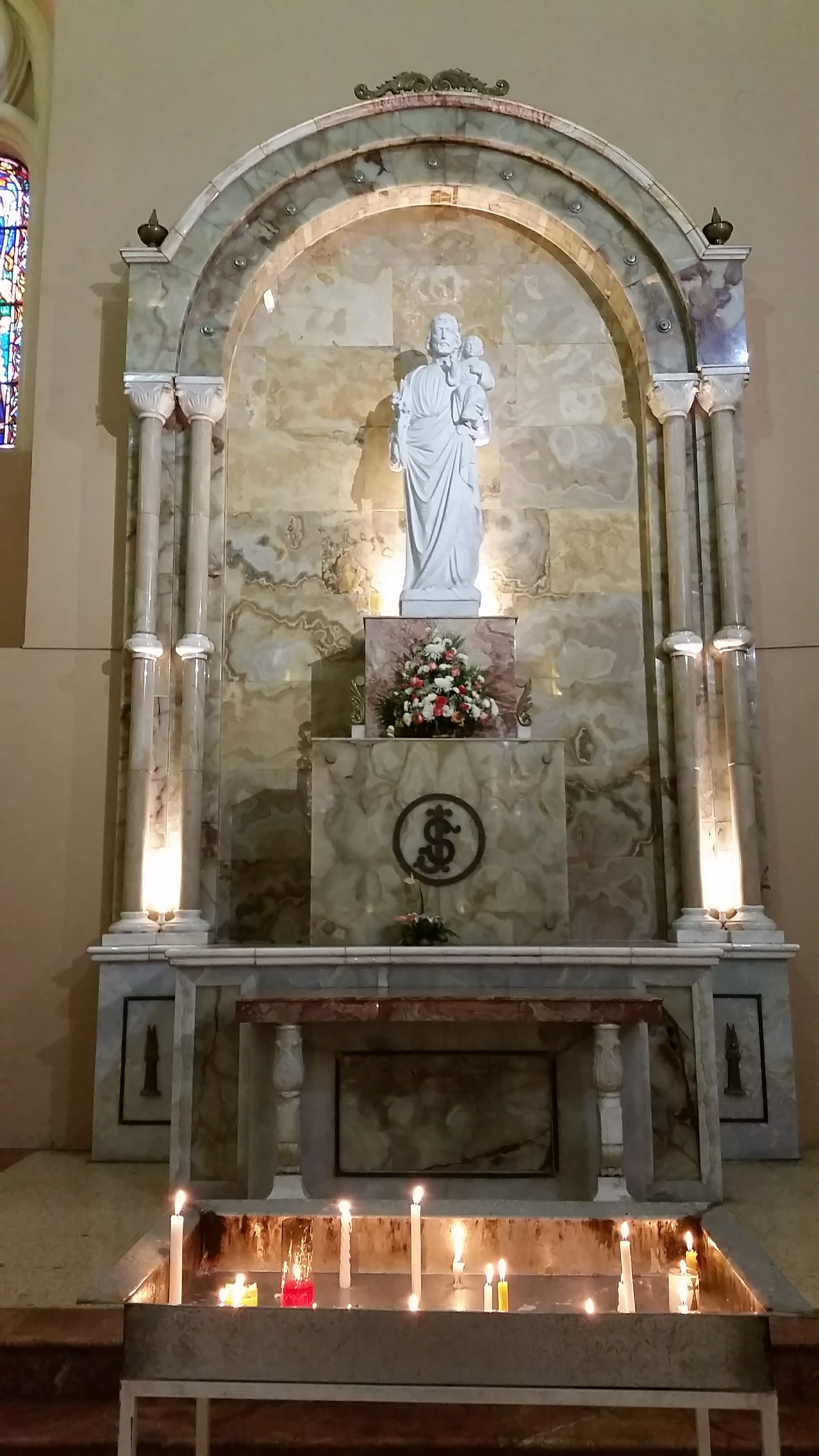
New Church Town Center.Door Repair at the New Church.Gold Alter.Beautiful.The Beauty Throughout.
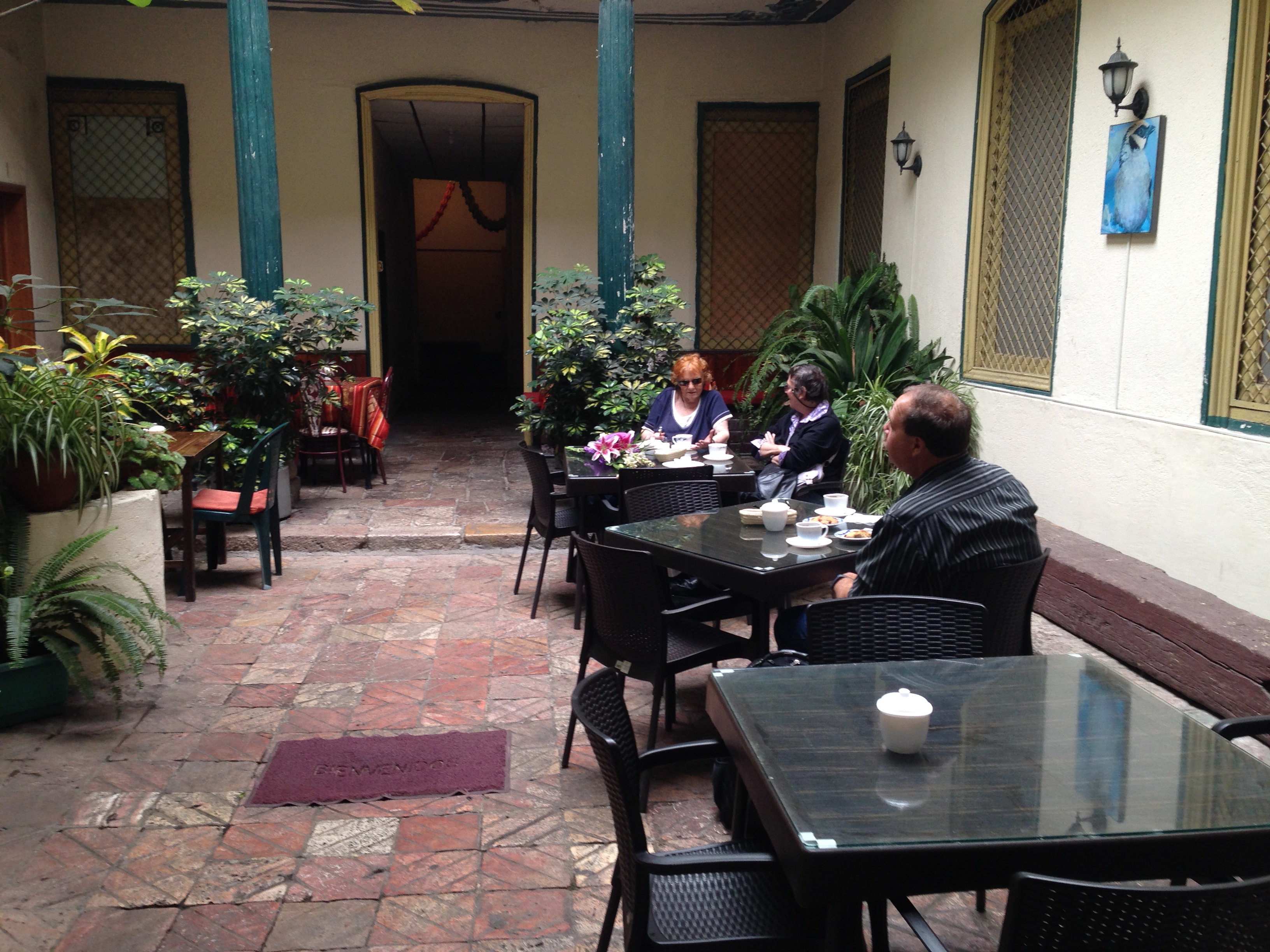
During our touring of the city cathedrals we discovered several coffee shops. The first one we entered smelled heavenly on the outside. The hostess was grinding beans so we had to go inside. We ordered coffee and Tod tasted his and immediately added sugar. (Something he never does.) I tasted mine and made an executive decision. “This coffee is terribly weak and not very fresh, lets go.” Tod looked at me like I was crazy so I reminded him, “Darling, life is too short to drink bad coffee!”
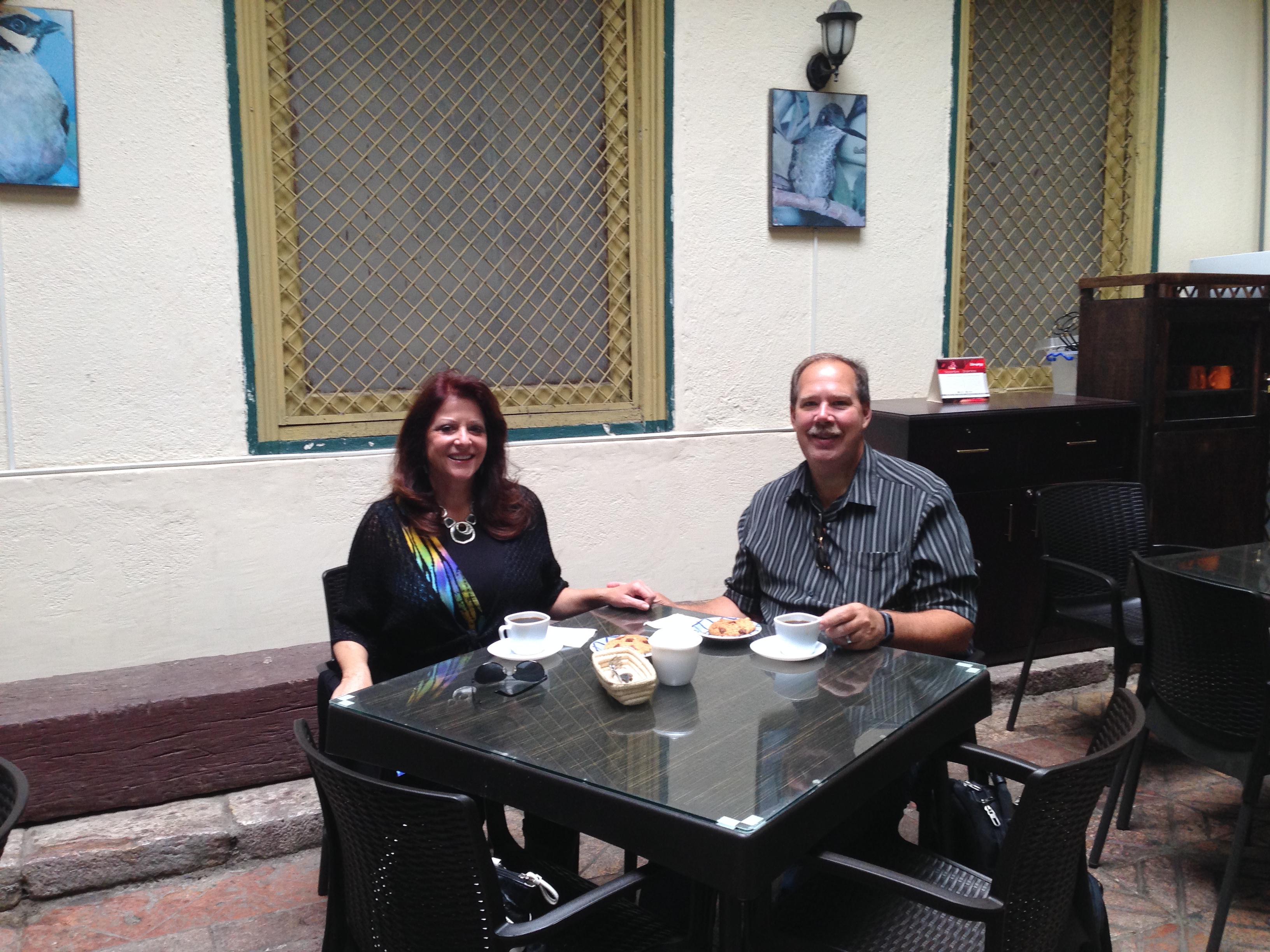
About 3 doors down we found a coffee shop where they made each cup fresh and asked if we wanted it strong! We loved it and it became our favorite coffee shop in Cuenca.
Favorite Coffee Shop in Cuenca.Life is Too Short to Drink Bad Coffee!
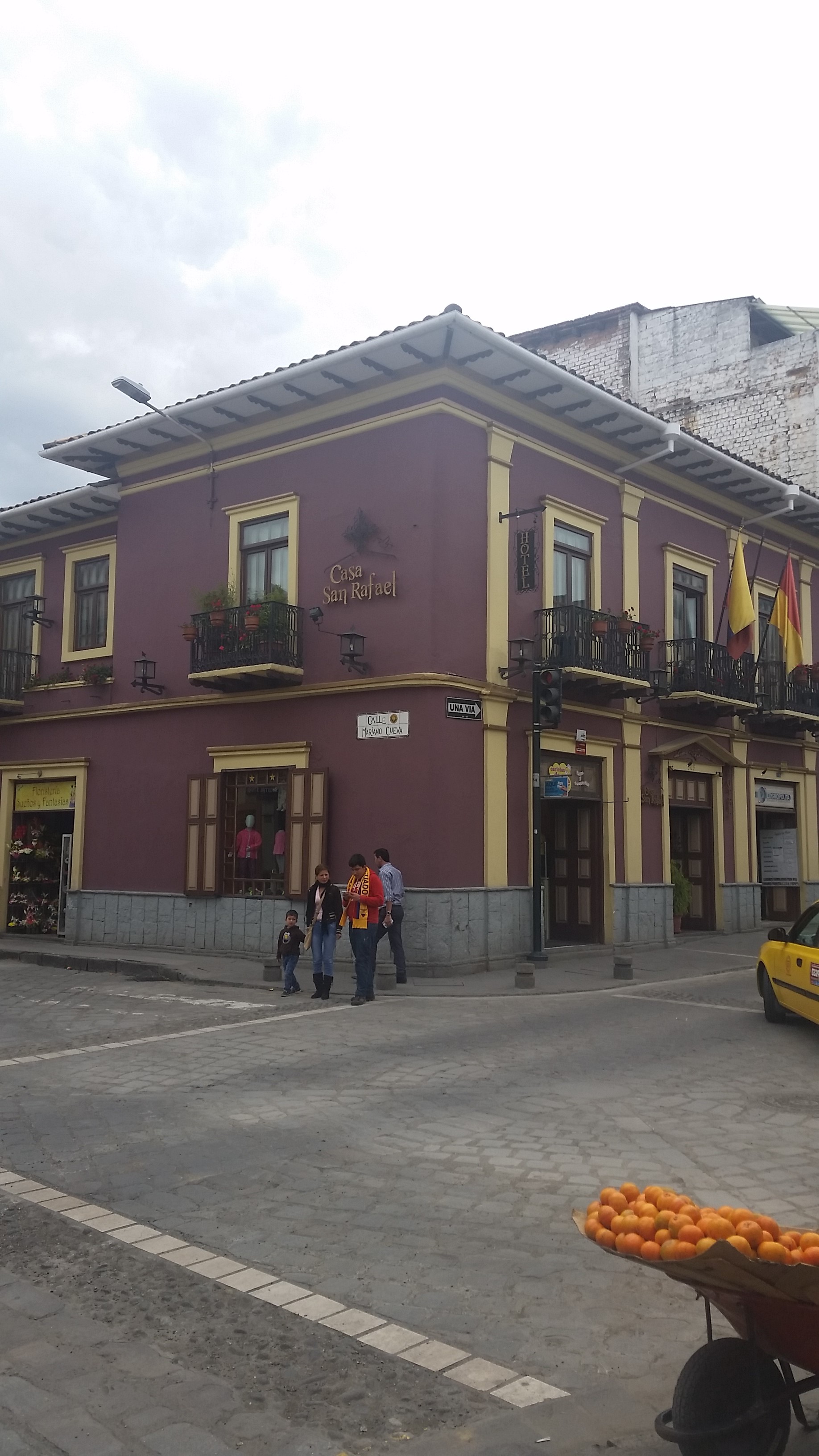
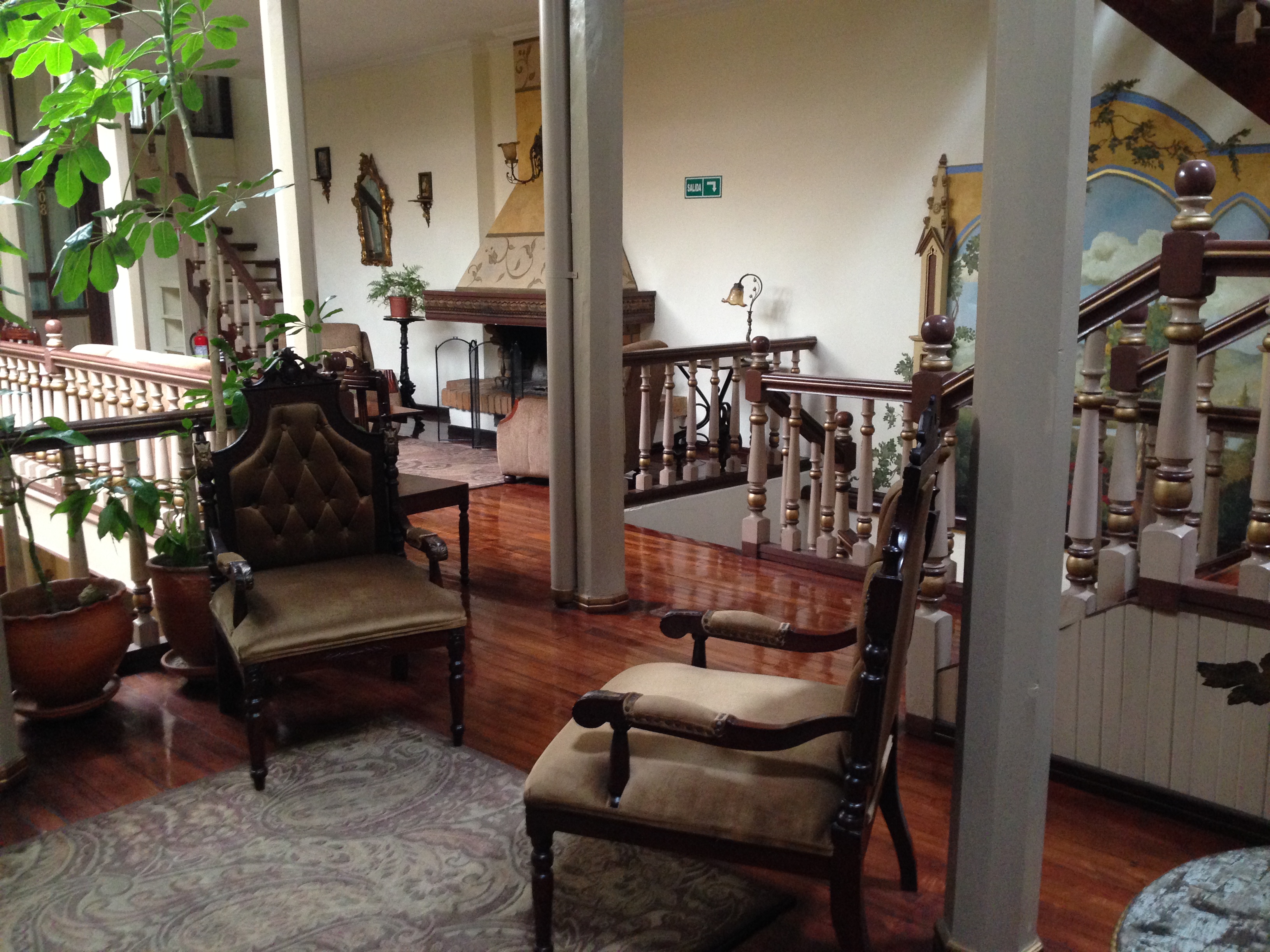
Our travels to Cuenca involved a 40 minute taxi ride to the Quito airport, a long wait at the airport and a 35 minute flight to Cuenca. The Cuenca airport is small, (3 gates) but very nice and extremely efficient. Our hotel, Casa San Rafael, had an absolutely charming colonial style ambiance. The hotel has 13 rooms, each with a private bath, this is something you have to remember to ask when booking a hotel as not all do. The hotel was once a private home and the hotel was the main living quarters (or the place where the important people lived as our hotel receptionist stated). The servant’s quarters was sectioned off, sold and now is a different business. I am not sure how old the building is, but, the hotel other than required additions such as the front desk, remains as it was in the original house.
Hotel Casa San Rafael.Upstairs Lobby Area.Hotel Breakfast Nook. Adorable Setting.
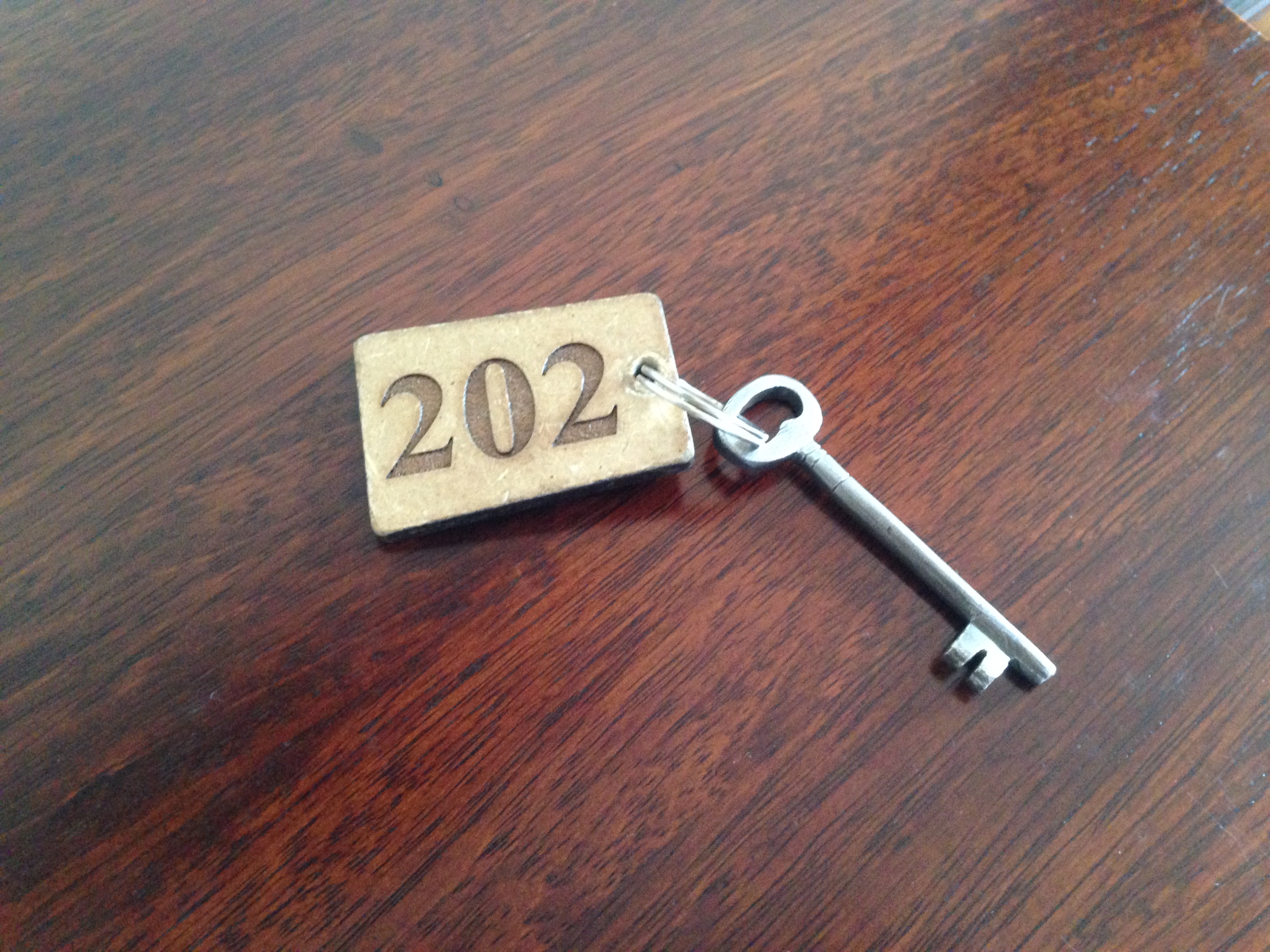
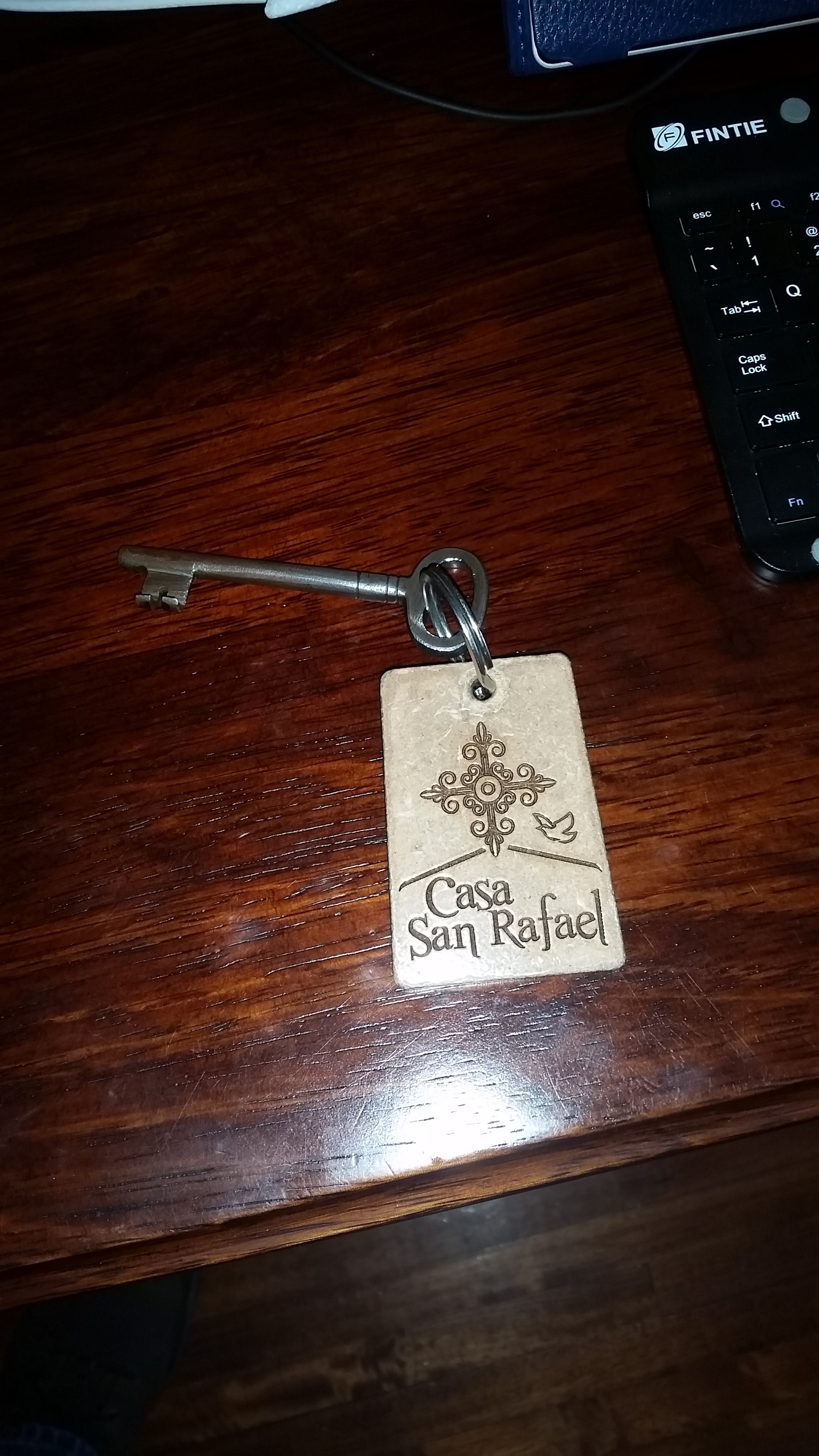
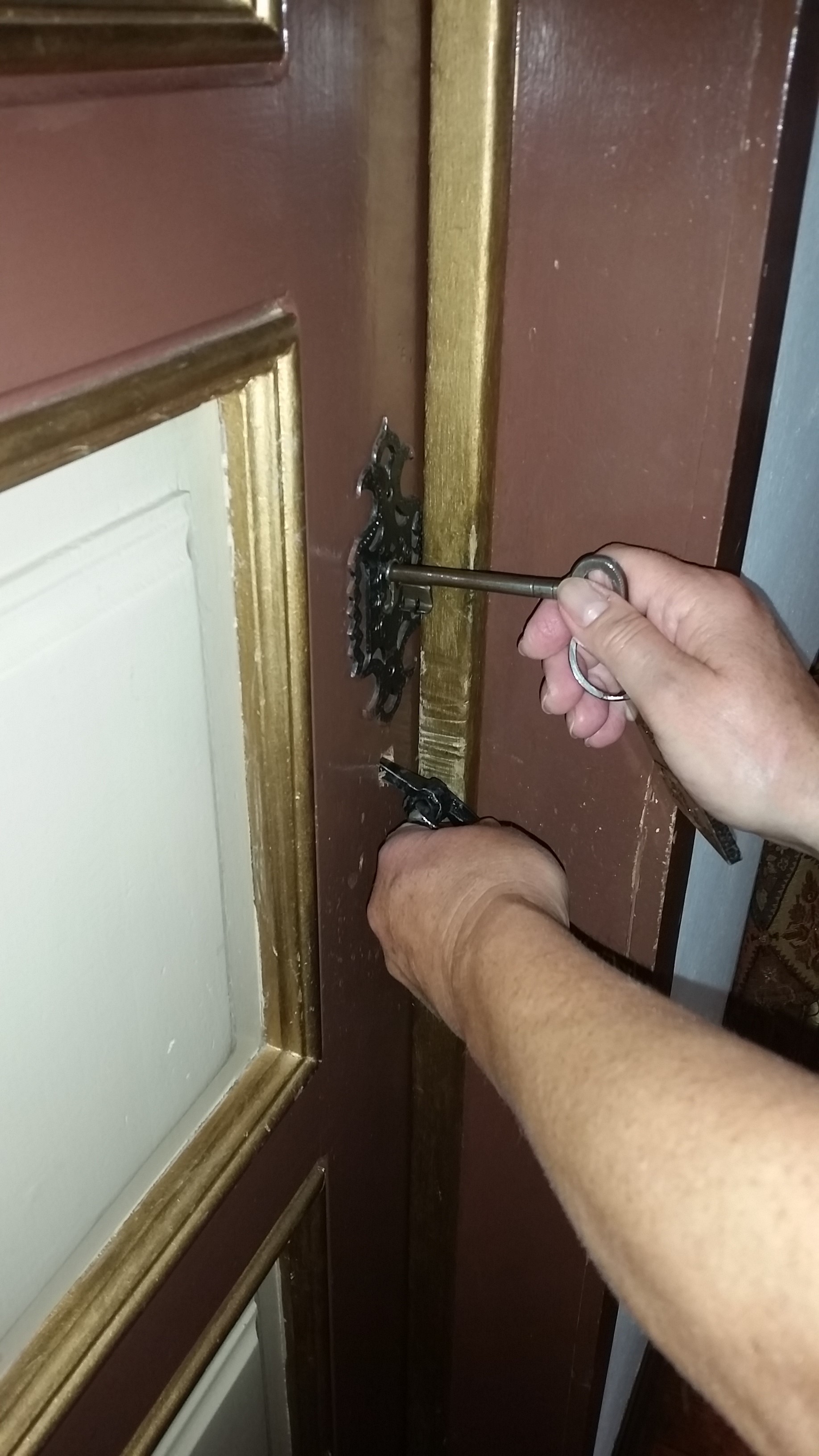
I love the way Ecuadorian hotels include the name of the hotel and the room number on your keys. I guess security is different in Ecuador. We would have liked to pocket the key for a souvenir just because it is so rare to see a skeleton key actually in use.
Guess What our Room Number Was?Room Number on One Side, Hotel Name on the Other.Skeleton Key – Not as Easy as it Looks.
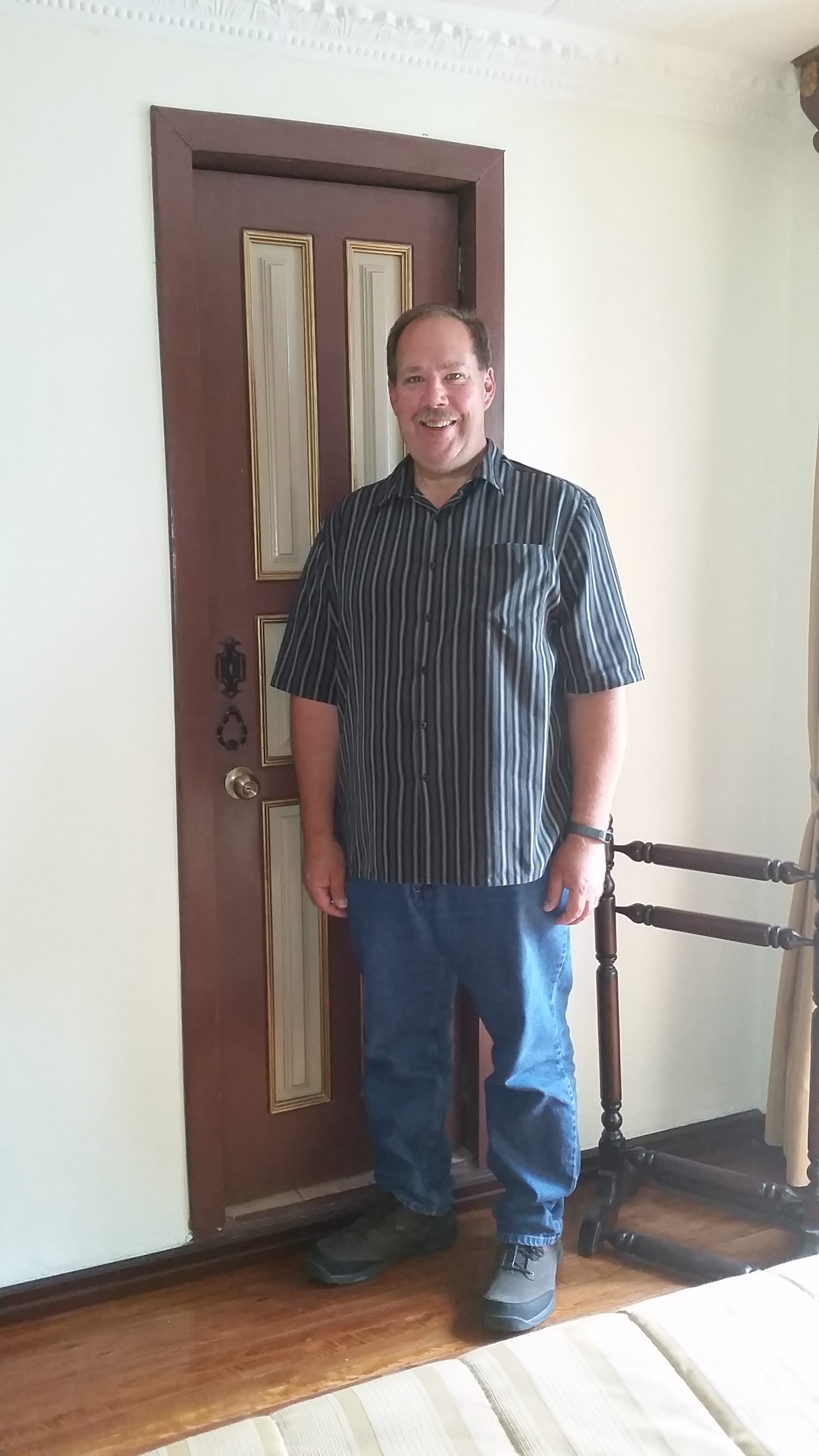
I am sure the bathrooms were added on, maybe they were closets in the original home. I tried to show the perspective of the narrow door but it was hard to capture in a photo. The inside was nice but small, anyone over 5’4” would need to put their legs inside the shower stall to be seated.
Tiny Little Doorway.It’s Smaller Than it Looks.
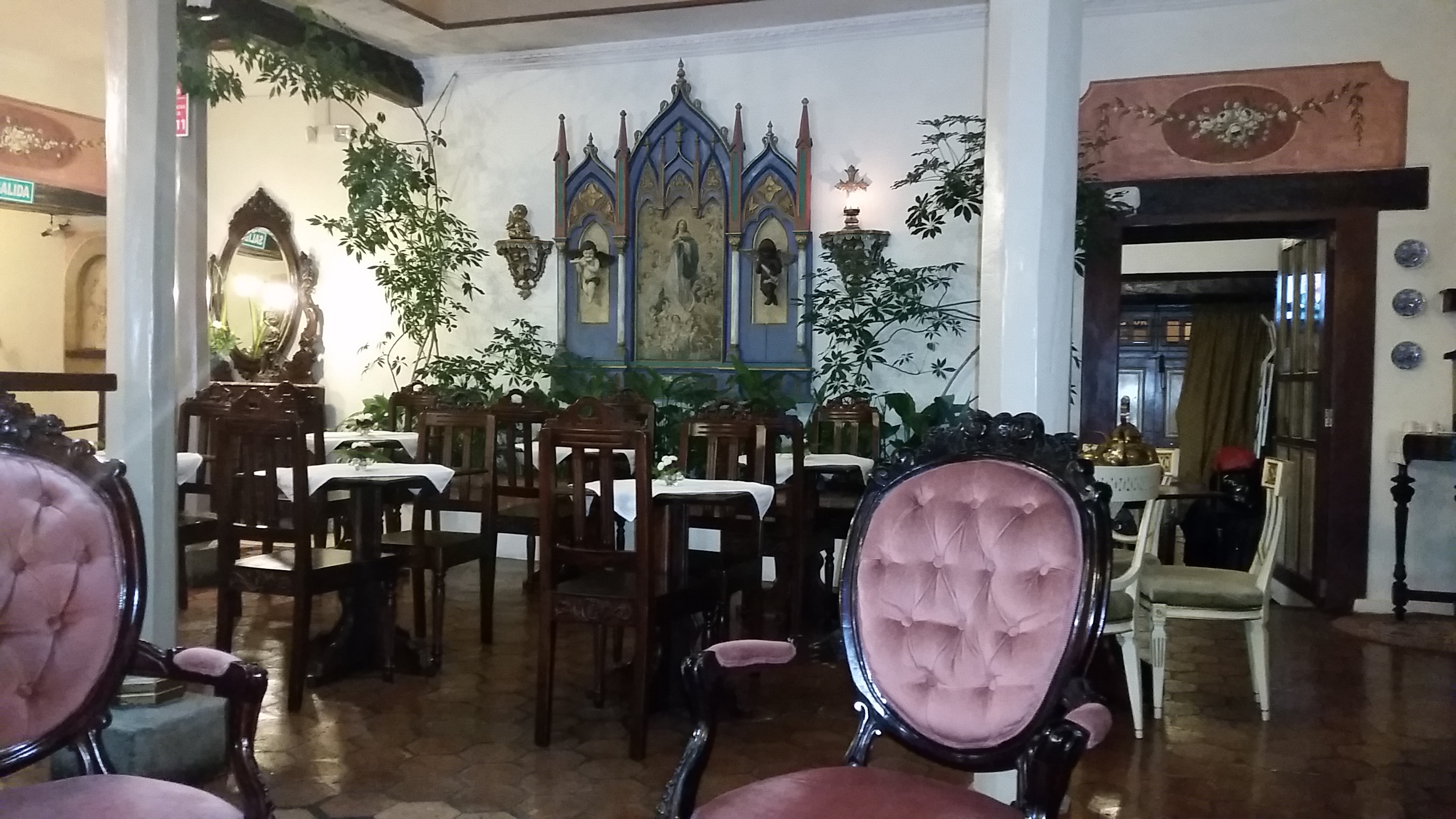
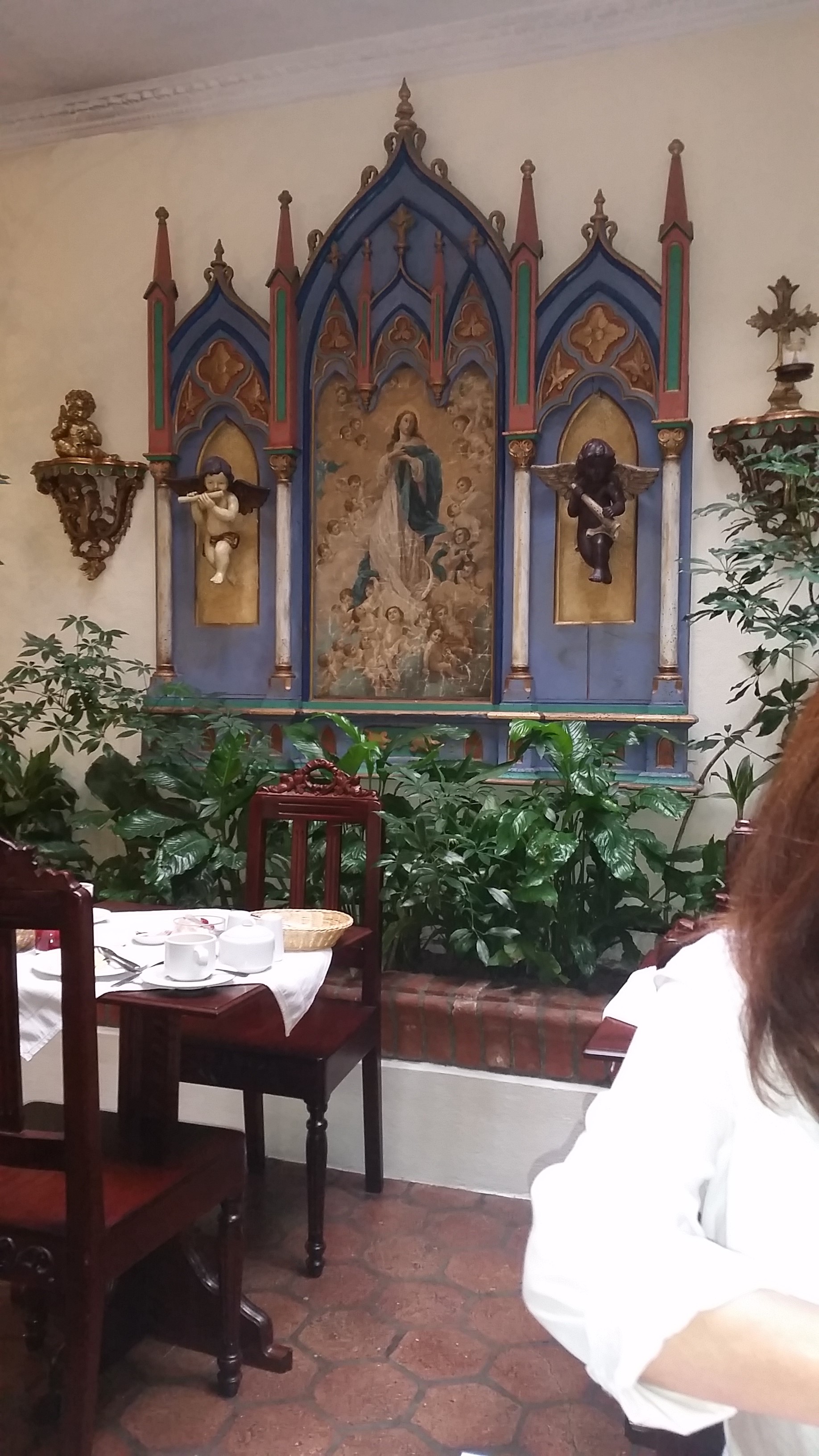
The little breakfast nook area was so cute. Every time we walked into the hotel Tod would say, “Shelly would just love this place.”
Breakfast China.All Part of the Charm.
At this point we are looking forward to exploring this city!
Today we spent doing laundry and repacking our bags. Tomorrow morning we fly to Cuenca. Cuenca is the capital of the Azuay Province. It is located in the highlands of south central Ecuador at about 2,500 meters (8202 feet) above sea level, with an urban population of approximately 400,000. The city center is listed as a UNESCO World Heritage Trust site due to its many historical buildings. We are scheduled to stay for 3 nights.
For our “down day” we only hiked 5 miles. We decided to skip the bus and walk to the Lizarran, my favorite Ecuadorian Spanish Tapas Restaurant. We have put on a few miles so far this trip. Tod has been keeping track of the steps and converting to miles to let me know how we are doing. All of our trekking is together so our miles are the same distance other than the day I was completely down with altitude sickness. So far we have a total of 60 walking miles (all uphill it seems) for an average of 5.5 miles a day! Not too bad considering one day was travel to get to Ecuador and one day I was in bed most of the day.
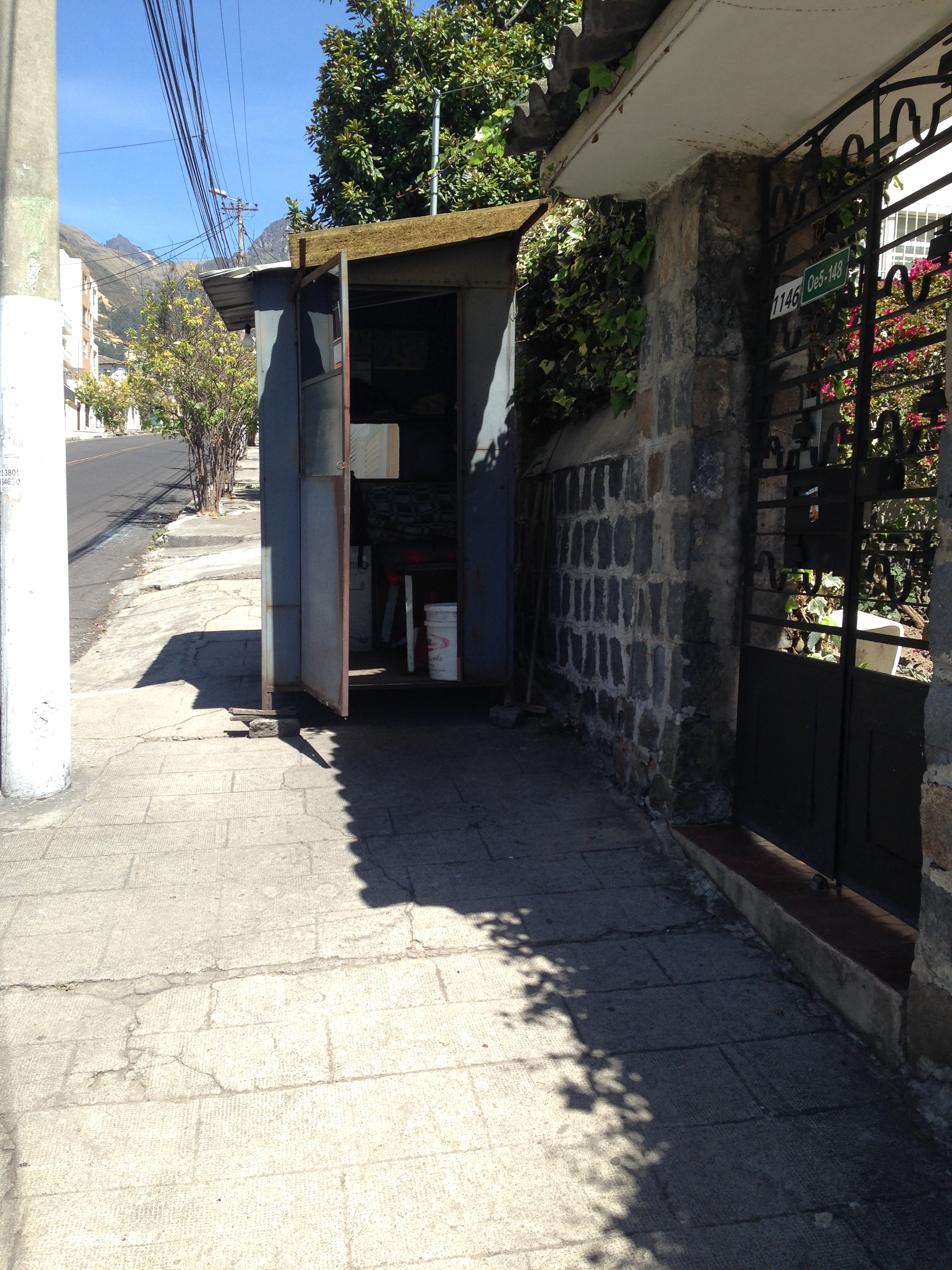
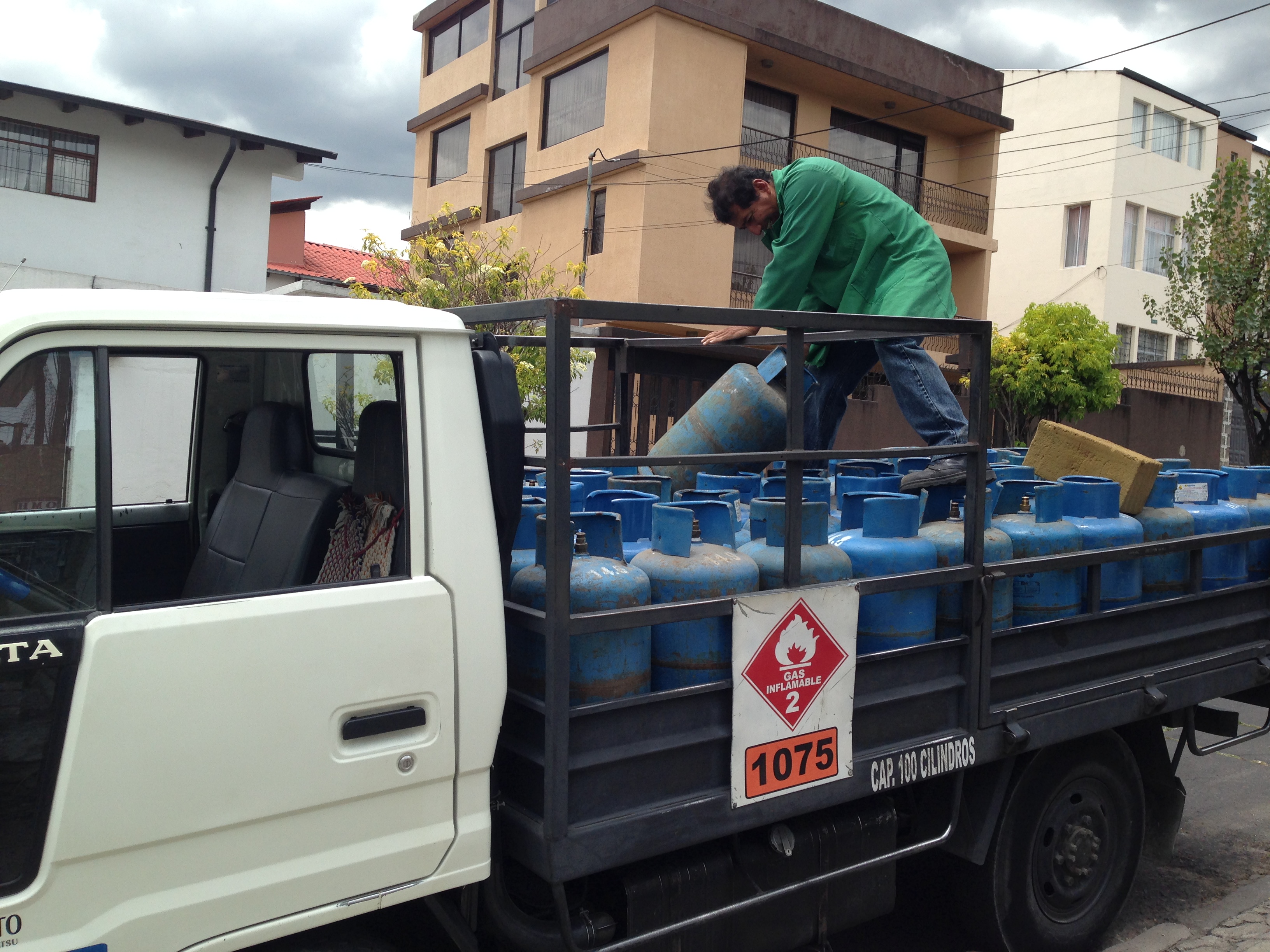
In Ecuador most homes have gas hot water and a gas stove. (I love our little gas stove, it reminds me of camping, you even have to light the burners each time you use it). The Gas man drives around usually in the morning and honks the horn. Then circles the block so if you want or need gas you go outside and open your gate and then he stops. We asked Sandra “What if you are not home or you just miss him?” She misunderstood me and said “Oh I have extra tanks I don’t run out”. We finally made ourselves clear that we were not asking about her specifically but just in general what if people work during the day. She said that you just arrange with the security guard and he will take care of it for you. We met the guard the first night here, he came up to the car and got Sandra’s keys and unlocked the gate so we could just drive in. Of course Tod and I had to get out anyway because the space is so small inside the parking area but it was sort of sweet and made us feel safe knowing he was there guarding our house. The photos below are of the outside of our flat, the security guard shack (they are all over the residential areas), and the gas man.
The Gate/Entrance.The Guard Shack – He is Inside.The Gasman Getting us a New Tank.Notice the Foam Pad on His Shoulder and the Wood Block by the Tire?
While the Gasman was connecting our new tank, a broom man walked by. I am not sure if he was walking the neighborhood selling brooms or bringing them to one of the mini markets to sell but whatever the case it was an unusual sight.

















 5117 Melbourne St., Unit 4103